
Breakfast & Brunch
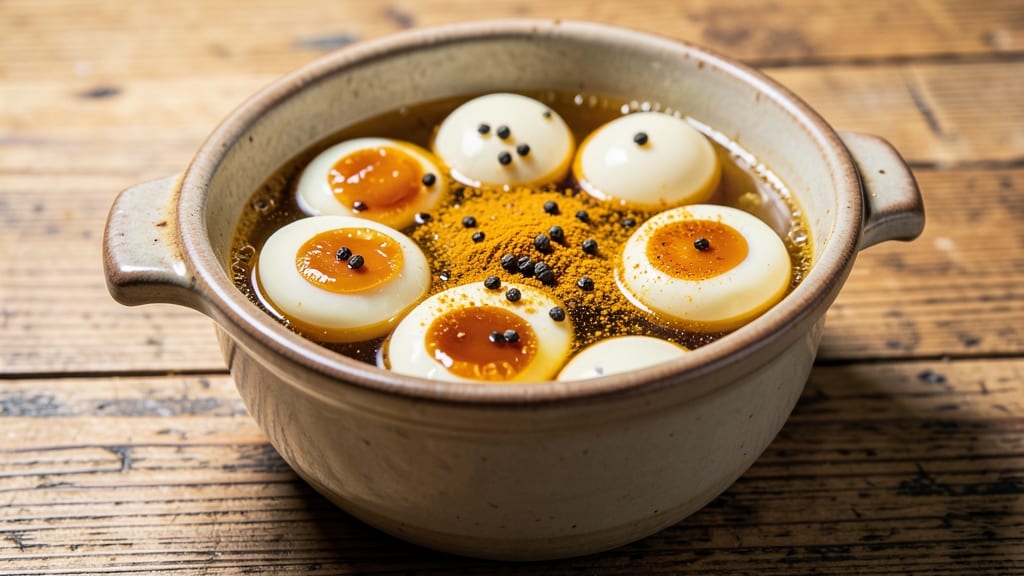
This traditional British pickled eggs recipe brings a taste of old-world England to your table with its signature tangy crunch. 💛 The secret lies in the vinegar-infused brine, packed with mustard seeds, turmeric, and bay leaves—classic British spices that transform simple hard-boiled eggs into a briny, golden delight.
Perfect for picnics, afternoon tea, or as a sophisticated appetizer, these eggs keep beautifully for weeks, making them ideal for entertaining.
The process is straightforward but requires patience—hard-boiled eggs soak in a warm, spiced vinegar brine for at least 48 hours, allowing the flavors to meld into every bite. The result?
Eggs with a crisp exterior, tender interior, and a bright, tangy bite that pairs perfectly with crusty bread or sharp cheddar. This recipe stays true to tradition while being simple enough for any home cook to master.
What makes these pickled eggs truly special is their versatility. Serve them as a starter at dinner parties, pack them in picnic baskets, or enjoy them as a snack with a cup of tea.
The golden hue from the turmeric and the aromatic spices create a dish that’s as visually appealing as it is delicious. Once you try them, you’ll understand why they’ve been a British staple for generations.
With just a few pantry staples and a little time, you’ll have a batch of authentic British pickled eggs that taste like they came from a charming English countryside kitchen. Let’s get started on creating this timeless recipe that’s perfect for any occasion.
Ingredients for traditional british pickled eggs
Six eggs and a handful of pantry spices create this timeless British treat.
| Ingredient | Amount | Notes |
|---|---|---|
| Large Eggs 🥚 | 6 whole | Extra-large for even cooking |
| White Vinegar 🍶 | 2 cups | White or apple cider vinegar |
| Water 💧 | 2 cups | Distilled or filtered preferred |
| Granulated Sugar 🍚 | ½ cup | White or brown sugar |
| Mustard Seeds 🌶️ | 1 tbsp | Yellow or brown seeds |
| Ground Turmeric 🌿 | 1 tsp | For golden color |
| Bay Leaves 🍃 | 2 whole | Fresh or dried |
| Salt 🧂 | 1 tbsp | Kosher or sea salt |
| Black Peppercorns 🌶️ | 1 tsp | Crushed lightly |
| Allspice Berries 🍃 | 4 whole | Or 0.5 tsp ground allspice |
| Cayenne Pepper 🔥 | ¼ tsp | Adjust for heat preference |
The eggs are the star, so grab extra-large—they hold up better to the long soak. Local farm eggs have richer yolks, but store-bought work fine. The vinegar is non-negotiable—white or apple cider vinegar both work, but avoid anything fruity. Mustard seeds can be tricky to find whole, so check the spice aisle at Whole Foods or Penney's if your regular store doesn't carry them. The turmeric gives those gorgeous golden eggs their signature color—use fresh ground if you've got it, but pre-ground works too. Bay leaves? Grab a few extra—they steep beautifully in the brine.
No mustard seeds? Skip them entirely—the recipe still works. Allspice berries hard to find? Ground allspice at half the amount is a solid swap. Too much cayenne? Cut it with a pinch of sugar to balance the heat. The sugar in the brine isn't just for sweetness—it helps preserve the eggs. If you're short on time, reduce the soak to 24 hours, but 48 hours is ideal for maximum flavor. And trust me, the first bite after that long soak is worth the wait.
This brine keeps for up to 1 month in the fridge—just pour it back into the jar after removing eggs. The eggs themselves stay crisp and tangy for 2-3 weeks in the fridge, or 3 months if you freeze them in the brine. I always make double batches—one for immediate snacking, one to gift in pretty jars. The flavor actually improves after a week, so make it ahead whenever possible. Serve with crusty bread or sharp cheddar for the full British experience.
Why You'll Love This Recipe
- Five-Ingredient Magic: I swear by this recipe because it’s that simple—just eggs, vinegar, sugar, water, and mustard seeds. No fancy prep, no mess, and honestly? That’s all you need for something that tastes like a proper British pub treat.
- Tangy Crunch Surprise: The mustard seeds add this tiny, unexpected bite that makes every bite exciting. Between the vinegar’s sharp kick and the sugar’s sweet balance, it’s the kind of flavor that lingers—like a good memory.
- Picnic or Party Hero: Between us, these eggs are my secret weapon for picnics, buffets, or even just a lazy Sunday spread. Cold or at room temp, they’re always a hit—no reheating, no fuss, just pure satisfaction.
- Lasts for Days: I make a big batch and keep them in the fridge for weeks. The longer they sit, the better they get—crispy shells, perfectly pickled yolks—and it’s the most budget-friendly snack I know.
Step-by-step instructions for traditional British pickled eggs
Here's how to make proper British pickled eggs with that signature golden hue and perfect crunch.
🍳 Step 1: Hard-Boil the Eggs to Perfection
Place the 6 whole large eggs in a saucepan and cover them with cold water by about 1 inch. Bring to a rolling boil over high heat, then immediately reduce to a gentle simmer. Cook for exactly 10 minutes—set a timer, don't guess. You want fully cooked yolks without turning them green.
Here's the thing—once boiling starts, the clock begins. If you start with cold water, it takes longer to reach boiling, so don't rush this step. Transfer the eggs to an ice bath for 10 minutes to stop the cooking process and make peeling easier. The cool water shock also helps set the texture for that satisfying crunch later.
👨🍳 Step 2: Prepare the Golden Pickling Spice Mixture
In a small bowl, combine the 1 tbsp mustard seeds, 1 tsp ground turmeric (this gives that classic golden color), 1 tsp crushed black peppercorns, 4 whole allspice berries, and 0.25 tsp cayenne pepper. I like to lightly crush the allspice berries with the back of a spoon to release more flavor. Set aside—this is your spice blend that'll infuse the vinegar with authentic British flavor.
In a separate bowl, whisk together the 2 cups white vinegar, 2 cups water, 0.5 cup granulated sugar, and 1 tbsp salt until the sugar and salt dissolve completely. The mixture should be clear with no graininess. This balance of sweet, tangy, and salty is what makes British pickled eggs so special.
🥘 Step 3: Assemble and Sterilize the Jars
Peel the eggs carefully, making sure to remove all traces of shell membrane—this prevents cloudy pickling liquid later. Pack the eggs tightly into two clean, sterilized quart-sized jars. I always use two jars for this recipe to give each egg plenty of room to develop that signature crunch.
Add the spice mixture to the jars, distributing it evenly between the eggs. Tuck in the 2 whole bay leaves so they nestle between the eggs. Pour the vinegar mixture over the eggs until completely covered—you want at least 1 inch of liquid above the eggs to ensure proper preservation.
⏰ Step 4: Seal and Cure for Maximum Flavor
Wipe the jar rims clean, then seal with lids. Let the jars cool to room temperature before refrigerating. This cooling period helps create a proper seal. The eggs need at least 3 days to develop their proper flavor, but I find they're best after 1 week—the longer they cure, the more complex the taste becomes.
After 1 week, check the liquid level. If it's below the eggs, you can top up with more vinegar mixture (using the same proportions). The eggs should float slightly in the liquid, which is normal. For best results, store in the refrigerator and enjoy within 2 months. The crunch will diminish over time, so eat them when they're at their peak!
Pro Tips For Making Traditional British Pickled Eggs
- Boil Eggs Until They’re Firm (Not Soft): I learned this the hard way—undercooked eggs turn rubbery in the brine, and nobody wants that. Boil large eggs for exactly 9 minutes from a rolling boil, then plunge them into ice water. The yolk should be set but still creamy, not dry or chalky.
- Use Equal Parts Vinegar and Water: Traditional British recipes often split the difference here, and it’s not just tradition—it’s about balance. A 50/50 mix of white vinegar and water keeps the eggs tangy without overpowering them, while also preventing the vinegar from making the whites too tough. (Yes, even if you’re impatient like me.)
- Toast the Mustard Seeds First: Crushing whole mustard seeds in the brine is a must, but toast them first—just 30 seconds in a dry pan until they smell nutty. This makes a real difference in flavor, giving the eggs that deep, warm kick instead of a sharp bite. (Your future self will thank you.)
- Dissolve Sugar in Warm Brine: Cold water + sugar = grainy, lumpy brine. Heat the vinegar-water mix just enough to dissolve the sugar completely before adding eggs and mustard. It’s a small step, but it guarantees a smooth, evenly flavored pickle every time. (Does it look weird? Yes. Does it work? Every single time.)
Common mistakes when making perfect results
Overcooking the Eggs
One of the biggest mistakes is overcooking the eggs during the boiling process. If you exceed 10 minutes at a gentle simmer, the yolks will turn green and rubbery, ruining that perfect tender texture.
I’ve learned this the hard way—once, I left them in for 12 minutes and the result was disappointing. Always use a timer and start counting only when the water reaches a full rolling boil. 💛
Skipping the Ice Bath
Many people skip the 10-minute ice bath after boiling, which makes peeling the eggs nearly impossible. The cold water shock stops the cooking process and tightens the egg whites, making them much easier to peel.
Without it, you’ll end up with messy, uneven peels that can trap shell fragments in the brine, leading to cloudy pickling liquid. Trust me, this step is worth the extra 10 minutes.
Using the Wrong VinegarUsing the Wrong Vinegar
Not all vinegars are created equal! While white vinegar is traditional, using something fruity or balsamic will alter the flavor profile dramatically. The sharp, clean taste of white vinegar or apple cider vinegar is essential for that authentic British tang.
I once used red wine vinegar by mistake, and while it wasn’t terrible, it lacked the bright, crisp quality that makes these eggs so special. Stick to the classic choices.
Improper Spice Distribution
Unevenly distributing the spices can lead to some eggs being bland while others are overly spicy.
Not Enough Brine Coverage
If the eggs aren’t fully submerged in the brine, they won’t pickle evenly and may develop mold or off flavors. Always ensure there’s at least 1 inch of liquid above the eggs. I’ve seen people pack jars too tightly, leaving gaps where air can get trapped. Use two jars instead of one if needed—it’s better to have slightly more space than risk uneven pickling. The liquid should always cover the eggs completely.
Rushing the Curing Time
Patience is key with pickled eggs. While they’re technically edible after 24 hours, they won’t reach their full flavor potential until at least 3 days, and ideally 1 week.
I’ve had people complain that their pickled eggs didn’t taste right, only to realize they ate them too soon. Let the flavors develop—it’s worth the wait for that perfect tangy crunch! ⏰
Nutrition facts
Frequently asked questions
Why do traditional British pickled eggs turn golden?
The beautiful golden color comes from turmeric in the brine! This spice not only gives the eggs their signature hue but also adds a warm, earthy flavor that pairs perfectly with the vinegar's tang. The turmeric infuses into the eggs during the 48-hour minimum soak, creating that iconic British look.
Can I use brown eggs instead of white for this recipe?
Brown eggs work perfectly and will have a slightly richer flavor. The pickling process treats both types equally, so you can use whatever eggs you prefer. Just be sure to peel them carefully to avoid any shell fragments in the brine. The color difference won't affect the taste or texture at all.
How do I know when the pickled eggs are ready to eat?
After the minimum 3-day soak, they're technically ready, but they'll taste even better after 1 week. The eggs should have a firm, crisp exterior and a bright, tangy flavor. If the liquid smells vinegary (not sour or off), they're ready! The longer they cure, the more complex the flavor becomes—don't rush this step for the best results.
What's the best way to serve these pickled eggs?
These eggs shine as a picnic side dish, appetizer, or tea-time snack! Serve them with crusty bread, sharp cheddar, or even as part of a British-style platter with cured meats. They also make a great addition to sandwiches or salads. The crunchy texture and tangy flavor pair perfectly with rich, creamy, or salty accompaniments.
Can I make this recipe without mustard seeds?
Yes, mustard seeds are optional but add a nice peppery bite. If you can't find them, simply omit them—the recipe will still work beautifully. The other spices (turmeric, allspice, and bay leaves) will still create that classic British flavor profile. You might notice a slightly milder taste, but it won't ruin the dish.