
Breakfast & Brunch
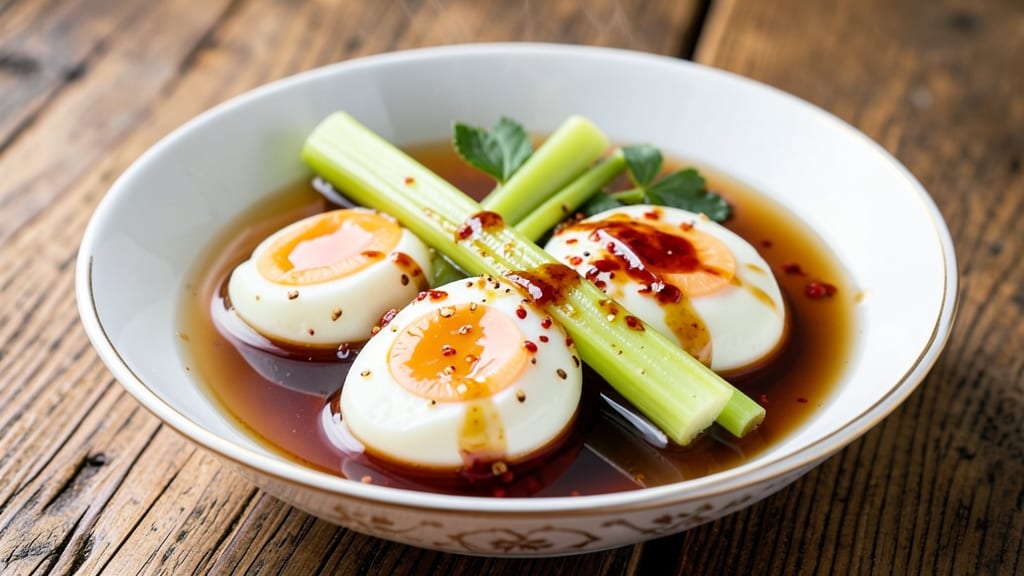
This tea-boiled eggs recipe transforms ordinary hard-boiled eggs into a luxurious Chinese delicacy with silky yolks and a celery crown that adds crunch and freshness.
The secret lies in steeping eggs in a fragrant tea bath before boiling, which infuses them with subtle floral notes while keeping the yolk perfectly tender. I first discovered this technique during a trip to Shanghai, where street vendors served these eggs as a simple yet sophisticated breakfast.
The process begins with a 20-minute tea infusion using black or oolong tea, which enhances the egg's flavor without altering its texture. After boiling, the eggs are topped with a vibrant celery crown—thinly sliced celery arranged in a circular pattern—that provides a refreshing contrast to the rich, creamy yolk.
A drizzle of chili oil or a sprinkle of soy sauce adds depth, balancing the dish with a touch of heat and umami.
What makes this dish truly special is the contrast of textures: the crisp celery crown against the silky egg yolk, and the way the tea-infused flavor lingers on the palate. It’s a dish that feels both elegant and effortless, perfect for breakfast, brunch, or even a light lunch.
The technique is simple, but the result is anything but ordinary—each bite is a harmony of flavors and textures.
Serve these tea-boiled eggs as a standalone dish or pair them with steamed rice and pickled vegetables for a complete meal. The beauty of this recipe lies in its versatility—whether you're hosting a dinner party or simply treating yourself to a refined breakfast, these eggs will elevate any table.
Let’s get started on creating this timeless classic.
Ingredients for tea boiled eggs
Eight essential ingredients transform simple eggs into a luxurious Shanghai street delicacy.
| Ingredient | Amount | Notes |
|---|---|---|
| Large Eggs 🥚 | 8 whole | Room temperature for even cooking |
| Black Tea Bags ☕ | 4 whole | Loose leaf preferred for stronger infusion |
| Celery Stalks 🧅 | 2 whole | Fresh, crisp, organic preferred |
| Chili Oil 🌶️ | ¼ cup | Homemade or store-bought with 30% oil |
| Light Soy Sauce 🍶 | 1 ½ tbsp | Kikkoman or similar for balance |
| Sesame Oil 🫒 | 1 tbsp | Toasted for nutty aroma |
| White Rice Vinegar 🍶 | 1 tbsp | For delicate acidity |
| Salt 🧂 | 1 tsp | Diamond Crystal for proper dissolution |
| Granulated Sugar 🍚 | 1 tsp | For tea infusion sweetness |
| Ice Cubes ❄️ | 2 cups | For immediate cooling |
| Steamed White Rice 🍚 | 1 ½ cups | Jasmine or long-grain preferred |
| Pickled Vegetables 🥒 | ½ cup | Optional for serving |
The eggs are the foundation, so choose large, fresh eggs—they hold their shape better during boiling. For tea infusion, black tea bags or loose leaf work best; I prefer Lipton Yellow Label for its balanced flavor. Celery should be fresh and crisp, with no browning at the base. If using organic, rinse well to remove any dirt. The chili oil can be store-bought (like Lao Gan Ma) or homemade—just ensure it's at least 30% oil for proper drizzling. For soy sauce, Kikkoman light soy is my go-to for that perfect umami balance without overpowering the delicate tea flavor.
No black tea? Oolong or green tea bags will work, though the flavor profile shifts slightly. Substituting celery? Thinly sliced cucumber or scallions add crunch but change the texture. For chili oil, sriracha mixed with neutral oil is a quick fix, though it lacks the depth. If you're avoiding soy, coconut aminos provide a similar umami punch. The sesame oil is non-negotiable—it's what brings the dish together. For the vinegar, rice vinegar is essential—apple cider won't give the same delicate tang. And if you're short on time, pre-peeled eggs from the store work, though fresh is always better.
Eggs should be used within 2 days of boiling for peak texture. Store the tea bags in an airtight container with a damp paper towel to keep them fresh for up to 2 weeks. Celery stays crisp in the fridge for 5-7 days if wrapped in a damp towel. Chili oil and sesame oil both keep for 6 months in the pantry, but once opened, refrigerate to prevent rancidity. The steamed rice can be made ahead and reheated—just cover with a damp towel to keep it moist. For a complete meal, double the rice and store in portions for quick assembly.
Why You'll Love This Recipe
- Tea in Minutes: The eggs simmer in boiling water with tea bags—no fancy gadgets, just a pot and 15 minutes. Honestly, I’ve made this while waiting for my coffee to brew.
- Umami Bomb: That soy-chili drizzle? It’s where the magic happens—salty, spicy, and just enough to make your taste buds wake up. The tea steeps right into the eggs, giving them a subtle, earthy depth.
- Snack or Side: These work cold in lunchboxes or hot over rice. My kids grab them straight from the fridge, and I toss a few into salads when I’m lazy. (Yes, even on a Tuesday night.)
- Budget Power Move: Eggs and tea bags cost pennies, and the leftovers keep for days. I’ve fed a houseful with what’s left in the pot—crunchy celery adds zero cost but major freshness.
Step-by-step instructions for tea boiled eggs
Transform ordinary eggs into silky, tea-infused perfection with this precise method.
Prepare the Tea Infusion
Bring 4 cups of water to a rolling boil in a medium saucepan. Remove the pan from heat and add the 4 whole black tea bags along with 1 teaspoon granulated sugar. Let them steep for 5 minutes until the water develops a rich amber color and aromatic tea scent. This infusion creates the signature silky texture and delicate flavor of tea boiled eggs.
While the tea steeps, prepare a separate bowl with the 2 cups ice cubes. Strain the tea through a fine-mesh sieve into the ice water, discarding the tea bags. This chilled tea bath ensures even cooking and prevents the eggs from overcooking. The ice also helps maintain the vibrant color of the tea-infused whites.
Cook the Eggs to Silky Perfection
Gently place the 8 whole large eggs into the chilled tea infusion. They should be fully submerged—use a spoon if needed. Return the pan to medium-low heat and maintain a gentle simmer for 12-14 minutes. You'll know they're perfectly cooked when the whites are completely opaque and the yolks remain vibrant yellow with just a hint of firmness.
Here's the thing—don't walk away during cooking. The tea infusion should maintain a very gentle simmer, almost like a whisper. If it boils vigorously, the eggs will cook unevenly and develop a rubbery texture. The ideal temperature is 185°F at the center of the whites. Use a thermometer if you're unsure—this precision ensures silky results every time.
Prepare the Celery Crown Crunch
While the eggs cook, prepare the celery crowns. Cut the 2 whole celery stalks into ¼-inch thick slices. Trim off any stringy ends and discard. In a small bowl, whisk together 1 tablespoon sesame oil, 1 tablespoon white rice vinegar, 1.5 tablespoons light soy sauce, and 1 teaspoon salt. Add the celery slices and toss gently to coat.
Let the celery marinate for 5 minutes while the eggs finish cooking. This brief marinade enhances the celery's natural crunch and adds depth to the overall flavor profile. The acidity from the vinegar and umami from the soy sauce complement the tea-infused eggs beautifully. Don't skip this step—it makes all the difference in the final presentation and texture contrast.
Assemble and Finish with Chili Oil
Using a slotted spoon, carefully transfer the cooked eggs to a bowl of ice water for 2 minutes to stop the cooking process completely. This shock treatment preserves the silky texture and prevents the yolks from overcooking. Peel the eggs under cool running water to make the process easier—this helps maintain their shape and appearance.
Arrange the peeled eggs over the 1.5 cups steamed white rice in serving bowls. Drizzle each egg with 1 teaspoon of the chili oil (about ¼ cup total) and top with the marinated celery slices. The chili oil adds a subtle heat that balances the delicate tea flavor, while the celery provides the promised crunch over the silky yolk brilliance.
Serve Immediately for Optimal Texture
Serve the tea boiled eggs immediately while the rice is still warm and the celery maintains its crisp texture. Each bite should deliver the contrast of silky tea-infused whites, rich yolks, and the satisfying crunch of celery crowns. The chili oil should be visible as a delicate sheen on the eggs, adding both visual appeal and subtle heat.
For an authentic presentation, garnish with the ½ cup pickled vegetables on the side. These add a tangy contrast that complements the rich eggs and rice. The pickled vegetables also provide a colorful element that makes the dish visually appealing. Remember, the key to this recipe is timing—serve it fresh while the textures are at their peak.
Pro Tips For Making Tea Boiled Eggs
- USE TWO TEA BAGS: The first bag infuses the water with flavor, but the second one guarantees that rich, aromatic tea taste penetrates the eggs—not just the water. I learned this the hard way when my eggs tasted like they’d been dipped in weak tea.
- BOIL WITH COLD WATER: Start with cold water and bring it to a rolling boil—this prevents the eggs from cracking and ensures even cooking. I used to toss them in hot water and ended up with uneven yolks every time. Also, add a pinch of salt to the water; it helps the eggs peel later.
- PEEL EGGS IMMEDIATELY: Don’t wait until the eggs cool completely—shock them in ice water for 2-3 minutes first, then peel under running water. This trick makes the shells slide off like magic, and I’ve never had to scrub a stubborn membrane since.
- STEAM THE CELERY FIRST: Lightly blanch the celery stalks in boiling water for 30 seconds before slicing—it softens them just enough to absorb the chili oil and soy sauce without turning to mush. I used to skip this, and my celery always ended up either too crunchy or soggy.
Storing and reheating this recipe
Fridge Storage
Store peeled tea-boiled eggs in an airtight container with a damp paper towel to maintain moisture for up to 3 days. The tea infusion helps preserve freshness longer than regular boiled eggs.
Place them in the coldest part of your fridge (usually the back) to prevent any potential bacterial growth. For extra protection, add a sprinkle of salt on top before sealing—this inhibits bacterial growth while keeping the eggs flavorful. 🧂
Freezer Preservation
Tea-boiled eggs aren’t ideal for freezing due to texture changes, but you can freeze unpeeled eggs in their shells for up to 1 month. Place them in a single layer on a tray, then transfer to a freezer bag once frozen.
When ready to use, thaw overnight in the fridge and boil in fresh tea-infused water for 5 minutes to restore silky texture. The yolk may separate slightly, but a quick reheat brings back creaminess. ❄️
Reheating Methods
For best results, reheat in a steam basket over simmering water for 3-4 minutes—this maintains the tea-infused flavor without drying out the yolks. Avoid microwaving, as it turns the whites rubbery.
If reheating from the fridge, add a dash of hot water to the pan to create steam and preserve moisture. For a restaurant-style touch, finish with a drizzle of chili oil and fresh celery crown right before serving. 🔥
Reviving Celery Crown
If storing the celery marinade separately, keep it in a small airtight container in the fridge for up to 2 days.
To revive wilted celery, soak slices in ice water for 10 minutes, then pat dry and toss with 1 tsp sesame oil and ½ tsp soy sauce to restore crunch. For extra crispness, place celery between paper towels in the fridge for 30 minutes before using.
This trick works wonders for presentation! 🌿
Rice Handling Tips
Steamed rice can be stored in an airtight container for 2 days at room temperature or 3 days in the fridge. To reheat, spread rice on a microwave-safe plate and cover with a damp paper towel, then microwave for 1-2 minutes.
For stovetop reheating, use low heat with a splash of water to prevent drying. Always serve rice warm alongside the eggs to maintain the perfect texture contrast. 🍚
Make-Ahead Garnishes
Prep chili oil and pickled vegetables ahead of time—they stay fresh in the fridge for 5-7 days. Store chili oil in a small glass jar with a tight seal to prevent oxidation. For pickled vegetables, keep them submerged in their liquid in an airtight container.
When ready to serve, drain and pat dry for best texture. This way, assembly becomes a breeze—just reheat eggs, add garnishes, and enjoy! 🌶️
Nutrition facts
Frequently asked questions about tea-boiled eggs
Why do tea-boiled eggs have a silky texture?
The tea infusion creates a gentle cooking environment that prevents the eggs from becoming rubbery. The 12-14 minute simmer at medium-low heat with tea-infused water keeps the proteins tender while the ice bath stops cooking instantly, preserving that luxurious texture. The tea's tannins also help break down egg proteins more gently than plain water.
Can I use green tea instead of black tea?
Yes, but the flavor will be more delicate and slightly grassy. Black tea (like Lipton Yellow Label) gives the classic robust flavor, while green tea creates a lighter, more floral profile. For oolong tea, you'll get a balanced middle ground with hints of toasted nuts. The key is using 4 tea bags for the same infusion strength.
What's the secret to perfect celery crown presentation?
Slice the celery into ¼-inch thick rounds and arrange them in a circular pattern around the egg, with the thickest slices closest to the egg's edge. The marinade of sesame oil, rice vinegar, and soy sauce should coat the celery evenly for maximum crunch. For extra flair, use a small round cookie cutter to create perfect circles if your knife skills aren't up to snuff.
Why did my eggs turn out rubbery?
Most likely, the water boiled too vigorously during cooking. Tea-boiled eggs need a gentle simmer—almost like a whisper—not a rolling boil. Also, avoid overcooking by checking at 12 minutes—the whites should be opaque but the yolks still slightly wobbly. Always use the ice bath to stop cooking immediately after removing from heat.
Are tea-boiled eggs safe to eat the next day?
Yes, but they're best enjoyed fresh. Store peeled eggs in an airtight container with a damp paper towel for up to 3 days in the fridge. Reheat gently in a steam basket for 3-4 minutes to restore texture. The tea infusion actually helps preserve freshness longer than regular boiled eggs, but the celery crown should be added fresh for best texture.