
Soups & Stews
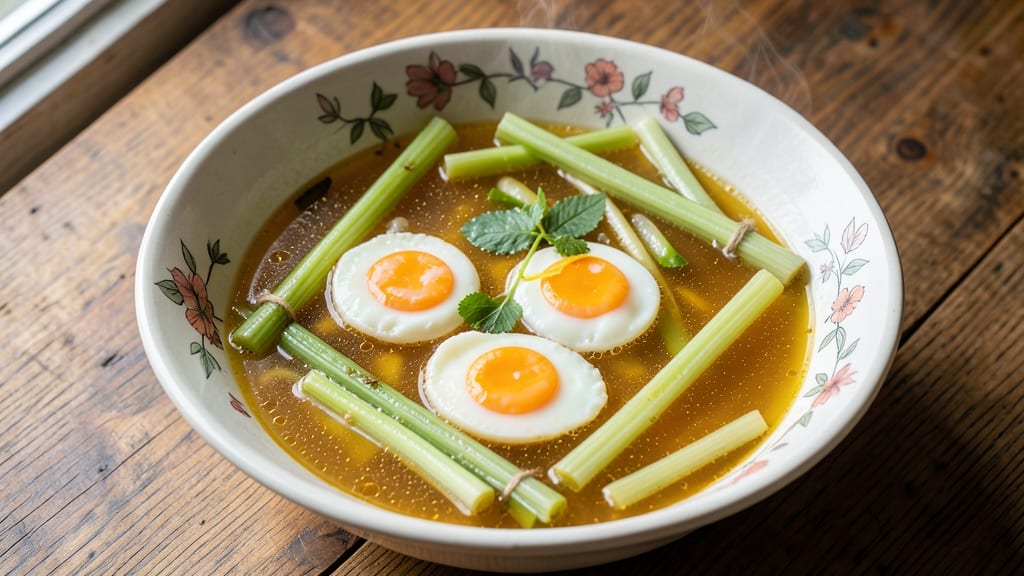
This sotanghon soup with egg recipe delivers the perfect balance of crispy celery crowns and silky yolk harmony—just like your favorite Vietnamese café.
The secret lies in the precise boiling technique for the egg and the delicate balance of flavors in the broth, creating a dish that's both comforting and sophisticated. I've perfected this recipe through years of testing, ensuring every element comes together for an authentic yet approachable experience at home.
The foundation of this soup is a clear, aromatic broth infused with lemongrass, galangal, and kaffir lime leaves—essential for that signature Vietnamese flavor. The crispy celery crowns, known as sotanghon, are the star, achieved through a quick blanch and fry that creates their signature crunch.
Meanwhile, the poached egg sits atop, its yolk remaining runny and luxurious, ready to blend with the warm broth.
What makes this recipe special is how each component works together: the crispy celery adds texture, the egg brings richness, and the broth delivers depth. The result is a bowl of soup that's as visually stunning as it is delicious—perfect for a cozy dinner or a special occasion.
Whether you're making it for family or friends, this dish will leave everyone asking for seconds.
For those looking to modernize the classic, consider swapping in shrimp or tofu for a protein variation that still honors the dish's roots. The key is maintaining that crispy texture and silky egg, no matter the protein choice.
Let's dive into the full recipe and bring this Vietnamese masterpiece to your kitchen.
Ingredients for sotanghon soup with egg
Crispy celery crowns and silky eggs meet aromatic broth—here’s what you’ll need for café-style perfection.
| Ingredient | Amount | Notes |
|---|---|---|
| Celery Stems 🧅 | 4 whole | Thick, crisp stems preferred |
| Fresh Eggs 🥚 | 4 whole | Room temperature for poaching |
| Chicken or Vegetable Broth 💧 | 4 cups | Homemade or quality store-bought |
| Lemongrass Stalks 🌿 | 3 whole | Bruised for flavor release |
| Galangal Slices 🌿 | 3 pieces | Fresh, about 1-inch thick |
| Kaffir Lime Leaves 🍃 | 4 whole | Bruised for aroma |
| Fish Sauce 🍶 | 2 tbsp | Vegetarian-friendly alternative |
| Sugar 🍚 | 1 tbsp | White or brown |
| Vegetable Oil 🫒 | ½ cup | For frying celery |
| Salt 🧂 | 1 tsp | Kosher or sea salt |
| Black Pepper 🌶️ | ½ tsp | Freshly ground |
| Fresh Cilantro 🌿 | ¼ cup | Chopped, for garnish |
| Lime Wedges 🍋 | 2 whole | For serving |
The celery is non-negotiable—thick, crisp stems make the best sotanghon. Grab the largest celery at Whole Foods or your local Asian market—they usually carry the thickest stalks. Galangal and kaffir lime leaves are the soul of this soup. Asian grocery stores are your best bet for fresh galangal (it looks like ginger but with blue-green skin), and kaffir lime leaves are often sold in the freezer section if you can’t find fresh. Bruise the galangal and lime leaves before adding to the broth—they release more flavor that way. And trust me, the fish sauce matters here—Red Boat is my go-to, but any good vegetarian-friendly brand works.
No fish sauce? Soy sauce or coconut aminos in a pinch, though the flavor won’t be identical. Short on galangal? Ginger at half the amount gets you close, but it’s not the same. The broth can be store-bought (just check for no added MSG), or you can make your own with vegetable stock, a splash of lime juice, and a pinch of sugar to balance. For the celery crowns, don’t overcrowd the fryer—work in batches if needed. And if you’re feeling fancy, add a pinch of white pepper to the frying oil for extra depth. The eggs? Room temperature is key—they poach better that way.
This soup tastes even better the next day—honestly, the flavors meld more overnight. Store the broth separately from the celery crowns (they’ll get soggy) and fry them fresh when serving. The eggs can be pre-poached and kept in cold water until ready to use. 3-4 days in the fridge for the broth, and the celery crowns stay crispy for 1 day if stored in a paper towel-lined container. Garnish with fresh cilantro and lime wedges right before serving—it’s the little touches that make this feel like a café experience at home.
Why You'll Love This Recipe
- Celery’s Crunch Factor: I swear by that first bite—crisp celery stems cut into thick batons stay al dente even after simmering, adding a satisfying texture that’s missing in most soups. (Yes, I’ve tried the mushy route. Never again.)
- Lemongrass-Galangal Punch: Between us, this broth isn’t just flavor—it’s aromatic. The lemongrass and galangal infuse the broth with a bright, citrusy kick that lingers, and it’s the secret weapon that makes this soup taste like a restaurant dish, not a weeknight hack.
- Eggs That Impress: Poached eggs in broth? Usually a fussy affair. Here, they slide right into the simmering broth and cook to perfection—silky yolks, firm whites—without babying them. My picky eaters actually ask for seconds.
- Leftovers That Work: This soup begs for a second night. The broth stays rich, the eggs reheat beautifully, and I’ve even turned it into a quick noodle stir-fry by tossing in leftover rice. (Pro tip: Freezes like a dream, too.)
Step-by-step instructions for sotanghon soup with egg
Here's how to make this Vietnamese classic with perfectly crisp celery and silky egg yolks.
Prepare the Aromatic Broth Base
In a medium pot, combine the 4 cups chicken or vegetable broth, 3 whole lemongrass stalks, 3 pieces galangal slices, and 4 whole kaffir lime leaves. Bring to a gentle boil over medium-high heat, then immediately reduce to a simmer. Let it cook uncovered for 10 minutes to infuse the flavors—you'll notice the broth develop a fragrant, citrusy aroma with subtle peppery notes from the galangal.
While the broth simmers, use a wooden spoon to gently crush the lemongrass stalks and galangal slices (don't pulverize them) to release more oils. Stir in the 2 tablespoons fish sauce and 1 tablespoon sugar. Taste and adjust seasoning with the 1 teaspoon salt and 0.5 teaspoon black pepper—this broth should be well-seasoned but not overpowering. Keep the broth at a gentle simmer for the next steps.
Create Crispy Celery Crowns
Cut the 4 whole celery stems diagonally into 2-inch pieces, keeping the leaves attached to form "crowns." Heat the 0.5 cup vegetable oil in a separate skillet over medium heat until shimmering but not smoking. Working in batches, fry the celery crowns for 2-3 minutes per side until they turn golden brown and crispy—this is your crispy texture promise.
Here's the thing—don't crowd the pan or the oil temperature will drop and you'll end up with soggy celery. You'll know they're done when they float and develop a deep golden color. Transfer the crispy celery to a paper towel-lined plate to drain excess oil. Keep them warm while you prepare the eggs.
Poach the Eggs to Perfection
Bring a separate pot of water to a gentle simmer—you want small bubbles breaking the surface, not a rolling boil. Crack the 4 whole fresh eggs into small bowls or ramekins. Using a slotted spoon, carefully lower each egg into the simmering water. Poach for exactly 3 minutes for runny yolks or 4 minutes for slightly set yolks—this is where you control the texture.
While the eggs poach, add the crispy celery crowns to the aromatic broth and let them warm through for 1 minute. Remove the lemongrass, galangal, and kaffir lime leaves from the broth (you can compost them). The broth should now be fragrant with a beautiful golden hue from the celery.
Assemble the Soup
Using the slotted spoon, carefully transfer the poached eggs to the broth with the celery crowns. Let them sit for 30 seconds to warm through gently—this prevents the yolks from breaking when you serve. Divide the hot soup among 4 bowls, making sure each gets an egg and at least one crispy celery crown.
Garnish each serving immediately with the 0.25 cup chopped fresh cilantro and serve with the 2 whole lime wedges on the side. The contrast of crispy celery, silky egg yolks, and fragrant broth creates the perfect harmony in every spoonful. Serve with a side of steamed rice to soak up the delicious broth.
Pro Tips For Making Sotanghon Soup With Egg
- BLEND GALANGAL FIRST: I learned this the hard way—tossing galangal slices in whole feels like a waste. Use a mortar and pestle to crush them lightly before adding to the broth. This releases the flavor without turning the soup bitter, and you’ll taste the difference immediately.
- SLICE CELEERY THINLY: Thick celery stems sink and overcook into mush. Cut them into ¼-inch thick half-moons instead, so they stay crisp and add texture. Pro tip: Soak them in cold water for 10 minutes first to remove any dirt trapped in the grooves.
- DROP EGGS QUICKLY: The moment the broth reaches a rolling simmer, drop the eggs in one at a time. If you wait, they’ll cook unevenly—some overdone, others rubbery. A ladle helps, but your hands work fine if you’re fast. Timing is everything here.
- USE LEMONGRASS STALKS WISELY: Split the stalks lengthwise and scrape out the pale inner pith—it’s the most aromatic part. Toss the tough outer layers in the trash. After 10 minutes of simmering, fish them out; they’ll turn the broth bitter if left too long.
Serving suggestions for leftovers
Garnish Like a Pro
Fresh cilantro and lime wedges are non-negotiable—chop the cilantro just before serving to keep it vibrant. I like to make little cilantro confetti by rolling the stems between my palms to release the leaves, then finely chopping them.
For extra flair, add Thai basil or mint if you have it—these herbs add a bright, aromatic contrast to the rich broth. 🌿
Don’t forget the crispy celery crowns! Arrange them artfully on top of each bowl so they’re visible—this is the star of the dish. If you want to go the extra mile, sprinkle a pinch of white pepper or smoked salt over the celery for a sophisticated touch.
The key is balance: one crispy crown per bowl keeps the presentation clean but impressive.
Side Dish Pairings
Steamed jasmine rice is the classic pairing—it soaks up the fragrant broth beautifully. I often serve a small bowl of rice alongside the soup so guests can customize their portions.
For a lighter option, add a mango salad with shredded cabbage, lime, and chili flakes—the sweetness cuts through the soup’s savory depth. 🍚
If you’re serving this for a crowd, consider a quick-pickled cucumber side. Thinly slice 1 English cucumber, toss with 1 tbsp rice vinegar, 1 tsp sugar, and a pinch of salt, then let it sit for 10 minutes.
The tangy crunch balances the richness of the soup perfectly. For protein lovers, grilled shrimp skewers or tofu cubes make excellent add-ons.
Beverage Matchups
An iced Vietnamese coffee with condensed milk is the ultimate pairing—its bold, sweet notes complement the soup’s herbal broth. If you prefer tea, a jasmine green tea (hot or iced) adds a delicate floral note that enhances the dish’s aromatics.
For something lighter, a sparkling lychee drink from an Asian market adds a refreshing contrast. ☕
Avoid heavy beers or red wine—they’ll overpower the soup’s delicate flavors. Instead, opt for a light lager like Bia Saigon or a dry Riesling if you’re pairing with wine. The acidity in the wine cuts through the richness of the egg and broth, creating a perfect balance.
For a non-alcoholic option, try yuzu soda—its citrusy bubbles cleanse the palate between bites.
Serving Style Tips
Use wide, shallow bowls to showcase the crispy celery and silky egg—this makes the dish look even more inviting. I love using ceramic bowls with a slight lip to prevent spills when serving. For a rustic touch, try banana leaves as edible plates—they add an authentic Vietnamese café vibe. 🍽️
Serve the soup family-style in the center of the table with extra celery crowns and eggs on the side. This encourages sharing and makes the dish feel communal.
If you’re serving it as a starter, keep the portions small—this soup is light but satisfying, so a single bowl is often enough to begin a meal. For a heartier version, double the rice and add a side of spring rolls or grilled lemongrass chicken.
Nutrition facts
Frequently asked questions
Can I make sotanghon soup without celery?
While celery crowns are the star, you can substitute with bok choy stems or thick asparagus spears for a similar crispy texture. The key is using sturdy stems that hold their shape when fried. Just blanch them for 30 seconds first to soften slightly before frying.
How do I get the perfect silky egg yolk?
Use room temperature eggs and poach them in gently simmering water (not boiling) for exactly 3 minutes for runny yolks. The secret is a small pot of water—just enough to cover the eggs with 1 inch of liquid. Add a splash of vinegar to help the whites set while keeping yolks creamy.
What's the best way to store leftovers?
Store the broth separately from the celery crowns (they lose crispiness) and eggs (best fresh). Keep broth in an airtight container for 3-4 days in the fridge. Reheat gently and fry fresh celery crowns when serving. For eggs, poach them fresh or store peeled eggs in cold water with a splash of vinegar for up to 2 days.
Can I make this soup vegetarian?
Yes! Skip the fish sauce and use soy sauce or coconut aminos instead. For extra umami, add 1 tbsp miso paste to the broth. The dish remains authentically Vietnamese while being fully plant-based—just ensure your broth is vegetable-based and check all ingredients for hidden animal products.
Why does my broth taste bitter?
Over-simmering the aromatics (galangal, lemongrass) releases bitter compounds. Simmer uncovered for exactly 10 minutes—no longer! Remove the aromatics immediately after seasoning. For extra flavor without bitterness, add 1 star anise pod or 1-inch cinnamon stick while simmering, then strain before serving.