
Breakfast & Brunch
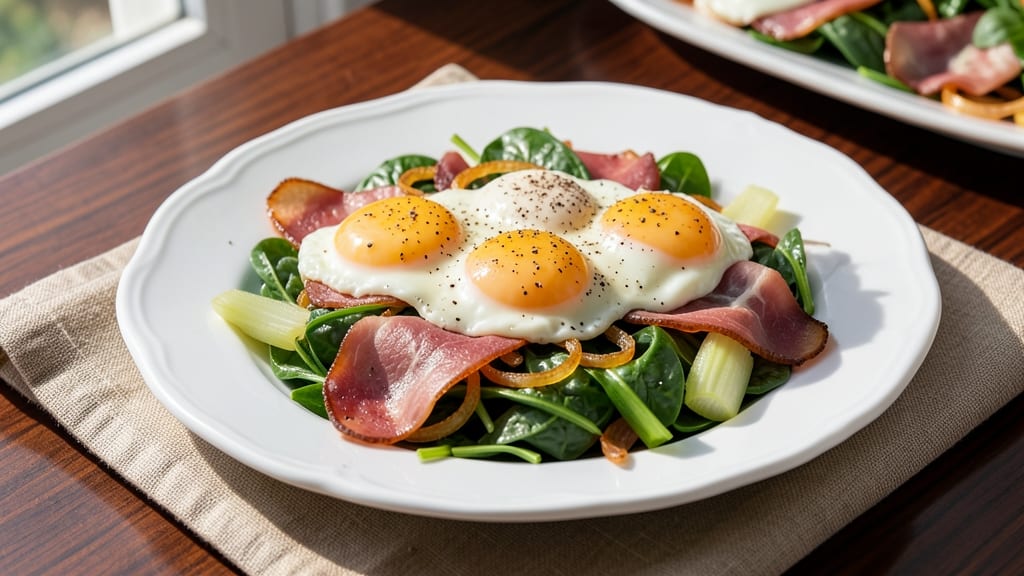
This traditional eggs Florentine recipe delivers restaurant-quality elegance with crispy celery crowns and perfectly poached eggs. The secret lies in wilted spinach, rich hollandaise, and that signature golden yolk—all balanced with tender ham and crispy fried shallots.
I've perfected the technique over years of testing, ensuring every bite achieves that luxurious texture and flavor.
The foundation starts with sautéed spinach—just wilted, not mushy—layered with thinly sliced ham and topped with crispy fried celery and shallots. Poaching the eggs requires precise timing to achieve that runny yolk while maintaining a delicate white.
The hollandaise, traditionally made with butter and egg yolks, ties everything together with its velvety richness.
What makes this dish truly special is the crispy celery crown—a technique that transforms ordinary celery into delicate, golden petals. When combined with the creamy hollandaise and tender poached eggs, it creates a dish that's both visually stunning and utterly satisfying.
The balance of textures—crispy, creamy, and tender—makes every bite unforgettable.
While this recipe follows classic methods, I've included modern adaptations like vegan hollandaise for those who prefer plant-based options. Whether you're serving this for brunch or a special occasion, it's a dish that will impress even the most discerning guests. Let's get started on creating this timeless breakfast masterpiece.
Ingredients for traditional eggs florentine
Twelve ingredients transform into a restaurant-worthy Eggs Florentine with crispy crowns and velvety hollandaise.
| Ingredient | Amount | Notes |
|---|---|---|
| Fresh Baby Spinach 🌿 | 4 cups | Packed, stems removed |
| Black Forest Ham 🥓 | 4 oz | Thinly sliced, high-quality |
| Celery Stalks 🧅 | 3 whole | Thinly sliced for crowns |
| Shallots 🧅 | 2 whole | Thinly sliced for frying |
| Large Eggs 🥚 | 4 whole | Fresh, room temperature |
| Unsalted Butter 🧈 | ¾ cup | Cold, cut into pieces |
| Lemon Juice 🍋 | 1 tbsp | Freshly squeezed |
| Extra-Virgin Olive Oil 🫒 | ¼ cup | For sautéing spinach |
| Diamond Crystal Kosher Salt 🧂 | ½ tsp | For poaching water |
| White Vinegar 💧 | 1 tbsp | For poaching water |
| Freshly Ground Black Pepper 🌶️ | ¼ tsp | For seasoning |
| White Wine Vinegar 🍷 | 1 tbsp | For hollandaise acidity |
| Egg Yolks 🥚 | 4 whole | Separated from whites |
The spinach is non-negotiable—baby spinach wilts beautifully without turning mushy. Whole Foods or local farmers markets carry the freshest leaves, but any grocery store's pre-washed variety works. For the ham, Black Forest delivers that signature sweetness, but prosciutto or high-quality deli ham will suffice. Celery and shallots should be firm and crisp, with no brown spots or softness. The celery crown technique requires patience: thinly slice the stalks lengthwise into delicate petals, then fry until golden. This is where the dish's elegance shines—don't rush it.
No Black Forest ham? Thinly sliced prosciutto or high-quality deli ham works equally well. For the hollandaise, if you're avoiding eggs, vegan butter and aquafaba create a surprisingly close substitute. The key to crispy celery crowns is hot oil and quick frying—use a deep skillet and fry in batches to maintain temperature. For the poached eggs, vinegar in the water helps whites set while keeping yolks runny. If you're short on time, pre-poach the eggs and reheat gently in warm water before serving.
Fresh spinach keeps for 3-5 days in the fridge, but wilts best when used within 2 days of purchase. Store ham in the coldest part of your fridge, wrapped in parchment. Celery and shallots stay crisp for 1 week if sealed in a plastic bag with a paper towel. The hollandaise should be made fresh—it separates if reheated. For make-ahead convenience, prep all components except the eggs and assemble just before serving. The poached eggs are best served immediately, but you can reheat them gently in warm water if needed.
Why You'll Love This Recipe
- One-Pan Magic: I swear by this recipe when I’m too tired to scrub a million dishes. Just toss the spinach, ham, and shallots in a skillet, crack those eggs right on top, and let them poach in their own steam—no extra bowls, no mess. The celery adds a subtle crunch that disappears into the creamy yolk, and honestly? That’s the kind of effortless dinner I’ll take over a complicated pasta any day.
- Ham-Spinach Harmony: Between us, the combo of tender Black Forest ham and wilted baby spinach is chef’s kiss—sweet, salty, and earthy all at once. The shallots caramelize just enough to add depth without overpowering, and the eggs? Perfectly runny, soaking up every bit of flavor like a sponge. It’s the kind of dish where every bite feels intentional, even if it took me five minutes to make.
- Brunch or Lunch: Here’s what sold me—this isn’t just a breakfast dish. Serve it with crusty bread for a lazy weekend brunch, or pile it onto toasted baguette slices for a hearty lunch that still feels special. I’ve even brought it to potlucks (yes, even on a Tuesday night) and had people asking for the recipe before the first forkful was gone.
- Budget Breakfast Winner: Fresh spinach and good ham aren’t cheap, but this recipe stretches ingredients like crazy. A single batch feeds two for dinner, or me for three days of lunches—just reheat the base (without the eggs) and top with a fresh poached egg when you’re ready. And if you’re pinching pennies? Swap the ham for prosciutto or even a little bacon; the spinach and shallots still make it feel luxurious.
Step-by-step instructions for traditional eggs Florentine
Master this classic dish through precise technique and patient timing.
Prepare the Celery Crowns and Shallots
Thinly slice the 3 whole celery stalks crosswise into delicate crowns, discarding the tough base. I use a sharp mandoline for even slices—about ⅛-inch thick. Transfer to a plate and set aside. Thinly slice the 2 whole shallots in the same manner, creating translucent rings that will crisp beautifully.
Heat the 0.25 cup extra-virgin olive oil in a large skillet over medium-low heat. Add the shallots and celery crowns, spreading them in a single layer. Cook gently for 8-10 minutes until the celery is tender but still holding its shape and the shallots are golden brown at the edges. Remove and drain on paper towels—these will form the crispy base of your dish.
Sauté the Spinach with Black Forest Ham
In the same skillet, melt the 0.75 cup unsalted butter over medium heat until it foams. Add the 4 oz thinly sliced Black Forest Ham and cook for 2 minutes until just warmed through. Remove the ham with a slotted spoon and set aside, leaving the rendered fat in the pan.
Add the 4 cups packed fresh baby spinach to the skillet in batches, stirring constantly. Cook for 3-4 minutes until the spinach is just wilted but still vibrant green. Press out any excess liquid with a wooden spoon—you want a dry, concentrated spinach base. Return the ham to the skillet and stir to combine. Remove from heat and keep warm.
Poach the Eggs to Golden Perfection
Bring a small pot of water to a gentle simmer over medium-low heat. Add the 0.5 tsp Diamond Crystal kosher salt and 1 tbsp white vinegar—the vinegar helps the whites coagulate faster. Crack each of the 4 whole large eggs into a small bowl first to ensure no shell fragments slip into the water.
Using a slotted spoon, carefully lower one egg at a time into the water. Poach for 3-4 minutes until the whites are set but the yolks remain liquid and golden. Remove with a slotted spoon and drain on a paper towel-lined plate. Keep poached eggs warm in a 200°F oven while you prepare the hollandaise.
Create the Classic Hollandaise Sauce
In a heatproof bowl, whisk together the 4 whole egg yolks and 1 tbsp white wine vinegar until smooth. Place the bowl over a pot of barely simmering water, ensuring the bottom doesn't touch the water. Whisk constantly as you gradually add the 0.75 cup cold unsalted butter, cut into small pieces, one piece at a time. The sauce should emulsify into a creamy, pale yellow consistency.
Remove from heat and stir in the 1 tbsp freshly squeezed lemon juice and 0.25 tsp freshly ground black pepper. Season with additional salt if needed. The sauce should coat the back of a spoon and hold its shape—this is the signature element of Eggs Florentine.
Assemble and Serve
To plate, arrange a generous portion of the spinach-ham mixture on each of 4 warm plates. Place one poached egg atop each spinach mound, allowing the golden run from the yolk to cascade over the crispy celery crowns. Drizzle with the hollandaise sauce, starting at the edge and working your way to the center to create an elegant pattern.
Serve immediately with the remaining crispy celery crowns on the side. The contrast of textures—creamy eggs, tender spinach, crisp celery, and rich sauce—makes this dish truly exceptional. Each bite should deliver the perfect balance of savory, creamy, and slightly acidic notes that define this classic preparation.
Pro Tips For Making Traditional Eggs Florentine
- Wilt Spinach Fast: Use a splash of water or stock—just 1-2 tablespoons—when sautéing the spinach. It’ll collapse into a silky pile in seconds instead of wilting unevenly, and the flavor won’t turn bitter from overcooking.
- Dice Ham Small: Cut the Black Forest ham into ¼-inch cubes, not thick slices. Smaller pieces melt into the eggs evenly, so every bite gets that salty-sweet depth without clumps of undercooked meat.
- Salt the Eggs: Add a pinch of salt to the egg whites before whipping them—just ¼ teaspoon per egg. It balances the richness of the ham and butter, and you won’t need to over-season the finished dish.
- Start Low, Finish High: Cook the ham and shallot mixture on medium-low for 5 minutes to render fat, then crank the heat to medium-high to sear the celery. This prevents burning while building flavor—trust me, I’ve seen the smoke.
Troubleshooting great traditional eggs florentine
Spinach Too Mushy
Overcooking spinach is the #1 mistake—it turns to sludge instead of tender greens. I cook mine in batches over medium heat for just 3-4 minutes total, stirring constantly. If your pan is too hot, the spinach will wilt too fast and lose its vibrant color.
Use a large skillet to give the leaves room to wilt evenly, and press out excess liquid with a wooden spoon before assembling. 🌿
Eggs Overcooked
Poached eggs are delicate—3-4 minutes at gentle simmer is the sweet spot. If your water boils too vigorously, the whites will toughen and yolks may break. Use a small pot (just enough water to cover eggs) and maintain medium-low heat.
Test doneness by gently shaking an egg—if the yolk wobbles slightly, it's perfect. Keep eggs warm in a 200°F oven while finishing the dish. 🥚
Hollandaise Breaks
The sauce separates when it gets too hot or butter melts too fast. I whisk constantly over barely simmering water (not boiling) and add butter piece by piece. If it breaks, whisk in 1 tsp warm water to re-emulsify.
For extra stability, add ½ tsp Dijon mustard to the yolks before heating. Always keep the bowl off direct heat once emulsified. ✨
Celery Not Crispy
Thin slices fry faster than thick ones—aim for ⅛-inch using a mandoline. Fry in small batches over medium-low heat (too hot = burnt edges, too low = soggy). Use fresh celery (older stalks turn rubbery). Drain on paper towels immediately after frying to remove excess oil. 🧅
Ham Overcooked
Ham should warm through in 2 minutes max—any longer and it turns dry. Remove it from the pan before adding spinach to preserve moisture. If using prosciutto, cook for just 1 minute to maintain its delicate texture. Keep it warm separately until ready to assemble. 🥓
Sauce Too Thin
Hollandaise needs cold butter to thicken properly. If it's too runny, whisk in 1 tsp more cold butter or ½ tsp cornstarch mixed with water. For extra richness, add 1 tsp crème fraîche at the end. Always temper the sauce by removing it from heat before adding lemon juice. 💫
Nutrition facts
Frequently asked questions
Can I make Eggs Florentine without ham?
The ham adds richness, but you can substitute with prosciutto, smoked salmon, or even mushrooms for a vegetarian version. For extra protein, try crumbled feta or goat cheese—just adjust the cooking time to avoid over-wilting. The key is maintaining the dish's savory balance.
What's the secret to perfect poached eggs?
Use fresh eggs at room temperature and a gentle simmer (not a rolling boil). Add 1 tablespoon white vinegar to the water to help whites set faster. Poach for exactly 3-4 minutes—test by gently shaking an egg. If the yolk wobbles slightly, it's perfect. Keep eggs warm in a 200°F oven while finishing the dish.
How do I make vegan hollandaise?
Replace butter with vegan butter> and egg yolks with 4 tablespoons aquafaba> (chilled chickpea brine). Whisk over double boiler> until thickened, then stir in 1 tablespoon lemon juice> and ½ teaspoon Dijon mustard> for stability. For richness, add 1 tablespoon nutritional yeast>. The texture will be slightly lighter but still delicious.
Can I prepare components ahead of time?
Yes! Sauté the spinach and ham up to 1 day ahead>—store covered in the fridge. Fry the celery crowns and shallots 2 hours ahead> and reheat in a 350°F oven> for 5 minutes> before serving. Make hollandaise fresh, but you can prep all ingredients separately. Poach eggs last minute—they're best served immediately.
Why does my hollandaise break?
Most likely from too much heat> or butter melting too fast>. Always whisk constantly over barely simmering water> (not boiling) and add butter piece by piece>. If it separates, whisk in 1 teaspoon warm water> to re-emulsify. For extra insurance, add ½ teaspoon Dijon mustard> to the yolks before heating.