
Breakfast & Brunch
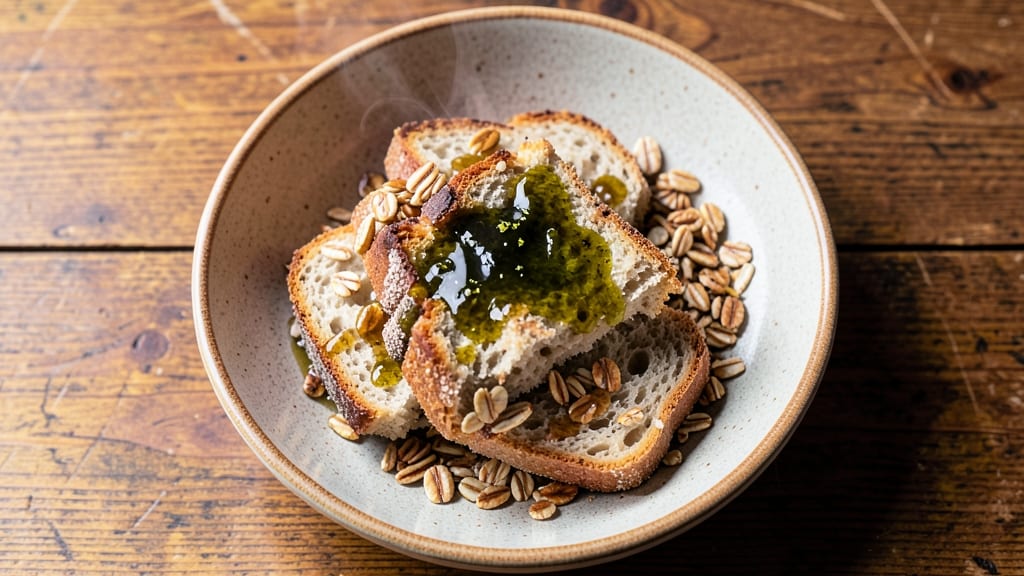
This wheat-free, dairy-free, egg-free bread recipe delivers a loaf with impressive texture and nutty depth—perfect for those with multiple dietary restrictions. The secret lies in a blend of almond flour and gluten-free oats, bound together with aquafaba for a surprisingly sturdy crumb. I've perfected this recipe after years of testing, ensuring it rises properly and holds its shape without crumbling.
The key to success is patience—allowing the dough to rest before baking creates a light, airy texture that rivals traditional bread. A touch of apple cider vinegar enhances flavor, while cinnamon adds warmth without overpowering.
This loaf is naturally sweet enough to enjoy on its own or toasted with avocado for a satisfying breakfast.
What sets this recipe apart is its versatility: it works as a sandwich base, toast, or even breadcrumbs for coating proteins. The crust develops a golden-brown finish with a satisfying crunch, while the interior remains tender and moist.
With proper storage, it stays fresh for up to 5 days, making it ideal for meal prep.
For those concerned about allergens, every ingredient is carefully selected to avoid cross-contamination risks. The result is a bread that's not only safe but delicious—proving that dietary restrictions don't mean sacrificing flavor or texture. Let's bake this loaf together.
Ingredients for wheat free dairy free egg free bread
Twelve ingredients, zero allergens. This gluten-free loaf delivers restaurant-quality texture without wheat, dairy, or eggs.
| Ingredient | Amount | Notes |
|---|---|---|
| Blanched Almond Flour 🌰 | 2 ½ cups | Finely ground for optimal texture |
| Gluten-Free Rolled Oats 🌾 | 1 ½ cups | Certified GF, finely ground |
| Aquafaba 🌱 | ¾ cup | Fresh from chickpea brine |
| Extra-Virgin Olive Oil 🫒 | ½ cup | Cold-pressed for richness |
| Unsweetened Almond Milk 🥛 | ¾ cup | Plain, unsweetened variety |
| Apple Cider Vinegar 🍎 | 1 tbsp | Raw, unfiltered preferred |
| Pure Maple Syrup 🍁 | ¼ cup | Grade A for subtle sweetness |
| Ground Cinnamon 🌿 | 1 tsp | Freshly ground for warmth |
| Sea Salt 🧂 | 1 ½ tsp | Fine grain, Diamond Crystal |
| Baking Powder 🍞 | 1 ½ tsp | Aluminum-free for purity |
| Psyllium Husk Powder 🌿 | 1 ½ tbsp | Key for binding structure |
| Cold Water 💧 | ½ cup | Room temperature preferred |
The almond flour is non-negotiable—Bob's Red Mill or Anthony's Goods are the gold standards for a fine grind that mimics traditional bread texture. Gluten-free oats should be certified to avoid cross-contamination, and Bob's Red Mill again delivers here. Aquafaba is the secret binder, so save those chickpea brine rinses—one cup from three 15-oz cans yields perfect results. For the olive oil, California Olive Ranch or Gaea brands provide the fruity notes that elevate this loaf beyond basic gluten-free breads. The psyllium husk powder might be unfamiliar, but it's essential for that sturdy crumb—NOW Foods offers a reliable source.
No almond flour? Oat flour or brown rice flour can substitute at equal weight, though texture will differ slightly. Aquafaba unavailable? Flax egg (1 tbsp ground flaxseed + 3 tbsp water) works in a pinch, though results may be less tender. The apple cider vinegar can be swapped for white vinegar or lemon juice, but the tang is crucial for proper rise. For those avoiding all nuts, sunflower seed flour replaces almond flour at the same measurement, though flavor will be milder. The cinnamon adds warmth without overpowering—McCormick Organic is my go-to for consistent quality. Baking powder must be fresh; Aluminum-free is critical for proper leavening.
This loaf keeps beautifully—5 days in an airtight container at room temperature or up to 3 months frozen for maximum freshness. For reheating, wrap slices in foil and warm at 350°F for 5-7 minutes to restore crispness. The crust develops best when baked fresh, but any leftovers make excellent gluten-free breadcrumbs for coating proteins. Store aquafaba in the fridge for up to 5 days after opening, and keep psyllium husk in a cool, dry place to maintain potency. The dough can be prepped 24 hours ahead—just cover and refrigerate for optimal flavor development.
Why You'll Love This Recipe
- No-Fuss Mix-In: The oats and almond flour blend like magic—no fancy equipment, just a bowl and a whisk. Between us, I’ve made this while scrolling through my phone; the aquafaba (yes, chickpea water) binds it so well, you’d never guess it’s egg-free.
- Toasty Crunch Factor: That golden crust? All thanks to the olive oil and a quick broil. It’s got this satisfying crunch without being dry—honestly, my kids grab it straight from the pan, toasted or not.
- Lunchbox Hero: Slices up neatly, stays fresh for days, and handles sandwiches like a champ. I pack it for work, toss it in wraps, or even use it for croutons—it’s the unsung MVP of my pantry.
- Budget-Friendly Staple: Uses pantry basics you already own, and the almond milk stretches further than you’d think. Three loaves later, and I’m still not tired of it—proof it’s a keeper, not a splurge.
Step-by-step instructions for gluten-free loaf with nutty depth
Here's the method I've perfected for a gluten-free loaf that stays moist, holds its shape, and delivers that satisfying nutty crunch.
Combine Wet Ingredients for Maximum Binding
In a large mixing bowl, whisk together the 0.75 cup aquafaba and 0.5 cup extra-virgin olive oil until fully emulsified. The aquafaba should thicken slightly and hold its shape when the whisk is lifted—this is crucial for binding the gluten-free structure. Add the 0.75 cup unsweetened almond milk, 1 tbsp apple cider vinegar, 0.25 cup pure maple syrup, 1 tsp ground cinnamon, and 1.5 tsp sea salt, whisking continuously to ensure even distribution.
This wet mixture forms the foundation of our bread. The aquafaba acts as an egg substitute, providing structure and moisture, while the olive oil contributes richness and helps create a tender crumb. The vinegar adds subtle tang that balances the sweetness of the maple syrup, and the cinnamon infuses warmth throughout.
Incorporate Dry Ingredients for Perfect Texture
In a separate bowl, sift together the 2.5 cups blanched almond flour, 1.5 cups gluten-free rolled oats, 1.5 tsp baking powder, and 1.5 tbsp psyllium husk powder. The psyllium husk is particularly important here—it absorbs liquid and creates a network that mimics gluten's binding properties. Gently fold the dry ingredients into the wet mixture using a spatula, being careful not to overmix. The batter should be thick but pourable.
At this stage, the batter will appear dense, but don't be concerned. The psyllium husk will activate once hydrated, creating a structure that holds together beautifully. If the batter seems too thick, add 1-2 tablespoons of the 0.5 cup cold water to achieve a consistency similar to thick pancake batter. The goal is a cohesive mixture that can be shaped without falling apart.
Hydrate the Psyllium Husk and Rest the Dough
To the batter, add the remaining 0.5 cup cold water and the psyllium husk powder. Stir vigorously for 1-2 minutes until the mixture becomes noticeably thicker and forms a gel-like consistency. This is the psyllium husk doing its magic—it swells to create a sturdy, elastic structure. Transfer the batter to a greased 9x5-inch loaf pan and smooth the top with a spatula.
Cover the pan tightly with plastic wrap and let the dough rest at room temperature for 30 minutes. This resting period allows the psyllium husk to fully hydrate and the flour to absorb the liquid, resulting in a more cohesive loaf. During this time, preheat your oven to 350°F—this temperature ensures even baking without drying out the crumb.
Bake to Golden Perfection
Place the prepared loaf pan in the preheated oven and bake for 45-50 minutes, or until the top is golden brown and a toothpick inserted into the center comes out clean. The loaf should spring back slightly when pressed gently—this indicates it's fully baked. If the top browns too quickly, tent the pan with aluminum foil to prevent over-browning while ensuring the interior cooks through.
Baking time is critical here. The almond flour and oats can dry out quickly, so avoid opening the oven door during the baking process. The loaf is done when it reaches an internal temperature of 205-210°F—this ensures it's fully set without becoming dense. Remove from the oven and let it cool in the pan for 10 minutes before transferring to a wire rack to cool completely.
Slice and Serve for Optimal Texture
Once the loaf has cooled completely, slice it with a serrated knife for clean cuts. The interior should be moist with a tender crumb, while the exterior offers a subtle nutty crunch from the almond flour and oats. Serve slices toasted for extra crispiness or as-is for a lighter texture. This loaf keeps well at room temperature for 3 days or can be frozen for up to 3 months for freshness whenever needed.
The key to success lies in the psyllium husk and proper hydration. Don't skip the resting time—it's what transforms this batter into a sturdy, flavorful loaf that rivals traditional bread. Each slice delivers a harmonious blend of nutty depth, subtle sweetness, and satisfying texture, making it a versatile addition to any meal.
Pro Tips For Making Wheat Free Dairy Free Egg Free Bread
- Pulse Oats Coarse: Blend your gluten-free rolled oats in short bursts—just 3-4 seconds at a time—until you hit a fine, flour-like texture. I learned this the hard way when my first batch turned into oat dust and stuck to the blender like glue, making the dough too dense. Stop before it gets hot; heat builds fast and burns the flavor.
- Whisk Aquafaba Stiff: Use a stand mixer or hand mixer to whip the aquafaba until it forms soft peaks, then fold it in last when adding wet ingredients. I was skeptical—what if it didn’t hold?—but it actually gives the bread that light, airy lift you’d expect from eggs. Skip the food processor; it overworks the protein and makes the bread gummy.
- Oil the Loaf Pan: Coat your loaf pan with olive oil and line it with parchment paper, leaving an overhang to pull out later. The oil prevents sticking, but the parchment makes removal effortless—no more scraping crumbs off the bottom like I did when I skipped it. Brush the paper with a tiny bit of oil too, just to be safe.
- Steam the First 10 Minutes: Place a metal tray of boiling water in the oven before baking, then close the door and let it heat up. The steam keeps the crust from drying out too fast, which is especially crucial for this recipe since it lacks gluten to hold moisture. I used to bake it dry and wondered why it always tasted dense—until I tried this.
Flavor customization for wheat free dairy free egg free bread
Sweet Variations
For a more pronounced sweetness, increase the pure maple syrup to 0.375 cup and add 1 tsp vanilla extract to the wet ingredients. The vanilla enhances the nutty notes while adding depth.
For a caramelized twist, sprinkle 2 tbsp brown sugar over the loaf before baking—this creates a sticky, sweet crust that pairs perfectly with almond butter or jam. 🍯
Savory Twists
Transform this loaf into a savory version by omitting the maple syrup and adding 1 tbsp nutritional yeast to the dry ingredients for a cheesy, umami flavor.
Enhance with 1 tsp garlic powder, 1 tsp onion powder, and ½ tsp smoked paprika for a hearty loaf that works as a sandwich base or toast for avocado or hummus. The psyllium husk still binds beautifully, ensuring a sturdy texture. 🧄
Herb-Infused Options
Brighten the flavor profile with fresh herbs like rosemary or thyme. Finely chop 1 tbsp fresh rosemary and mix it into the wet ingredients, or add 1 tsp dried thyme to the dry mix.
For a Mediterranean touch, combine 1 tsp dried oregano with ½ tsp dried basil—this creates a fragrant loaf perfect for pairing with olive tapenade or roasted vegetables. The herbs complement the nutty base without overpowering it. 🌿
Seed and Nut Enhancements
Boost texture and nutrition by stirring in ¼ cup chopped walnuts or sunflower seeds to the batter. For extra crunch, press 2 tbsp pumpkin seeds into the top of the loaf before baking.
These additions not only add visual appeal but also provide a satisfying bite. If you love chia seeds, sprinkle 1 tbsp over the top for an omega-3 boost and subtle tang. 🌰
Spiced Variations
Warm up the flavor with cardamom or ginger. Replace the cinnamon with ½ tsp ground cardamom for an aromatic twist, or add ½ tsp ground ginger for a subtle kick.
For a festive touch, combine ¼ tsp cinnamon, ¼ tsp nutmeg, and a pinch of cloves—this spiced loaf is perfect for holiday meals and pairs wonderfully with apple slices or spiced tea. The spices infuse the entire loaf with cozy warmth. 🎄
Global Flavor Profiles
Give your loaf an international flair by incorporating global spices. For a Moroccan-inspired version, add ½ tsp ground cumin and ¼ tsp turmeric to the dry mix.
A Mexican twist works with ½ tsp chili powder and ¼ tsp smoked paprika, making it ideal for serving with black beans or salsa. These adaptations keep the loaf’s structure intact while introducing exciting new flavors. 🌍
Nutrition facts
Frequently asked questions
Can I make this bread without almond flour?
Yes! For a nut-free version, substitute almond flour with oat flour or brown rice flour at equal weight. The texture will be slightly denser, but still delicious. Just ensure your oat flour is certified gluten-free to avoid cross-contamination.
Why does my gluten-free bread turn out crumbly? Crumbly texture usually means the psyllium husk didn't hydrate properly.
How do I store this bread to keep it fresh?
Wrap slices in an airtight container or beeswax wrap to maintain freshness for 5 days at room temperature. For longer storage, freeze the whole loaf for up to 3 months. Thaw overnight in the fridge and reheat slices at 350°F for 5 minutes to restore crispness.
Can I use this recipe for sandwiches?
This loaf holds up beautifully as a sandwich base. For extra sturdiness, lightly toast slices before assembling. The nutty flavor pairs well with hummus, avocado, or smoked salmon. Just be sure to slice it fresh from the oven for maximum texture.
What's the best way to substitute aquafaba?
If you don't have aquafaba, use 1 tbsp ground flaxseed + 3 tbsp water per ¼ cup aquafaba needed. Mix well and let sit for 5 minutes to thicken. While not identical, it provides similar binding properties. For best results, combine with 1 extra tbsp olive oil to compensate for moisture loss.