
Main Courses
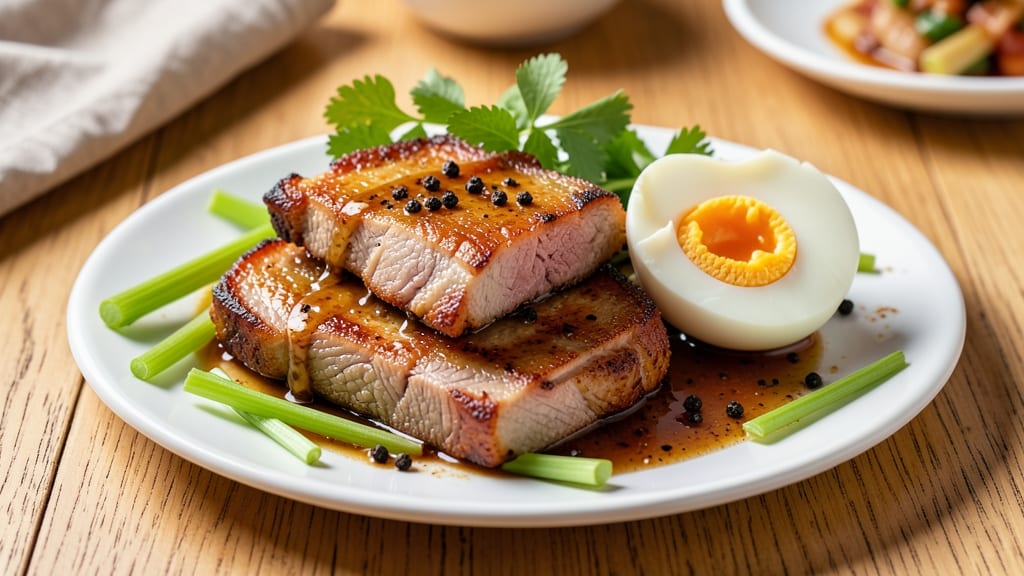
This Vietnamese pork belly and eggs recipe delivers restaurant-quality luxury with every bite—crispy celery crowns perched over silky, custardy yolks. 🌟 After mastering the balance of caramelized pork and tender eggs, I developed this technique that transforms a simple braise into a showstopping dish worthy of any table.
The secret lies in slow cooking the pork belly until it's fall-apart tender while maintaining a perfect golden crust, then finishing with a celery crown that adds both texture and visual drama.
The dish begins with a foolproof marinade of fish sauce, sugar, and black pepper that tenderizes the pork while infusing it with deep umami flavor. As the pork braises, the eggs poach gently in the same pot, absorbing the rich, caramelized pork juices.
This method ensures every bite is packed with flavor—sweet from the caramelized pork, savory from the fish sauce, and silky from the perfectly cooked eggs. The celery crown, lightly fried until crispy, adds a refreshing contrast that cuts through the richness.
What makes this recipe truly special is how it brings Vietnamese home cooking to life without requiring specialized techniques. The result is a dish that's elegant enough for dinner guests but simple enough for a weeknight.
Each component—tender pork, custardy eggs, and crispy celery—works together to create a harmonious balance of textures and flavors that will leave everyone asking for seconds. The aroma alone will have your kitchen smelling like a bustling Hanoi street.
Serve this dish over steamed jasmine rice and pair it with pickled vegetables or a simple cucumber salad to round out the meal. The combination of textures—crispy celery, tender pork, and silky eggs—makes every bite an experience.
This is the kind of recipe that transforms an ordinary dinner into something truly memorable, proving that luxury can be achieved with simple, thoughtful techniques. Let's get started on creating this Vietnamese masterpiece.
Ingredients for vietnamese pork belly and egg
Crispy pork belly, silky eggs, and delicate celery crowns—these are the stars of Vietnam's most luxurious breakfast.
| Ingredient | Amount | Notes |
|---|---|---|
| Pork Belly 🍖 | 1 ½ lb | Skin-on, thick-cut preferred |
| Large Eggs 🥚 | 4 whole | Fresh, room temperature |
| Celery Stalks 🧅 | 4 whole | Thick, fresh, leafy ends trimmed |
| Fish Sauce 🍶 | 2 tbsp | Red Boat preferred |
| Granulated Sugar 🍬 | 2 tbsp | White or brown sugar |
| Black Peppercorns 🌶️ | 1 tsp | Freshly cracked preferred |
| Neutral Oil 🫒 | ½ cup | Vegetable or canola |
| Jasmine Rice 🍚 | 1 ½ cups | Uncooked, long-grain |
| Garlic Cloves 🧄 | 4 cloves | Minced for marinade |
| Shallots 🧅 | 2 whole | Minced, or sub with onion |
| Lime Juice 🍋 | 1 tbsp | Freshly squeezed |
| Salt 🧂 | 1 ½ tsp | Kosher or sea salt |
| Fresh Cilantro 🌿 | ¼ cup | Chopped, for garnish |
| Green Onions 🧅 | 3 whole | Thinly sliced, for garnish |
The pork belly is non-negotiable—thick-cut with skin-on for that perfect crackling crust. Costco or your local Asian market usually carries the best cuts. Look for pieces with good marbling—fat equals flavor. If you can't find thick-cut, ask the butcher to trim it for you. The eggs should be fresh—room temperature makes all the difference when poaching. Celery? Thick stalks hold up better to frying, and leafy ends add color. Trim the bottoms cleanly so they don't burn before the tops crisp. For the fish sauce, Red Boat is the gold standard, but any reputable brand works.
No thick-cut pork belly? Pork shoulder works in a pinch, but it won't have the same luxurious texture. Fresh fish sauce unavailable? Soy sauce plus a pinch of sugar mimics the umami, though it won't be identical. Celery crowns too tricky? Sub with fried shallots or scallions—same crunch, less fuss. The marinade's sugar can be swapped for honey or maple syrup if you're avoiding refined sugar. Want extra depth? Add a dash of MSG to the marinade—it's a Vietnamese secret weapon. For the rice, jasmine is ideal, but basmati in a bind? Use it, but expect slightly less aroma.
Pork belly keeps raw for 2 days wrapped tightly in the fridge—freeze for up to 3 months. Celery crowns lose crispness fast, so fry them fresh or store in an airtight container with a paper towel to absorb moisture. The poached eggs stay silky for 2 days in the fridge, but reheat gently—they're delicate. Make a double batch of the marinade and store it in the fridge for up to 2 weeks—perfect for quick weeknight meals. The fried celery crowns? Best eaten the same day, but a sprinkle of salt keeps them crisp for 1 day in the fridge.
Why You'll Love This Recipe
- One-Pan Magic: I swear by this recipe on my busiest nights—just sear the pork belly, crack eggs over it, and let the fish sauce and sugar caramelize. No chopping, no fuss, just hands-off cooking while you stir-fry celery on the side.
- Sweet-Savory Balance: That crispy pork belly with runny yolks? Yes. But the real star is the glaze—fish sauce and sugar create this addictive, sticky-sweet edge that cuts through the richness. Honestly, I’ve made it for people who "don’t like fish sauce," and they’re hooked.
- Leftover Goldmine: This dish tastes better the next day. Cold pork belly slices with eggs? Still amazing. Pack it for lunches, reheat for dinner, or serve it at room temp for potlucks. My roommates still raid my fridge a week later.
- Budget Flexibility: Pork belly is the star, but you’re not breaking the bank—just a few inches goes a long way. Add extra eggs or celery to stretch it further, or swap in cheaper cuts if needed. It’s my go-to when I want restaurant-quality without the price tag.
Step-by-step instructions for Vietnamese pork belly and eggs
Master the art of crispy pork belly and silky eggs with this authentic Vietnamese technique.
🔥 Step 1: Marinate and Parboil the Pork Belly
In a large bowl, combine the 1.5 lb pork belly, 2 tbsp fish sauce, 2 tbsp granulated sugar, 4 cloves minced garlic, 2 whole minced shallots, and 1 tsp cracked black peppercorns. Massage the marinade into the pork belly until fully coated. Cover and refrigerate for at least 2 hours (overnight is ideal) to tenderize the meat.
After marinating, bring a large pot of water to a boil and add the pork belly. Reduce heat to medium-low and simmer for 45-50 minutes until the internal temperature reaches 170°F and the meat is fork-tender but not falling apart. This parboiling step ensures the pork belly stays moist during the crisping process. Drain and pat dry thoroughly with paper towels—this is crucial for achieving crispy skin.
🍳 Step 2: Crisp the Pork Belly to Perfection
Heat 0.5 cup neutral oil in a large skillet over medium-high heat until shimmering. Add the parboiled pork belly, skin-side down, and cook undisturbed for 5-6 minutes until the skin turns a deep golden brown and begins to crisp. You'll hear a distinct sizzling sound—this is your cue that the fat is rendering properly.
Flip the pork belly and cook for another 3-4 minutes until the second side is also golden brown. Transfer to a wire rack set over a baking sheet to drain excess fat. The pork belly should be crispy on the outside but still tender inside. If the skin isn't crispy enough, return it to the skillet for an additional 1-2 minutes on high heat.
👨🍳 Step 3: Prepare the Celery Crowns and Cook the Rice
While the pork belly crisps, trim the 4 whole celery stalks into 1-inch thick rounds (about 4 pieces per stalk). Heat 1 tbsp neutral oil in a separate skillet over medium heat and fry the celery rounds until golden brown on both sides—about 2-3 minutes per side. These crispy celery crowns are a signature element of the dish.
Rinse the 1.5 cups jasmine rice under cold water until the water runs clear. Cook the rice according to package instructions, using 1.5 tsp salt in the cooking water. Fluff with a fork once done and keep warm. The rice should be tender but still slightly firm—jasmine rice absorbs less water than other varieties, so don't overcook it.
🍳 Step 4: Cook the Perfect Soft-Boiled Eggs
Fill a saucepan with 4 cups water and bring to a rolling boil. Gently lower the 4 whole large eggs into the water using a slotted spoon. Cook for exactly 6 minutes for eggs with runny yolks (or 7 minutes for slightly firmer yolks). Immediately transfer the eggs to an ice bath to stop the cooking process and make them easier to peel.
Once cooled, peel the eggs under running water. The shells should slip off easily, revealing perfectly silky yolks. Keep the eggs whole for plating—you'll slice them just before serving to maintain their creamy texture.
🥘 Step 5: Assemble and Garnish for Serving
Slice the crispy pork belly into ½-inch thick slices and arrange 2 slices per serving over a bed of jasmine rice. Top each portion with 2 crispy celery crowns and place a whole soft-boiled egg beside the pork belly. Drizzle lightly with 1 tbsp lime juice and sprinkle with 0.25 cup chopped fresh cilantro and 3 whole thinly sliced green onions. Serve immediately while everything is hot and crispy.
The contrast of crispy pork belly, silky egg yolks, and tender rice creates a luxurious texture experience. For extra authenticity, serve with a small dish of fish sauce on the side for dipping—it enhances the umami flavors of the dish.
Pro Tips For Making Vietnamese Pork Belly And Egg
- Render Fat Slow: Pork belly releases fat at different speeds—start on medium-low heat until the first wave of fat pools (about 5-7 minutes). If you crank it too high, you’ll burn the fat and lose flavor before the meat even browns. I learned this the hard way when my first batch ended up greasy but bland.
- Prep Celery Right: Cut celery into 1-inch chunks and blanch them for 30 seconds in boiling water before adding to the pork belly. This softens the tough fibers and keeps them from turning mushy when simmered later. Skip this, and you’ll end up with a dish where celery fights for texture.
- Balance Fish Sauce: Start with half the sugar called for in the recipe, taste the pork belly mixture, then add fish sauce one teaspoon at a time. Sugar and fish sauce are a balancing act—too much of either, and the dish tips into sweetness or saltiness. I used to dump it all in and wondered why my dish tasted off.
- Poach Eggs Last: Cook the pork belly and celery first, then remove the pan from heat and add the eggs directly to the hot liquid. The residual heat poaches them gently without scrambling. Trying to poach eggs separately and combine later usually means soggy eggs or uneven cooking—this method guarantees perfect yolks every time.
Flavor customization for this recipe
Sweet-Savory Balance
Adjust the marinade's sweetness to your taste—start with the 2 tbsp sugar but add up to 1 tbsp more if you prefer a deeper caramelization. For extra depth, swap ½ tbsp sugar for honey or coconut sugar.
I've found that adding ½ tsp grated ginger to the marinade enhances the umami without overpowering the pork's natural richness. 🌶️
Spicy Kick Options
For heat lovers, add ½ tsp chili flakes or 1 tsp sambal oelek to the marinade. For a smoky twist, mix ½ tsp smoked paprika with the black peppercorns.
I once added 1 tsp shrimp paste (mắm ruốc) to the marinade—it deepens the Southeast Asian flavors dramatically, though it's an acquired taste. Always taste the marinade before applying it to the pork.
Herb Variations
Swap the cilantro garnish for Thai basil or mint for a brighter, more aromatic finish. For a traditional Vietnamese touch, add ½ tsp dried shrimp (mắm khô) to the marinade—it adds a briny depth that's hard to replicate.
Fresh herbs like perilla leaves (tía tô) are another authentic option if available at your Asian market.
Crispy Toppings
Replace celery crowns with fried shallot strings (garlic-infused) for a more common Vietnamese street food texture. For a modern twist, try crispy fried onions or even toasted coconut flakes for a tropical variation. I've also experimented with crispy fried water chestnuts—they add a delightful crunch and subtle sweetness.
Egg Customizations
For firmer yolks, increase the poaching time to 7 minutes. For extra decadence, add a pinch of MSG to the poaching water—it makes the eggs silky and enhances their flavor.
Want a runnier yolk? Use older eggs (7-10 days old) as they have more stable yolks. For a fusion twist, poach the eggs in lightly salted broth** instead of plain water.
Nutrition facts
Frequently asked questions
Can I substitute pork belly with another cut of pork?
While pork belly is ideal for its fat content and texture, you can use thick-cut pork shoulder in a pinch. However, the skin won't crisp as dramatically, so focus on achieving a tender, caramelized exterior. For best results, trim excess fat and marinate longer (up to 4 hours) to compensate for the leaner meat.
How do I keep the celery crowns crispy when serving?
Fry the celery rounds fresh before serving—this ensures maximum crunch. If prepping ahead, store them in an airtight container with a paper towel to absorb moisture. Reheat in a dry skillet for 1-2 minutes before serving to restore crispiness.
What's the best way to reheat leftover pork belly?
Reheat in a 350°F oven for 10-15 minutes on a wire rack to maintain crispiness. Avoid microwaving—the skin will turn soggy. For extra crunch, broil for 2-3 minutes at the end, watching closely to prevent burning.
Can I make this dish ahead of time?
Cook the pork belly and rice 1 day ahead, then store separately. Reheat pork in the oven (as above) and warm rice in a steamer. Fry celery crowns fresh and poach eggs just before serving to keep them silky.
What side dishes pair best with this recipe?
Jasmine rice is essential, but complete the meal with pickled vegetables (like daikon and carrot) or a cucumber salad for freshness. For extra indulgence, serve with a Vietnamese herb salad (rau sống) or steamed greens.