
Salads
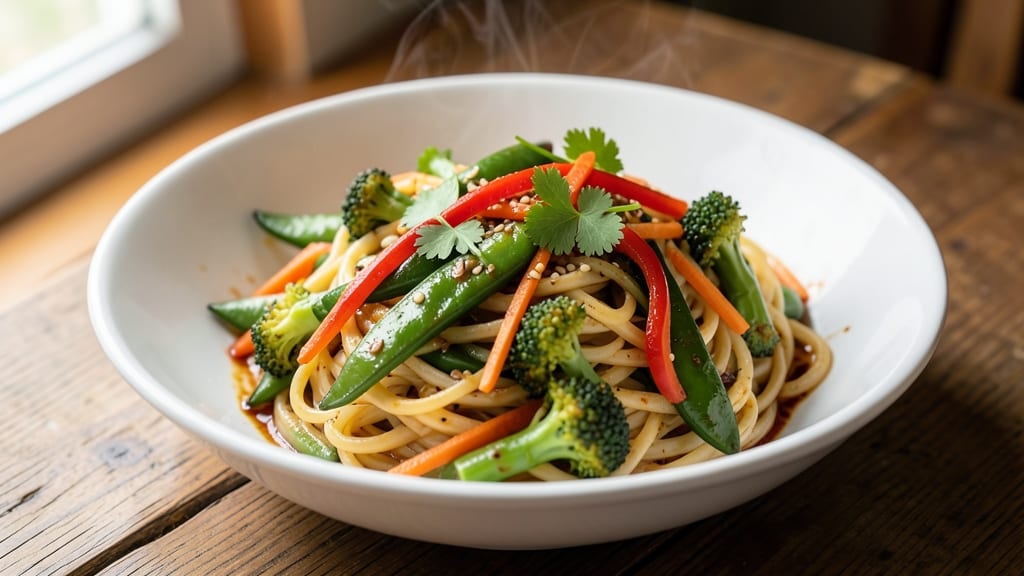
This veggie pasta stir-fry recipe delivers restaurant-quality wok-tossed noodles with crisp-tender vegetables and silky al dente pasta in just 20 minutes. The secret lies in high-heat stir-frying and a simple soy-ginger sauce that binds everything together without overpowering the natural flavors.
I developed this recipe for busy weeknights when I wanted a satisfying vegetarian meal that still feels indulgent.
The beauty of this stir-fry is its versatility—swap in your favorite vegetables, adjust the sauce to your taste, and even make it gluten-free with tamari instead of soy sauce.
We start with toasted pasta to prevent mushiness, then work quickly over high heat to maintain that perfect crunch in the vegetables. The sauce comes together in minutes with pantry staples, yet elevates the dish to something special.
What you'll end up with is a crunchy, flavorful bowl of noodles where each bite delivers a mix of textures—silky pasta, crisp vegetables, and a savory-sweet sauce that coats everything perfectly.
The dish is hearty enough to stand alone but works equally well as a side for grilled proteins. Garnish with sesame seeds or fresh herbs for that final restaurant touch.
Best of all, this recipe scales effortlessly—double it for leftovers or halve it for a single serving. The technique is simple enough for beginners but impressive enough for dinner guests. Let's get cooking!
Ingredients for veggie pasta stir fry
Pantry staples meet wok-tossed crunch—just 15 ingredients for restaurant-style veggie pasta stir-fry.
| Ingredient | Amount | Notes |
|---|---|---|
| Spaghetti or Linguine Pasta 🍝 | 12 oz | Uncooked, al dente preferred |
| Vegetable Oil 🫒 | 3 tbsp | High smoke point for stir-frying |
| Red Bell Pepper 🍅 | 1 whole | Sliced into thin strips |
| Broccoli Florets 🥦 | 2 cups | Cut into bite-sized pieces |
| Snap Peas 🌱 | 1 cup | Trimmed if needed |
| Carrot 🥕 | 1 whole | Julienned into matchsticks |
| Garlic Cloves 🧄 | 3 cloves | Minced finely for sauce |
| Fresh Ginger 🌿 | 1 tbsp | Grated finely (peeled) |
| Low-Sodium Soy Sauce 🥢 | 3 tbsp | Gluten-free tamari alternative |
| Rice Vinegar 🍶 | 1 ½ tbsp | For bright acidity |
| Sesame Oil 🫒 | 1 tbsp | Toasted for aroma |
| Maple Syrup 🍯 | 1 tbsp | For subtle sweetness |
| Toasted Sesame Seeds 🌰 | 1 tsp | For garnish (optional) |
| Fresh Cilantro 🌿 | ¼ cup | Chopped for garnish |
| Diamond Crystal Kosher Salt 🧂 | 1 ½ tsp | For seasoning and sauce |
The pasta makes all the difference here. Spaghetti or linguine works best for that classic stir-fry texture, but any shape will do. Look for brands like Barilla or De Cecco for reliable al dente results. For extra crunch, toast the pasta in the wok for 30 seconds before adding oil—this prevents mushiness later. The vegetables are where you can get creative, but broccoli and snap peas are my go-tos because they hold up perfectly to high heat. If you're short on time, frozen stir-fry veggie mixes work in a pinch—just thaw and pat dry before cooking.
No soy sauce? Coconut aminos or gluten-free tamari make great substitutes. Fresh ginger is ideal, but if you're using powdered, reduce to half the amount—it's way more concentrated. The sesame oil might seem small, but it's what gives that authentic wok-house aroma. Trader Joe's has a great toasted sesame oil that's worth the splurge. For the sweetness, maple syrup keeps it vegan-friendly, but agave or date syrup works just as well. If you're making this gluten-free, swap the regular soy sauce for tamari from the start—no last-minute substitutions needed.
This dish reheats beautifully—just toss with a splash of water and cover until warmed through. Keeps for 3-4 days in the fridge, or freeze portions for up to 3 months. I always double the sauce and store it separately so I can drizzle it over noodles later. The sesame seeds and cilantro stay fresh for 1 week in the fridge if you wrap them tightly in a paper towel. For extra flavor, toast the sesame seeds in a dry pan for 30 seconds before adding them to the dish—game-changer.
Why You'll Love This Recipe
- One-Pan Magic: I swear by this recipe because it’s literally one pan—no dirty dishes, no fuss. Toss the pasta in the same skillet as the broccoli and bell peppers, and you’re done. (Yes, even on a Tuesday night when you’d rather be scrolling than scrubbing.)
- Sweet-Savory Balance: That red bell pepper adds a bright, almost candy-like sweetness while the snap peas keep it crisp. Honestly, the flavor is so good I forget it’s a veggie dish—until I see my kids eyeing the broccoli first.
- Lunchbox Hero: Between us, this is my go-to for meal prep. Cook a big batch, and it reheats like a dream—no soggy pasta or bland veggies. Pack it for work or school, and you’ll be the hero who actually eats their greens.
- Budget-Friendly Feast: Linguine and frozen veggies? Check. A single bell pepper and a bag of peas stretch across multiple meals. I’ll be real: it’s the kind of recipe that makes grocery day feel like a win, not a chore.
Step-by-step instructions for wok-tossed veggie pasta
Here's how to create a vibrant stir-fry with perfectly al dente noodles and crisp-tender vegetables.
Prepare All Ingredients for Quick Cooking
Start by slicing the 1 whole red bell pepper into thin strips—about ¼-inch thick—and cutting the 1 whole carrot into matchsticks. Trim the ends from the 1 cup snap peas if needed. For the broccoli, separate the 2 cups florets into bite-sized clusters. Mince the 3 cloves garlic and grate the 1 tbsp fresh ginger using a fine grater or microplane. Chop the 0.25 cup fresh cilantro for garnish.
I always prep everything before heating the pan—this keeps the stir-fry moving quickly and prevents soggy vegetables. Keep the chopped veggies in separate bowls so they don't start wilting while you cook. The key here is speed: you want everything to hit the wok at nearly the same time for maximum crunch.
Cook the Pasta Al Dente
Bring a large pot of water to a rolling boil and add 1.5 tsp diamond crystal kosher salt. Add the 12 oz spaghetti or linguine pasta and cook until it's 1 minute shy of the package's al dente time. For example, if the package says "10 minutes al dente," cook it for 9 minutes. Reserve 1 cup pasta water before draining.
This extra minute ensures the pasta finishes cooking in the wok's residual heat, absorbing the sauce perfectly. Drain the pasta and toss it with 1 tbsp sesame oil to prevent sticking while you stir-fry the vegetables. The noodles should be hot but not mushy when they hit the wok.
Stir-Fry Vegetables in Hot Oil
Heat a large wok or skillet over high heat until smoking, then add 3 tbsp vegetable oil. Once the oil shimmers, add the red bell pepper strips and carrot matchsticks, stirring constantly for 2 minutes until they begin to soften but still retain a slight crunch. Add the broccoli florets and snap peas, cooking for another 3 minutes while tossing vigorously.
Here's where timing matters: the vegetables should stay bright and crisp, not mushy. If they start to steam instead of sizzle, your heat isn't high enough. Push the veggies to one side of the wok and add the minced garlic and grated ginger, stirring for 30 seconds until fragrant. This quick cooking preserves the vegetables' texture and flavor.
Combine Everything with the Sauce
Return the pasta to the wok and toss everything together. In a small bowl, whisk together 3 tbsp low-sodium soy sauce, 1.5 tbsp rice vinegar, 1 tbsp maple syrup, and the reserved 1 cup pasta water. Pour this mixture over the wok and stir-fry for 2-3 minutes until everything is well-coated and heated through.
The sauce should cling to the noodles and vegetables, creating a glossy finish. If it's too thick, add another splash of pasta water. Taste and adjust seasoning with an extra pinch of diamond crystal kosher salt if needed. The balance of sweet, tangy, and umami flavors should be harmonious.
Finish and Serve Immediately
Transfer the stir-fry to serving plates and garnish with 1 tsp toasted sesame seeds and the chopped fresh cilantro. Serve while hot, with extra sesame seeds sprinkled on top for texture. The noodles should be tender yet still have a slight bite, and the vegetables should be crisp-tender with vibrant colors.
This dish is best enjoyed immediately while the vegetables retain their crunch. The flavors meld beautifully as you eat, with each bite offering a mix of sweet, savory, and slightly tangy notes. Leftovers can be refrigerated for up to 2 days, but I recommend eating it fresh for the best texture.
Pro Tips For Making Veggie Pasta Stir Fry
- CUT BELL PEPPERS LENGTHWISE: I learned this the hard way—slicing bell peppers crosswise makes them turn to mush in stir-fries. Instead, halve them lengthwise and remove the seeds, then slice into ½-inch strips. They’ll stay crisp and cook faster, so you won’t end up with a soggy pile of peppers by the time the pasta’s done.
- STIR-FRY IN BATCHES: Your pan will steam like a sauna if you toss all the veggies in at once. Cook the broccoli first (it takes the longest), then remove it and stir-fry the snap peas and bell pepper separately. This keeps everything tender-crisp, not limp and overcooked.
- SALT THE PASTA WATER HARD: Skip the "lightly salted" nonsense—this isn’t soup. Use a full tablespoon of salt per 4 quarts of water. The pasta will taste bland if you underseason, and you can’t fix it later by adding more salt to the stir-fry.
- USE COLD PASTA FOR CRISPNESS: Drain your pasta, rinse it under cold water, and toss with a drizzle of oil right away. This stops the cooking process and keeps the strands from turning mushy when you toss them into the hot stir-fry later. (Yes, even if you’re impatient like me.)
Essential equipment for great veggie pasta stir fry
Wok Essentials
A high-quality carbon steel wok is my top recommendation for this stir-fry—it heats up fast and retains heat perfectly. The Made In wok from Williams Sonoma is my go-to because it develops a natural non-stick patina over time.
If you don’t have a wok, a 12-inch cast iron skillet works just as well. For budget-friendly options, All-Clad stainless steel woks distribute heat evenly and are dishwasher-safe. 🔥
High-Heat Tools
You’ll need a long-handled spatula (like the OXO Good Grips) for tossing everything in the wok without burning your hands. A tongs set with heat-resistant handles is also essential for flipping veggies quickly.
I keep a small mixing bowl nearby to whisk the sauce while the stir-fry cooks—Pyrex or CorningWare are great for this. Avoid non-stick pans for stir-frying; they can’t handle the high heat needed for that perfect crunch.
Prep Aids
A sharp chef’s knife and cutting board are non-negotiable for chopping veggies efficiently. I swear by the Victorinox Fibrox cutting board—it’s lightweight and stays stable. For grating ginger and garlic, a microplane is faster than a grater.
If you’re short on time, pre-cut stir-fry veggie mixes from the grocery store (like Trader Joe’s or Taylor Farms) save prep time without sacrificing texture. 🌱
Sauce & Garnish Tools
Measure your sauce ingredients with a small measuring spoon set—I love the OXO stainless steel ones for precision. A fine-mesh strainer helps if you want to remove any ginger bits from the sauce.
For garnishing, a small spoon works best for sprinkling sesame seeds and cilantro evenly. Keep a small bowl of water nearby to rinse your knife between cuts—this prevents the veggies from sticking.
Optional Upgrades
If you’re serious about stir-frying, a wok burner or induction burner gives you more control over heat levels than a stovetop. For extra flavor, a garlic press makes mincing garlic faster, and a sesame seed toaster (like the KitchenAid) ensures they’re perfectly toasted.
A digital kitchen scale helps measure pasta and sauce ingredients accurately—especially useful for gluten-free or low-sodium versions. 💡
Nutrition facts
Frequently asked questions
Can I use any pasta shape for this stir-fry?
While spaghetti or linguine work best because they hold up well to tossing, you can use fettuccine, udon, or even rice noodles for a different texture. Avoid thick shapes like penne or rigatoni—they'll get stuck together when stir-fried. For extra crunch, try chow mein noodles or lo mein noodles which are designed for stir-frying.
How do I prevent the vegetables from getting soggy?
Keep everything moving at high heat and cook in batches if needed. Start with the hardest veggies (like carrots) first, then add softer ones (like broccoli) later. Pat all veggies dry before cooking to remove excess moisture. Also, avoid overcrowding the pan—work in small batches if your wok is small. The key is speed: vegetables should cook for 3-5 minutes max to stay crisp-tender.
What if I don't have sesame oil?
You can substitute with 1 tsp neutral oil (like vegetable or canola) plus ½ tsp toasted sesame seeds for flavor. For the sauce, skip the sesame oil entirely and use an extra ½ tbsp rice vinegar to maintain the bright, tangy balance. If you're avoiding sesame, try toasted coconut oil for a different nutty flavor. The dish will still taste delicious—just slightly less authentic.
Can I make this gluten-free?
Use gluten-free tamari instead of soy sauce and ensure your pasta is certified gluten-free. Check labels on sesame seeds and rice vinegar too—some brands process with gluten. For extra insurance, use a dedicated gluten-free wok or thoroughly clean your cookware. The recipe remains exactly the same otherwise.
How do I make this spicier?
Add ½ tsp red pepper flakes or 1 tsp sriracha to the sauce for immediate heat. For deeper flavor, stir in 1 tsp gochujang (Korean chili paste) or ½ tsp cayenne pepper with the soy sauce. If you prefer fresh heat, toss in 1 chopped Thai chili with the garlic and ginger. Start with less and adjust to taste—you can always add more!