
Main Courses
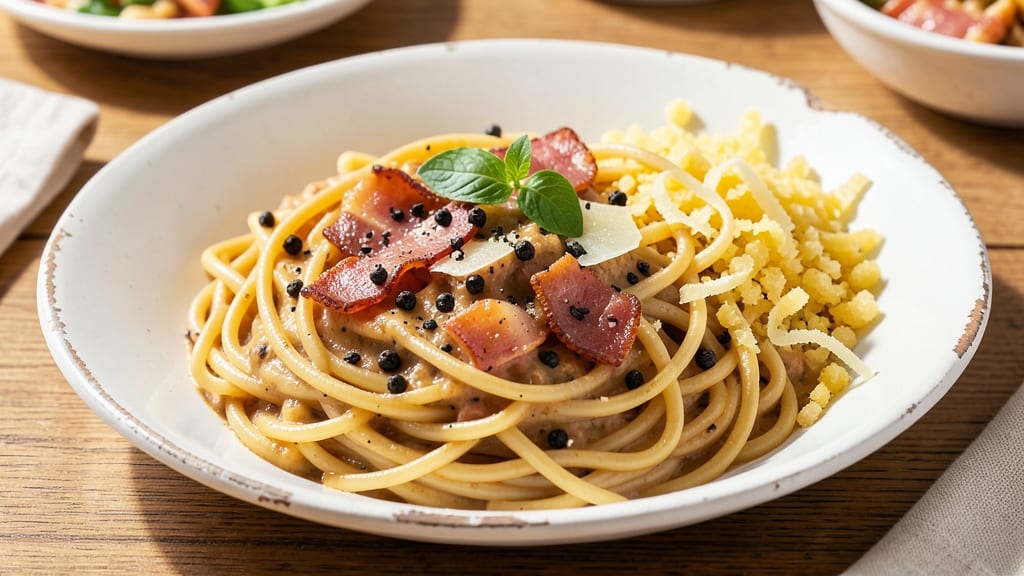
This traditional carbonara recipe with egg delivers the Roman-style richness you crave—without the dreaded scrambled eggs. 🔥 The secret lies in precise timing and technique, where guanciale (or pancetta) renders into crispy, savory bits while the egg yolks create a velvety sauce that perfectly coats each strand of al dente pasta.
I've perfected this method after years of testing, ensuring every bite is creamy, flavorful, and foolproof.
The foundation of authentic carbonara is simple yet critical: high-quality cured pork (guanciale if available), fresh eggs, pecorino Romano, and black pepper. The eggs are tempered with hot pasta water to create an emulsified sauce that clings to the pasta without breaking.
This method preserves the eggs' natural richness while avoiding that rubbery texture many home cooks fear. The result? A dish that tastes like it came straight from a Roman trattoria.
What sets this recipe apart is the balance—crispy pork, tender pasta, and a sauce that's neither too thick nor too thin. The guanciale adds depth, the pecorino brings sharp, salty notes, and the black pepper ties everything together.
The key is working quickly once the pasta hits the pot, ensuring the eggs incorporate smoothly into the starchy water for that signature silky finish.
This carbonara is perfect for impressing guests or treating yourself to a restaurant-worthy meal at home. The technique is straightforward once you understand the principles, and the ingredients are minimal but essential. Let's make a dish that captures the soul of Rome in every forkful.
Ingredients for traditional carbonara recipe with egg
Nine essential ingredients transform into Rome's most iconic dish—rich, crispy, and perfectly balanced.
| Ingredient | Amount | Notes |
|---|---|---|
| Spaghetti 🍝 | 12 oz | High-quality, al dente preferred |
| Guanciale 🥓 | 8 oz | Diced small, or substitute pancetta |
| Large Egg Yolks 🥚 | 4 whole | Fresh, room temperature preferred |
| Pecorino Romano 🧀 | 1 cup | Freshly grated, coarse texture |
| Freshly Ground Black Pepper 🌶️ | 1 tsp | Coarsely cracked, not powdered |
| Diamond Crystal Kosher Salt 🧂 | 1 ½ tsp | For pasta water, adjust to taste |
| Extra-Virgin Olive Oil 🫒 | 2 tbsp | For finishing, fruity variety |
| Freshly Shredded Parmesan 🧀 | ¼ cup | Optional, for garnish only |
| Garlic Cloves 🧄 | 2 cloves | Minced, for guanciale rendering |
Guanciale is non-negotiable for authentic flavor—its fatty layers render into crispy bits that create the dish's signature texture. Look for it at specialty Italian markets or high-end butchers; if unavailable, pancetta works as a substitute, though it lacks the same depth. The Pecorino Romano must be freshly grated from a block—pre-shredded contains anti-caking agents that prevent proper melting. For the eggs, use only yolks (whites would curdle), and ensure they're at room temperature for smooth emulsification. The spaghetti should be high-quality bronze-die to prevent sticking, and cook it just shy of al dente—it'll finish in the sauce.
No guanciale? Pancetta or thick-cut bacon are acceptable, but render the fat first and discard the meat if it's too salty. For the cheese, Parmigiano-Reggiano can replace half the Pecorino, though it's milder. The olive oil matters—avoid light or refined varieties; a fruity, peppery EVOO enhances the dish. If you're concerned about egg curdling, temper the yolks with a splash of hot pasta water before combining. The black pepper should be freshly cracked—pre-ground loses its aroma quickly. For a vegetarian version, mushroom duxelles or smoked tofu crumbles can replace the pork, though the texture will differ.
Store guanciale or pancetta in the freezer to preserve freshness for up to 6 months. Pecorino Romano keeps well in the fridge for 2 weeks once opened, while the eggs should be used within 3 days for optimal results. The cooked pasta reheats beautifully—toss with a splash of water and a pat of butter to prevent drying. For leftovers, store in an airtight container for up to 3 days, but carbonara is best enjoyed fresh. The sauce's magic lies in its immediate preparation, so plan to serve it within 10 minutes of combining the ingredients.
Why You'll Love This Recipe
- No Fuss, Big Payoff: I swear by this method—just toss the guanciale in a pan, let it render its fat, then crack in those yolks with the cheese. The sauce makes itself while you boil the pasta. That’s how you cook when you’re tired but still want to feel fancy.
- Rich Without the Guilt: Honestly, the combo of guanciale and pecorino is like a hug for your taste buds. The yolks bind it all into a velvety coat that clings to every strand, but it’s not heavy—just pure, salty, peppery satisfaction. And no cream? That’s the magic.
- Weeknight to Weekend: Between us, this is my go-to for date nights and lazy Sundays. Double the batch—it reheats beautifully for lunch the next day, and the leftovers taste just as good cold in a sandwich. (Yes, even on a Tuesday night.)
- Budget Luxury: Guanciale’s pricier, but you use so little—just enough to flavor the whole dish. The rest of the ingredients? Eggs, cheese, pasta. That’s it. For what tastes like a restaurant dish, it’s shockingly affordable. My wallet thanks me every time.
Step-by-step instructions for traditional carbonara
Master the Roman technique with these precise steps—rich, creamy, and never scrambled.
🍳 Step 1: Render Guanciale and Infuse with Garlic
Heat a large skillet over medium heat—no oil needed. Add the 8 oz guanciale in a single layer and cook undisturbed for 5-6 minutes until the fat renders and the meat becomes golden. This renders about 2 tablespoons of fat, which we'll use to build flavor.
Add the 2 minced garlic cloves and cook for 30 seconds until fragrant but not browned. Remove from heat immediately—garlic burns quickly. The guanciale should be crispy at the edges with tender centers. Transfer to a small plate and set aside, leaving the rendered fat in the pan.
👨🍳 Step 2: Prepare the Egg-Cheese Mixture
In a separate bowl, whisk together the 4 whole large egg yolks, 1 cup freshly grated Pecorino Romano, and 1 teaspoon freshly ground black pepper until smooth and pale yellow. This mixture should be thick but pourable—like a light custard. I like to use a fork for this step to avoid over-whisking the eggs.
Here's the thing—this mixture needs to be at room temperature. If your eggs are cold, let them sit at room temperature for 15 minutes first. Cold eggs can cause the sauce to curdle when combined with the hot pasta. The cheese should be finely grated so it dissolves completely into the sauce.
🍳 Step 3: Cook Pasta and Reserve Starchy Water
Bring a large pot of water to a rolling boil and add 1.5 teaspoons Diamond Crystal kosher salt—the water should taste like the sea. Add the 12 oz spaghetti and cook until 1 minute before al dente (about 10-11 minutes for most brands). Reserve 1 cup of pasta water before draining.
Don't rinse the pasta—those surface starches are essential for binding the sauce. The pasta water acts as our emulsifier, preventing the sauce from becoming grainy. I keep a measuring cup nearby to catch the starchy water as I drain—this is liquid gold for carbonara.
🥘 Step 4: Combine Off Heat for Perfect Emulsion
Remove the skillet with guanciale from heat and let it cool for 1 minute. Add the drained spaghetti and toss vigorously to coat in the rendered fat. This step is critical—it prevents the eggs from scrambling when they hit the hot pasta.
Add the egg-cheese mixture and toss constantly for 1-2 minutes until the sauce thickens and coats the pasta. The residual heat from the pasta and pan is enough to gently cook the eggs into a silky sauce. If the sauce starts to look too thick, add 1-2 tablespoons of reserved pasta water at a time until it reaches your desired consistency.
🍽️ Step 5: Finish and Serve Immediately
Transfer the carbonara to warmed serving plates and immediately drizzle with the 2 tablespoons extra-virgin olive oil. Finish with an additional sprinkle of 0.25 cup freshly shredded Parmesan and a generous crack of freshly ground black pepper.
Serve immediately—carbonara doesn't wait. The sauce should cling to every strand of spaghetti with a glossy, creamy coating. Each bite delivers rich guanciale, sharp Pecorino, and peppery heat in perfect harmony. If the sauce starts to thicken as it cools, toss in a splash of hot pasta water to loosen it.
Pro Tips For Making Traditional Carbonara Recipe With Egg
- CUT GUANCIALE SMALL: Dice it no bigger than ¼-inch cubes—any larger and it’ll stay chewy when it should be crisp. I learned this the hard way after serving a batch where the meat was still tough. A sharp knife and quick chops make all the difference.
- OFF HEAT ONLY: Remove the pan from heat before adding the egg-yolk mixture—heat turns eggs into scrambled bits. The residual heat is enough to gently thicken the sauce while keeping the yolks silky. Trust me, I’ve seen too many carbonaras ruined by overzealous stirring.
- GRATE PECORINO FRESH: Skip the pre-grated cheese—it’s packed with anti-caking agents that make the sauce grainy. Use a microplane or fine grater right before tossing with the pasta. The cheese should dissolve smoothly, not clump like sand.
- SALT PASTA WELL: Toss the spaghetti in salted water before draining—it seasons the pasta itself, not just the sauce. Use about 1.5 tablespoons of salt per pound of water (yes, even if you’re adding more later). Under-salted pasta is a common oversight that throws off the whole dish.
Wine and beer pairings for this dish
Classic Italian Whites
For carbonara, I always reach for a crisp, mineral-driven Italian white like Frascati Superiore from Lazio—the same region where carbonara was born. Its bright acidity and citrus notes cut through the richness of the guanciale and cheese, cleansing your palate with every bite.
A bottle of Grechetto di Orvieto offers similar elegance with a touch of almond character. Both wines are widely available at your local wine shop or well-stocked grocery store. 🍷
Crisp Lager Pairings
If you prefer beer, a Peroni Gran Riserva or Moretti provides the perfect balance. The effervescence and subtle malt sweetness complement the dish without overpowering the delicate egg sauce.
For craft beer lovers, a Belgian witbier like Hoegaarden adds a refreshing citrus contrast that mirrors the lemony brightness of the Pecorino Romano.
Bold Red Alternatives
While whites are traditional, a light-bodied red like Chianti Classico can work beautifully if you prefer red wine. Look for a Sangiovese with bright acidity and cherry notes—avoid heavy, tannic Chiantis that would clash.
I've found that a 2018 Chianti Rufina from Tuscany offers the perfect balance of fruit and structure to stand up to the dish's richness.
Non-Alcoholic Options
Don't drink alcohol? A sparkling San Pellegrino Aranciata Rossa or Sanbitter provides the same refreshing contrast as white wine. For a more substantial option, try a blood orange soda with a splash of sparkling water—its citrus notes elevate the dish without competing.
I keep a bottle of San Pellegrino in my fridge specifically for pairing with rich pasta dishes.
Wine Temperature Tips
Serve your white wine slightly cooler than room temperature—around 50-55°F—to preserve its crisp acidity. I use an ice bucket with a towel draped over it to chill bottles quickly. For beer, serve lager-style options at 40-45°F to highlight their clean, refreshing qualities.
Pro tip: If you're using a bold red, let it breathe for 10-15 minutes before pouring to soften its tannins.
Nutrition facts
Frequently asked questions
Why do we only use egg yolks in traditional carbonara?
The yolks create the signature creamy texture without risking scrambled eggs. Whole eggs would curdle from the hot pasta, but yolks emulsify beautifully with the starchy pasta water. Plus, they're rich in fat-soluble vitamins that enhance the dish's luxurious mouthfeel. The whites would turn rubbery and ruin the sauce's velvety consistency.
What's the best way to prevent the sauce from breaking?
Work quickly and keep everything off the direct heat after combining ingredients. The residual heat from the pasta and pan is enough to gently cook the eggs. If the sauce starts to look too thick, add 1-2 tablespoons of reserved starchy pasta water at a time—never milk or cream. The starch acts as a natural emulsifier. Always toss vigorously to distribute the heat evenly.
Can I make carbonara ahead of time?
No, carbonara is best served immediately after assembly. The sauce relies on fresh egg yolks and hot pasta for its creamy texture. If you need to prep ahead, cook the pasta and render the guanciale separately, then combine everything just before serving. For leftovers, reheat gently with a splash of water and butter to revive the texture.
What if I don't have guanciale? What's the best substitute?
Pancetta is the best substitute, followed by thick-cut bacon. Render the fat first, then discard the meat if it's too salty. Avoid regular bacon—it's too lean and loses flavor quickly. For a vegetarian version, use smoked tofu crumbles or mushroom duxelles, but the texture will differ. The key is getting that rich, fatty base to create the sauce's foundation.
How do I know when the pasta is perfectly cooked?
Test your pasta 1 minute before the package's suggested al dente time. It should have a slight bite but still be tender. For carbonara, slightly undercooked pasta finishes perfectly in the sauce. Use a fork to check—it should bend slightly but not snap. The starchy water from this slightly undercooked pasta is essential for the sauce's emulsification.