
Beverages
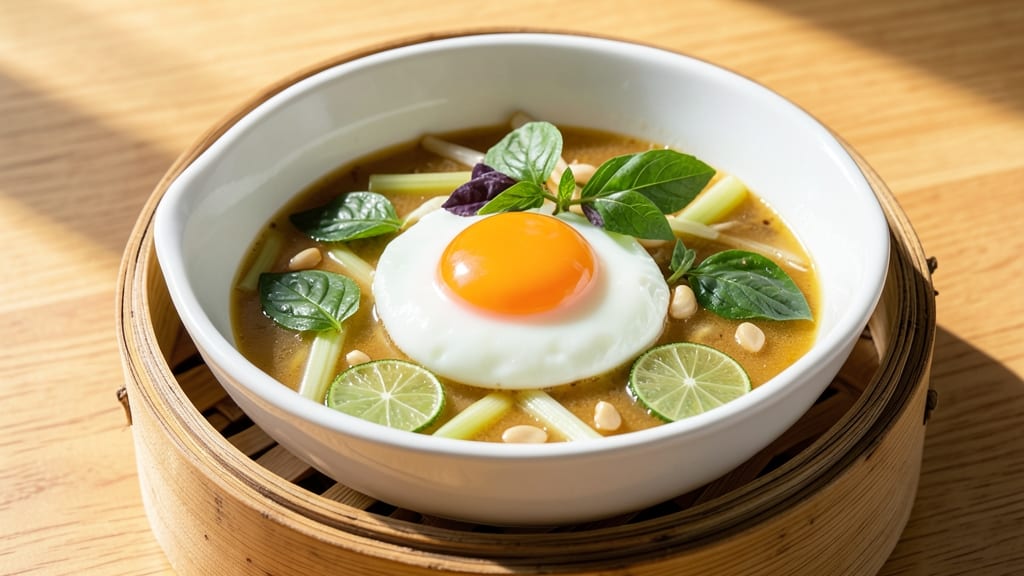
This Thai steamed egg recipe transforms simple eggs into a luxurious dish with silky yolk clouds and fragrant herbs—perfect for elevating any meal.
The secret lies in steaming the eggs gently over aromatic coconut milk, lemongrass, and kaffir lime leaves, creating a delicate balance of creamy richness and bright citrus notes.
I first discovered this technique while traveling in Thailand, where it’s a staple breakfast or side dish, often served with sticky rice or pickled vegetables.
The process is simpler than it sounds: eggs are poached in a fragrant broth, then steamed until the whites set just enough to hold their shape while the yolks remain cloud-like and tender. The herbs infuse the dish with a subtle, complex aroma that makes it unforgettable.
Unlike traditional hard-boiled or fried eggs, these steamed eggs offer a delicate texture that melts in your mouth, making them ideal for both casual lunches and special occasions.
What you’ll achieve is a dish that’s elegant yet approachable—restaurant-quality at home without the fuss. The fragrant herbs and coconut milk create a light, aromatic base, while the eggs themselves become the star with their creamy, almost custard-like yolks.
This recipe is versatile enough to pair with rice, noodles, or even fresh greens, but it’s the technique that truly makes it special.
The best part? It’s a foolproof method that requires minimal effort but delivers maximum flavor. Whether you’re serving it as a light breakfast, a side for a Thai-inspired dinner, or a showstopper for brunch, these steamed eggs will impress. Let’s get started on creating your own silky, fragrant masterpiece.
Ingredients for thai steamed egg
Eight simple ingredients transform ordinary eggs into restaurant-quality Thai steamed egg clouds.
| Ingredient | Amount | Notes |
|---|---|---|
| Large Eggs 🥚 | 8 whole | Freshly laid preferred for best texture |
| Coconut Milk 🥥 | 1 cup | Full-fat for creaminess, canned preferred |
| Lemongrass Stalk 🌿 | 1 whole | Bruised lightly for aroma, outer leaves removed |
| Kaffir Lime Leaves 🍃 | 4 pieces | Fresh, dried won't work |
| Thai Basil Leaves 🌿 | ½ cup | Packed, stems removed |
| Garlic Cloves 🧄 | 3 cloves | Minced finely for subtle flavor |
| Fish Sauce 🍶 | 1 tbsp | Vegetarian alternative: soy sauce |
| White Sugar 🍚 | 1 tbsp | Adjust to taste |
| Salt 🧂 | ½ tsp | Fine sea salt preferred |
| Vegetable Oil 🫒 | 2 tbsp | For gentle poaching |
| Water 💧 | 1 cup | Filtered preferred |
The eggs are the star, so freshness matters. Grab the freshest eggs you can find—local farms or the back of the grocery store where they're kept coldest. Thai basil is non-negotiable for that signature flavor, but if you can't find it, regular basil plus a pinch of cinnamon works in a pinch. For the coconut milk, full-fat canned brands like Thai Kitchen or Aroy-D give the best creaminess, though light coconut milk works if you're watching calories. The lemongrass and kaffir lime leaves are what carry that authentic aroma—Asian markets usually have them fresh, but if you're stuck, dried lemongrass powder (half the amount) can substitute.
No fish sauce? Soy sauce or vegetarian fish sauce substitutes work perfectly—just remember it's salty, so taste as you go. Want more heat? Add a pinch of chili flakes or sriracha to the broth. The sugar isn't for sweetness—it balances the acidity from the lime leaves. If you're making this ahead, prep the broth ingredients the night before and store them in the fridge. The eggs themselves should be at room temperature when you poach them—20 minutes out of the fridge is ideal. For the poaching step, use a gentle simmer, not a rolling boil, to keep those yolks cloud-like.
This dish reheats beautifully—steam for 5-7 minutes to restore that perfect texture. Store the steamed eggs in an airtight container with a damp paper towel to keep them moist for up to 3 days in the fridge. The broth can be made a day ahead and stored separately. For serving, keep the eggs warm in a 200°F oven until ready to eat. These taste even better the second day as the flavors meld together—make extra for leftovers. Pair with jasmine rice and a quick cucumber salad for a complete Thai-inspired meal.
Why You'll Love This Recipe
- I’ll be real: coconut milk and fresh herbs aren’t cheap, but this recipe uses just enough to make a big batch without breaking the bank. Plus, the eggs stretch farther than scrambled eggs ever could—perfect for feeding a crowd or saving leftovers for days.
- Steam-and-Go Magic: I swear by this recipe when I’m too tired to cook—just crack eggs into coconut milk, add lemongrass and lime leaves, and let the steamer do the work. No flipping, no frying, no stress. The eggs turn out silky and rich, like a spa day for my taste buds.
- Aromatic Bomb: That first whiff of lemongrass and kaffir lime leaves steeping in coconut milk? It’s like walking into a Thai street food stall, but in my kitchen. The basil finishes it off with a bright, herby punch that makes every bite feel like a little vacation.
- Lunchbox Hero: Between us, this is my go-to for meal prep—steamed eggs stay fresh for days, and I can pack them cold or reheat with rice for a quick lunch. (Yes, even on a Tuesday night when I’m starving and short on time.)
Step-by-step instructions for Thai steamed eggs
Master the technique for silky, cloud-like yolks infused with aromatic Thai flavors.
Prepare the Aromatic Base
In a small saucepan, combine the 1 cup coconut milk, 1 cup water, 1 tbsp white sugar, 1 tbsp fish sauce, 0.5 tsp salt, 3 cloves minced garlic, 1 whole lemongrass stalk (bruised and cut into 2-inch pieces), and 4 pieces kaffir lime leaves. Bring to a gentle simmer over medium-low heat for 5 minutes, allowing the flavors to meld. You'll notice the lemongrass and lime leaves release their citrusy aroma into the liquid.
Remove the pan from heat and let it steep for 10 minutes while you prepare the eggs. This infusion creates the fragrant broth that will gently cook the eggs without breaking their delicate texture. Strain the liquid through a fine-mesh sieve into a clean bowl, pressing gently on the herbs to extract maximum flavor. Discard the solids—you want only the aromatic essence.
Create the Steaming Environment
Place a heatproof steamer basket or colander into a large pot with about 1 inch of water. Bring the water to a gentle boil over medium heat, then reduce to medium-low until you see small, steady bubbles forming—this is your ideal steaming temperature. The water should never boil vigorously, or it will cook the eggs too quickly and make them rubbery.
Line the steamer basket with a clean, damp kitchen towel or cheesecloth. This creates a humid environment that prevents the egg whites from drying out during steaming. The towel should be damp but not soaking wet—excess moisture can dilute the coconut milk broth.
Assemble and Steam the Eggs
In a large bowl, whisk the 8 whole large eggs until the yolks and whites are fully combined. Pour the eggs evenly into a greased 8-inch round cake pan or heatproof dish that fits snugly in your steamer. The pan should be lightly coated with 2 tbsp vegetable oil to prevent sticking—focus on the bottom and sides.
Carefully place the egg-filled pan into the prepared steamer basket. Pour the strained coconut milk infusion over the eggs until they're completely submerged, about 1 inch above the surface. Cover the pan tightly with aluminum foil, pressing it directly onto the surface to seal in steam. This creates a controlled environment that ensures even cooking.
Cook to Perfect Silky Texture
Steam the eggs for 12-15 minutes over medium-low heat, maintaining that gentle bubbling in the water below. The eggs are ready when the whites are set but the yolks remain soft and custard-like—they should jiggle slightly when the pan is gently shaken. For a more precise test, insert a toothpick into the center: it should come out clean, but the yolk should still feel slightly warm and liquid.
Remove the pan from the steamer and let the eggs rest for 5 minutes before unmolding. Run a thin knife around the edges to loosen them, then invert onto a serving plate. The eggs should release cleanly, revealing their signature cloud-like texture. Gently lift the foil to allow any remaining steam to escape, then sprinkle with 0.5 cup chopped Thai basil leaves just before serving.
Pro Tips For Making Thai Steamed Egg
- STEAM EGGS LOW AND SLOW: I learned this the hard way—blasting the eggs on high heat turns them rubbery. Instead, keep the steam gentle: once the water’s boiling, reduce to a bare minimum simmer (just enough to see tiny bubbles). The eggs need 12–15 minutes to set properly, not 8. Trust the process—rushing is how you end up with a sad, dense block instead of silky custard.
- SLICE LEMONGRASS LENGTHWISE: Bruising the lemongrass releases bitter oils, so slice it lengthwise (like a pencil) into 3–4 thin strips per stalk. Tuck them into the egg mixture before steaming—this way, the aroma infuses evenly without turning the custard grassy. (Pro move: Tie them with kitchen twine for easy removal later.)
- USE FULL-FAT COCONUT MILK: The cheap, watery stuff ruins the texture. Grab a can labeled 100% full-fat (like Thai brands or Aroy-D). The richness keeps the eggs creamy, not watery, and the fat helps carry the basil and lime flavors. I skip this shortcut, and the dish tastes noticeably lighter—like someone forgot the soul.
- STIR JUST UNTIL COMBINED: Overmixing the egg-coconut mixture incorporates too much air, which can make the eggs grainy when steamed. Whisk just until the yolks and whites are barely blended—think marbled, not smooth. A few streaks of white are fine; they’ll disappear during steaming. (Yes, even if you’re impatient like me.)
Essential equipment for this recipe
Steamer Essentials
You’ll need a heatproof steamer basket or colander that fits snugly into your pot—OXO Good Grips or Farberware brands work perfectly. The basket should have holes large enough to allow steam to circulate but small enough to prevent eggs from falling through.
If you don’t own a steamer, a fine-mesh sieve or even a trivet lined with a damp towel works in a pinch. Just ensure it sits 1 inch above the water to avoid direct contact. 🌿
Coconut Milk Infusion Setup
A small saucepan (like Cuisinart MultiCooker’s 3-quart pot) is ideal for infusing the coconut milk broth. Use a fine-mesh strainer (like Heston Blumenthal’s or any stainless steel one) to remove herbs after steeping.
For extra flavor extraction, lightly crush the kaffir lime leaves with the back of a spoon before adding them to the broth. The lemongrass stalk should be bruised with a rolling pin or knife to release its oils. A wooden spoon helps stir gently without scratching the pan.
Egg Preparation Tools
Whisk the eggs in a deep bowl (like Le Creuset’s 4-quart oval bowl) to prevent splattering. A lightly oiled 8-inch cake pan (or ramen bowl) is perfect for holding the eggs—Lodge’s cast iron or USA Pan’s nonstick options work well.
For unmolding, a thin, flexible spatula (like OXO Good Grips) helps loosen the edges without breaking the eggs. A kitchen towel lined with parchment paper makes transferring the eggs to a plate effortless. 💫
Steaming Control Gear
Monitor the water level with a measuring cup to maintain 1 inch of water below the steamer. A digital thermometer (like Thermoworks Smoke) ensures the water stays at 180–190°F—critical for gentle steaming.
If your stove lacks precise heat control, a slow cooker on "Warm" setting works as a backup. For sealing the foil, heavy-duty aluminum foil (like Reynolds) prevents steam from escaping.
A small weight (like a canning jar) on top of the foil helps press it flat for even cooking.
Finishing Touches
Chop Thai basil leaves with a sharp chef’s knife (like Mercer Culinary) for even pieces. A small plate (like Corelle’s stoneware) makes serving these delicate eggs easier. For extra presentation, use a ring mold (like Wilton’s 6-inch) to shape the eggs into neat rounds.
Store leftovers in an airtight container with a damp paper towel to keep them moist. A steamer basket insert (like OXO’s) elevates the eggs for easy serving. ✨
Nutrition facts
Frequently asked questions
Can I use regular basil instead of Thai basil?
You can substitute regular basil, but the flavor won't be quite the same. Thai basil has a distinct anise-like quality that pairs perfectly with the coconut and lemongrass. For a closer match, add a pinch of cinnamon (about 1/8 tsp) to your regular basil. The dish will still taste delicious, just with a slightly different aromatic profile.
How do I know when the eggs are perfectly steamed?
The eggs are done when the whites are fully set but the yolks remain soft and custard-like. They should jiggle slightly when gently shaken. For a precise test, insert a toothpick into the center—it should come out clean, but the yolk should still feel slightly warm and liquid. Overcooking by even 1 minute can turn the yolks rubbery.
What if I don't have a steamer basket?
No problem! Use a fine-mesh sieve, colander, or even a trivet lined with a damp kitchen towel. The key is keeping the eggs 1 inch above simmering water. Place your pan of eggs on this makeshift steamer and cover tightly with foil. The steam will still cook the eggs gently and evenly.
Can I make this recipe without fish sauce?
Use 1 tbsp soy sauce or vegetarian fish sauce substitute instead. Remember these are saltier, so you may want to reduce the added salt to 1/4 tsp. For extra umami depth, add a splash of coconut aminos (about 1 tsp) to the broth for a more authentic Thai flavor.
How should I store and reheat these steamed eggs?
Store in an airtight container with a damp paper towel to maintain moisture for up to 3 days in the fridge. To reheat, steam for 5-7 minutes in a steamer basket or microwave for 20-30 seconds on low power. The texture will be slightly firmer than fresh, but still delicious when served with warm rice or fresh herbs.