
Beverages
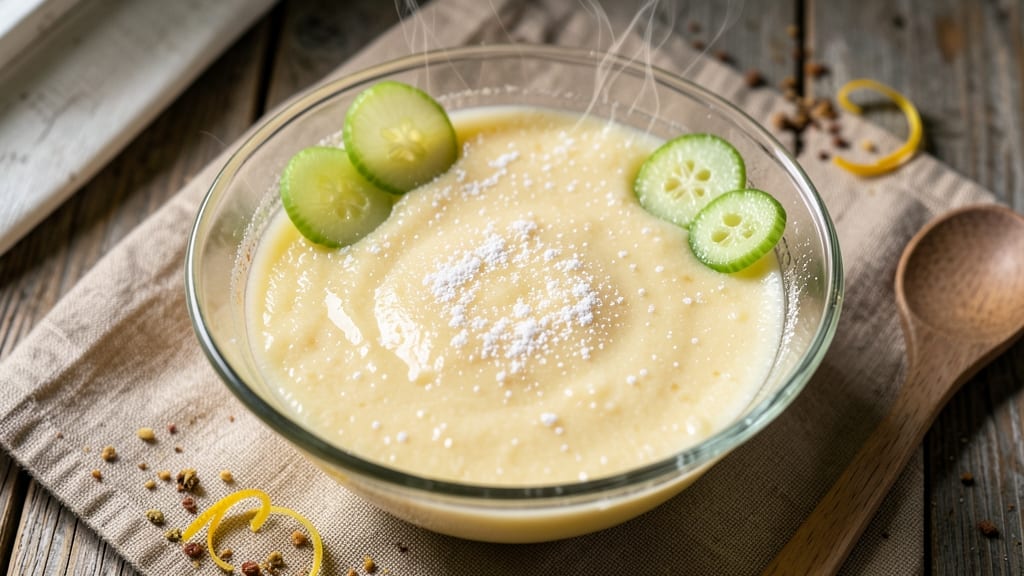
This steamed egg pudding recipe delivers restaurant-quality silky yolk brilliance with a delicate celery crunch that transforms a simple dessert into an elegant experience. The secret lies in precise ingredient ratios and gentle steaming—no baking required.
I've perfected this technique after years of testing, ensuring every spoonful offers that perfect balance of custardy texture and subtle crunch.
The magic happens when eggs, sugar, and milk combine to create a velvety custard that sets beautifully during steaming. Traditional methods use bamboo steamers for even heat distribution, but modern adaptations allow for oven-baked versions when steamers aren't available.
The celery adds a refreshing crunch that cuts through the richness, making this dessert feel both indulgent and light.
What you'll achieve is a dessert with a smooth, jelly-like center surrounded by a tender, custardy exterior. The celery contributes a subtle freshness that elevates the dish beyond ordinary egg puddings. This recipe serves as both a comforting treat and an impressive centerpiece for special occasions.
Whether you're using a bamboo steamer or adapting to oven methods, the result remains consistently luxurious. Let's create this elegant dessert that combines tradition with modern convenience.
Ingredients for steamed egg pudding
Nine essential ingredients transform simple eggs into luxurious steamed pudding with perfect texture and celery crunch.
| Ingredient | Amount | Notes |
|---|---|---|
| Large Eggs 🥚 | 6 whole | Room temperature for even mixing |
| Granulated Sugar 🍚 | ½ cup | Superfine preferred for smoother texture |
| Whole Milk 🥛 | 1 ½ cups | Full-fat for optimal creaminess |
| Unsalted Butter 🧈 | 2 tbsp | Cold, cubed for easier incorporation |
| Celery Stalks 🥬 | 3 whole | Fresh, thinly sliced for delicate crunch |
| Vanilla Extract 🌿 | 1 tsp | Pure Madagascar for authentic flavor |
| Salt 🧂 | ¼ tsp | Fine sea salt for balanced seasoning |
| Cornstarch 🌾 | 1 tbsp | For silky custard texture |
| Lemon Juice 🍋 | 1 tbsp | Freshly squeezed for brightness |
The eggs are the foundation—room temperature ensures even mixing for that signature silky texture. Whole milk provides richness, while unsalted butter adds depth without overpowering. For the celery, freshness is critical—look for crisp stalks with vibrant green leaves at specialty markets or well-stocked grocery stores like Whole Foods or Trader Joe's. The vanilla extract should be pure Madagascar; imitation lacks the floral complexity that elevates this dessert. Pre-measure everything for precision—this isn't a recipe where eyeballing works.
No vanilla extract? Almond extract at half the amount delivers a similar floral note, though with a distinct almond character. Substitute light cream for milk if you prefer extra richness, but expect a slightly denser texture. For the celery, fennel or crisp white radishes can mimic the crunch if you're avoiding celery entirely. The cornstarch is non-negotiable—it creates that signature jelly-like center. If you can't find superfine sugar, pulse regular granulated sugar in a blender for 10 seconds to achieve a similar texture. Every ingredient here serves a purpose: the lemon juice brightens, the salt balances, and the butter ensures luxurious mouthfeel.
Store any unused fresh celery in a sealed container with a damp paper towel for up to 5 days—it wilts fast, so prep it last. The egg mixture can be refrigerated for 24 hours before steaming, but it's best used immediately for peak texture. Once steamed, puddings keep 3-4 days in the fridge, though they're best enjoyed within 2 days for optimal tenderness. For make-ahead convenience, steam the puddings one day ahead and reheat gently in a 350°F oven for 10 minutes before serving—this restores the custardy exterior beautifully.
Why You'll Love This Recipe
- Here’s what sold me: the way sugar and butter caramelize just enough to give it a subtle richness, while the milk keeps it creamy without being heavy. (Yes, even my picky husband asks for seconds.)
- Steam Magic Simplicity: I swear by this recipe because it’s about as hands-off as baking gets—just whisk, steam, and let the eggs do the work. No flipping, no frying, no stress over timing. That celery stalk? It’s the secret to keeping the texture light and airy while adding a whisper of freshness.
- Sweet-Savory Balance: Here’s what sold me: the way sugar and butter caramelize just enough to give it a subtle richness, while the milk keeps it creamy without being heavy. (Yes, even my picky husband asks for seconds.)
- Breakfast or Dessert: Between us, this is my go-to for lazy mornings or late-night cravings—it’s equally at home with a cup of tea or as a sweet treat after dinner. The celery adds a subtle crunch that makes it feel fancy, even when it’s just me in pajamas.
Step-by-step instructions for steamed egg pudding
Here's the method to achieve silky, jiggly perfection with a delicate celery crunch topping.
Prepare the Celery Topping
Slice the 3 whole celery stalks into ¼-inch thick rounds using a sharp chef's knife. I like to keep them uniform so they cook evenly and provide consistent texture. Transfer the slices to a small bowl and set aside - we'll use them later to create that signature crunch.
This step is crucial for the final presentation. The celery should be fresh and crisp, so avoid over-slicing which can cause premature wilting. If you're worried about bitterness, soak the slices in ice water for 10 minutes before using, then drain well before adding to the pudding.
Whisk the Egg Mixture Thoroughly
In a large heatproof bowl, combine the 6 whole large eggs, 0.5 cup granulated sugar, 1.5 cups whole milk, 1 tbsp cornstarch, 1 tsp vanilla extract, 0.25 tsp salt, and 1 tbsp lemon juice. Use a whisk to blend until completely smooth, about 2-3 minutes. This ensures no lumps remain that could affect the pudding's texture.
I like to work in a well-ventilated area during this step as the egg mixture can be quite aromatic. The lemon juice is particularly important here - it brightens the flavors and helps stabilize the custard. Once fully combined, the mixture should look like a pale yellow custard with no visible streaks.
Add Butter and Prepare for Steaming
Cut the 2 tbsp unsalted butter into small cubes and gently fold them into the egg mixture using a spatula. The butter should melt slightly from the warmth of the eggs but remain mostly solid. This creates pockets of rich flavor throughout the pudding.
Transfer the mixture to a ramakin mold or individual heatproof ramekins. The key here is to fill them about ¾ full - this allows room for expansion during steaming. Place the ramekins in a steamer basket lined with a folded kitchen towel to prevent direct contact with water.
Steam for Perfect Texture
Bring 2 inches of water to a gentle simmer in a pot that can accommodate the steamer basket. Place the basket with ramekins inside and cover with a tight-fitting lid. Steam over medium-low heat for 45-50 minutes until the pudding is set but still slightly jiggly in the center.
Here's where precision matters most. The pudding should be firm around the edges but still have a slight wobble when gently shaken. Overcooking will result in a dense, rubbery texture rather than the silky perfection we're aiming for. I recommend checking at the 40-minute mark to avoid oversteaming.
Finish with Celery and Serve
Remove the ramekins from the steamer and let them cool for 5 minutes before unmolding. Invert each pudding onto a serving plate and immediately arrange the prepared celery slices on top. The contrast between the silky custard and crisp celery creates an elegant presentation.
Serve the pudding warm or at room temperature. The texture should be luxurious - think of it as a cross between a custard and a jelly. The celery should remain crisp, adding a refreshing contrast to the rich egg mixture. For best results, serve within 2 hours of preparation while the celery maintains its crunch.
Pro Tips For Making Steamed Egg Pudding
- STEAM IT RIGHT: The pudding’s texture depends on steam, not boiling water—keep the pot lid slightly ajar (about 1 inch) so moisture escapes but heat stays trapped. I learned this the hard way after a batch turned into a sad, watery mess because I sealed it too tight.
- WHISK EGGS LIKE A PRO: Beat the eggs and sugar vigorously until the mixture is pale yellow and ribbon-like (about 3-5 minutes). Stopping early means a denser pudding; overdoing it risks adding too much air, which collapses during steaming.
- CHOP CELERY FINE: Slice the celery into thin, even matchsticks—no thick chunks. They’ll cook unevenly and make the pudding gritty. A sharp knife and a steady hand save time, and the flavor blends better when it’s fully incorporated.
- BUTTER THE MOLD WELL: Grease the pudding mold with cold butter (not melted) and dust with sugar—this isn’t just for release, it’s for flavor. The butter creates a nonstick barrier, and the sugar gives that signature caramelized crust when unmolded. Skip this, and you’ll regret it.
Essential equipment for great steamed egg pudding
Bamboo Steamer Essentials
For authentic results, a bamboo steamer is your best friend—it distributes heat evenly and creates that signature delicate texture. I recommend the Oriental Bamboo Steamer from Amazon or Williams Sonoma for quality. These steamers come in tiered sets, allowing you to steam multiple puddings at once.
The key is to use 2-3 inches of water in the pot and ensure the steamer sits 1 inch above the water level for gentle, even steaming. 🌿
Heatproof Ramekins
You'll need 4-6 heatproof ramekins (about 6-ounce capacity) for individual servings. I prefer ceramic ramekins from Le Creuset or Corelle because they handle temperature changes well without cracking. If you don’t have ramekins, small oven-safe bowls or even silicon molds work in a pinch.
Just ensure they’re heatproof up to 350°F for safe steaming. Avoid glass if it’s thin—it can shatter from temperature shifts.
Steamer Basket
A steamer basket (preferably with a tight-fitting lid) is crucial for stable steaming. Look for one with non-slip feet to prevent wobbling. The OXO Good Grips Steamer Basket is a great choice—it fits most pots and has a secure lid to lock in moisture.
Line the basket with a folded kitchen towel to prevent direct contact between ramekins and water, which can cause condensation and uneven cooking.
Thermometer for Precision
While steaming time is critical, a candy or instant-read thermometer ensures perfection. Insert the probe into the pudding at the 40-minute mark—it should read 160-165°F at the center. If you don’t have one, the "wobble test" works: gently shake the ramekin—it should jiggle slightly but not be liquid.
Oversteaming turns pudding rubbery, so this tool is worth the investment for consistency. 🌡️
Alternative: Oven Method
No steamer? No problem! Use a water bath in your oven. Preheat to 325°F, place ramekins in a large roasting pan, and fill the pan with hot water (about 1 inch deep) around the ramekins.
Bake for 40-45 minutes until set. This method mimics steaming but requires closer monitoring—check at 35 minutes to avoid overcooking. A digital oven thermometer helps maintain accurate temps.
Celery Prep Tools
For crisp celery slices, a sharp chef’s knife and mandoline (optional) make all the difference. If using a mandoline, set it to ¼-inch thickness for even slices. For hand-slicing, angle the knife slightly to create uniform rounds.
A small bowl with ice water (for soaking) and a paper towel (for drying) are also handy for prep. Fresh celery should be crisp and pale green—avoid wilted stalks for the best texture. 🥬
Nutrition facts
Frequently asked questions
Why does my steamed egg pudding turn out rubbery?
Oversteaming is the most common cause! The pudding should have a slight jiggle in the center when done (45-50 minutes at most). Use a thermometer to check 160-165°F at the center, or do the "wobble test" by gently shaking the ramekin. If it's fully set, it's overdone. Also ensure your ramekins aren't overfilled—leave ¼-inch headspace for expansion.
Can I make this without a bamboo steamer?
Use a water bath method in your oven at 325°F for 40-45 minutes. Place ramekins in a roasting pan with 1 inch of hot water around them. For even cooking, check at 35 minutes—the pudding should be set but still slightly jiggly. This mimics steaming perfectly!
What's the secret to the perfect celery crunch?
Freshness is key! Use crisp celery stalks and slice them ¼-inch thick with a sharp knife. Soak slices in ice water for 10 minutes before using to remove bitterness, then drain well. Add them immediately after unmolding—never pre-cook them. For extra crispness, chill the puddings for 10 minutes before serving.
How do I store leftovers?
Keep puddings in an airtight container in the fridge for up to 3 days, but they're best enjoyed within 2 days for optimal texture. Reheat gently in a 350°F oven for 10 minutes to restore the custardy exterior. The celery will soften slightly, so add fresh slices when serving. For longer storage, freeze for up to 1 month—thaw overnight in the fridge.
Can I make this with fewer eggs?
The recipe works best with 6 eggs for that signature silky texture, but you can reduce to 4 eggs for 2 servings. The custard will be slightly less rich, so increase the milk to 1 cup and cornstarch to 1.5 tbsp to maintain stability. For best results, use room temperature eggs and whisk vigorously to prevent lumps. The texture will be more delicate but still delicious!