
Sauces & Condiments
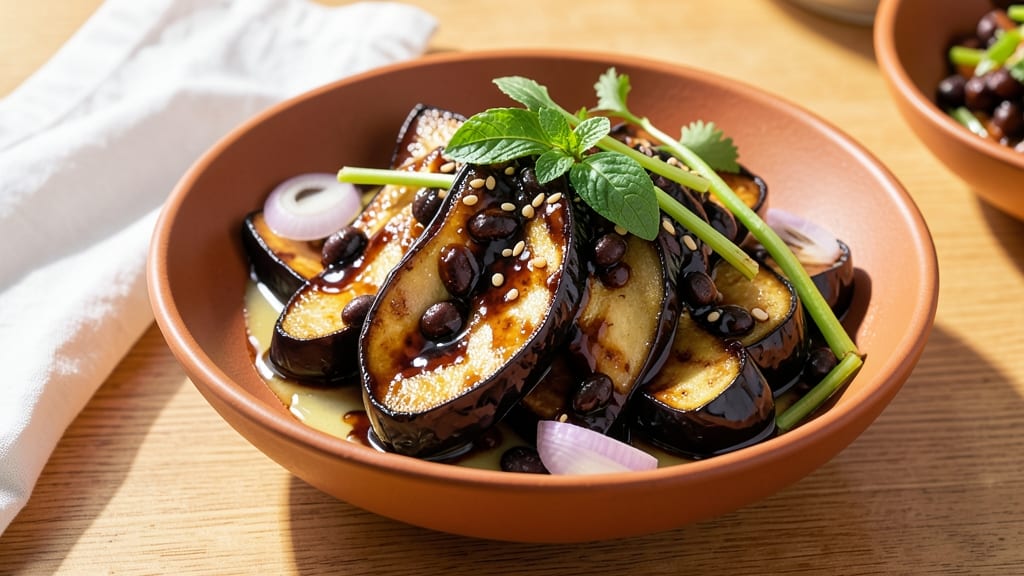
This Thai eggplant with black bean sauce recipe delivers restaurant-quality depth in a single pan, where smoky-sweet black bean sauce transforms tender eggplant into a vibrant, umami-rich dish. The secret lies in balancing Thai aromatics—fresh lemongrass, garlic, and ginger—with the earthy richness of fermented black beans, creating a sauce that clings perfectly to the eggplant’s silky texture. I developed this one-pan method after realizing traditional recipes often require multiple steps, and it never fails to impress even skeptical vegetarians.
The magic happens in two stages: first, roasting the eggplant until its edges caramelize and its flesh becomes tender enough to absorb the sauce completely.
Then, the black bean sauce—simmered with coconut milk, fish sauce (or vegetarian alternative), and a touch of palm sugar—infuses every bite with layers of smoky, sweet, and tangy flavors.
The result is a dish that’s as visually striking as it is delicious, with glossy eggplant slices bathed in a deep, glossy sauce.
What sets this recipe apart is how the sauce transforms simple ingredients into something extraordinary. The black beans provide a deep, fermented richness that pairs beautifully with the eggplant’s natural sweetness, while the Thai aromatics add brightness and complexity.
Serve it over jasmine rice or alongside a crisp cucumber salad to balance the richness, and garnish with fresh cilantro and lime wedges for a pop of freshness.
This dish is perfect for weeknight dinners or when you’re craving bold, flavorful vegetarian food without the fuss. The prep takes just 20 minutes, and the cooking process is hands-off, making it ideal for busy evenings.
Once you taste the harmony of smoky-sweet sauce and tender eggplant, it’ll become a staple in your rotation.
Ingredients for thai eggplant with black bean sauce
Eight vibrant ingredients transform into a restaurant-worthy Thai eggplant dish with smoky-sweet depth.
| Ingredient | Amount | Notes |
|---|---|---|
| Japanese Eggplant 🍆 | 2 lb | Medium-sized, sliced into 1/2-inch rounds |
| Fermented Black Beans 🥫 | ½ cup | Rinsed and drained, or sub with black soybeans |
| Coconut Milk 🥥 | 1 can | Full-fat, 13.5 oz can, not carton |
| Vegetarian Fish Sauce 🍜 | 2 tbsp | Or soy sauce for vegan version |
| Palm Sugar 🍬 | 2 tbsp | Or brown sugar in a pinch |
| Fresh Lemongrass 🌿 | 3 stems | White part only, finely chopped |
| Garlic Cloves 🧄 | 6 cloves | Peeled and smashed |
| Fresh Ginger 🌿 | 1 ½ inch | Peeled, thinly sliced |
| Red Curry Paste 🌶️ | 1 ½ tbsp | Maesri brand preferred |
| Jasmine Rice 🍚 | 1 cup | Uncooked, for serving |
| Fresh Cilantro 🌿 | ¼ cup | Chopped, for garnish |
| Lime Wedges 🍋 | 2 whole | For serving |
| Olive Oil 🫒 | 2 tbsp | For roasting eggplant |
| Salt 🧂 | 1 tsp | Diamond Crystal preferred |
| Black Pepper 🌶️ | ½ tsp | Freshly ground |
The eggplant is the star—Japanese eggplant has thinner skin and fewer seeds, making it ideal for absorbing the sauce. Look for glossy, firm eggplants at Whole Foods or your local Asian market. Fermented black beans are non-negotiable for that deep umami punch—Three Crabs brand is my go-to, but any well-preserved jarred variety works. The lemongrass? Buy fresh stems—the white bottom is what you need, and it keeps for 1 week wrapped in a damp towel. For the curry paste, Maesri brand delivers that authentic Thai heat without additives.
No fermented black beans? Black soybeans work in a pinch—just soak them overnight first. Fresh lemongrass too expensive? Substitute 1 tbsp lemongrass paste (like Thai Kitchen brand) or even a splash of lime juice for brightness. The coconut milk can be light, but full-fat gives richer flavor. For the vegetarian fish sauce, Red Boat brand is a solid choice—it mimics the umami depth. Palm sugar unavailable? Brown sugar or coconut sugar are fine substitutes, though they'll have slightly different caramel notes.
Eggplant roasts best when prepped ahead—slice and toss with olive oil, salt, and pepper, then refrigerate for 30 minutes before roasting. The sauce keeps well for 5 days in the fridge, though it's best used within 3 days for peak freshness. Freeze any leftover sauce in ice cube trays for quick future meals. Store the fresh cilantro in a glass of water like flowers—it stays vibrant for 1 week. The jasmine rice? Cook it in advance—this dish tastes even better the next day as flavors meld.
Why You'll Love This Recipe
- One-Pan Magic: I swear by this recipe when I’m too tired to scrub pots—just slice the eggplant, fry it until golden, and toss it into the black bean sauce. The fermented beans do all the heavy lifting, so you’re basically assembling instead of cooking.
- Umami Bomb: That first bite? The crispy eggplant soaking up the salty-sweet black bean sauce—it’s like a flavor explosion. The coconut milk softens it just enough, while the vegetarian fish sauce adds this deep, funky richness that sticks with you.
- Meal Prep MVP: Between us, this keeps perfectly for days in the fridge. I’ll make a big batch on Sunday, and it’s ready to reheat for lunches or toss into rice bowls all week. (Yes, even on a Tuesday night when takeout feels like a chore.)
- Budget Thai Feast: Fermented black beans and coconut milk stretch this into a full meal without breaking the bank. One eggplant feeds four, and the sauce’s bold flavors mean you don’t need fancy sides—just rice or greens, and you’re golden. My wallet thanks me every time.
Step-by-step instructions for Thai eggplant with black bean sauce
This one-pan wonder delivers smoky, sweet, and umami-rich flavors with minimal effort.
Roast the Eggplant Until Caramelized
Preheat your oven to 400°F and line a baking sheet with parchment paper. Toss the 2 lb Japanese Eggplant slices with 2 tbsp Olive Oil and 1 tsp Salt, spreading them in a single layer. Roast for 20-25 minutes, flipping halfway through, until the edges are deep golden brown and slightly charred.
Here's the thing—you want that caramelization to develop, but don't let it burn. The eggplant should be tender enough to pierce easily with a fork. If you notice any slices browning too quickly, move them to a different part of the pan. Once roasted, remove and set aside—those slices will soak up all the delicious sauce later.
Build the Flavor Base in the Same Pan
In the same oven-heated pan (no need to clean it—those eggplant bits are flavor gold), add 2 tbsp Olive Oil over medium heat. Add the 6 cloves Garlic Cloves and 1.5 inch Fresh Ginger, cooking for 1-2 minutes until fragrant but not browned. Stir in the 3 stems Fresh Lemongrass and 1.5 tbsp Red Curry Paste, letting them sizzle for 30 seconds to release their aromas.
This is where the magic happens. The curry paste will deepen in color as it toasts, developing that signature Thai smokiness. Don't walk away—burnt curry paste tastes bitter. If you smell it getting too strong, reduce the heat slightly. The goal is a rich, aromatic paste that coats the back of a spoon.
Simmer the Black Bean Sauce
Add the 0.5 cup Fermented Black Beans, 2 tbsp Vegetarian Fish Sauce, and 2 tbsp Palm Sugar to the pan. Stir well to combine, then pour in the 1 can Coconut Milk. Bring to a gentle simmer over medium-low heat, letting it cook uncovered for 5-7 minutes until slightly thickened.
You'll notice the sauce transform from a thin liquid to a glossy, velvety consistency. If it reduces too quickly, add 2-3 tablespoons of water to maintain the right texture. The black beans will soften and break down, releasing their deep umami flavor. Taste and adjust seasoning—you might need a touch more fish sauce or sugar to balance the flavors.
Finish with Eggplant and Garnish
Return the roasted eggplant to the pan, gently tossing to coat in the sauce. Simmer for an additional 3-4 minutes until the eggplant absorbs the flavors and the sauce clings to it. Remove from heat and stir in the 0.25 cup Fresh Cilantro. The bright herb notes will cut through the richness of the coconut and black beans.
Serve immediately over 1 cup Jasmine Rice, garnished with 2 whole Lime Wedges for squeezing. The contrast of the cool lime with the warm, smoky eggplant is what makes this dish truly special. Each bite should deliver a perfect balance of sweet, savory, and umami—with that beautiful caramelized eggplant at the center.
Pro Tips For Making Thai Eggplant With Black Bean Sauce
- CHAR THE EGGPANT FIRST: The eggplant’s skin should blister and blacken in spots—this isn’t just for looks, it’s about texture. Use a dry wok or cast-iron on medium-high heat for 8–10 minutes per side, turning once. I used to rush this and ended up with soggy eggplant; patience here makes all the difference in the final bite.
- SOAK THE BLACK BEANS: Fermented black beans need a quick rinse and soak—10 minutes in warm water cuts through the funk without diluting their flavor. Skip this, and you’ll taste that sharp, salty tang overpowering the coconut milk. Drain well before cooking, or your sauce will turn gloopy.
- CONTROL THE COCONUT MILK: Low and slow is the rule here—simmer the sauce on medium-low heat to let the flavors meld. I learned this after a batch separated into a greasy mess because I cranked the heat. Stir occasionally, and if it starts to split, whisk in a splash of cold water to stabilize it.
- SWEAT THE AROMS FIRST: Before adding coconut milk, cook the fermented black beans, garlic, and shallots in oil until fragrant—about 3–4 minutes. This builds depth that skipping would leave flat. If you’re short on time, at least get the beans sizzling for 2 minutes; your sauce will still taste better than if you dumped everything in cold.
Make-ahead tips for this thai eggplant with black bean sauce
Prep Ahead Sauce
The black bean sauce is where flavor develops most deeply, so I always make it a day ahead. Simmer the sauce as directed, then cool it completely before transferring to an airtight container. Store in the refrigerator for up to 5 days—the flavors actually deepen overnight.
When ready to use, simply reheat gently on the stovetop over low heat for 3-5 minutes, stirring occasionally to prevent scorching. This shortcut saves you 20 minutes of active cooking time on the day you serve it. 💫
Roast Eggplant Early
Eggplant roasts best when prepped in advance. Slice the 2 lb Japanese eggplant into ½-inch rounds and toss with 2 tbsp olive oil, 1 tsp salt, and ½ tsp black pepper. Arrange on a parchment-lined baking sheet and refrigerate uncovered for 30 minutes before roasting.
This step removes excess moisture, ensuring crispy edges when roasted at 400°F for 20-25 minutes. Store roasted eggplant in an airtight container for up to 3 days in the fridge.
Freezer-Friendly Sauce
For maximum convenience, freeze the sauce in 1-cup portions using ice cube trays. Once frozen solid, transfer cubes to a ziplock freezer bag and flatten to save space. Thaw overnight in the fridge before reheating—this method preserves texture better than microwave defrosting.
The sauce keeps in the freezer for up to 3 months, making it perfect for meal prep. Just toss thawed sauce with fresh eggplant and serve over rice for a quick weeknight meal. ❄️
Rice Prep Shortcut
Cook a big batch of jasmine rice and store it in an airtight container for up to 4 days. Reheat portions in the microwave with 2 tbsp water for 1 minute before serving. This saves 25 minutes of active cooking time on busy evenings.
For extra flavor, add 1 tsp coconut milk to the reheating water—it mimics the sauce's richness beautifully. I always keep a batch ready so I can focus on assembling the eggplant and sauce.
Garnish Assembly
Prep all garnishes in advance to streamline serving. Chop ¼ cup fresh cilantro and store it in a small container with a damp paper towel to keep it fresh. Slice 2 lime wedges and store them in a sealed container in the fridge.
For extra presentation, toast 1 tbsp sesame seeds in a dry pan over medium heat for 1-2 minutes until golden, then store in an airtight container. Assemble everything just before serving—this keeps the garnishes vibrant and ready to add that final pop of color and freshness. 🌿
Nutrition facts
Frequently asked questions
Can I substitute regular eggplant for Japanese eggplant?
You can, but the texture will differ slightly. Japanese eggplant has thinner skin and fewer seeds, making it more tender and better at absorbing the sauce. If using regular eggplant, slice it ¼-inch thick and roast for 15-20 minutes instead of 20-25 minutes to prevent overcooking. The sauce will still cling beautifully, though the skin may be slightly chewier.
What if I don't have fermented black beans?
No problem! Use ½ cup black soybeans instead—soak them overnight first, then simmer with the sauce ingredients. For a quicker option, try ½ cup black bean paste (like the kind used in Thai cooking), which adds instant umami. The dish will still taste rich and flavorful, though the texture will be slightly smoother.
Can I make this dish without coconut milk?
Swap the coconut milk for ½ cup heavy cream or ½ cup full-fat Greek yogurt for a creamy texture, or use ½ cup vegetable broth for a lighter version. The sauce will still develop depth, though coconut milk’s natural sweetness and richness are key to that authentic Thai balance. Adjust the palm sugar slightly if using a neutral substitute.
How do I avoid burnt curry paste?
Watch the pan closely—curry paste burns quickly! Keep the heat at medium-low and stir constantly for those 30 seconds of toasting. If it darkens too quickly, reduce the heat further or remove the pan from the stove temporarily. The paste should smell aromatic, not acrid. A lightly toasted paste adds depth, while burnt paste turns bitter.
Is this dish spicy? Can I adjust the heat level?
The recipe uses 1.5 tbsp red curry paste, which adds mild heat. For less spice, reduce to 1 tbsp or use mild curry paste. For extra heat, add ½ tsp red pepper flakes** or a dash of chili garlic sauce. The black bean sauce’s richness balances any spice, so don’t be shy—adjust to your taste!