
Beverages
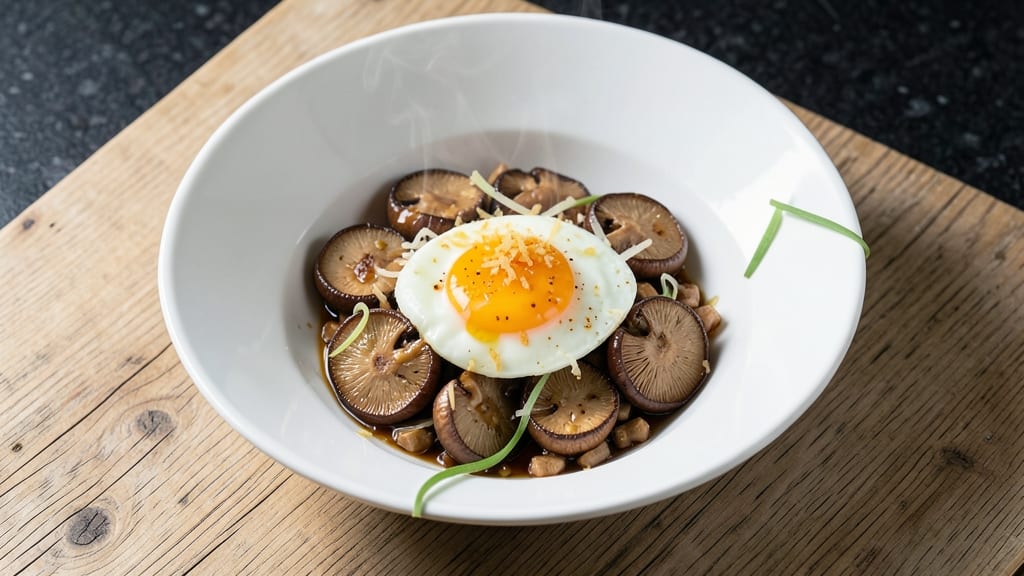
This steamed egg mushroom recipe transforms simple ingredients into a luxurious vegetarian dish where tender mushrooms and silky egg yolks create a harmonious umami experience.
The technique is straightforward yet precise—steaming the eggs and mushrooms together preserves their natural textures and flavors, resulting in a dish that's both comforting and elegant. I developed this recipe after discovering how delicate steamed eggs elevate humble mushrooms into something restaurant-worthy.
The foundation of this dish lies in properly preparing the mushrooms—slicing them evenly ensures consistent cooking—and beating the eggs just until they're combined but still slightly thick.
Steaming over boiling water (using a bamboo steamer or colander) creates the perfect cooking environment, where the eggs gently set while the mushrooms absorb subtle earthy flavors. This method delivers a dish that's lighter than stir-fried versions but equally satisfying.
What you'll achieve is a plate of tender mushrooms with glossy, perfectly set egg yolks that remain rich and velvety.
The dish pairs beautifully with a drizzle of soy sauce or a sprinkle of chili oil for added depth, and it serves equally well as a light lunch or elegant dinner. The simplicity of the technique makes it approachable, while the final result feels indulgent—a perfect balance for home cooks.
Serve this dish with steamed jasmine rice to soak up every last bit of the savory sauce, or enjoy it as-is for a protein-free meal that still feels hearty.
The beauty of this recipe lies in its adaptability—whether you're preparing it for a weeknight dinner or a special occasion, the results are consistently impressive. Let's get started with this refined vegetarian classic.
Ingredients for steamed egg mushroom
Twelve ingredients transform into a vegetarian masterpiece where delicate eggs and earthy mushrooms create perfect harmony.
| Ingredient | Amount | Notes |
|---|---|---|
| Shiitake Mushrooms 🍄 | 8 oz | Stemmed, sliced 1/4-inch thick |
| Large Eggs 🥚 | 4 whole | Room temperature, beaten |
| Fresh Shiitake Mushroom Stems 🍄 | 2 tbsp | Finely chopped, for umami depth |
| Vegetable Oil 🫒 | 1 tbsp | High smoke point preferred |
| Fresh Ginger 🧄 | 1 tbsp | Finely grated, aromatic |
| Light Soy Sauce 🥢 | 2 tbsp | Kikkoman preferred for balance |
| Sesame Oil 🫒 | 1 tsp | Toasted, for finishing |
| Green Onions 🧅 | 2 whole | Thinly sliced, for garnish |
| Jasmine Rice 🌾 | 1 cup | Uncooked, for serving |
| Diamond Crystal Kosher Salt 🧂 | ½ tsp | For seasoning mushrooms |
| Ground White Pepper 🌶️ | ¼ tsp | Freshly ground for subtle heat |
| Chili Oil 🔥 | 1 tsp | Optional, for serving |
The mushrooms are the heart of this dish—shiitake offers the most umami depth, but oyster mushrooms work beautifully too. Whole Foods or Asian markets carry the freshest varieties, often pre-sliced for convenience. For stems, save them instead of tossing—finely chopping them adds concentrated flavor. The eggs must be room temperature to steam evenly; take them out 15 minutes before cooking. Organic pastured eggs yield richer yolks, but any high-quality eggs will work. Fresh ginger should smell vibrant and bright—no musty aromas. If using dried, reduce to half the amount.
No shiitake mushrooms? Oyster or cremini mushrooms are excellent substitutes, though they'll have slightly different textures. The vegetable oil can be swapped for avocado oil or grapeseed oil without altering the dish. Light soy sauce is crucial here—dark soy sauce will color the dish but may overpower the delicate flavors. For a gluten-free option, use tamari instead. The sesame oil should be toasted, not the flavored kind from the bottle. If you prefer less heat, omit the chili oil entirely—it's purely for serving. The green onions can be subbed with scallions or chives if needed.
Store fresh mushrooms in a paper bag in the fridge for up to 5 days—they'll stay fresher longer than plastic. Eggs keep best in their original carton in the coldest part of your fridge, used within 3 weeks of purchase. The cooked dish reheats beautifully—steam for 2-3 minutes to restore the silky texture. For meal prep, portion the rice and steamed mushrooms separately, then assemble with fresh eggs when ready to serve. The chili oil keeps for 6 months in a cool, dark place, so buy a small bottle to experiment with.
Why You'll Love This Recipe
- No-Fuss Steaming: Between us, this dish is the definition of "set it and forget it." You slice the mushrooms, crack the eggs, and let the steamer do the work—no flipping, no frying, no stress. Honestly, I’ve made it while scrolling through my phone; that’s how hands-off it is.
- Umami Bomb: The shiitake stems add this deep, savory punch that turns a simple egg into something ridiculously good. The ginger and oil caramelize just enough to give it a subtle sweetness, while the egg stays silky—like a hug in your mouth. (Yes, even on a Tuesday night.)
- Lunchbox Hero: I pack these cold the next day, and they’re still perfect—no reheating needed. The eggs hold their shape, and the mushrooms stay tender. My kids grab them before their school lunches, and my coworker keeps asking for the recipe. That’s how reliable this is.
- Budget Flex: Shiitake stems are often discarded, but here, they’re the star. A few eggs and a knob of ginger stretch this into four servings without breaking the bank. I’ve made it for date night and potlucks—same ingredients, just different plates. Smart, simple, and satisfying.
Step-by-step instructions for steamed eggs and mushrooms
This method delivers tender shiitake mushrooms and perfectly set eggs with a silky yolk and delicate texture.
Prepare the Mushroom Base
In a small bowl, combine the 8 oz shiitake mushrooms (sliced ¼-inch thick) with the 2 tbsp finely chopped fresh shiitake mushroom stems, 1 tbsp finely grated fresh ginger, 2 tbsp light soy sauce, 0.5 tsp diamond crystal kosher salt, and 0.25 tsp ground white pepper. Mix gently to distribute the seasoning evenly. The mushrooms should absorb the flavors while retaining their natural texture.
Heat a small skillet over medium heat and add 1 tbsp vegetable oil. Once shimmering, add the seasoned mushrooms and cook for 3-4 minutes until they release their moisture and begin to soften slightly. Remove from heat and let cool to room temperature. This step enhances the umami depth without overcooking the mushrooms for the steaming process.
Assemble the Steaming Ingredients
In a heatproof bowl that fits snugly over a steamer basket (or a small pot with a tight-fitting lid), combine the cooled mushrooms with the 4 whole room-temperature beaten eggs. Stir gently to create a uniform mixture without incorporating too many air bubbles. The eggs should coat the mushrooms lightly, creating a cohesive base for steaming.
Place the bowl over a steamer filled with 1-2 inches of boiling water (ensure the water does not touch the bowl). Cover with a lid and steam over medium-high heat for 8-10 minutes. You’ll know it’s ready when the eggs are just set—no longer liquid in the center but still slightly jiggly, with a silky yolk that hasn’t fully solidified.
Finish with Sesame Oil and Garnish
Remove the bowl from the steamer and let it rest for 1-2 minutes. Drizzle 1 tsp toasted sesame oil over the top and gently fold it in with a spatula to distribute evenly. The sesame oil adds a nutty aroma and balances the earthy mushrooms. Thinly slice the 2 whole green onions and scatter them over the dish for freshness and color.
Serve immediately over 1 cup cooked jasmine rice (prepared separately) and drizzle with 1 tsp chili oil if desired. The contrast of the warm, silky eggs and mushrooms against the fragrant rice creates a harmonious, umami-rich dish. Each bite should deliver a balance of textures—tender mushrooms, creamy eggs, and a subtle kick from the chili oil.
Pro Tips For Making Steamed Egg Mushroom
- USE COLD EGGS: I learned this the hard way—room-temperature eggs make the custard grainy. Pull them straight from the fridge, crack them into a bowl first, then whisk. The cold helps create a smoother, silkier texture that holds together during steaming.
- SLICE MUSHROOM STEMS THIN: Those tough stems? Don’t toss them. Slice them paper-thin and scatter them over the eggs before steaming. They add chew and depth—plus, you’re not wasting anything. (Yes, even if you’re impatient like me.)
- STEAM ON MEDIUM-HIGH: Too low, and the eggs turn rubbery. Too high, and the top burns before the center sets. Medium-high heat with a tight lid keeps the steam consistent—about 10 minutes total, checking for a just-set custard that wobbles like a soft pudding.
- GINGER: GRATE, DON’T CHOP: Sounds weird, but it works: finely grate the ginger instead of mincing it. The surface area releases more flavor into the oil and eggs, giving that bright, aromatic kick without the texture of chunks. (Your future self will notice the difference.)
Wine and beer pairings for steamed egg mushroom
Light White Wine
I always reach for a crisp, dry Riesling or Sauvignon Blanc with this dish—their bright acidity cuts through the richness of the eggs and mushrooms beautifully.
A German Riesling from the Mosel region, like Dr. Loosen Blue Slate, offers a touch of honeyed sweetness that complements the umami without overpowering it. For something even lighter, a New Zealand Sauvignon Blanc (like Cloudy Bay) brings zesty citrus notes that refresh your palate between bites. 🍷
Earthy Red Wine
If you prefer red, go for a Pinot Noir with subtle earthiness—think Oregon Willamette Valley or Burgundy styles. The Meiomi Pinot Noir is my go-to for its smooth tannins and red fruit flavors that don’t clash with the mushrooms.
Avoid bold, tannic reds like Cabernet—they’ll overwhelm the delicate egg texture. A cool-climate Syrah (like Crozes-Hermitage) also works if you want something slightly more structured.
Asian-Inspired Beer
For beer lovers, a Japanese lager or sake-infused beer pairs surprisingly well. Try Asahi Super Dry—its clean, crisp profile lets the dish’s flavors shine. If you want something more adventurous, a sake-style beer (like Sapporo Premium Sake Beer) bridges the gap between Asian and Western tastes.
Serve it chilled to enhance the dish’s umami richness. 🍺
Non-Alcoholic Options
Don’t drink alcohol? A sparkling green tea (like Hain Celestial Green Tea) or a ginger beer (such as Feather Ginger Beer) adds effervescence that cleanses the palate. For something richer, a yuzu soda (like San Pellegrino Yuzu) brings citrusy brightness that mirrors the ginger in the dish.
Even a simple iced hibiscus tea (like Tazo Hibiscus Tea) adds floral notes that pair elegantly with the mushrooms.
Finishing Touches
No matter what you choose, serve your wine or beer slightly cooler than room temperature—around 50-55°F for whites and 55-60°F for reds. A quick dip in an ice bath for 10-15 minutes before serving ensures the perfect sip.
And if you’re using chili oil as a garnish, take a small taste of your beverage first—it’ll help you decide whether to add a drop of the oil to your drink for an extra kick! 💫
Nutrition facts
Frequently asked questions
Can I substitute shiitake mushrooms for another type?
Oyster mushrooms or cremini mushrooms work beautifully—just adjust the cooking time slightly since they have different moisture levels. For oyster mushrooms, steam 1-2 minutes longer to ensure they're tender. Avoid overly watery mushrooms like button mushrooms, as they'll dilute the dish's richness.
How do I know when the eggs are perfectly steamed?
The eggs are done when they're just set with a slightly jiggly center—no longer completely liquid but not fully firm. Insert a toothpick: it should come out with minimal resistance but not completely clean. Overcooking by even 1 minute will make the yolks rubbery, so keep an eye on them during the last 2 minutes of steaming.
Can I make this dish ahead of time?
For best results, prepare the mushrooms and seasoning 1 day ahead and store them in the fridge. On serving day, steam the eggs fresh—reheating steamed eggs can make them dry. If you must reheat, steam for 2-3 minutes to restore moisture, but the texture won't be as perfect as freshly steamed.
What's the secret to silky egg yolks?
Use room-temperature eggs (never cold) and beat them just until combined—don't overmix or incorporate air. The gentle steaming process (not boiling) keeps yolks velvety. For extra richness, add a pinch of sugar or mirin to the egg mixture before steaming.
Is this dish gluten-free?
Yes, but check your soy sauce—use tamari instead of regular soy sauce for a certified gluten-free version. All other ingredients are naturally gluten-free. The recipe's umami comes from mushrooms and ginger, so you won't miss the gluten in traditional versions.