
Breakfast & Brunch
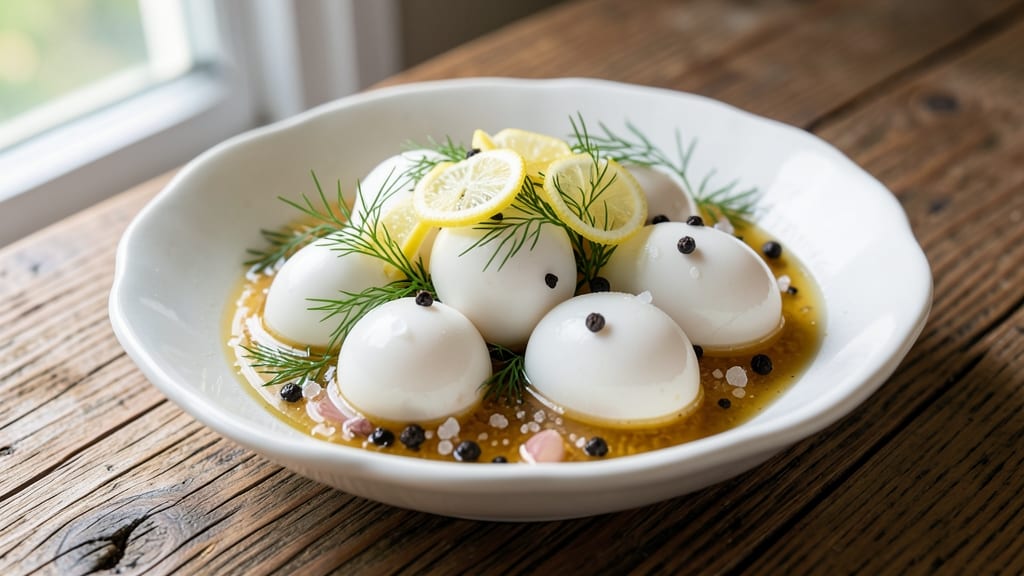
This mustard pickled quail eggs recipe transforms delicate quail eggs into vibrant, tangy bites with a satisfying crunch—perfect for elevating any brunch spread. The secret lies in balancing mustard's sharpness with vinegar's acidity, creating a brine that tenderizes the eggs while preserving their shape.
I developed this technique after discovering how quail eggs' small size makes them ideal for pickling without ever becoming mushy.
The process is straightforward but requires precision—sterilizing jars, calculating the right brine ratio, and timing the boil perfectly. You'll start with whole eggs, poach them gently, then pack them into jars with a mustard-infused vinegar solution that develops flavor over time.
The result? Eggs with a crisp outer layer and a creamy, tangy interior that's impossible to resist.
These pickled eggs deliver restaurant-quality presentation with minimal effort—just arrange them on a platter with fresh herbs or crusty bread for an instant appetizer. The mustard brine keeps them fresh for weeks, making them ideal for meal prep or gifting.
Whether served as part of a charcuterie board or as a standalone snack, they bring a sophisticated crunch to every bite.
For best results, use fresh quail eggs and high-quality mustard—this isn't the place for shortcuts. The payoff? A dish that's equal parts elegant and approachable, with a flavor profile that's bright enough to stand alone or bold enough to complement richer dishes. Let's get started on this brunch game-changer.
Ingredients for mustard pickled quail eggs
Fresh quail eggs meet bold mustard and vinegar for a brunch showstopper that keeps for weeks.
| Ingredient | Amount | Notes |
|---|---|---|
| Fresh Quail Eggs 🥚 | 12 whole | Room temperature preferred |
| Yellow Mustard 🌶️ | ½ cup | High-quality, smooth variety |
| White Wine Vinegar 🍷 | 1 cup | Dry, crisp variety preferred |
| Granulated Sugar 🍚 | ¼ cup | Fine grain preferred |
| Diamond Crystal Kosher Salt 🧂 | 1 ½ tbsp | For proper brine balance |
| Fresh Dill Weeds 🌿 | ¼ cup | Finely chopped, stems removed |
| Garlic Cloves 🧄 | 4 cloves | Thinly sliced, for infusion |
| Black Peppercorns 🌶️ | 1 tsp | Crushed, for subtle heat |
| Fresh Black Pepper 🌶️ | 1 tsp | Freshly cracked, for garnish |
| Glass Canning Jars 🍶 | 4 pieces | Pint-sized, sterilized preferred |
| Water 💧 | 1 ½ cups | Filtered preferred for clarity |
| Lemon Zest 🍋 | 1 tbsp | Freshly grated, for brightness |
| Fresh Thyme Leaves 🌿 | ⅛ cup | Finely chopped, for aroma |
The quail eggs are the foundation—freshness is critical. Source them from specialty grocers like Whole Foods or local farms, where they're typically sold refrigerated. Look for eggs with clean, unbroken shells and a vibrant, slightly glossy appearance. Room temperature eggs poach more evenly, so take them out of the fridge 30 minutes before using. The mustard should be a smooth, high-quality variety—French Dijon or American yellow mustard both work well, but avoid powdered mustard blends. For vinegar, dry white wine vinegar provides the crisp acidity that balances the mustard's sharpness without overpowering the delicate quail flavor. Sterilize your jars properly to prevent spoilage—either boil them for 10 minutes or run through a dishwasher cycle.
No yellow mustard? Dijon mustard at half the quantity works beautifully, though it'll be slightly more assertive. Substitute apple cider vinegar for white wine vinegar if needed, but reduce the sugar slightly to 0.2 cup since apple cider has natural sweetness. Fresh dill can be swapped for 1 tsp dried dill, but the flavor won't be as vibrant. If you're missing thyme, rosemary at half the amount offers a similar earthy note. The garlic and peppercorns can be omitted entirely if you prefer a milder flavor profile—this recipe is incredibly forgiving in that regard. For storage, glass jars are non-negotiable—plastic can absorb odors and won't maintain the same crisp texture over time.
These pickled eggs develop their full flavor over 48 hours, but they'll keep for up to 3 months in the refrigerator once opened. Store them submerged in their brine to maintain texture. For gifting, sterilize the jars again before sealing and they'll stay fresh for 6-8 weeks unrefrigerated. The brine can be reused for up to 2 additional batches if stored properly. When serving, arrange the eggs on a platter with a sprinkle of freshly cracked black pepper and a drizzle of the reserved brine for an elegant presentation. The eggs can be served chilled or at room temperature, though they're particularly refreshing straight from the fridge.
Why You'll Love This Recipe
- Fridge Ready in 10: I just boil the eggs, then dump them into a jar with mustard, vinegar, sugar, and salt—no peeling, no fuss. Honestly, the hardest part is waiting for the flavors to marry, and even then, it’s just letting them do their thing.
- Tangy Crunch Surprise: That first bite? The mustard’s sharp kick meets the eggs’ creamy center, while the vinegar keeps it bright—not too sweet, not too sour, just spot-on. It’s the kind of flavor that makes you reach for another one without thinking.
- Party Snack Star: No one can resist these at gatherings—easy to grab, impossible to overlook. I’ve used them on charcuterie boards, as a quick appetizer with crackers, or even tucked into sandwiches. They’re the kind of bite that turns “just a snack” into “wow, this is good.”
- Budget-Friendly Luxury: Quail eggs might seem pricey, but a dozen pickled ones stretch for days—perfect for when you want something special without breaking the bank. Plus, the pantry staples (vinegar, sugar, salt) mean you’re not buying a whole new grocery list.
Step-by-step instructions for mustard pickled quail eggs
Here's the precise method for achieving perfectly balanced, vibrantly flavored pickled quail eggs.
Prepare the Brine Solution
In a medium saucepan, combine the 1 cup white wine vinegar, 0.25 cup granulated sugar, 1.5 tablespoons diamond crystal kosher salt, 1 tablespoon lemon zest, 0.125 cup fresh thyme leaves, 4 cloves garlic cloves, and 1 teaspoon crushed black peppercorns. Bring to a gentle simmer over medium heat for 3-4 minutes, stirring occasionally until the sugar and salt fully dissolve.
The mixture should smell bright and aromatic—like a cross between vinegar's sharpness and thyme's earthy warmth. Remove from heat immediately to prevent over-reduction, which would concentrate the flavors too intensely. Let the brine cool to room temperature while you prepare the eggs and jars.
Sterilize Jars and Prepare Eggs
Place the 4 glass canning jars in a 400°F oven to sterilize for 15 minutes. While they heat, carefully crack each of the 12 whole fresh quail eggs into a small bowl. Using a fine-mesh strainer, gently rinse the cracked eggs under cold water to remove any loose membrane or debris, ensuring the yolks remain intact.
Here's the thing—quail eggs are delicate, so handle them with care. The goal is to maintain their shape while allowing the brine to penetrate evenly. Once the jars are sterilized, remove them from the oven and place them on a clean towel. Distribute the 0.25 cup finely chopped fresh dill weeds evenly between the jars—about 1 tablespoon per jar—to create a fragrant bed for the eggs.
Pack and Seal the Jars
Using a ladle or spoon, carefully place 3 quail eggs into each jar, arranging them neatly. Pour the cooled brine over the eggs until they are completely submerged, leaving at least ½ inch of liquid above the eggs. This prevents mold growth and ensures proper preservation.
Seal the jars tightly and place them in the refrigerator. The eggs will begin to pickle immediately, but for optimal flavor and texture, allow them to cure for at least 48 hours. Real talk: the longer they sit—up to 2 weeks—the more complex and tangy the flavor becomes. The mustard will infuse gradually, adding depth without overpowering the bright vinegar base.
Incorporate the Mustard and Finish
After the 48-hour minimum curing period, remove one jar and carefully drain the brine through a fine-mesh strainer into a clean bowl. Discard the solids (dill, garlic, thyme) and return the strained brine to the jar. Add the 0.5 cup yellow mustard, stirring vigorously until fully incorporated and smooth.
Seal the jar again and return it to the refrigerator. The mustard will blend seamlessly with the brine over the next 24 hours, creating a rich, tangy sauce that clings to the eggs. For the remaining jars, repeat the process every 24 hours until all jars are mustard-infused. This staggered approach ensures you always have freshly pickled eggs available.
Storage and Serving
Once all jars are complete, store them in the refrigerator for up to 3 months. The eggs will develop a satisfying crunchy texture and a bright, balanced flavor—sharp from the vinegar, creamy from the mustard, and aromatic from the herbs. To serve, simply remove an egg from the jar, pat it dry with a paper towel, and enjoy on charcuterie boards, in salads, or as a tangy bite alongside grilled meats.
Each egg should have a vibrant yolk and a firm, slightly crunchy white. If the texture softens over time, simply return the jar to the refrigerator for an additional 24 hours to restore firmness. The mustard-infused brine can also be used as a condiment for sandwiches or drizzled over roasted vegetables.
Pro Tips For Making Mustard Pickled Quail Eggs
- BOIL EGGS UNTIL JUST DONE: Quail eggs cook faster than you think—test one at 3 minutes, then check with a pin. Overcooking turns them rubbery, and nobody wants mushy pickles. I used to pull them at 4 minutes, then realized the yolk needed that extra 30 seconds to stay creamy.
- WHISK MUSTARD SMOOTH: Clumps in mustard make your brine look sloppy. Stir it into the vinegar first, then add sugar and salt—this breaks up any lumps before they set. I’ve seen people skip this, and the final jar always looks amateur.
- WEIGH SALT BY VOLUME: Diamond Crystal kosher salt measures differently than table salt. Use 1½ tablespoons per cup of liquid—pack it tight into the measuring spoon, then level it off. Too little salt makes the pickles bland; too much ruins the balance.
- STORE COLD FOR FLAVOR: Let the brine cool to room temp before adding eggs, then refrigerate immediately. The cold slows fermentation, keeping the mustard’s sharpness bright instead of turning sour. I learned this after a batch went funky because I was impatient.
Troubleshooting this dish
Eggs Too Soft?
If your pickled quail eggs turn out too soft, it’s usually from improper curing time or insufficient acidity. First, check your vinegar-to-sugar ratio—too much sugar can slow down the pickling process. I’ve found that adding an extra ½ teaspoon of citric acid per jar speeds up firming.
Also, ensure the eggs were fully submerged in the brine from day one. If they’re already too soft, try this: remove them from the jar, pat dry, and pack them into a fresh jar with 1 cup white vinegar, 1 tablespoon sugar, and 1 teaspoon salt.
Refrigerate for 24 hours—this often restores the crunch. 💡
Brine Too Weak?
A weak brine happens when the acidity isn’t strong enough to preserve the eggs properly. The fix is simple: boost the vinegar. For every 1 cup of existing brine, add ¼ cup extra white wine vinegar and ½ teaspoon citric acid.
Stir well and return the eggs to the jar. If the flavor seems off after this adjustment, strain the brine and use it as a condiment instead—it’ll add tangy brightness to sandwiches or roasted veggies. The eggs themselves will still be safe to eat, just less preserved. 🍯
Mustard Not Infusing?
If your mustard isn’t blending into the brine, it’s likely because the jar wasn’t sealed tightly or the mustard wasn’t stirred enough. First, check for air gaps—mustard needs to mix fully with the liquid. For stubborn jars, remove the eggs, strain the brine, and whisk in the mustard again.
If the mustard clumps, add 1 tablespoon of hot water to emulsify it. For future batches, I recommend using Dijon mustard instead—it blends more smoothly than American yellow mustard. 🌶️
Mold or Fuzz?
Mold is a red flag, but it’s usually preventable. Always use sterilized jars and ensure the eggs are fully submerged in the brine. If you spot mold, discard the entire jar immediately—quail eggs are small, and contamination spreads fast.
To prevent this, I now add ½ teaspoon of potassium sorbate (a natural preservative) to each jar. It’s optional but worth it for long-term storage. Also, keep jars refrigerated at all times—never leave them at room temperature for more than 2 hours. ❄️
Eggs Floating?
Quail eggs sometimes float if the brine isn’t dense enough. This usually means the salt or sugar wasn’t dissolved properly. To fix it, carefully remove the eggs with a slotted spoon, strain the brine, and add 1 extra tablespoon of salt and 1 tablespoon of sugar per cup of brine.
Reheat gently to dissolve, then return the eggs to the jar. If the brine level drops too low, top it off with a mix of ½ cup vinegar and 1 tablespoon sugar. The eggs will sink once the brine density increases. 🥚
Flavor Too Harsh?
If the mustard or vinegar overpowers the delicate quail flavor, balance it with sweetness or freshness. Add 1 teaspoon of honey or 1 tablespoon of maple syrup to the jar to mellow the acidity.
For brightness, toss in ½ cup fresh mint leaves or 1 tablespoon of lemon zest—it cuts through the sharpness beautifully. If the issue persists, use the brine as a condiment (diluted with water) rather than a pickle.
The eggs themselves will still be safe to eat, just less intense. 🍋
Nutrition facts
Frequently asked questions
Can I use chicken eggs instead of quail eggs for this recipe?
Technically yes, but the texture and presentation will differ significantly. Chicken eggs are much larger and softer when pickled, losing that satisfying crunch. For best results, stick with quail eggs—their small size and firm texture hold up beautifully in the mustard brine. If you must use chicken eggs, reduce the pickling time to 24 hours and expect a creamier result rather than a crunchy bite.
How long do these pickled eggs keep, and can I make them ahead?
These mustard pickled eggs stay fresh for up to 3 months in the refrigerator once opened. The flavor actually improves over time! For meal prep, make them 2-3 days ahead to let the mustard fully infuse. The longer they cure (up to 2 weeks), the more complex the flavor becomes. Store them fully submerged in brine to maintain texture.
What’s the secret to getting that perfect crunchy texture?
The crunch comes from proper curing time and acidity balance. Ensure eggs are fully submerged in the brine from day one, and don’t rush the 48-hour minimum cure time. The mustard adds body to the brine, but the real magic happens with the vinegar’s acidity. For extra firmness, add ½ teaspoon citric acid per jar—it speeds up the pickling process without altering flavor.
Can I adjust the spice level in this recipe?
For milder flavor, reduce the mustard to ¼ cup or swap in Dijon mustard at half quantity. Want more heat? Add ½ teaspoon cayenne pepper to the brine or include 1-2 thinly sliced jalapeños per jar. The mustard’s sharpness balances well with sweetness too—try adding 1 tablespoon honey to mellow the acidity if needed.
What are the best ways to serve these pickled eggs?
These versatile bites shine on charcuterie boards alongside cured meats and cheeses, or as a tangy topping for deviled eggs. Try them in salads for a bright contrast, or use the mustard-infused brine as a condiment for sandwiches. For a New England twist, serve with crusty sourdough and sharp cheddar—the mustard cuts through the richness beautifully. They’re also perfect as a snack with cocktails!