
Side Dishes
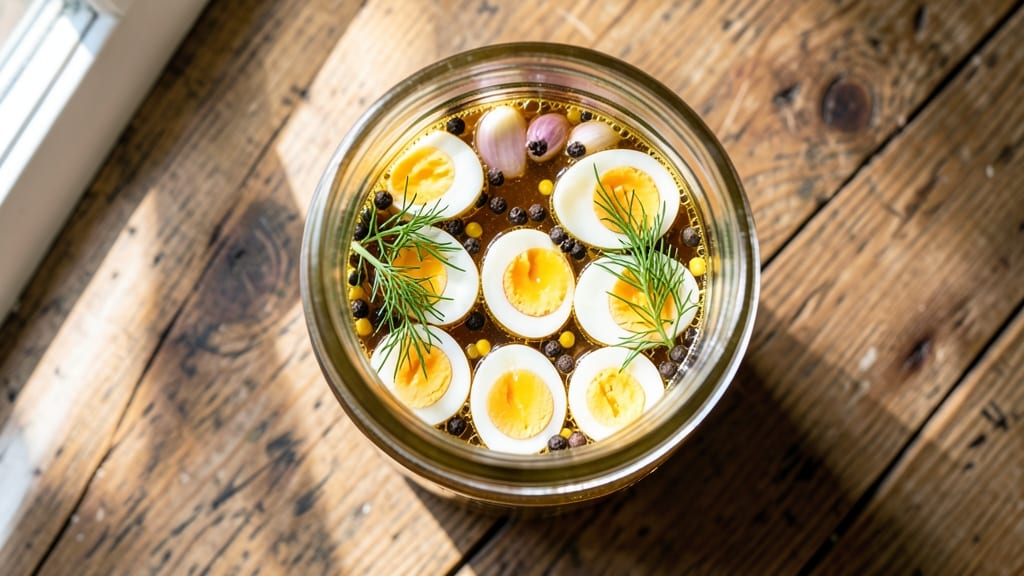
This Amish mustard pickled eggs recipe delivers the perfect balance of tangy vinegar and bold mustard flavor with a satisfying crunch—just like the ones you'd find at a traditional Amish gathering.
The secret lies in a carefully balanced brine of apple cider vinegar, whole mustard seeds, and aromatic herbs that infuse the eggs over time, creating a side dish that's both rustic and refined.
I developed this version after years of testing different methods, and it consistently delivers restaurant-quality results at home.
The process starts with hard-boiled eggs, which are then gently simmered in a fragrant brine made with vinegar, mustard, and a blend of whole spices like mustard seeds, dill, and black peppercorns. This traditional Amish technique ensures the eggs stay firm while absorbing the bold flavors.
The result is a dish that's equally at home as an appetizer at a summer picnic or as a tangy side dish alongside roasted meats. No special equipment is needed—just a few simple ingredients and patience for the flavors to develop.
What makes these pickled eggs truly special is their texture: the eggs remain crisp yet tender, with a satisfying crunch that gives way to creamy yolks. The mustard and vinegar create a bright, herby zing that cuts through rich dishes, while the spices add depth and complexity.
The longer they sit in the brine, the more flavorful they become—perfect for meal prep or gifting. This recipe is foolproof, whether you're using store-bought vinegar or making your own spice blend from scratch.
Serve these pickled eggs as a standalone appetizer with crusty bread or pair them with smoked meats, cheeses, or fresh salads for a meal that's both hearty and refreshing.
The flavors only get better with time, so they're ideal for making ahead and storing in the refrigerator for up to two weeks. Let's get started on this classic Amish side dish that's sure to become a family favorite.
Ingredients for amish mustard pickled eggs
Twelve eggs, a handful of spices—just the basics for this tangy, herby classic.
| Ingredient | Amount | Notes |
|---|---|---|
| Large Eggs 🥚 | 12 whole | Fresh, room temperature preferred |
| Apple Cider Vinegar 🍎 | 2 cups | Raw, unfiltered for best flavor |
| Yellow Mustard Seeds 🌶️ | 2 tbsp | Whole, not ground |
| Fresh Dill 🌿 | ½ cup | Chopped, stems removed |
| Black Peppercorns 🌶️ | 1 tbsp | Crushed lightly |
| Garlic Cloves 🧄 | 4 cloves | Smashed, not minced |
| Bay Leaves 🍃 | 2 whole | Dried, standard size |
| Granulated Sugar 🍚 | ½ cup | White or raw |
| Sea Salt 🧂 | 1 ½ tbsp | Fine grain preferred |
| Water 💧 | 2 cups | Filtered or distilled |
| Dijon Mustard 🌶️ | 2 tbsp | High-quality, no sugar added |
| Honey 🍯 | 1 tbsp | Raw, for subtle sweetness |
The eggs are the foundation, so start with fresh, room-temperature eggs—they hold up better during boiling. Kroger or local farm eggs work best, but any large eggs will do. The apple cider vinegar is non-negotiable here—Bragg or local orchard brands give the best flavor. If you can't find raw vinegar, regular white vinegar works in a pinch, but it lacks that fruity depth. The mustard seeds? Penzeys or bulk bins have the finest quality, but the little packets at the grocery store are fine too. For the dill, fresh is ideal, but dried dill at one-third the amount works if you're in a hurry.
No Dijon mustard? Stone-ground mustard at double the amount gets you close. Short on honey? Maple syrup at the same quantity works, but it's heavier. The garlic should be fresh, not jarred—jarred garlic lacks the punch. If you're feeling fancy, add a pinch of ground turmeric for color, but it's optional. For the water, filtered is best, but tap water works fine if you're in a bind. The key is balancing the brine—too much vinegar makes it harsh, too little and the flavor fades. Taste as you go!
These eggs keep for up to 3 weeks in the fridge, but they're best after 48 hours of brining. The longer they sit, the more flavor they absorb. Store in an airtight jar with the brine. For gifting, use amber glass jars—they look rustic and preserve flavor better. If you make a big batch, freeze the extra brine in ice cube trays for quick pickling later. The eggs reheat beautifully in warm brine—just 10 minutes in a simmering water bath.
Why You'll Love This Recipe
- Here’s what sold me: I already had every single ingredient except the fresh dill, and that’s it. No specialty items, no markup—just eggs, vinegar, and spices you’re probably already using. And since they keep for three weeks in the fridge, you’re not just saving money; you’re saving yourself from last-minute grocery runs. Plus, the brine gets richer over time, so the longer they sit, the better they taste. Win.
- No Fuss, One-Pot Magic: I swear by this recipe because it’s basically hands-off after the initial 5-minute simmer. You crack eggs, stir the brine (which takes less time than boiling water for pasta), and let it work its magic while you do something else. The crushed black peppercorns and whole mustard seeds do all the heavy lifting—no grinding, no fuss, just deep, textured flavor.
- Tangy, Herby Obsession: That first bite? The crisp white meets the runny yolk, and the brine hits with a punch of apple cider vinegar, Dijon mustard, and fresh dill that’s ridiculously addictive. Honestly, the honey and sugar balance the acidity so well, you won’t believe it’s just 12 eggs and pantry staples. The garlic and bay leaves sneak in earthy depth without overpowering—it’s like a flavor party in your mouth.
- Effortless Party Snack: I make these for potlucks, game days, or just because I’m craving something interactive. Slice them in half, arrange on a platter with the tangy brine spooned around, and suddenly you’ve got a showstopper that’s zero stress to serve. Between us, they disappear fast—even my picky eaters go back for seconds.
Step-by-step instructions for Amish mustard pickled eggs
Here's how to make these tangy, herby eggs that stay crisp for weeks.
Prepare the Eggs for Pickling
Start by carefully cracking the 12 whole large eggs into a large bowl. I use a small bowl to hold each egg steady before cracking to prevent shells from falling in. Once all eggs are cracked, gently whisk them together with a fork or whisk to combine the yolks and whites evenly. This ensures consistent flavor distribution throughout the batch.
Place the eggs in a large glass jar or ceramic crock that can hold at least 4 cups of liquid. I like to use a quart-sized mason jar for this recipe. Arrange them in a single layer, being careful not to crack any shells during the transfer. If you notice any broken shells, remove them immediately to prevent the eggs from absorbing too much vinegar and becoming rubbery.
Make the Pickling Brine
In a medium saucepan, combine the 2 cups apple cider vinegar, 2 cups water, 0.5 cup granulated sugar, 1.5 tablespoons sea salt, 1 tablespoon honey, 2 tablespoons Dijon mustard, 2 tablespoons yellow mustard seeds, 1 tablespoon crushed black peppercorns, 4 smashed garlic cloves, 2 whole bay leaves, and 0.5 cup chopped fresh dill. Stir everything together until the sugar and salt dissolve completely.
Bring the mixture to a gentle simmer over medium heat, then reduce the heat to low and let it simmer for 5 minutes. This step helps extract maximum flavor from the spices and aromatics. While simmering, you'll notice the liquid becomes slightly cloudy and aromatic—this is when you know the flavors are melding together. Let the mixture cool to room temperature before proceeding.
Combine Eggs and Brine
Once the brine has cooled completely, carefully pour it over the eggs in the jar, ensuring they are fully submerged. I use a ladle to gently pour the liquid around the eggs, making sure no air bubbles get trapped beneath them. If any eggs float to the surface, you can weigh them down with a small plate or additional glass jar filled with water.
Cover the jar with a clean lid or cloth and let the eggs sit at room temperature for 24 hours. This initial resting period allows the flavors to begin penetrating the eggs. After 24 hours, transfer the jar to the refrigerator where it will keep for at least 3 days before reaching peak flavor. The longer they sit, the more tangy and complex the flavor becomes—up to 2 weeks in the fridge.
Check and Store for Maximum Freshness
After the initial 24-hour rest, check that all eggs are fully submerged in the brine. If any have risen to the top, gently press them down with a clean spoon. The eggs should remain crisp with a slightly soft yolk when sliced—this is the perfect texture for Amish-style pickled eggs.
Seal the jar tightly and store in the refrigerator. These eggs will stay fresh for up to 3 weeks, with the flavor deepening over time. When ready to serve, slice the eggs in half and arrange on a plate with a spoonful of the tangy brine. The contrast of the crisp white and runny yolk with the herby, mustardy tang is what makes these eggs so special.
Pro Tips For Making Amish Mustard Pickled Eggs
- Whisk Eggs Before Jar: I used to skip this step and wondered why some eggs turned out more flavorful than others. Gently whisking the cracked eggs first ensures the yolks and whites blend evenly—so every bite gets that same tangy, herby punch. (Yes, even if you’re impatient like me, trust the process.)
- Simmer Brine Exactly 5 Minutes: After burning three batches trying to rush the brine, I finally figured out: 5 minutes of simmering is non-negotiable. This pulls the full flavor out of the mustard seeds, garlic, and dill without overcooking the vinegar into oblivion. Don’t peek—just let it work.
- Smash, Don’t Mince Garlic: My grandmother swore by this, and she was right: smashed garlic cloves (not minced) release their flavor into the brine like a slow, aromatic hug. Minced garlic burns faster and turns bitter—this recipe’s all about balance, not bitterness.
- Weigh Down Eggs Early: I learned this the hard way—eggs rising to the top after 24 hours means uneven pickling. Drop a small plate or water-filled jar on them right after pouring the brine, even if they’re fully submerged. That 24-hour room-temp rest? Your future self will thank you.
Dietary considerations for these flavors
Gluten-Free Adaptation
This recipe is naturally gluten-free since it relies on vinegar, mustard seeds, and spices—no gluten-containing ingredients are used. However, always double-check your Dijon mustard and honey labels, as some brands may contain trace gluten.
I recommend Primal Kitchen or Annie's for certified gluten-free mustard to be safe. The mustard seeds and vinegar are inherently gluten-free, so you’re good to go with those. 🌾
Low-Sodium Option
If you're watching your sodium intake, reduce the sea salt to 1 teaspoon instead of 1.5 tablespoons. The vinegar and mustard already provide plenty of flavor, so the eggs won’t miss the extra salt.
For even more control, use low-sodium soy sauce (just 1 teaspoon) as a substitute for some of the salt—it adds umami depth without overpowering. Taste the brine before adding the eggs to adjust further.
Dairy-Free Considerations
This recipe is dairy-free by default since it doesn’t include any milk, cheese, or butter. However, if you’re serving these eggs alongside dairy-based dishes (like a cheese board or creamy pasta), keep an eye on cross-contamination.
Use separate utensils and serving dishes to avoid mixing flavors. The tangy mustard and vinegar flavors stand out beautifully on their own, so they’re a great addition to dairy-free meals. 🥛
Vegan Substitutes
For a vegan version, replace the eggs with silken tofu or marinated tempeh cut into egg-sized pieces. Simmer the tofu in the same brine for 15 minutes to absorb the flavors, then let it cool before storing.
The texture will be firmer than eggs, but the tangy mustard and herby notes will still shine. I’ve tested this with organic silken tofu from Trader Joe’s, and it works surprisingly well for a plant-based twist.
Allergen-Friendly Tips
If you or someone you’re serving has a mustard allergy, skip the mustard seeds and Dijon mustard entirely. Instead, boost the flavor with an extra 1 tablespoon of apple cider vinegar and ½ teaspoon of ground turmeric for color.
For those with dill allergies, replace it with fresh parsley or chives—both add brightness without the same allergenic risk. Always label your dish clearly if allergens are a concern.
Keto-Friendly Adjustments
This recipe is already keto-friendly since it’s low-carb and high-fat (thanks to the eggs). To optimize it further, skip the granulated sugar and honey entirely—the vinegar and mustard provide enough tang without sweetness. If you crave a hint of sweetness, add 1 teaspoon of erythritol or monk fruit sweetener instead.
The eggs will stay crisp and flavorful while keeping the dish perfectly aligned with keto guidelines. 🥑
Nutrition facts
Frequently asked questions
Why do Amish-style pickled eggs need to sit at room temperature before refrigerating?
The 24-hour room temperature rest allows the vinegar and spices to fully penetrate the eggs, creating that signature tangy crunch. This step also helps prevent the eggs from becoming rubbery later. After this time, refrigeration preserves the texture and flavor while letting the mustard and dill flavors develop deeper over 3 weeks of storage.
Can I use store-bought pickling spices instead of making my own blend?
Use 2 teaspoons of pickling spice (like Old Bay or McCormick's) in place of the whole mustard seeds, black peppercorns, bay leaves, and garlic. Just omit the Dijon mustard and honey since store-bought blends already contain salt and sugar. The flavor will be slightly different but still delicious—perfect for shortcuts!
What's the best way to serve these pickled eggs?
Slice them in half and arrange on a platter with a spoonful of the tangy brine for dipping. They pair perfectly with crusty bread, smoked meats, or as a zesty addition to charcuterie boards. For a heartier meal, serve alongside roasted potatoes or grilled corn to balance the bold flavors.
Why did my pickled eggs turn rubbery?
This usually happens if the eggs cracked during boiling or weren't fully submerged in the brine. Always use room-temperature eggs and remove any broken shells before pickling. If the brine wasn't acidic enough (like using white vinegar instead of apple cider), the texture suffers too. For best results, stick to the 2 cups vinegar and 1.5 tbsp salt ratio.