
Side Dishes
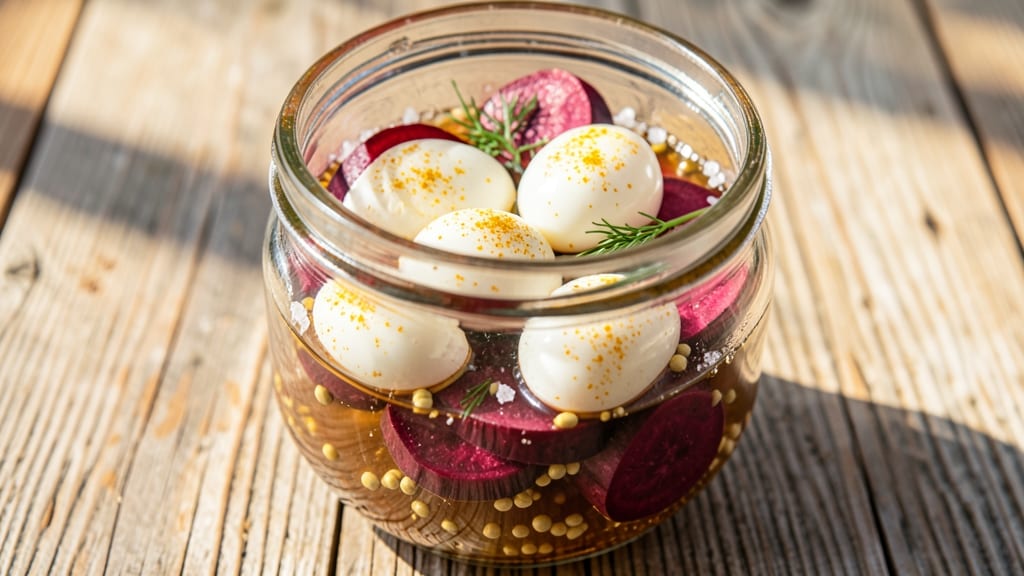
This Amish pickled eggs and beets recipe transforms humble ingredients into a vinegar-bright, sweet-tangy side dish that tastes like summer in a jar. Growing up in Pennsylvania, I learned how Amish communities preserve harvests using simple, time-honored methods that keep flavors vibrant for months.
The secret lies in the balance of vinegar, sugar, and spices—creating a crunchy, tangy bite that pairs perfectly with fried chicken or sandwiches.
The process is straightforward but requires patience: fresh beets and hard-boiled eggs are submerged in a carefully measured brine of vinegar, water, and spices, then left to cure for at least a week.
This slow method develops deep, complex flavors while maintaining the beets' natural sweetness and the eggs' satisfying crunch. Unlike store-bought versions, homemade pickled eggs and beets stay crisp and tangy for weeks, making them a foolproof pantry staple.
What you’ll end up with is a jar of crunchy, vibrant pickled beets and eggs—bright red, glossy, and packed with that signature tangy-sweet flavor. The beets hold their shape while absorbing just enough of the brine to stay tender-crisp, and the eggs develop a satisfying snap when bitten into.
This dish is more than just a side; it’s a taste of tradition, perfect for potlucks, picnic spreads, or as a quick snack straight from the jar.
Best of all, this recipe scales easily—double the batch for gifts or meal prep. The key is letting the flavors meld over time, so plan ahead for the most rewarding results. Let’s get started on preserving that farm-fresh taste!
Ingredients for amish pickled eggs and beets
Pantry staples meet Amish tradition: vinegar, sugar, and spices transform humble eggs and beets into a tangy, crunchy masterpiece.
| Ingredient | Amount | Notes |
|---|---|---|
| Large Eggs 🥚 | 8 whole | Fresh, organic preferred |
| Medium Beets 🥕 | 4 whole | Fresh, medium-sized, peeled |
| White Vinegar 💧 | 2 cups | Distilled, 5% acidity preferred |
| Granulated Sugar 🍚 | 1 cup | White or raw cane sugar |
| Coarse Kosher Salt 🧂 | ½ cup | Diamond Crystal preferred |
| Mustard Seeds 🌶️ | 1 tbsp | Whole, yellow preferred |
| Black Peppercorns 🌶️ | 1 tbsp | Freshly cracked preferred |
| Fresh Dill Sprigs 🌿 | ¼ cup | Packed, stems removed |
| Garlic Cloves 🧄 | 4 cloves | Fresh, peeled, lightly crushed |
| Water 💧 | 2 cups | Filtered or distilled preferred |
| Red Wine Vinegar 🍷 | ½ cup | For depth of flavor |
| Ground Turmeric 🌿 | ½ tsp | For vibrant color |
| Vegetable Oil 🫒 | ¼ cup | For frying beets |
The eggs and beets are the stars here—freshness is non-negotiable. For the eggs, organic or pasture-raised yields richer flavor, but any large eggs will work. The beets should be firm, vibrant, and about the size of a tennis ball—local farmers' markets or organic sections at Whole Foods carry the best quality. If using store-bought beets, opt for pre-washed but unpeeled varieties to preserve texture. The vinegar is critical: distilled white vinegar provides consistent acidity, while red wine vinegar adds complexity. For the spices, Penzeys or Spicewalla offer premium options, but basic pantry spices suffice if fresh.
No white vinegar? Apple cider vinegar works in a pinch, though it may impart slight sweetness. Substitute red wine vinegar with lemon juice at half the amount, but the flavor profile shifts slightly. For the beets, if you can't find medium-sized ones, small beets can be halved—just ensure even cooking. The dill is essential for that classic Amish tang, but if unavailable, dried dill at one-third the amount will do. For the garlic, powdered garlic can replace fresh, though it lacks depth. The turmeric adds color but can be omitted if you prefer a more natural hue—just increase sugar slightly to balance acidity.
This preserves beautifully—3-4 weeks in the fridge for peak crunch, up to 6 months if canned properly. For canning, use hot-pack method with new pint jars and process for 1 hour in a boiling water bath. Store in a cool, dark place to maintain vibrant color. The eggs will develop a satisfying snap after 2-3 days of curing, while the beets remain tender-crisp. Portion into small jars for gifts or meal prep—each jar keeps for 2-3 weeks once opened.
Why You'll Love This Recipe
- No Boiling Required: I’ll admit, I was skeptical at first—no boiling eggs? But the vinegar brine does all the work while you boil the beets. Less mess, no cracking, and the eggs stay perfectly intact. Honestly, it’s the kind of shortcut that makes me want to cook more.
- Sweet-Tart Magic: That balance of sugar and vinegar? Chef’s kiss. The beets add earthy depth, while the eggs soak up just enough tang to make every bite addictive. It’s the kind of flavor that lingers—like a hug for your taste buds.
- Picnic or Potluck Hero: Between us, this is my go-to for gatherings. Cold eggs and beets in jars? Zero fuss to pack, zero fuss to serve. My daughter’s friends always ask for seconds, and I just smile while I sneak another jar into my basket.
- Pantry Goldmine: I make a big batch and keep it in the fridge for weeks. The vinegar keeps things fresh, and the sugar makes it taste like a treat—not just leftovers. Plus, beets and eggs are dirt cheap. It’s my secret for stretching meals without breaking the bank.
Step-by-step instructions for Amish pickled eggs and beets
Here's the method for preserving vibrant beets and tender eggs in a sweet-tart brine.
Prepare the Beets for Pickling
In a medium saucepan, combine the 2 cups water, 1 cup granulated sugar, and 0.5 tsp ground turmeric. Bring to a boil over medium-high heat while you prepare the beets. Peel the 4 whole medium beets and cut them into 1-inch thick slices—uniform thickness ensures even cooking.
Heat 0.25 cup vegetable oil in a separate skillet over medium heat. Add the beet slices in a single layer and cook for 3-4 minutes per side until they develop a golden crust. This step enhances their texture and flavor before pickling. Remove the beets and set aside in a clean bowl.
Return the saucepan of water-sugar mixture to a boil, then add the 4 cloves garlic cloves and 0.25 cup fresh dill sprigs. Simmer for 5 minutes to infuse the liquid with flavor. This aromatic base will become the heart of your pickling brine.
Hard-Boil the Eggs and Prepare the Brine
Place the 8 whole large eggs in a saucepan and cover them with cold water by 1 inch. Bring to a boil over high heat, then immediately reduce to low heat and simmer for exactly 9 minutes. This timing ensures perfectly set whites with creamy yolks that won't overcook.
Drain the eggs in a colander and transfer them to an ice bath for 5 minutes to stop the cooking process. Once cooled, peel the eggs under running water to remove any remaining shell fragments. This step is crucial for clean, professional-looking pickled eggs.
In a large mixing bowl, combine the 2 cups white vinegar, 0.5 cup red wine vinegar, 0.5 cup coarse kosher salt, 1 tbsp mustard seeds, and 1 tbsp black peppercorns. Stir until the salt and spices are fully dissolved. This brining solution will create the signature tangy flavor profile of Amish pickles.
Assemble and Pack the Pickling Jars
Layer the cooked beet slices and peeled eggs alternately in clean, sterilized quart-sized jars. Start and end with beets to ensure even exposure to the brine. Arrange the garlic cloves and dill sprigs among the layers for additional flavor infusion during the pickling process.
Carefully pour the warm vinegar brine over the beets and eggs, ensuring each piece is completely submerged. Use a wooden spoon to gently press down the contents if needed, creating space for the liquid to reach all surfaces. Leave ½-inch headspace at the top of each jar.
Seal the jars tightly with lids and place them in a large pot. Cover the jars with 2 inches of water and bring to a boil over medium-high heat. Process in a water bath for 30 minutes to sterilize the contents. This step extends shelf life and ensures food safety.
Cool and Store the Pickled Mixture
Remove the jars from the water bath and let them cool to room temperature. Once cooled, store them in a dark, cool place for at least 48 hours before consuming. This resting period allows the flavors to fully develop and meld together.
The pickled beets and eggs will keep in the refrigerator for up to 3 months, maintaining their vibrant color and crisp texture. The combination of sweet beets and tangy eggs creates a perfect balance of flavors that's both refreshing and satisfying.
Pro Tips For Making Amish Pickled Eggs And Beets
- Fry Beets Fast: Skip the slow boil—those 3-4 minutes per side in 0.25 cup vegetable oil over medium heat give them that crisp golden crust without waiting. I used to boil them like potatoes, but this step actually makes them taste richer when pickled.
- Salt the Brine Right: Stir that 0.5 cup coarse kosher salt into the vinegar mixture until it completely dissolves—no gritty surprises later. I learned this the hard way when I rushed it and ended up with salt crystals floating in my jars.
- Don’t Rush the Eggs: That exact 9 minutes at a gentle simmer after boiling is non-negotiable. One minute more and your yolks turn rubbery; one less and the whites stay too soft. Set a timer—trust me, your future self will notice.
- Pack Jars Tight, But Leave Air: Press the beets and eggs down just enough to submerge them, but don’t jam them. That ½-inch headspace is your friend—it prevents mold and keeps the brine from spilling when you open the jar later. (Yes, I’ve learned this the messy way.)
Troubleshooting this dish
Brine Too Weak?
If your pickled eggs and beets aren’t tangy enough after curing, your brine may need more acidity. The key is maintaining the right ratio of vinegar to water—aim for 1:1 (like in the recipe).
If yours tastes flat, stir in an extra ¼ cup white vinegar and redistribute it over the contents. For extra zing, add 1 tsp mustard powder or ½ tsp red pepper flakes to the brine before reprocessing. 💡
Eggs Turning Cloudy?
Cloudy eggs usually mean overcooking or improper cooling. Stick to the 9-minute boil and ice bath steps—this preserves clarity.
If it happens, peel the eggs again under cold water, then submerge them in fresh, cold brine (equal parts vinegar and water) for 12 hours before returning to the original jar. This refreshes their appearance and taste.
Beets Too Soft?
Overcooked beets lose their satisfying crunch. To fix this, reduce cooking time by 1 minute per side in the oil. For extra firmness, add ½ tsp tapioca starch to the beet slices before frying—they’ll hold shape better.
If already too soft, drain them, pat dry, and sprinkle with 1 tsp cornstarch before returning to the jar for a starchy bite. 🥕
Mold or Fuzz?
This usually means contamination during packing or improper sealing. Discard any jars with mold immediately—it’s a sign of spoilage. To prevent it, always use sterilized jars and lids, and ensure everything is fully submerged in brine.
If you see just a little fuzz, skim it off and check for off smells—if the contents still taste fine, they’re likely safe to eat.
Brine Too Strong?
If the flavor is overwhelmingly sour, dilute the brine by removing ½ cup liquid and replacing it with ½ cup cold water. Stir gently to redistribute, then reseal the jar.
For a milder taste, add 1 tbsp honey or sugar to balance the acidity. Let the jar sit for 24 hours before tasting again—flavors mellow over time. 🍯
Jars Not Sealing?
If lids won’t stay sealed after processing, the issue is usually air bubbles or improper headspace. Remove the lids, gently press down the contents to eliminate air pockets, then reseal.
For stubborn jars, place them in a boiling water bath for 10 more minutes—this often helps the lids seal properly. If still loose, refrigerate and use within 1 week (the vacuum won’t form, but the contents will stay fresh).
Nutrition facts
Frequently asked questions
Why do Amish recipes use pickling for preservation?
Traditional Amish communities rely on pickling as a natural preservation method to extend food shelf life without refrigeration. The combination of vinegar, salt, and spices creates an acidic environment that prevents bacterial growth while enhancing flavor. This technique originated from European settlers who adapted it to local ingredients like beets and eggs—both abundant in Pennsylvania farmsteads. The process also transforms simple ingredients into vibrant, flavor-packed dishes perfect for summer picnics or winter meals.
Can I use store-bought pickled beets instead of fresh?
Fresh beets are ideal for this recipe because they hold their texture better during pickling. However, if you must use store-bought pickled beets, drain and rinse them thoroughly to remove excess brine, then pat dry before adding to your jar. For best results, reduce the recipe's sugar by ½ cup since store-bought versions are already sweetened. The flavor will be slightly different but still delicious.
How long should I wait before eating the pickled eggs and beets?
For optimal flavor development, wait at least 7-10 days before eating. The first 48 hours allow the ingredients to absorb the brine, while the full week lets the spices and vinegar meld together. After 2 weeks, the flavor peaks with maximum tanginess and crunch. If you're impatient, taste after 3 days—just know the flavor will continue improving for weeks.
What's the best way to serve these pickled eggs and beets?
These make a perfect side for fried chicken, cornbread, or sandwiches. Try them on charcuterie boards with sharp cheddar and crusty bread, or as a topping for burgers. For a vegetarian option, serve with roasted potatoes or as a topping for grain bowls. The combination of sweet beets and tangy eggs also pairs beautifully with smoked meats like ham or sausage.
Can I make this recipe without vinegar?
Vinegar is essential for proper pickling as it creates the acidic environment needed for preservation. However, if you're avoiding vinegar for dietary reasons, you could try a lacto-fermented version using 2% salt brine (2 tbsp salt per quart of water) instead. Note that the flavor will be milder and less tangy, and the shelf life will be shorter (2-3 weeks in the fridge). For safety, always use sterilized jars and proper fermentation techniques.