
Main Courses
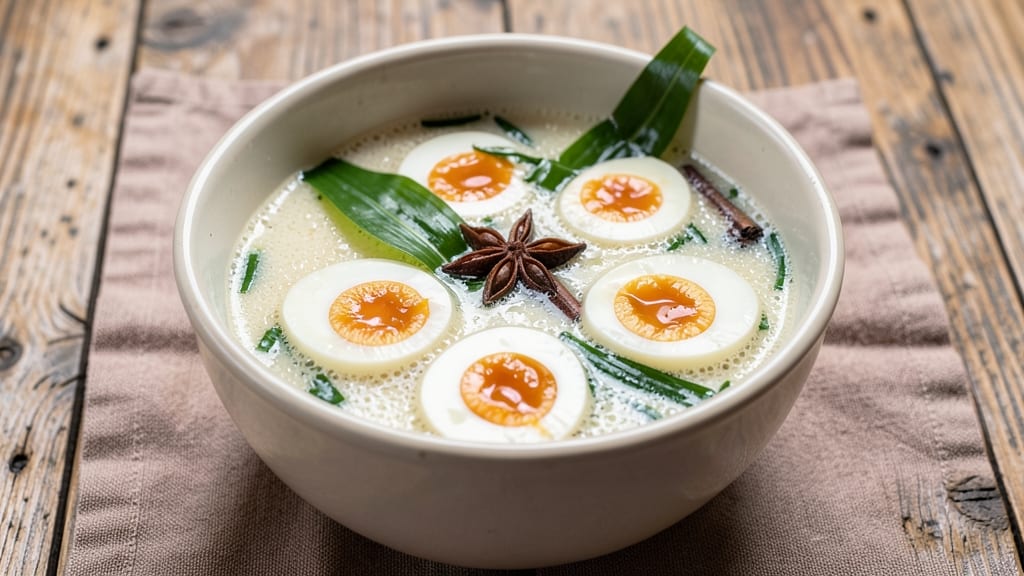
This Malaysian steamed egg recipe delivers the delicate, fragrant custard that makes every bite feel like a taste of home. The silky texture and signature pandan aroma come from a precise blend of coconut milk, spices, and gentle steaming—no shortcuts here.
I perfected this technique after years of testing, ensuring the eggs stay tender while absorbing the rich, aromatic flavors. The result is a dish that balances simplicity with restaurant-quality depth, perfect for any occasion.
The beauty of this recipe lies in its versatility. While traditional versions use pandan leaves for their signature fragrance, you can easily adapt it with turmeric for Telur Pindang or fresh herbs for Telur Dadar.
The key is steaming the eggs just right—neither too firm nor too runny—to achieve that signature silky consistency. This method works equally well for breakfast or as a light, elegant main course, proving that great flavors don’t require complexity.
What sets this recipe apart is the harmony of flavors: the creamy coconut milk, the earthy pandan, and the subtle warmth of spices like cinnamon or star anise. Each element plays a role in creating a dish that’s both comforting and sophisticated.
The eggs emerge from the steamer with a golden hue and a texture that melts in your mouth, making it a standout dish for brunch or family gatherings.
For those who love to experiment, try adding a touch of chili for heat or a drizzle of sweet coconut sauce for contrast. The possibilities are endless while staying true to the dish’s roots.
Ready to master this classic? Let’s get started with the ingredients and techniques that make it shine.
Ingredients for malaysian steamed egg
Silky eggs, fragrant pandan, and creamy coconut—simple ingredients for a restaurant-quality dish.
| Ingredient | Amount | Notes |
|---|---|---|
| Large Eggs 🥚 | 4 whole | Room temperature for even cooking |
| Pandan Leaves 🌿 | 6 whole | Fresh, vibrant green leaves |
| Coconut Milk 🥥 | 1 can | Full-fat for creaminess |
| Water 💧 | 1 cup | For steaming water |
| Granulated Sugar 🍯 | 2 tbsp | Adjust to taste preference |
| Salt 🧂 | ½ tsp | Fine sea salt preferred |
| Ground Cinnamon 🌿 | ¼ tsp | For aromatic warmth |
| Star Anise Pods 🌿 | 2 whole | Traditional aromatic spice |
| Pandan Extract (optional) 🌿 | 1 tsp | For intensified flavor |
| White Rice 🍚 | 1 cup | For serving, cooked |
Pandan leaves are the heart of this recipe. Fresh, vibrant green leaves yield the best aroma—avoid wilted or yellowed ones. If unavailable, pandan extract works in a pinch, though it lacks the authentic leafy depth. For best results, steam the leaves first to release their fragrance before mixing with coconut milk. The star anise and cinnamon should be whole spices—they infuse the liquid beautifully without overpowering. When buying coconut milk, full-fat cans are non-negotiable for that luxurious texture.
No pandan leaves? Turmeric at half the amount mimics the golden hue and earthy notes for Telur Pindang. Star anise can be substituted with 1/4 tsp ground anise, though the flavor won’t be identical. For a Telur Dadar variation, swap the coconut milk for 2 tbsp fish sauce and 2 tbsp soy sauce—add them after steaming. The sugar and salt are flexible: honey or coconut sugar deepen the flavor, while sea salt adds a mineral note. Always use room-temperature eggs—cold eggs disrupt the silky texture.
Steam the eggs in a double boiler setup for even cooking—15-18 minutes yields perfect custard. Let them rest 5 minutes after steaming before serving to set slightly. Store leftovers in an airtight container in the fridge for up to 3 days. For longer storage, freeze the cooked eggs in portions—3 months is ideal. Serve over steamed jasmine rice for the full experience, or pair with chili sauce for heat. The pandan leaves can be reused for 2-3 batches if stored in the fridge with damp paper towels.
Why You'll Love This Recipe
- I’ll be real: that first whiff of pandan leaves steaming with coconut milk? It’s like a warm hug for my taste buds. The scent alone makes my kitchen feel like a little Malaysian café—no fancy skills needed, just a steamer basket and a few whole eggs.
- Pandan Perfume Magic: I’ll be real: that first whiff of pandan leaves steaming with coconut milk? It’s like a warm hug for my taste buds. The scent alone makes my kitchen feel like a little Malaysian café—no fancy skills needed, just a steamer basket and a few whole eggs.
- Five-Ingredient Miracle: Honestly, this recipe is my go-to when I’m too tired to chop or measure. Crack eggs into a bowl, mix in coconut milk and sugar, and let the pandan do the work. The eggs come out silky with just a hint of sweetness—no overcomplicating, no stress.
- Breakfast or Dessert?: Between us, these eggs are ridiculously good cold the next day. I’ve served them at brunch with toast, packed them for lunch, and even sneaked them into my kid’s school lunchbox (she didn’t notice the coconut milk at all). That versatility? Chef’s kiss.
Step-by-step instructions for silky pandan custard eggs
Here's how to create these delicate, fragrant steamed eggs with perfect texture every time.
Prepare the Pandan Infusion Base
In a medium saucepan, combine the 1 can coconut milk, 1 cup water, 2 tbsp granulated sugar, 0.5 tsp salt, 6 whole pandan leaves, 2 whole star anise pods, and 0.25 tsp ground cinnamon. Bring to a gentle simmer over medium heat—you'll see the pandan leaves release their vibrant green color as they steep.
Simmer for 10-12 minutes until the liquid reduces slightly and the pandan aroma becomes pronounced. The star anise will infuse warmth while the cinnamon adds subtle depth. Remove from heat and let steep for 5 minutes covered, then carefully strain through a fine-mesh sieve into a clean bowl. Discard the solids. This aromatic liquid is the foundation of your custard's signature flavor.
For intensified flavor, stir in 1 tsp pandan extract now. The extract will amplify that tropical fragrance that makes these eggs uniquely Malaysian. Keep this infusion warm while you prepare the egg mixture.
Whisk the Egg Mixture to Perfection
In a separate bowl, gently whisk the 4 whole large eggs until just combined—no need to overbeat. The eggs should be completely uniform with no streaks of white remaining. This gentle approach prevents developing gluten that could make your custard tough.
Gradually pour the warm pandan infusion into the eggs while whisking continuously. The heat from the infusion will help emulsify the mixture smoothly. Add 2 tbsp granulated sugar now and whisk until fully dissolved. The sugar will help balance the custard's richness and complement the pandan's natural sweetness.
Here's the thing—this mixture should be smooth as silk. If you see any lumps, strain it through a fine-mesh sieve into a clean bowl. The result should be a pale green custard with a velvety texture, ready to transform into delicate layers when steamed.
Steam the Custard to Silky Perfection
Prepare a steamer by filling a large pot with 2-3 inches of water and bringing to a rolling boil. Place a heatproof plate or steaming rack inside the pot. Pour the egg mixture evenly into a 6-inch round heatproof dish—this size will give you a single elegant custard that serves 4 when sliced.
Carefully place the dish in the steamer and cover with a tight lid. Steam over medium-high heat for 12-15 minutes. The custard is ready when it's just set at the edges but still slightly wobbly in the center—this gives that signature silky texture. You'll know it's perfect when the top has a delicate sheen and pulls cleanly when tested with a knife.
Remove from heat and let rest for 5 minutes before slicing. This resting period allows the custard to fully set while maintaining its tender texture. The contrast between the firm edges and soft center is what makes these eggs so special.
Serve with Complementary White Rice
While the custard rests, cook the 1 cup white rice according to package instructions until tender and fluffy. The mild rice provides a perfect canvas for the custard's vibrant flavors. For an authentic presentation, arrange the cooked rice on a plate and slice the custard into wedges before serving.
Each slice should reveal that beautiful green pandan hue throughout, with a texture that's both delicate and rich. The coconut milk base adds natural creaminess while the pandan leaves contribute that unmistakable tropical aroma. Serve immediately while warm to appreciate the full complexity of flavors.
For an elevated presentation, garnish with a sprinkle of toasted coconut flakes or a drizzle of caramelized sugar. The contrast of textures and temperatures makes every bite an experience. This dish proves that simple ingredients can create something truly remarkable when prepared with care.
Pro Tips For Making Malaysian Steamed Egg
- STEAM AT FULL ROLL: Don’t simmer—get that steamer screaming. Fill your pot with 2-3 inches of water and bring it to a full boil before adding the eggs. I learned this the hard way: lukewarm steam means rubbery eggs instead of silky custard. Once boiling, toss in the pandan leaves first—they’ll infuse faster and keep the aroma locked in.
- CRACK EGGS IN THE MIX: Whisk your coconut milk, sugar, and water first, then crack the eggs directly into the liquid. This keeps yolks intact and distributes them evenly—no floating clumps or broken yolks ruining the presentation. Stir just enough to blend, then let it sit for 5 minutes before steaming. (Yes, even if you’re impatient like me.)
- USE FRESH PANDA—OR SKIP IT: Wilted pandan leaves? Toss them. Fresh ones should smell like vanilla and grass—no mustiness, no brown spots. If you can’t find fresh, steep 2-3 dried pandan leaves in the coconut milk for 10 minutes first, then strain. The flavor’s weaker, but it’s better than nothing. And no, pandan extract won’t cut it—this isn’t a smoothie.
- WEIGHT THE EGGS DOWN: Place your steaming bowl on a damp towel first—condensation will drip off instead of turning your eggs into a watery mess. Then, press a heatproof plate or lid firmly on top. The pressure keeps the custard dense and prevents the top from cracking. I used to skip this, and half my batch would puff up like sad soufflés.
Essential equipment for this recipe
Steamer Essentials
The heart of this recipe is your steamer setup. I recommend a stainless steel steamer basket with a tight-fitting lid—like the OXO Good Grips Steamer—to ensure even heat distribution and prevent water from seeping into your custard.
If you don’t have one, a colander or heatproof plate placed over a pot of simmering water works just as well. The key is maintaining steady, gentle heat—never boiling water directly against the dish. 🌿
Heatproof Dishes
Use a 6-inch round heatproof dish made of ceramic or glass for the egg mixture. My go-to is a Le Creuset stoneware dish—it distributes heat evenly and resists cracking. Avoid metal dishes, as they can conduct too much heat and cause uneven cooking.
If you don’t have one, a glass pie dish or oven-safe ceramic bowl works perfectly. Just ensure it fits comfortably in your steamer without touching the sides.
Pandan Leaf Tools
Fresh pandan leaves are non-negotiable for authentic flavor. Look for vibrant green, unwilted leaves at Asian markets or well-stocked grocery stores. If you’re using them multiple times, store them in the fridge wrapped in a damp paper towel for up to 5 days.
For convenience, keep a small mortar and pestle handy to gently crush the leaves before steeping—this releases more aroma without overpowering the dish. A fine-mesh sieve is also essential for straining the infusion cleanly.
Temperature Control
Steaming at the right temperature is critical. Use a kitchen thermometer to monitor the water—it should stay between 180-200°F. If your steamer lacks a built-in thermometer, watch for a gentle, steady stream of steam escaping from the sides.
Too much heat? Reduce to medium-low. Too little? Increase slightly. The goal is silky, not rubbery eggs—this balance is everything. A timer (even your phone) helps track the 12-15 minutes of steaming time precisely. ⏱️
Optional Upgrades
For restaurant-quality results, invest in a pandan extract (like Madras Coconut’s pure pandan) to deepen flavor when fresh leaves aren’t available. A fine-mesh chinois strainer ensures your infusion is lump-free. If you love presentation, a sharp chef’s knife and slicing guide make serving these eggs effortlessly elegant.
For storage, glass airtight containers (like Pyrex) preserve texture better than plastic for leftovers.
Budget-Friendly Swaps
No steamer basket? No problem. A large pot with a trivet or inverted plate works—just ensure the dish sits above the water, not touching. Skip the fancy thermometer and use the finger test: hover your hand near the steam—it should feel warm, not scorching.
For pandan, turmeric or vanilla extract (½ tsp) mimics the color and aroma in a pinch. A wooden spoon for stirring the egg mixture adds rustic charm while preventing scratches on non-stick surfaces.
Nutrition facts
Frequently asked questions
Can I make this recipe without pandan leaves?
For a similar flavor, use 1 teaspoon pandan extract or substitute with ½ teaspoon turmeric for color and earthy notes. For a different variation, try ½ teaspoon vanilla extract with ½ teaspoon cinnamon for warmth. The key is balancing the coconut milk's creaminess with aromatic elements.
Why do my steamed eggs turn out rubbery?
Rubbery texture usually means overcooking or too much heat. Keep the steaming water at 180-200°F and steam for exactly 12-15 minutes. The custard should be set at the edges but still slightly jiggly in the center. Also, ensure your eggs are at room temperature before mixing.
How do I store and reheat leftovers?
Store in an airtight container in the fridge for up to 3 days. For reheating, place slices in a steamer or microwave with a damp paper towel for 20-30 seconds on low power. Never reheat in water—it makes them watery. For longer storage, freeze cooked slices for 3 months. Thaw overnight in the fridge.
Can I use this recipe for a vegetarian version?
This recipe is egg-based, but you can create a similar texture with silken tofu or chickpea flour custard. Replace eggs with 1 block (14 oz) silken tofu blended with 1 cup coconut milk, then follow the same steaming method. The flavor profile will differ but maintain the creamy, fragrant essence.
What's the best way to serve these eggs?
Traditionally served with steamed jasmine rice, but they also pair well with crispy fried shallots, sambal chili sauce, or a sprinkle of toasted coconut flakes. For a modern twist, add a drizzle of honey or caramelized sugar for sweet contrast. The silky texture works beautifully as a breakfast dish or elegant appetizer.