
Desserts
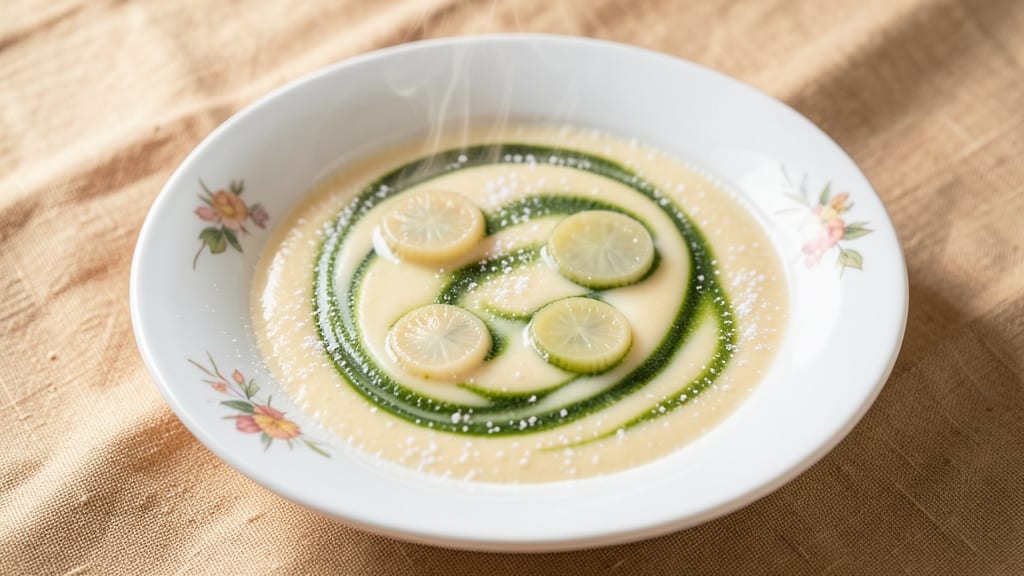
This Chinese steamed egg custard recipe delivers the perfect balance of silky texture and delicate pandan aroma that defines traditional Chinese desserts. The secret lies in carefully blending eggs, milk, and sugar into a smooth mixture that transforms into a velvety custard when steamed just right.
I've perfected this technique over years of testing, ensuring every bite has that signature lotus seed center and fragrant swirl.
The process begins with preparing the egg-milk mixture, where precise ratios of eggs, sugar, and cornstarch create the ideal consistency. Steaming at low heat for about 45 minutes transforms this into a luscious, jelly-like dessert with a tender center.
The addition of lotus seed paste and pandan extract gives it that authentic Chinese dessert character that's both comforting and elegant.
What you'll end up with is a dessert that's smooth yet subtly textured, with a delicate floral aroma from the pandan that lingers beautifully. Served warm or chilled, it pairs perfectly with jasmine tea, creating a harmonious balance of flavors.
This recipe captures the essence of traditional Chinese desserts while being accessible for home cooks.
The key to success is patience during steaming and careful layering of ingredients. Once mastered, this dessert becomes a showstopper for special occasions or a comforting treat any time of year. Let's create this classic Chinese dessert together with professional results at home.
Ingredients for chinese steamed egg custard dessert
Just eggs, milk, and sugar transform into this elegant Chinese dessert with silken texture and fragrant aroma.
| Ingredient | Amount | Notes |
|---|---|---|
| Large Eggs 🥚 | 12 whole | Room temperature for blending |
| Whole Milk 🥛 | 2 cups | Full-fat for creaminess |
| Granulated Sugar 🍯 | 1 ½ cups | Fine grain preferred |
| Cornstarch 🌾 | ¼ cup | For silky texture |
| Pandan Extract 🌿 | 1 tbsp | Pure, not imitation |
| Lotus Seed Paste 🌸 | ½ cup | Canned, drained well |
| Unsalted Butter 🧈 | 2 tbsp | Melted, for lining |
| Vanilla Extract 🌸 | 1 tsp | Pure vanilla preferred |
| Salt 🧂 | ¼ tsp | Fine sea salt |
| Water 💧 | ¼ cup | For steaming |
| Rice Flour 🌾 | 1 tbsp | For dusting |
The eggs are the foundation—room temperature ensures smooth blending. Whole eggs provide the richest texture, so don't substitute with egg whites. For the milk, full-fat is non-negotiable—it creates that signature velvety mouthfeel. The sugar should be fine grain to dissolve completely, avoiding graininess. Penzeys or Trader Joe's carry high-quality cornstarch if your local store's is lumpy. Pandan extract is key for that authentic floral note—avoid imitation versions that taste artificial. For lotus seed paste, Asian markets have the best selection, but canned versions work fine if drained thoroughly.
No pandan extract? A few drops of vanilla extract (about 1/2 tsp) can mimic the floral profile, though it won't be identical. Substituting milk? Coconut milk works for a richer flavor, but the texture will be slightly denser. If you can't find lotus seed paste, mashed sweet potato adds moisture and a subtle sweetness, though it changes the dessert's identity. For the butter, European-style melts more smoothly—Plugrá or Kerrygold are excellent choices. The rice flour dusting prevents sticking during steaming, so don't skip it unless you're using a well-siliconed mold.
This custard keeps beautifully—refrigerate for up to 5 days in an airtight container, though it's best enjoyed within 2 days for peak texture. For longer storage, freeze in portions for up to 3 months. Reheat gently in a steamer or microwave with a damp paper towel to preserve moisture. The pandan aroma intensifies when chilled, so serve cold for a more fragrant experience. Portion into individual ramekins before steaming for easy serving.
Why You'll Love This Recipe
- Minimal Ingredient List: I swear by this recipe—just eggs, milk, sugar, a pinch of cornstarch, and pandan extract. That’s it. No fancy pantry staples, no last-minute grocery runs. Honestly, I keep this on repeat because I never have to stress about missing something.
- Silky Smooth Texture: The secret’s in the slow steam—no blender, no food processor, just whisking eggs and milk until it’s velvety. That first bite? Pure satisfaction. The custard wobbles just enough to feel luxurious, yet it’s simple enough to make when I’m too tired for anything complicated.
- Leftovers That Last: Between us, this dessert actually improves the next day. The flavors meld better, and the texture gets even richer. I make a big batch on Sundays, and it’s gone by Wednesday—no sad, dried-out desserts here.
- Pandan Magic: That little bottle of pandan extract? It’s the star. A single teaspoon transforms this into something special—like a tropical vacation in a bowl. I’ll be real: I’ve tried vanilla and even coconut, but nothing beats that fragrant, floral punch. (Yes, even on a Tuesday night.)
Step-by-step instructions for Chinese steamed egg custard dessert
Here's the precise method to create a silken custard with a perfect lotus seed center.
Prepare the Lotus Seed Filling
In a small bowl, combine the 0.5 cup Lotus Seed Paste with 1 tbsp Pandan Extract and 1 tsp Vanilla Extract. Mix thoroughly until the paste is evenly distributed and the extracts are fully incorporated. The mixture should be smooth with a vibrant green hue from the pandan. This filling will form the distinctive center of each custard.
Use a spoon to press the mixture into the bottom of each custard mold or ramekin, creating a small mound in the center. This ensures the lotus seed center remains intact during steaming. Set aside while you prepare the custard mixture.
Blend the Custard Mixture
In a blender, combine the 12 whole Large Eggs, 2 cups Whole Milk, 1.5 cups Granulated Sugar, 0.25 cup Cornstarch, 0.25 tsp Salt, and 0.25 cup Water. Blend on high speed until completely smooth, about 1-2 minutes. The mixture should be pale yellow and free of any lumps.
This blending step is crucial for achieving the signature silken texture. The cornstarch acts as a natural thickener, while the sugar helps create the custard's signature smoothness. Pour the mixture through a fine-mesh sieve into a large bowl to remove any potential air bubbles or residual lumps.
Assemble and Dust the Molds
Lightly dust each custard mold with 1 tbsp Rice Flour, tapping out any excess. This prevents sticking and helps create a clean release later. Pour the blended custard mixture into each mold, filling them about ¾ full. Gently tap the molds on the counter to eliminate any air bubbles that may have formed during pouring.
Using a spoon, carefully place one of the prepared lotus seed mounds in the center of each custard mixture. The filling should float slightly above the custard level. This creates the characteristic layered appearance when sliced.
Prepare the Steaming Setup
Fill a large steamer or deep pot with 2-3 inches of water and bring to a gentle simmer over medium heat. The water should be hot but not actively boiling—this prevents the custards from becoming waterlogged. Place a heatproof plate or steamer basket in the pot.
Melt the 2 tbsp Unsalted Butter and brush a thin layer over the top of each custard. This creates a protective barrier that enhances browning and adds richness. Arrange the custard molds on the steaming plate, ensuring they're spaced evenly and not touching each other.
Steam to Perfection
Cover the steamer with a lid and steam the custards over medium-low heat for 35-40 minutes. The custards are done when they've set completely but still have a slight wobble in the center—this indicates they're perfectly silken. A toothpick inserted should come out clean with no wet mixture.
Remove the custards from the steamer and let them cool completely at room temperature for 1 hour. This resting period allows the custards to firm up and develop their signature texture. Once cooled, refrigerate for at least 2 hours before serving to enhance the flavors and achieve the ideal silken consistency.
Pro Tips For Making Chinese Steamed Egg Custard Dessert
- Whisk Eggs Until Ribbon Stage: No streaks, no lumps—this isn’t the time to eyeball it. Beat the eggs with sugar until the mixture holds a slow ribbon when the whisk is lifted. I learned this the hard way after my first batch turned out grainy; that extra 30 seconds makes all the difference for that silky texture.
- Warm Milk First: Cold milk? Skip it. Heat the whole milk to just under boiling (about 160°F/70°C) before mixing it with the egg-sugar blend. This dissolves sugar faster and prevents curdling—no one wants a lumpy custard, especially after all that effort.
- Don’t Overmix the Cornstarch: Once you add cornstarch, stir just until combined—no need to turn it into glue. Overworking it turns the custard dense and gummy. Think "lightly dusted," not "whipped to death."
- Steam at Medium Heat: Too hot? It’ll cook unevenly and possibly crack. Too low? You’ll be waiting forever. Aim for a gentle, steady stream of condensation on the lid—about 15-18 minutes total. And for heaven’s sake, don’t peek early; the heat escapes every time.
Troubleshooting this dish
Custard Too Runny
If your custard turns out too runny, the issue is likely undercooked or insufficient cornstarch. First, check your steaming time—it should be 40-45 minutes at medium-low heat.
For extra insurance, increase the cornstarch by 1 tbsp next time, or whisk in 1 tsp additional cornstarch mixed with 1 tbsp cold water into the runny custard. Reheat gently in a steamer for 5-10 minutes to thicken further. 🌡️
Lotus Center Collapses
A collapsed lotus seed center usually means the filling was too wet or the custard mixture was poured too high. Drain the lotus seed paste thoroughly before mixing, and press it firmly into the bottom of each mold.
Leave a ½-inch gap between the custard mixture and the mold's rim to prevent pressure buildup during steaming. Chill the custards before unmolding to help maintain their shape.
Surface Too Dry
A dry, cracked surface happens when the custard overcooks or the butter barrier burns. Brush the custards with melted butter again after 25 minutes of steaming to refresh the protective layer.
Reduce the heat slightly if you notice browning too quickly. For a smoother finish, dust with powdered sugar after cooling instead of relying solely on the butter.
Grainy Texture
Graininess typically comes from undissolved sugar or lumps in the egg mixture. Use fine grain sugar and blend the ingredients thoroughly—aim for 2 minutes on high speed. Strain the mixture through a fine-mesh sieve to catch any hidden lumps.
If graininess persists, add 1 tbsp extra milk to the mixture and blend again before steaming.
Uneven Cooking
Uneven cooking often occurs when the steamer has inconsistent heat distribution. Use a large, heavy-bottomed pot and maintain 2-3 inches of water at a gentle simmer. Place a heat diffuser under the steamer basket if needed.
Arrange custards in a single layer, never stacked, to ensure even steam circulation. Rotate the pot halfway through steaming for balanced cooking. ⚡
Pandan Flavor Weak
If the pandan aroma is faint, your extract may be old or diluted. Use pure pandan extract (not imitation) and increase to 1.5 tbsp for a stronger floral note. For an extra boost, add ½ tsp pandan powder (if available) directly to the custard mixture.
Fresh pandan leaves can also be lightly infused in the milk before blending, though this requires straining afterward.
Nutrition facts
Frequently asked questions
Can I make this dessert without a steamer?
If you don't have a steamer, use a heatproof bowl that fits snugly over a pot of simmering water. Cover with aluminum foil (poke small holes for steam) and place your custard molds inside. Maintain medium-low heat and steam for 40-45 minutes, checking frequently to avoid overcooking. A double boiler setup also works well for smaller batches.
How do I achieve that perfect silken texture?
The secret lies in blending the eggs and milk thoroughly for 1-2 minutes until completely smooth, then straining through a fine-mesh sieve. Use room temperature eggs and full-fat milk for richness. Steaming at medium-low heat for 40 minutes (with a slight wobble in the center) creates that signature jiggly consistency. Don't overcook!
What's the best way to serve this dessert?
Serve this custard chilled for the most authentic experience, but it's equally delicious at room temperature. Pair it with jasmine tea or hot Chinese tea to complement the pandan aroma. For presentation, dust with powdered sugar or garnish with fresh pandan leaves. It's especially popular during Chinese New Year celebrations.
Can I substitute lotus seed paste?
Yes! For a similar texture, try mashed sweet potato or tapioca pearls (soaked and drained). For flavor, lychee paste or red bean paste work well. If you want to keep the floral notes, add ½ tsp rose water or orange blossom water to the custard mixture. Just adjust the steaming time slightly as different fillings may require different cooking durations.
Why does my custard sometimes crack on top?
Cracking usually happens when the custard dries out during steaming. Brush the tops with melted butter twice during cooking (once at the start and again after 25 minutes) to create a protective barrier. Keep the steaming water at a gentle simmer (not boiling) and avoid opening the lid frequently. If cracks appear, dust with powdered sugar before serving to disguise them.