
Sauces & Condiments
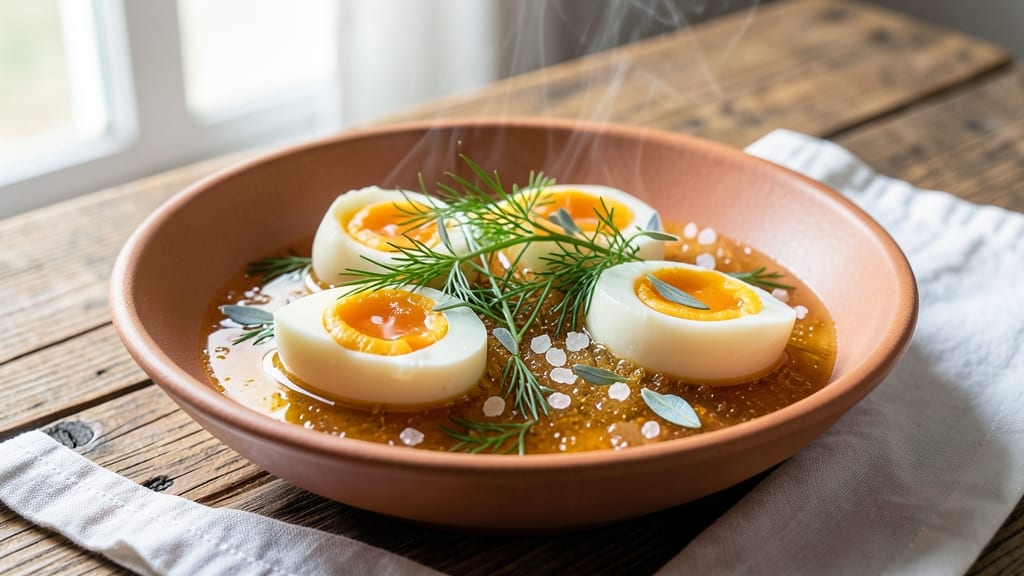
A herb-infused brine marinade transforms boiled eggs from bland to bold, with crisp peels and layers of flavor that linger in every bite. This precise method eliminates the frustration of stubborn shells while infusing eggs with aromatic herbs and subtle tang—perfect for meal prep or gourmet presentations.
The key lies in balancing acidity and seasoning to achieve both texture and taste perfection.
What sets this marinade apart is its dual-purpose design: it tenderizes eggs for effortless peeling while building complex flavor through vinegar, herbs, and a touch of sweetness. Unlike store-bought solutions, this recipe uses pantry staples and delivers restaurant-quality results in just 30 minutes of active time.
The brine works by breaking down egg proteins gently, creating that coveted separation between shell and yolk.
Once marinated, your eggs will have flawlessly crisp peels that slide off effortlessly and a rich, herbaceous profile that elevates any dish. The marinade's versatility extends beyond boiling—use it for deviled eggs, salads, or even as a base for egg salad.
With proper storage, it keeps for up to 5 days, making it an ideal solution for batch cooking.
This isn't just about peeling eggs—it's about transforming a simple ingredient into something professional and delicious. The technique is foolproof, the flavors are sophisticated, and the results will impress even skeptical eaters. Let's get started on creating eggs that peel perfectly every time.
Ingredients for boiled egg marinade
Pantry essentials meet herbaceous sophistication—this marinade elevates boiled eggs from ordinary to extraordinary.
| Ingredient | Amount | Notes |
|---|---|---|
| White Wine Vinegar 🍷 | 1 cup | Dry variety preferred for balance |
| Distilled White Vinegar 💧 | 1 cup | For acidity and preservation |
| Granulated Sugar 🍚 | ½ cup | Light brown preferred for depth |
| Diamond Crystal Kosher Salt 🧂 | ¼ cup | Coarse grain for even dissolution |
| Fresh Dill Weeds 🌿 | ½ cup | Finely chopped, stems removed |
| Fresh Tarragon Leaves 🌿 | ¼ cup | Finely chopped, organic preferred |
| Fresh Thyme Sprigs 🌿 | ¼ cup | Finely chopped, stems included |
| Garlic Cloves 🧄 | 6 cloves | Thinly sliced, skin removed |
| Black Peppercorns 🌶️ | 1 tbsp | Crushed, freshly ground preferred |
| Ground Black Pepper 🌶️ | 1 tsp | For final seasoning adjustment |
The vinegar duo—white wine and distilled—creates the perfect acid balance. Trader Joe's carries excellent dry white wine vinegar at reasonable prices, while Whole Foods often stocks organic distilled vinegar for a cleaner profile. Fresh herbs are non-negotiable here: Penzeys Spices sells pre-chopped herb blends, but nothing beats freshly chopped dill and tarragon from your garden or local farmers market. Look for herbs with vibrant color and no wilting—Wilting indicates age and diminished flavor. The garlic should be plump and firm, with no green shoots—this ensures maximum flavor infusion.
No fresh dill? Dried dill at one-third the amount works in a pinch, though texture will differ. Tarragon's unique anise flavor is hard to replicate—fennel seeds at half the amount offer a distant cousin. Substituting vinegar? Apple cider vinegar adds sweetness, while lemon juice introduces citrus notes that may alter the balance. For the sugar, honey or maple syrup can replace granulated, though they'll create a slightly different syrup texture. The peppercorns should be freshly crushed—pre-ground pepper loses potency quickly.
This marinade maintains peak quality for 5 days refrigerated in an airtight glass jar. For longer storage, freeze in 1-cup portions for up to 6 months. The herbs will separate slightly when frozen, so give it a stir before use. For best results, use within 3 days of boiling eggs—the marinade's flavor continues developing during storage. When ready to use, simply pour over eggs and let sit for 15-30 minutes before peeling.
Why You'll Love This Recipe
- Five-Minute Mix: The vinegar and sugar combo comes together faster than you can boil water—just stir, steep, and store. Honestly, I’ve made it while waiting for coffee to brew, and it still tastes like I put in effort.
- Bright & Tangy Kick: That fresh dill and vinegar tang cuts through everything—salads, grilled fish, even cold cuts. Between us, it’s the secret weapon in my picnic basket (yes, even on a Tuesday night).
- Pantry Magic: No fresh herbs? No problem. The dried dill works just fine, and the vinegar-sugar balance keeps it bright for weeks. I’ve used this marinade on boiled eggs, chicken, and even roasted potatoes—it’s that versatile.
- Budget Brightener: A splash of white wine vinegar and a pinch of salt transform simple boiled eggs into something special. I’ll be real: it costs pennies but makes every bite taste like a splurge. Plus, it stretches across multiple meals.
Step-by-step instructions for herb-infused brine for boiled eggs
This marinade transforms ordinary boiled eggs into restaurant-quality centerpieces with effortless peeling.
Combine Vinegars and Sugar for the Base Brine
In a large, non-reactive container with a lid, pour together the 1 cup white wine vinegar and 1 cup distilled white vinegar. Stir until fully blended. Add the 0.5 cup granulated sugar and dissolve completely by whisking vigorously. This creates a balanced foundation where the vinegar's acidity preserves the eggs while the sugar enhances flavor.
The mixture should be completely clear with no visible sugar crystals. If you notice any undissolved sugar, gently warm the liquid over low heat until fully integrated. This step is critical—undissolved sugar can create uneven flavor distribution in the marinade. Let the solution cool to room temperature before proceeding.
Incorporate Herbs, Garlic, and Whole Peppercorns
Add the 0.5 cup finely chopped fresh dill weeds, 0.25 cup finely chopped fresh tarragon leaves, and 0.25 cup finely chopped fresh thyme sprigs to the vinegar mixture. Stir thoroughly to distribute the herbs evenly. Next, incorporate the 6 thinly sliced garlic cloves and 1 tablespoon crushed black peppercorns, pressing them into the liquid to release their essential oils.
Here's the thing—proper herb distribution is key. I use a wooden spoon to press each herb sprig against the container's sides, ensuring maximum flavor extraction. The garlic and peppercorns should be completely submerged. If any ingredients float to the surface, gently stir again. This step builds the aromatic complexity that will permeate your eggs during the marinating process.
Dissolve the Salt and Finalize the Marinade
Add the 0.25 cup diamond crystal kosher salt to the herb-infused vinegar mixture. Stir continuously for 2-3 minutes until the salt completely dissolves. The solution should become slightly cloudy as the salt integrates. This is where the magic happens—the salt creates osmotic pressure that helps the eggs absorb the marinade's flavors while maintaining their structural integrity.
Finally, add the 1 teaspoon ground black pepper and give the mixture one last thorough stir. The marinade should now have a vibrant green hue from the herbs and a subtle garlic aroma. Taste a small amount—it should be tangy with a pronounced herbal note and proper salt balance. If needed, adjust the salt slightly, but the original measurement should be correct for proper preservation.
Prepare the Marinating Process
Transfer the completed marinade to a clean, airtight container that can accommodate your eggs. For best results, I recommend using a glass jar with a tight-sealing lid. The eggs should be completely submerged in the marinade, so you may need to add a small amount of cold water if the liquid level is insufficient after adding the eggs.
Place the container in the refrigerator and let the marinade infuse for at least 4 hours, though overnight results yield the most flavorful eggs. The cold temperature slows down the chemical reactions, allowing the vinegar, herbs, and spices to penetrate the eggs' protein structure evenly. This is particularly important for achieving that signature herbaceous flavor throughout each egg, not just on the surface.
Pro Tips For Making Boiled Egg Marinade
- Warm the Vinegar: If your sugar won’t dissolve, don’t just stir—gently warm the vinegar mixture over low heat until it’s fully clear. I learned this the hard way after finding undissolved crystals clinging to my eggs like tiny flavorless ghosts. A few minutes of patience saves you from a bland marinade.
- Chop Herbs Evenly: Skip the rough chop—finely dice the dill, tarragon, and thyme so every bite of egg gets that bright herbal punch. I used to leave stems in whole and wondered why my eggs tasted like a bouquet instead of a cohesive flavor. A sharp knife and a little effort make all the difference.
- Press the Garlic Hard: Don’t just toss in the garlic slices—press them into the liquid with a wooden spoon to break them open and release their oils. I was skeptical until I tried it: the marinade went from subtly garlicky to deeply garlicky, like the difference between a whisper and a command.
- Taste Before Sealing: Before refrigerating, take a sip of the marinade—yes, really. It should be tangy, herby, and properly salted. I’ve sealed jars blindly only to pull out eggs that tasted flat because I missed the mark. A quick taste adjustment now saves regret later.
Pro cooking tips for boiled egg marinade
Herb Extraction Mastery
Fresh herbs release their oils best when pressed against the container's sides. I use a wooden spoon to crush each sprig of dill and tarragon against the glass, ensuring maximum flavor extraction.
For thyme sprigs, I include the stems—they contain concentrated oils. This technique guarantees vibrant flavor throughout your eggs, not just on the surface. 🌿
Salt Dissolution Secrets
Stirring Diamond Crystal kosher salt for 2-3 minutes is non-negotiable—it prevents grainy texture in your marinade. If you notice undissolved crystals, warm the mixture gently (never boiling) until fully clear.
The salt's osmotic pressure is what creates that perfect egg texture. Taste before finalizing—properly dissolved salt should be barely noticeable but essential for balance.
Vinegar Temperature Control
Never let the vinegar mixture exceed 120°F when dissolving sugar. Heat speeds up the process but can degrade delicate herb flavors. I use a thermometer to monitor temperature—this ensures the sugar dissolves without cooking off the vinegar's acidity.
Always cool to room temperature before adding eggs to prevent shocking their proteins. ⚡
Garlic Slice Precision
Thinly sliced garlic cloves (almost translucent) infuse flavor more evenly than minced pieces. I use a sharp chef's knife to slice each clove paper-thin, then press them directly into the liquid.
This method releases allicin—the compound that gives garlic its signature punch—without creating bitter compounds from over-chopping. The slices should disappear completely after marinating.
Peppercorn Technique
Crushing black peppercorns just before mixing preserves their volatile oils. I use a mortar and pestle for 1 tbsp—this creates a coarse texture that distributes heat evenly.
Pre-ground pepper loses potency within weeks, so fresh crushing makes all the difference. The peppercorns should be completely submerged to prevent floating and uneven flavor distribution.
Container Selection
Glass containers with tight-sealing lids are essential—they maintain flavor integrity better than plastic. I prefer quart-sized mason jars for their airtight seal and durability. The container should be large enough to fully submerge eggs, with 1 inch of headspace to prevent spills during refrigeration.
Never use reactive metals like aluminum, which can alter the marinade's chemistry. 💡
Nutrition facts
Frequently asked questions
How long should I marinate boiled eggs in this herb-infused brine?
The marinade works best when eggs are submerged for at least 4 hours, but for maximum flavor penetration, let them marinate overnight (8-12 hours). The cold temperature ensures gentle flavor absorption without overcooking the eggs. This extended time allows the herbs, garlic, and spices to fully infuse the egg whites and yolks.
Can I use this marinade for other proteins besides eggs?
While designed specifically for boiled eggs, this marinade can work for other delicate proteins like tofu, shrimp, or firm fish—just reduce marinating time to 1-2 hours to avoid over-acidification. Avoid using it on tougher meats like chicken or beef, as the vinegar may make them too tender. Always test a small piece first!
What if my eggs float to the surface while marinating?
Add ice cubes or cold water to the container to increase density and keep eggs submerged. The cold temperature also helps preserve the eggs' texture. If needed, gently press them down with a spoon—just avoid puncturing the shells. This prevents floating while maintaining perfect peeling results.
Can I make this marinade ahead of time?
The marinade keeps perfectly in an airtight glass jar in the refrigerator for up to 5 days. For longer storage, freeze in 1-cup portions for up to 6 months. When ready to use, thaw overnight in the fridge and give it a good stir before marinating eggs. The flavors actually deepen with time!
Why does my marinade smell stronger than expected?
The pungent aroma comes from the vinegar and fresh herbs working together, which is normal. If you prefer a milder scent, reduce the garlic to 4 cloves or omit the peppercorns. The flavor will still develop—just less intensely. Always taste before using, as the smell doesn't always match the actual taste.