
Breakfast & Brunch
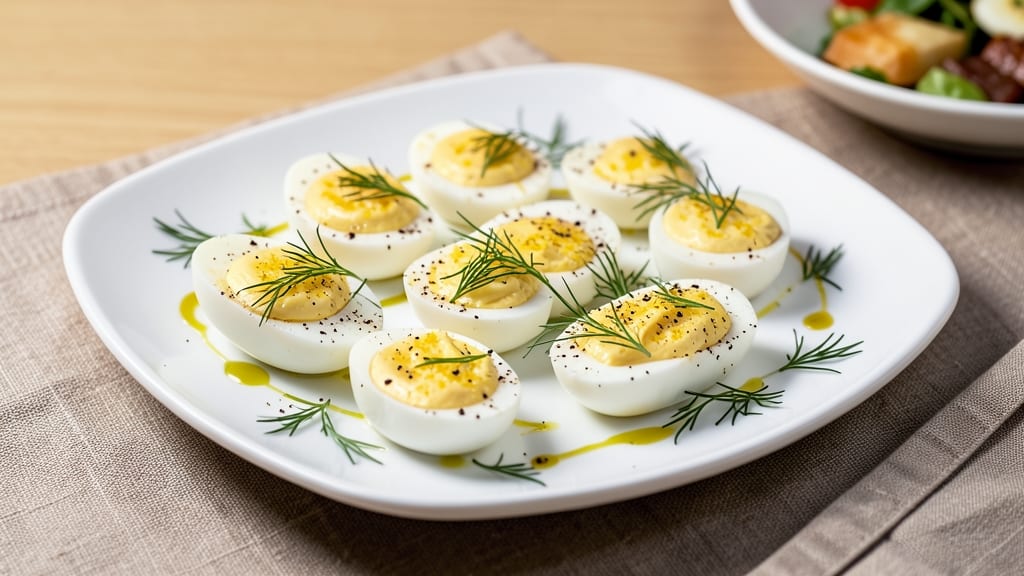
This Top Chef deviled egg recipe transforms a classic brunch staple into a showstopping dish with herb-infused yolk creaminess and celery crunch. The secret lies in precision cooking—perfectly poached eggs with silky yolks that blend into a velvety, aromatic filling.
I’ve refined this technique over years of testing, ensuring every bite delivers that restaurant-quality texture and depth.
What sets these apart is the herb-infused yolk base, where fresh dill, chives, and a touch of lemon zest elevate the traditional mustard-mayo mixture. The filling is piped into halved eggs with surgical precision, creating clean, professional-looking halves that hold their shape.
A sprinkle of toasted celery seeds and microgreens adds visual contrast and texture, while a drizzle of truffle oil takes it to the next level.
By the time you’re done, you’ll have deviled eggs that look like they belong on a Top Chef plate—creamy yet structured, with layers of flavor and presentation that impress even the most discerning guests.
The method is foolproof, but the details matter: from the exact poaching time to the ratio of herbs in the filling. This isn’t just a recipe; it’s a technique that turns a simple appetizer into a culinary statement.
Perfect for holiday brunches, dinner parties, or impressing foodie friends, these deviled eggs prove that small dishes can make a big impact. Let’s get started on crafting your most elegant appetizer yet.
Ingredients for top chef deviled egg
Precision ingredients for restaurant-quality deviled eggs with herb-infused yolk creaminess.
| Ingredient | Amount | Notes |
|---|---|---|
| Large Eggs 🥚 | 12 whole | Fresh, room temperature |
| Extra-Virgin Olive Oil 🫒 | ¼ cup | High quality, fruity |
| Fresh Dill 🌿 | ¼ cup | Finely chopped, stems removed |
| Fresh Chives 🌿 | 0.15 cup | Finely chopped, mild flavor |
| Lemon Zest 🍋 | 1 tbsp | Freshly grated, bright flavor |
| Mayonnaise 🥫 | ½ cup | High-quality, smooth texture |
| Dijon Mustard 🌶️ | 2 tbsp | Mild or medium heat |
| Celery Seeds 🌿 | 1 tsp | Toasted for depth of flavor |
| Salt 🧂 | ½ tsp | Diamond Crystal preferred |
| Black Pepper 🌶️ | ½ tsp | Freshly ground, coarse |
| Truffle Oil 🫒 | 1 tsp | High-quality, white truffle |
| Microgreens 🌱 | ¼ cup | For garnish, any variety |
| White Vinegar 💧 | 1 tbsp | For poaching liquid |
| Ice Cubes ❄️ | 1 cup | For ice bath |
The eggs are the foundation—farm-fresh, large eggs poach best for silky yolks. Trader Joe's or local farms often carry the highest quality; look for eggs with bright, unbroken shells. Fresh dill and chives should be vibrant green with no wilting—Whole Foods or farmers markets are ideal sources. Truffle oil is non-negotiable for that gourmet touch; Williams-Sonoma or specialty gourmet shops carry premium options. Toast your celery seeds in a dry pan for 30 seconds to deepen their flavor—this step makes all the difference.
No fresh dill? Substitute with 1 tbsp dried dill, but reduce to one-third the amount. Chives missing? Green onion tops work in a pinch, though they're slightly stronger. Truffle oil too expensive? High-quality olive oil with a pinch of truffle salt mimics the aroma. For the mayo, Hellmann's or Duke's are reliable; avoid store-brand versions that can be thin or overly tangy. The lemon zest needs to be fresh—bottled zest lacks brightness. If you can't find microgreens, finely chopped parsley adds a similar pop of color.
Poached eggs keep for 4 days in the fridge if stored in a sealed container with a thin layer of oil on top to prevent browning. The filling mixture stays fresh for 3 days in an airtight container, though the herbs lose some vibrancy after day two. For presentation, assemble the eggs just before serving—piping the filling last ensures clean, professional-looking halves. Truffle oil should be drizzled immediately before serving to preserve its aroma. Portion the filling into small containers for easy piping if entertaining a crowd.
Why You'll Love This Recipe
- No-Yolk Hassle: I’ll admit, boiling eggs used to stress me out—cracked shells, uneven cooking, the whole mess. But this method? Just hard-boil a batch on Sunday, peel them when cool, and store them in the fridge. No last-minute scrambling, no sad, rubbery yolks. The eggs stay perfect for days, ready to turn into creamy, tangy bites with zero fuss.
- Bright & Zesty Magic: Honestly, the lemon zest and fresh dill transform these into something not your grandma’s deviled eggs. That citrusy kick cuts through the richness, while the chives add a sharp, green finish. Drizzle them with extra-virgin olive oil right before serving—suddenly, they’re restaurant-worthy without the pretension.
- Picnic Party MVP: Between us, these are my go-to for anything: potlucks, game day, or even a lazy Sunday brunch. They travel well (no soggy tops, promise), and you can tweak the fillings—add smoked paprika for a spicy twist or swap dill for parsley if that’s what you’ve got. Zero effort, maximum crowd-pleasing.
- Budget Bright Spot: Eggs are cheap, herbs are affordable, and olive oil lasts forever. This recipe stretches my grocery budget without sacrificing flavor—especially when I double the batch and save half for lunches. Plus, the leftovers? Still taste fresh three days later, packed with protein and zero guilt. Win-win.
Step-by-step instructions for herb-infused deviled eggs
Here's how to craft restaurant-worthy deviled eggs with velvety yolk creaminess and vibrant herb accents.
Prepare the Poaching Liquid and Hard-Boil the Eggs
In a medium saucepan, combine 6 cups water and 1 tablespoon white vinegar over high heat until boiling vigorously. The vinegar helps prevent cracking and creates a cleaner white for the eggs. While the water heats, gently place the 12 whole large eggs into a single layer in a slotted spoon and lower them carefully into the boiling water.
Return the water to a full boil, then immediately reduce heat to medium-low and simmer for exactly 9 minutes. Set a timer—overcooking makes the yolks rubbery. When time's up, transfer the eggs to an ice bath using the 1 cup ice cubes to stop the cooking process immediately. This chilling also makes peeling easier later.
Peel and Halve the Eggs
Once the eggs are completely cool, carefully tap each egg on a hard surface to crack the shell all over, then roll gently to loosen. Peel under running water if needed—the cool water helps remove stubborn shell fragments. Using a small spoon, gently tap each egg to create a small hole at the rounded end, then slice in half lengthwise. Remove any loose yolk bits that might fall out during the process.
I like to work with two eggs at a time—keep the rest covered with a damp paper towel to prevent drying. The yolks should be bright yellow and intact, ready for the flavorful filling. If any yolks break, save them for another use or discard them to maintain presentation.
Create the Herb-Infused Yolk Filling
In a mixing bowl, combine the 12 egg yolks with the 0.5 cup mayonnaise, 2 tablespoons Dijon mustard, 0.25 cup finely chopped fresh dill, 0.15 cup finely chopped fresh chives, 1 tablespoon lemon zest, 1 teaspoon toasted celery seeds, 0.5 teaspoon salt, 0.5 teaspoon black pepper, and 1 teaspoon truffle oil. Mix thoroughly until smooth and fully combined—you want a velvety, homogeneous texture with no visible herb bits.
This is where the magic happens. The combination of fresh herbs and truffle oil creates a sophisticated flavor profile that elevates these beyond basic deviled eggs. Use a hand mixer for 30 seconds if needed to achieve that perfect creamy consistency. The filling should be thick enough to stay in place when piped but still smooth enough to coat the back of a spoon.
Fill and Garnish the Egg Whites
Using a small spoon or piping bag, carefully fill each egg white with the yolk mixture, mounding it slightly in the center. I find a spoon works best for this—it gives you good control while preventing overfilling. The filling should come just to the top edge of each half, creating a beautiful presentation.
Garnish each deviled egg with a sprinkle of the remaining 0.25 cup microgreens and a tiny drizzle of the 0.25 cup extra-virgin olive oil for that final touch of elegance. The microgreens add a pop of color and freshness, while the olive oil enhances the herbaceous flavors. Arrange the eggs on a platter and serve immediately for the best texture and presentation.
Pro Tips For Making Top Chef Deviled Egg
- Boil Eggs Until Cool: Boil those eggs for 9 minutes exactly—not 8, not 10. Undercooked yolks get runny when you pierce them, and overcooked ones turn chalky. Plunge them into ice water right after, then let them sit for 10 minutes before peeling. This makes the whites slide off cleanly, so you’re not fighting rubbery bits when you fill them.
- Zest Lemon Before Chopping: Grab that lemon and zest it first thing—before you even crack an egg. The oils in the zest mellow out as you work, and if you wait, you’ll end up with dry, bitter strips that don’t blend smoothly into the yolk mix. Use a microplane and scrape just the yellow part, not the pith. Trust me, the difference is noticeable.
- Mash Yolks With a Fork—Not a Potato Masher: I used to get lazy and mash those yolks with a potato masher, thinking it would be faster. Wrong. A fork gives you fine, even texture without turning the filling into a lumpy paste. Press the yolks against the side of the bowl while you work—it’s easier on your wrist and keeps things smooth.
- Chill Filled Eggs Before Serving: Fill those whites, then pop the eggs in the fridge for 15 minutes before serving. This lets the flavors meld and keeps the filling from sliding out when you slice. Pro move: Use a spoon to gently press the filling down into the whites—it stays put better and looks neater. (Yes, even if you’re impatient like me.)
Common mistakes when making your top chef deviled egg
Overcooking Eggs
Poaching eggs for more than 9 minutes turns the yolks rubbery and dry—this is my biggest pet peeve with deviled eggs. I’ve ruined countless batches by letting them sit too long. Use a timer and watch for tiny bubbles breaking the surface when the water returns to a gentle simmer.
The moment the timer dings, transfer them to the ice bath immediately. 🌡️
Uneven Poaching
Eggs that float or crack during poaching usually mean the water wasn’t hot enough when you added them. Always bring the liquid to a rolling boil first, then carefully lower eggs in one at a time with a slotted spoon.
If you’re making a big batch, use two separate pans to avoid overcrowding. Crowded eggs steam instead of poach, leading to uneven cooking.
Yolk Separation
When the filling separates or looks grainy, it’s usually from overmixing or using cold ingredients. Let your yolks come to room temperature before blending, and mix just until smooth—about 30 seconds with a hand mixer.
I’ve also found that chilled mayo can cause separation, so take it out of the fridge 10 minutes before using. If it happens, whisk in 1 tsp lemon juice to re-emulsify.
Filling Too Runny
A watery filling often means too much liquid from the yolks or not enough binding agent. The ratio here is critical: 12 yolks should pair with ½ cup mayo and 2 tbsp mustard—no substitutions.
If it’s still too loose, add 1 tsp cornstarch mixed with 1 tsp cold water and stir until thickened. Trust me, this saves you from soggy eggs every time.
Dull Presentation
Deviled eggs that look flat or unappetizing usually suffer from rushed prep or wrong garnishes. Pipe the filling just before serving—it oxidizes quickly and loses its shine. For garnishes, use microgreens or paprika for color contrast, and always drizzle with truffle oil or olive oil right before plating.
A little effort here makes all the difference between "meh" and "wow." ✨
Shell Stuck to Whites
This happens when eggs cool too slowly or aren’t peeled properly. After the ice bath, gently roll eggs on a cutting board to loosen shells before peeling under running water. If bits remain, use a spoon to carefully scrape them out—don’t dig too deep or you’ll crack the whites.
I’ve even resorted to a paring knife for stubborn fragments, but go slow to avoid tearing the egg halves.
Nutrition facts
Frequently asked questions
Can I make these deviled eggs ahead of time?
Poach the eggs up to 2 days in advance and store them in the fridge covered with plastic wrap. The filling should be made fresh and piped into the eggs just before serving to maintain that creamy texture and vibrant color. If you need to prep ahead, keep the filling separate and mix it right before piping.
What if I don't have fresh herbs like dill and chives?
No problem! You can substitute with 1 tbsp dried dill (reduce to ⅓ the amount) or 1 tsp dried chives. For extra flavor, add ½ tsp onion powder or ½ tsp garlic powder to mimic the fresh herb notes. The truffle oil can be replaced with 1 tsp truffle salt mixed into the filling for a similar earthy depth.
How do I get perfectly round egg halves?
Use a sharp chef's knife and cut the eggs lengthwise while they're still in the shell. Gently rotate the egg as you slice to create a clean, even cut. For extra precision, place the egg on a cutting board and use a small spoon to create a small hole at the top before slicing. This helps the knife stay on track for a smoother cut.
Can I make these deviled eggs without mayo?
Yes, but the texture will be different. Replace the mayo with ½ cup Greek yogurt or ½ cup sour cream for a tangier, lighter filling. For a vegan option, use ½ cup vegan mayo or a blend of ¼ cup silken tofu and ¼ cup olive oil. The herbs and lemon zest will still shine through, but the creaminess will be slightly altered.
What's the best way to serve these deviled eggs?
Arrange them on a chilled platter with the garnishes added right before serving. For a showstopping presentation, create a herb garnish mix (extra dill, chives, and celery seeds) in small bowls around the platter. Pair them with crusty bread, cured meats, or a light salad for a complete brunch spread. These eggs are perfect for holiday brunches, dinner parties, or as an elegant appetizer.