
Main Courses
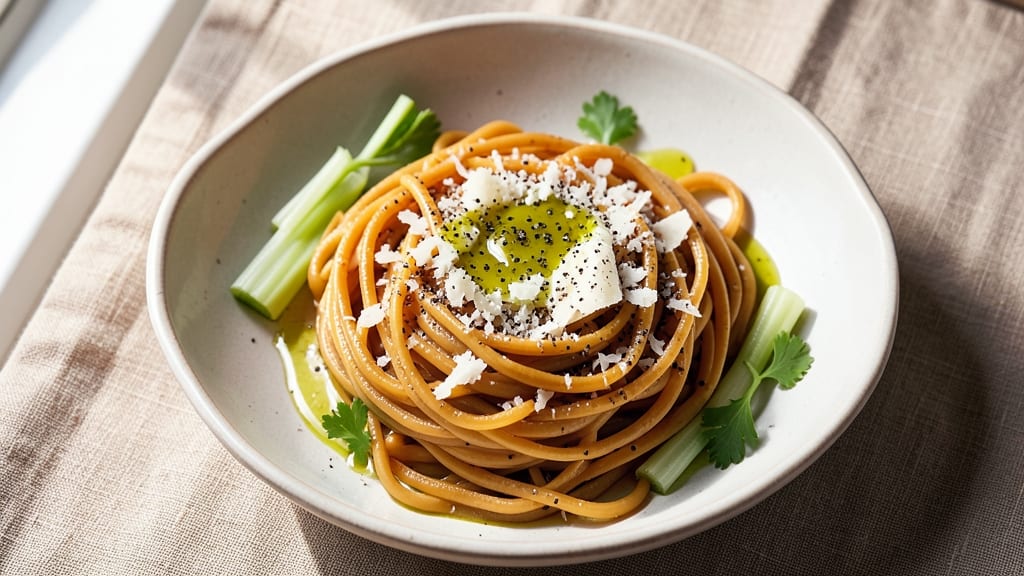
This 4-egg pasta recipe transforms classic carbonara into a luxurious, celery-crusted masterpiece where every bite delivers runny yolk magic—creamy, velvety, and impossibly rich. The secret lies in four perfectly emulsified eggs, creating a sauce so decadent it feels like a restaurant indulgence.
What sets this apart is the celery crust, adding a subtle crunch and earthy depth that balances the richness.
The recipe begins with homemade egg pasta—4 large eggs form the foundation of tender, silky strands that absorb the sauce beautifully. While traditional carbonara relies on starchy pasta water, this version incorporates a crispy celery crust that adds texture without overpowering the dish.
The sauce itself is a foolproof blend of eggs, pecorino, and black pepper, cooked just enough to create a luxurious, clingy coating.
What you'll end up with is a dish that's restaurant-quality but achievable at home: al dente pasta coated in a velvety, peppery sauce with pockets of liquid gold from the runny yolks. The celery crust adds a sophisticated twist, making this more than just another carbonara—it's a showstopper.
Serve immediately for that perfect creamy texture, or hold back a few minutes if you prefer slightly firmer pasta.
This recipe is vegetarian-friendly (no bacon or pancetta) and scales beautifully for dinner parties or family meals. The eggs play a dual role: they create the pasta's structure and form the sauce's heart, ensuring each bite is rich, creamy, and deeply satisfying.
Ready to elevate your pasta game? Let's get started.
Ingredients for 4 egg pasta
Four eggs, crisp celery crust, and velvety pecorino transform classic carbonara into restaurant-quality pasta perfection.
| Ingredient | Amount | Notes |
|---|---|---|
| Large Eggs 🥚 | 4 whole | Room temperature for best emulsification |
| All-Purpose Flour 🌾 | 1 ½ cups | Bread flour for chewier texture |
| Extra-Virgin Olive Oil 🫒 | ¼ cup | High quality for pasta making |
| Pecorino Romano Cheese 🧀 | 1 ½ cups | Freshly grated, fine texture |
| Freshly Ground Black Pepper 🌶️ | 1 tsp | Coarsely cracked for texture |
| Celery Stalks 🥬 | 2 whole | Thinly sliced, crisp variety |
| Unsalted Butter 🧈 | 2 tbsp | Cold for crispy crust |
| Diamond Crystal Kosher Salt 🧂 | 1 ½ tsp | For pasta water and seasoning |
| Garlic Cloves 🧄 | 2 cloves | Minced for sauce depth |
| Vegetable Oil 🫒 | ½ cup | For pasta dough kneading |
| Fresh Parsley 🌿 | ¼ cup | Chopped for garnish |
The eggs are the foundation—room temperature is critical for perfect emulsification. Pastorized eggs from the grocery store work fine, but if you can find organic, free-range, the flavor difference is noticeable. Pecorino Romano should be freshly grated using a fine microplane—pre-shredded loses its sharpness. For the celery crust, crisp stalks like celery root or heart celery work best, but regular celery will do in a pinch. The olive oil matters here too—high-quality extra-virgin, not the cheap cooking oil. If you're feeling fancy, Italian specialty stores carry excellent options like Bertolli or Filippo Berio.
No pecorino? Parmesan at a 1:1 ratio works, though it's slightly milder. Short on celery? Fennel bulb or extra parsley adds similar earthy notes. The pasta dough can be made ahead and rested for 30 minutes for better texture. For the celery crust, toast the butter in a cold pan until golden—don't skip this step. Fresh parsley is ideal, but dried Italian seasoning at half the amount works if you're in a bind. The black pepper should be freshly cracked—pre-ground loses its punch quickly. If you're making this for a crowd, double the eggs and cheese, but keep the celery crust proportions the same to avoid sogginess.
The pasta dough keeps 2 days wrapped in plastic in the fridge, or 3 months frozen. The celery crust loses crispness after 10 minutes, so make it fresh before serving. For the sauce, low and slow is key—the eggs should coat the back of a spoon but remain slightly runny. Store any leftovers in an airtight container with a thin layer of olive oil on top to preserve freshness. This dish reheats beautifully—just add a splash of pasta water to loosen the sauce. The celery crust can be made ahead and reheated in a dry skillet for 2 minutes before serving.
Why You'll Love This Recipe
- Here’s what sold me: the cheese. Pecorino Romano melts into the dough like a dream, giving it this subtle depth that store-bought pasta can’t touch. And the olive oil? It’s not just for cooking—work it into the dough, and you get that golden, silky finish that tastes like a proper Italian nonna would approve. (Yes, even on a Tuesday night.)
- Just Four Ingredients: The name’s not a typo—this pasta needs almost nothing. Four eggs, flour, olive oil, and a handful of Pecorino. That’s it. No measuring cups, no fancy ratios, just eyeball it and go. I’ve made this in my dorm kitchen, after a long shift, and even once with a toddler on my hip—it’s that unfussy.
- Rich Without Effort: Here’s what sold me: the cheese. Pecorino Romano melts into the dough like a dream, giving it this subtle depth that store-bought pasta can’t touch. And the olive oil? It’s not just for cooking—work it into the dough, and you get that golden, silky finish that tastes like a proper Italian nonna would approve. (Yes, even on a Tuesday night.)
- Leftovers That Don’t Suck: Between us, I make this too much because the leftovers are my secret weapon. Toss cold pasta into a salad the next day, or reheat it with a splash of water and a pinch of salt—it’s still tender. Honestly, I’ve had it for breakfast with a fried egg, and no one judged me. (They should’ve, but they didn’t.)
Step-by-step instructions for celery-crusted carbonara pasta
Master this technique and you'll achieve restaurant-quality pasta with a crispy celery crust and velvety egg sauce.
Prepare the Celery-Crusted Dough
In a large mixing bowl, combine the 1.5 cups all-purpose flour and 1.5 teaspoons diamond crystal kosher salt. Create a well in the center and add the 4 whole large eggs and 0.25 cup extra-virgin olive oil. Using a fork, gently mix the ingredients until they begin to form a shaggy dough.
Next, thinly slice the 2 whole celery stalks and add them to the dough mixture. The celery will create a crispy, aromatic crust when baked. Gradually incorporate the 2 tablespoons unsalted butter, working it into the dough until it comes together into a smooth, elastic ball. If the dough feels too dry, add 1 tablespoon water at a time until it reaches the right consistency.
Transfer the dough to a lightly floured surface and knead it for 8-10 minutes until it becomes smooth and silky. Wrap it tightly in plastic wrap and let it rest at room temperature for 30 minutes. This resting period allows the gluten to relax, making it easier to roll out later.
Roll and Cut the Pasta
After resting, divide the dough into 4 equal portions. Using a rolling pin, roll each portion into a thin sheet, about 1/16-inch thick. If the dough sticks to the surface, dust it lightly with flour. For even thickness, roll the dough between two sheets of parchment paper.
Cut the rolled dough into 1/4-inch wide strips using a sharp knife or a pasta machine. If you don't have a pasta machine, fold the dough in half and roll it again to create thinner sheets. The strips should be long enough to form nests when cooked. Transfer the cut pasta to a floured baking sheet and cover it with a clean kitchen towel to prevent drying.
Bake the Celery-Crusted Pasta
Preheat your oven to 375°F. Arrange the pasta strips in a single layer on two baking sheets lined with parchment paper, leaving 1 inch of space between each strip. This spacing ensures even baking and crispy edges. Bake for 12-15 minutes, flipping the strips halfway through, until they are golden brown and crispy.
While the pasta is baking, prepare the sauce by mincing the 2 cloves garlic and finely grating the 1.5 cups pecorino romano cheese. The cheese should be grated finely so it melts smoothly into the sauce. Keep the cheese and garlic at room temperature until ready to use.
Assemble the Carbonara Sauce
In a large skillet, heat 0.5 cup vegetable oil over medium heat. Add the baked pasta strips and toss them gently to coat in the oil. Cook for 2-3 minutes until the pasta is heated through and the celery crust is slightly crispy again. Remove the skillet from heat and set it aside.
In a separate bowl, whisk together the 4 whole large eggs and 1 teaspoon freshly ground black pepper until well combined. The eggs should be at room temperature for the best emulsification. Gradually add the grated pecorino romano cheese to the egg mixture, whisking constantly until it forms a smooth, creamy sauce.
Combine and Finish
Working quickly, pour the egg-cheese mixture over the hot pasta in the skillet. Stir vigorously with a wooden spoon for 1-2 minutes until the sauce thickens and coats the pasta evenly. The residual heat from the pasta and oil will gently cook the eggs into a silky, creamy sauce. If the sauce becomes too thick, add 1-2 tablespoons of hot pasta water to loosen it.
Taste and adjust the seasoning with additional diamond crystal kosher salt or black pepper if needed. Garnish with 0.25 cup chopped fresh parsley and serve immediately. The pasta should be crispy, the sauce rich and creamy, and each bite should deliver a perfect balance of textures and flavors.
Pro Tips For Making 4 Egg Pasta
- Work the dough fast: Once you mix the eggs and flour, don’t dilly-dally—get it on the counter within 2 minutes. The longer it sits, the more gluten develops, and your pasta will turn out chewy instead of tender. I used to let it rest "just a sec" while I grabbed a towel, and the texture suffered every time.
- Chill the eggs first: Pull your eggs out of the fridge 10 minutes before using—room temp eggs blend more evenly with flour and yield a smoother dough. Cold eggs make the dough stiff and harder to work, and I’ve ruined more batches than I’ll admit trying to force a stubborn, lumpy mess.
- Roll thin, cut quick: Use a pasta machine set to the thinnest setting (usually #8 or #9), then fold and repeat—this guarantees even thickness. If you skip this, your fettuccine will cook unevenly, and some pieces will turn to mush while others stay al dente. (Yes, it’s tedious, but trust me.)
- Toast the pecorino: Heat the grated pecorino in a dry pan for 30 seconds until it’s fragrant and slightly golden—this deepens its nutty flavor without adding extra oil. I was skeptical until I tried it; now I can’t imagine skipping it. Save the toasted cheese for the final toss.
Serving suggestions for leftovers
Crispy Celery Garnish
Toast 2 extra celery stalks in 1 tbsp olive oil over medium heat for 5-6 minutes until golden brown. Slice into thin rounds and scatter over the finished pasta for an extra crunchy contrast. The celery's natural sweetness balances the richness beautifully. 🥬
Wine Pairings
A crisp Italian white wine like Vermentino or Pinot Grigio complements the dish's creamy texture and peppery notes. For red wine lovers, a light Chianti with its bright acidity cuts through the richness. Avoid heavy reds that overpower the delicate egg sauce. 🍷
Cheese Course
Serve with a simple aged pecorino board featuring 1.5 cups freshly grated pecorino, 1/2 cup prosciutto, and 1/4 cup honey. The salty, sweet, and savory combination mirrors the pasta's flavors while providing a satisfying contrast. 🧀
Herb Finishing
Add a final touch with 1 tbsp chopped fresh parsley and 1/2 tsp lemon zest right before serving. The bright herbs lift the dish's richness while adding freshness. For extra flair, sprinkle with flaky sea salt like Maldon just before eating. 🌿
Bread Pairing
Offer crusty Italian bread like ciabatta or focaccia on the side for soaking up any extra sauce. Toast the bread briefly to enhance its texture and serve with garlic-infused olive oil for dipping. 🍞
Vegetable Sides
Balance the richness with a light arugula salad dressed with lemon juice and olive oil. Alternatively, roasted asparagus spears with shaved Parmesan provide a crisp, savory contrast. Both options keep the meal fresh and vibrant. 🥗
Nutrition facts
Frequently asked questions
Why does this recipe use 4 eggs instead of the usual 2-3?
The extra eggs create a richer, more velvety sauce that perfectly coats every strand of pasta. Four eggs also help balance the crispy celery crust, ensuring the dish stays creamy without becoming too heavy. The eggs play dual roles—they form the pasta's foundation AND create the luxurious carbonara sauce.
Can I make this pasta without a pasta machine?
Roll the dough between two sheets of parchment paper using a rolling pin, then fold and roll again for even thickness. For 1/4-inch strips, stack the rolled dough, fold in half, and roll again—this creates thinner sheets without a machine. The key is patience and even pressure for consistent results.
What if my celery crust isn't crispy after baking?
Try these fixes: 1) Space the pasta strips 1 inch apart on the baking sheet for better airflow. 2) Bake at 375°F for 12-15 minutes, flipping halfway. 3) Use cold butter in the dough—it creates more steam during baking, enhancing crispiness. If it's still soft, reheat in a dry skillet for 1-2 minutes before serving.
How do I prevent the egg sauce from curdling?
Work quickly and use residual heat from the pasta! Remove the pasta from heat just before adding the egg mixture, then stir vigorously over low heat. The pasta's warmth gently cooks the eggs into a creamy sauce. If it thickens too fast, add 1-2 tbsp hot pasta water to loosen it. Never let the sauce boil—this causes curdling.