
Main Courses
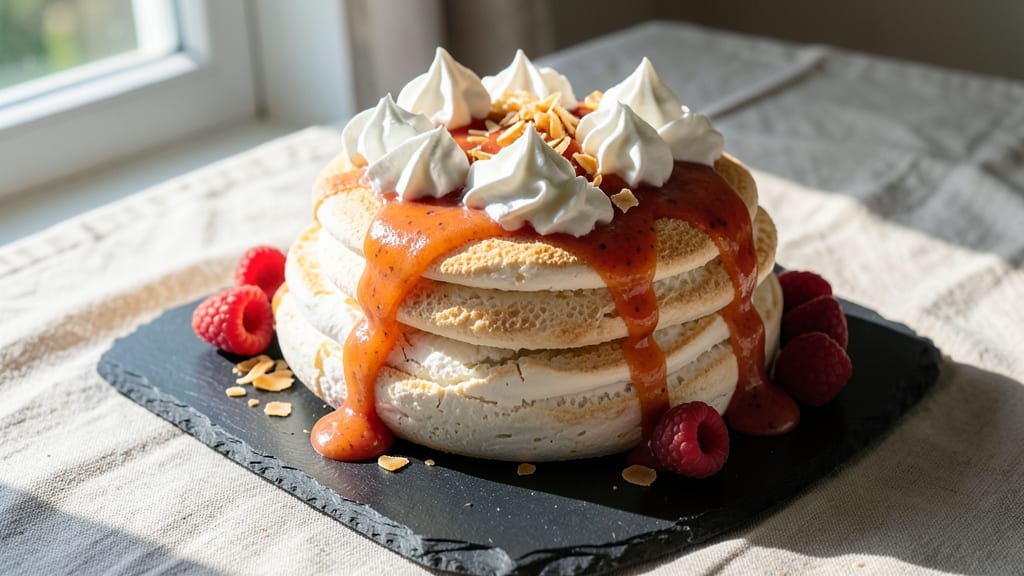
This 3 egg pavlova recipe delivers the perfect balance of crispy edges and light, airy centers—all without requiring six eggs. The secret lies in precise egg separation, oven control, and a slow cooling process that transforms ordinary meringue into a delicate, showstopping dessert.
I developed this version after years of trial and error, finally cracking the code for a foolproof pavlova that impresses every time.
The magic begins with properly whipped egg whites—stiff peaks are non-negotiable—and folding in sugar gradually to maintain that signature crisp shell. Baking at a precise 250°F ensures even browning without overcooking, while the slow cooling process prevents cracking.
The result? A sturdy enough shell to hold your favorite toppings without collapsing.
Once cooled, the real transformation happens with the filling—a silky citrus curd that adds tangy brightness to cut through the sweetness. Topped with whipped cream and fresh berries, this pavlova becomes a visual masterpiece as well as a delicious one.
Each bite delivers that satisfying contrast between crispy shell and creamy center.
Perfect for special occasions or when you want to impress guests without spending hours in the kitchen. The key is patience—letting the meringue set properly ensures it holds together beautifully. Ready to master this classic dessert? Let's get started.
Ingredients for 3 egg pavlova
Three eggs, precise technique, and a citrus curd that steals the show.
| Ingredient | Amount | Notes |
|---|---|---|
| Large Egg Whites 🥚 | 3 whole | Room temperature, no yolks |
| Granulated Sugar 🍚 | 1 ¼ cups | Superfine preferred for smoothness |
| Cornstarch 🌾 | ¼ cup | For crispy edges |
| White Vinegar 🍶 | ½ tsp | Stabilizes egg whites |
| Lemon Juice 🍋 | 1 tbsp | Freshly squeezed |
| Unsalted Butter 🧈 | 2 tbsp | For greasing baking sheet |
| Lemon Zest 🍋 | 1 tbsp | From 1 large lemon |
| Lemon Juice 🍋 | ¼ cup | For citrus curd |
| Granulated Sugar 🍚 | ½ cup | For citrus curd |
| Heavy Cream 🥛 | 1 cup | Cold for whipping |
| Vanilla Extract 🌸 | 1 tsp | Pure vanilla preferred |
| Fresh Raspberries 🍓 | 1 ½ cups | For topping |
| Fresh Blueberries 🫐 | ½ cup | For topping |
The egg whites are your foundation—room temperature and free of any yolk traces. KitchenAid attachments make whipping easier, but a clean, grease-free bowl works too. Superfine sugar dissolves better, but regular granulated works in a pinch if you pulse it in a food processor first. The white vinegar stabilizes the meringue, preventing weepy centers. I always grab organic eggs from Whole Foods—they whip up fluffier. For the citrus curd, freshly zested lemons add depth that bottled zest can't match.
No superfine sugar? Pulse regular sugar in a food processor for 30 seconds—it'll be close enough. Substitute apple cider vinegar for white vinegar, but use half the amount. For the citrus curd, orange zest and juice work beautifully if you're not a lemon fan. The berries can be frozen—just thaw and pat dry. Want extra stability? Add 1/4 tsp cornstarch to the curd mixture. And if you're short on time, store-bought whipped cream works, though fresh is always better.
The meringue needs 24 hours to fully set at room temperature—don't rush it. Store leftovers in an airtight container for up to 3 days. The citrus curd keeps 5 days refrigerated. For make-ahead prep, whip the meringue, bake, then freeze the curd separately. Assemble just before serving to keep the shell crisp. Whipped cream should be added last—it softens the meringue if left too long.
Why You'll Love This Recipe
- Three Eggs Only: I swear by this version—no fussing with extra whites, no wasted yolks. Three eggs give you just the right structure: sturdy enough to hold toppings but still light as air, like a meringue hugged by a crispy shell.
- Lemon-Kissed Magic: That splash of lemon juice? It’s the secret. The tang cuts through the sugar’s sweetness, making every bite taste like summer—bright, zesty, and just a little bit fancy. (Yes, even on a Tuesday night.)
- Topping Freedom: Breakfast, dessert, or snack? This is your blank canvas. Drizzle with honey and berries for brunch, fold in whipped cream for a quick dessert, or pile on Nutella for a midnight craving. The base stays the same; the fun never ends.
Step-by-step instructions for crispy meringue shell with silky citrus curd heart
Master this technique and you'll achieve a perfectly crisp meringue shell with a silky citrus curd center every time.
Prepare the Citrus Curd Filling
In a medium saucepan, combine the 0.25 cup lemon juice, 0.5 cup granulated sugar, and 1 tbsp lemon zest. Bring to a gentle simmer over medium heat, stirring constantly until the sugar dissolves completely. This should take about 3-4 minutes—watch closely to prevent scorching.
Remove from heat and whisk in the 1 cup cold heavy cream and 1 tsp vanilla extract. Pour the mixture back into the saucepan and cook over low heat, stirring constantly with a wooden spoon, until it thickens to a pudding-like consistency. You'll know it's ready when it coats the back of a spoon and leaves a clear path when you draw your finger through it—this should take about 5-7 minutes. Immediately transfer to a bowl, press plastic wrap directly onto the surface to prevent a skin from forming, and let cool completely at room temperature.
Whip the Meringue Base
In a spotlessly clean, grease-free mixing bowl, combine the 3 whole large egg whites and 0.5 tsp white vinegar. Using a stand mixer fitted with the whisk attachment, beat on medium speed until soft peaks form. Gradually add the 1.25 cups granulated sugar and the 0.25 cup cornstarch, mixing on high speed for 8-10 minutes until the meringue is glossy, thick, and holds stiff peaks when the whisk is lifted.
This is where precision matters most—the meringue should be thick enough to hold its shape but still spreadable enough to create that signature crisp shell. If the bowl starts to get warm, stop the mixer and let it cool for a minute before continuing. The meringue is ready when you can draw a figure-eight in the mixture that holds its shape without melting.
Shape and Bake the Meringue Shell
Line a baking sheet with parchment paper and lightly grease it with 2 tbsp unsalted butter using a pastry brush. Spoon about ⅓ of the meringue onto the center of the sheet and spread it into a 6-inch circle using a spatula, building up slightly higher edges to create the classic pavlova shape. Use the back of a spoon to create a shallow well in the center—this will hold the citrus curd filling later.
Transfer the baking sheet to a preheated 250°F oven and bake for 1 hour. Then, increase the temperature to 300°F and bake for another 30-45 minutes until the meringue is crisp and dry to the touch. Turn off the oven, crack the door open slightly, and let the meringue cool completely inside the oven—this prevents cracking as it cools. Once fully cooled, gently remove the meringue from the baking sheet and set it aside.
Assemble the Pavlova
Once the cooled meringue shell is completely dry, use a spoon to scoop the citrus curd into the center well. Gently press it down to create a smooth, even layer. The curd should fill the center completely but not overflow the edges—this ensures a clean presentation.
In a small bowl, toss the 1.5 cups fresh raspberries and 0.5 cup fresh blueberries with 1 tbsp lemon juice to prevent them from bleeding their color. Arrange the berries decoratively around the edge of the meringue shell, pressing them lightly into the base to secure them. Serve immediately while the meringue is still crisp and the curd is at its silkiest texture.
Pro Tips For Making 3 Egg Pavlova
- Use Room-Temp Egg Whites: Cold egg whites hide tiny drops of fat that sabotage volume—whisking them at room temperature cuts down on extra time straining and gives you a stiffer meringue. Pop them in a bowl of warm water for 10 minutes while you measure everything else.
- Mix Vinegar and Lemon Slowly: I used to dump both acids in at once, and the meringue would collapse like a sad soufflé. Instead, whisk in the vinegar first until soft peaks form, then add lemon juice gradually—this keeps the structure stable without over-acidifying.
- Bake at 250°F, Not Higher: The oven’s hot side will brown your pavlova unevenly if you crank it too high. 250°F is the sweet spot—low enough to dry the meringue gently, high enough to set it in 1 hour. Rotate the pan halfway if your oven runs hot.
- Skip the Extra Sugar on Top: That dusting of sugar on top looks fancy, but it burns fast and makes the edges gummy. Brush the meringue with a little extra lemon juice after baking instead—it adds shine and keeps the texture crisp without the mess.
Regional styles of this 3 egg pavlova
Australian Origins
The pavlova's story begins in Australia and New Zealand, where it became a national dessert pride. The debate over who invented it—Australia or New Zealand—still rages today, but both countries claim it as their own.
The name honors Russian ballerina Anna Pavlova, who toured Australia in 1926, though the dessert itself likely predates her visit. 🇦🇺🇳🇿
Traditional Australian versions often feature a meringue base with whipped cream and fresh fruit, but the original recipes used more eggs (typically 6-8) for a larger dessert. My 3-egg version keeps the spirit of the classic while adapting it for modern kitchens and smaller gatherings.
New Zealand Twist
In New Zealand, pavlova often includes a caramelized sugar crust on the meringue, created by sprinkling sugar on top before baking. This adds a delightful crunch that contrasts beautifully with the soft interior.
For a Kiwi-inspired touch, try adding 1 tbsp brown sugar to your meringue mixture before baking—it caramelizes slightly for extra depth.
Kiwi chefs also love topping their pavlovas with feijoa, a tropical fruit native to Brazil but widely grown in New Zealand. If you can find it, sliced feijoa adds a unique, floral sweetness that pairs wonderfully with citrus curd. For a more accessible option, try passionfruit pulp instead.
British Colonial Influence
The pavlova's roots trace back to European meringue traditions brought by British settlers in the 19th century. Early Australian and New Zealand recipes were heavily influenced by British meringue desserts like "meringue nests," which were often filled with fruit or cream.
The key difference? Australian and New Zealand cooks embraced a larger, more dramatic presentation.
One British-inspired adaptation is using Eton mess—a mix of crushed meringue, whipped cream, and berries—as a topping instead of a structured shell. For a hybrid version, try crushing half of your baked meringue and mixing it with whipped cream, then spooning it back over the remaining shell.
This creates a rustic, textured finish that still feels elegant.
Modern Fusion Styles
Today's chefs are reimagining pavlova with global flavors. In Japan, you'll find matcha-infused meringues paired with red bean paste or black sesame curd.
For a Japanese-inspired twist, replace the citrus curd with a green tea custard—simmer 1 tbsp matcha powder with the sugar and cream for a vibrant, earthy flavor.
In the United States, pavlova often appears at brunch with a maple-pecan curd*—substituting the lemon zest for 1 tsp maple syrup and topping with chopped pecans. This works beautifully with a bourbon-infused whipped cream (½ tsp bourbon in the whipped cream).
For a tropical version, swap the citrus curd for a coconut-lime curd—using ½ cup coconut milk instead of heavy cream.
Seasonal Adaptations
Summer pavlovas shine with bright, juicy fruits like peaches, nectarines, or mango—tossed in a little honey and lime juice before arranging.
For a winter version, try a spiced apple curd—adding ½ tsp cinnamon and ¼ tsp nutmeg to the curd mixture and topping with candied orange peel and pomegranate seeds.
Fall calls for pumpkin or butternut squash curd—puree ½ cup cooked squash and mix it into the curd base. Pair with cranberry sauce** and toasted walnuts for a cozy dessert that feels festive. Each season offers a chance to reinvent the classic while keeping the technique at its heart.
Nutrition facts
Frequently asked questions
Why does your recipe use only 3 eggs instead of 6?
This version uses 3 eggs to create a perfectly sized pavlova for 4-6 servings without requiring a massive meringue. The key is using cornstarch for crisp edges and proper baking techniques to ensure structural integrity. It's ideal for smaller gatherings or when you want a single elegant dessert rather than a large platter.
Can I make the meringue ahead of time?
Bake the meringue shell up to 2 days in advance and store it in an airtight container at room temperature. The longer it rests, the more stable it becomes. Just assemble with your toppings right before serving to maintain that perfect crispness.
What if my meringue cracks during baking?
Cracking happens when meringue dries too quickly or cools unevenly. To prevent this, preheat your oven thoroughly and use the two-stage baking method (low heat first, then higher). After baking, let it cool slowly inside the turned-off oven with the door slightly open.
How do I know when the citrus curd is done?
The curd is ready when it coats the back of a spoon and leaves a clear path when you draw your finger through it. This usually takes 5-7 minutes of constant stirring over low heat. If it's too runny, keep cooking—if it's too thick, thin it with a splash of cream.
Can I substitute the citrus curd for something else?
Yes! Try a vanilla custard or chocolate ganache for variety. For a lighter option, use whipped cream mixed with 1 tbsp jam. Just ensure your filling is cool and smooth before assembling to maintain the meringue's crisp structure.