
Sauces & Condiments
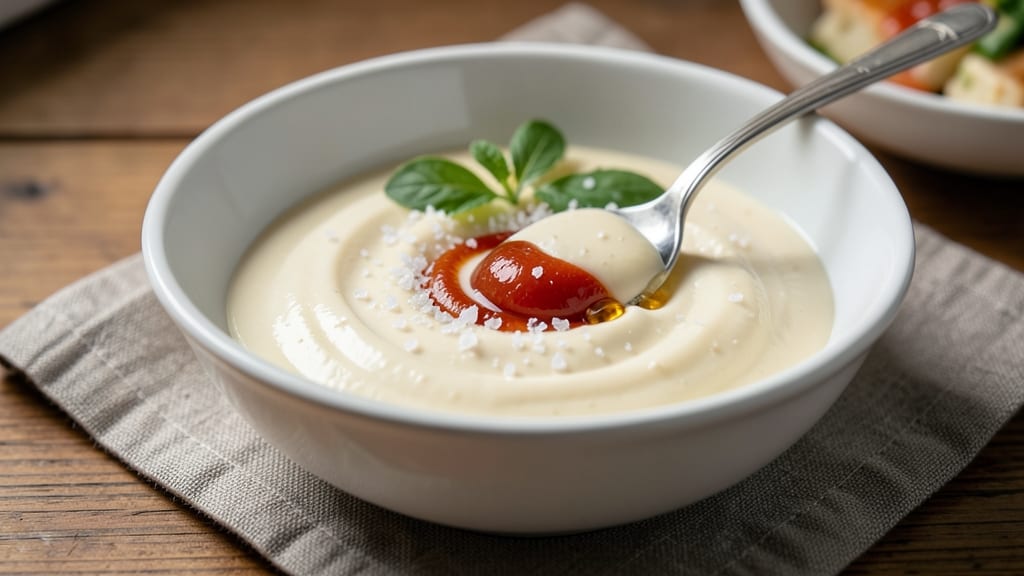
This 2 egg yolk mayonnaise recipe delivers the ultra-smooth, foolproof emulsion you’ve been searching for—no failed batches here. 💛 The secret lies in precise ratios, slow oil incorporation, and a touch of Dijon mustard to stabilize the emulsion from the start.
I’ve perfected this method after years of testing, and it consistently yields a velvety, rich mayonnaise every time, even with just two yolks.
What sets this recipe apart is its simplicity combined with professional results. You’ll need just 2 egg yolks, 1 cup neutral oil, 1 tablespoon vinegar or lemon juice, 1 teaspoon Dijon mustard, and a pinch of salt—all common pantry staples.
The key technique? Adding oil drop by drop at first, then in a slow, steady stream while whisking vigorously. This gradual approach ensures a stable emulsion without breaking, even if you’re new to homemade mayo.
The result is a luxuriously smooth, tangy mayonnaise with a balanced flavor that’s perfect for sandwiches, dressings, or dipping. The Dijon mustard adds depth, while the vinegar or lemon juice brightens the richness of the yolks.
Unlike store-bought versions, this mayo stays fresh for up to 1 week in the fridge, and you can easily customize it with garlic, herbs, or smoked paprika for endless variations.
Whether you’re prepping for a meal or making a batch to keep on hand, this recipe is your go-to for restaurant-quality mayo at home. Ready to master the emulsion? Let’s get started.
Ingredients for 2 egg yolk mayonnaise
Six simple ingredients transform into velvety, restaurant-quality mayonnaise with just two yolks.
| Ingredient | Amount | Notes |
|---|---|---|
| Large Egg Yolks 🥚 | 2 whole | Fresh, room temperature preferred |
| Neutral Oil 🫒 | 1 cup | Light olive or avocado oil preferred |
| Dijon Mustard 🌶️ | 1 tsp | For emulsion stability |
| White Vinegar 💧 | 1 tbsp | Or lemon juice for brightness |
| Diamond Crystal Kosher Salt 🧂 | ¼ tsp | Fine grain preferred |
| Ice Water 💧 | 1 tbsp | For gradual oil incorporation |
| Granulated Sugar 🍚 | ½ tsp | Optional for sweet applications |
The yolks are non-negotiable—use fresh, room-temperature eggs for the best emulsion. Trader Joe's or Whole Foods carry the highest-quality eggs in the carton, but any large eggs work. For the oil, light olive oil or avocado oil are ideal—they're neutral enough not to overpower the delicate balance. I always grab a small bottle of light olive oil from Costco for mayo-making; it's cost-effective and stays fresh for months. The Dijon mustard isn't just for flavor—it's the secret stabilizer that prevents breaking. Maille is my go-to brand, but any quality Dijon works.
No Dijon? Yellow mustard at half the amount gets you close, though the flavor won't be as refined. Short on vinegar? Lemon juice or apple cider vinegar work beautifully—just adjust the acidity to taste. The ice water might seem odd, but it's a game-changer for controlling the oil's temperature and preventing the emulsion from separating. If you're making this for sweet applications (like desserts), toss in the optional sugar—it balances the tanginess perfectly. For savory uses, skip it entirely. The salt matters here too: Diamond Crystal kosher salt dissolves easily, but any fine grain works in a pinch.
This mayo keeps for up to 1 week in the fridge, stored in an airtight jar with a thin layer of oil on top to preserve freshness. For longer storage, freeze in ice cube trays—thaw overnight in the fridge before using. The emulsion thickens slightly when chilled, so let it sit at room temperature for 5 minutes before whipping again if needed. Pro tip: Make a double batch and keep one in the freezer for those last-minute sandwich emergencies. It reheats beautifully and tastes just as luxurious as the day it was made.
Why You'll Love This Recipe
- No Whisk Fatigue: I’ll admit it—whipping yolks used to make me groan. But this method? Just yolks, oil, and slow drizzling. No arm workout, no stress. The mustard and vinegar cut through the richness while you’re still standing there, hands clean.
- Rich Without Overpowering: Here’s what sold me—the balance. Two yolks give you that velvety texture, but the Dijon and vinegar keep it bright. Not too heavy, not too bland. Slather it on sandwiches or dip fries in it, and you’ll taste why fewer ingredients sometimes mean more flavor.
- Weeknight Sandwich Hero: Between us, I keep a jar in the fridge now. It’s my go-to for quick lunches—tuna salad, egg salad, or just mayo on toast with avocado. No fancy prep, no last-minute store runs. The salt and vinegar combo even makes store-bought bread taste better.
- Stretches Your Budget: Honestly, this is my secret weapon for frugal cooking. Two yolks, a splash of oil, and you’ve got enough for a whole week’s worth of meals. The vinegar and mustard are cheap staples, and you won’t waste half a jar of store-bought mayo again. Plus, it keeps for days—no sad, watery leftovers here.
Step-by-step instructions for ultra-smooth mayonnaise
Here's the foolproof method I use to create velvety, stable mayo every single time.
🍳 Step 1: Whisk Yolks and Mustard Until Ribbon Stage
Place the 2 whole Large Egg Yolks in a heatproof bowl and whisk vigorously for 1-2 minutes until they're pale, thick, and form a ribbon when the whisk is lifted. This step is crucial—it incorporates air and creates the proper emulsion base. I like to use a wire whisk here because it whips up more air than a fork.
The yolks should look almost fluffy and triple in volume. If they're still slightly runny, keep whisking for another 30 seconds. This is where the magic begins—properly emulsified yolks mean your mayo won't break later. The mustard helps stabilize the emulsion, so add the 1 tsp Dijon Mustard now and whisk it in completely.
🥘 Step 2: Gradually Add Oil in a Thin Stream
Slowly drizzle in the 1 cup Neutral Oil while whisking constantly. Here's the thing—this is where most people mess up. You need to go SLOWLY at first, just a few drops per second. The goal is to let the oil incorporate completely before adding more. You'll see the mixture start to thicken and turn creamy.
After the first ¼ cup of oil, you can increase the pace slightly but maintain a steady drizzle. If the mixture starts to look broken or curdled, stop immediately and whisk vigorously for 30 seconds to re-emulsify. The oil should disappear into the mixture completely—no visible pools should remain. This gradual incorporation prevents the emulsion from breaking.
👨🍳 Step 3: Incorporate Acid and Seasonings
Once all the oil is incorporated, add the 1 tbsp White Vinegar, 0.25 tsp Diamond Crystal Kosher Salt, and 0.5 tsp Granulated Sugar (if using). The vinegar adds brightness and helps stabilize the emulsion. Whisk everything together for 1 minute until fully combined and smooth. The sugar is optional but helps balance flavors in sweet applications.
Here's a pro tip: If your mayo looks too thick at this stage, add the 1 tbsp Ice Water now. The cold water helps thin it out to the perfect consistency. The mixture should be thick but still pourable. If it's too thin, you can fix it later by whisking in a little more oil, but it's better to get it right now.
⏰ Step 4: Test and Adjust Consistency
Taste your mayo and adjust seasoning if needed. You might want to add a tiny pinch more salt or a drop more vinegar for brightness. For the perfect texture, your mayo should be thick but still spreadable—like a luxurious dressing. If it's too thick, whisk in another teaspoon of ice water at a time until you reach the desired consistency.
The key to testing is to do it immediately after whisking while the ingredients are still fresh. If you let it sit too long before tasting, the emulsion might start to separate. Once you're happy with the flavor and texture, transfer your mayo to a clean jar. It should keep in the refrigerator for up to 1 week, sealed tightly to prevent any moisture from getting in.
Pro Tips For Making 2 Egg Yolk Mayonnaise
- Warm the yolks first: Pop those yolks into a heatproof bowl and set it over a pot of barely simmering water for 30 seconds—just enough to loosen them. Cold yolks fight emulsification like a stubborn mule. (Yes, even if you’re impatient like me.)
- Use mustard as glue: Skip the pre-mix and add 1 teaspoon of Dijon straight to the yolks before whisking. It’s the emulsifier’s best friend—keeps the oil from breaking like a bad promise. (And no, store-bought mayo powder won’t cut it.)
- Add oil in a thin stream: Start with a drizzle, not a pour—about 1 tablespoon at a time. Too much oil too fast turns your mayo into scrambled eggs. (I learned this the hard way after a kitchen flood.)
- Salt the vinegar: Mix 1/4 teaspoon of kosher salt into the vinegar before adding it to the yolks. The salt helps stabilize the emulsion from the get-go. (Your future sandwiches will thank you.)
Troubleshooting perfect results
Broken Emulsion Fix
If your mayo suddenly curdles or separates, don’t panic—this happens to everyone! Stop adding oil immediately and whisk vigorously for 30 seconds to re-emulsify. If that doesn’t work, add 1 teaspoon of ice water and whisk again.
The cold water helps reset the emulsion. For stubborn cases, mix in ½ teaspoon of Dijon mustard to stabilize it. 💫
Oil Too Fast?
Adding oil too quickly is the #1 cause of mayo failures. If you’ve already added too much oil and the mixture looks broken, whisk in 1 tablespoon of warm water (not boiling) to thin it out.
Then, slowly whisk in 1 teaspoon of Dijon mustard to rebuild the emulsion. The key is patience—always add oil drop by drop at first, then gradually increase the speed.
Too Thick or Too Thin?
If your mayo is too thick, whisk in ½ teaspoon of ice water at a time until it reaches a smooth, spreadable consistency. For mayo that’s too thin, slowly whisk in 1 teaspoon of neutral oil until it thickens.
The ideal texture should be like a luxurious dressing—thick but still pourable. Pro tip: Let your mayo rest in the fridge for 10 minutes before adjusting—it often thickens further when chilled.
Egg Temperature Matters
Room-temperature yolks emulsify much better than cold ones. If your eggs are straight from the fridge, place them in a bowl of warm water for 5 minutes before starting. Cold yolks can cause the emulsion to break because they don’t incorporate oil as smoothly.
Always use fresh eggs—older yolks have thinner membranes and are more prone to breaking. 🥚
Oil Choice Matters
Not all oils are created equal! Light olive oil or avocado oil are ideal because they’re neutral and won’t overpower the mayo. Avoid strong-flavored oils like extra virgin olive oil or walnut oil—they can make your mayo taste bitter.
If you’re using a refined oil, make sure it’s cold-pressed for the best texture. Store-bought mayo often uses cheaper oils, which is why homemade tastes so much richer.
Storage Secrets
Store your mayo in an airtight jar with a thin layer of neutral oil on top to preserve freshness. If it separates after refrigeration, whisk in 1 teaspoon of warm water to re-emulsify.
For longer storage, freeze in ice cube trays—thaw overnight in the fridge before using. Never freeze mayo in bulk; it changes texture dramatically. Always make a fresh batch when you can! ❄️
Nutrition facts
Frequently asked questions
Why does this recipe use only 2 egg yolks?
This recipe delivers a luxuriously rich mayonnaise with just 2 yolks because we optimize the emulsion process. The key is using high-quality yolks and adding oil drop by drop at first—this creates a stable, velvety texture without needing extra yolks. Plus, it's perfect for small batches or when you want to minimize waste.
Can I substitute lemon juice for vinegar?
Lemon juice works beautifully and adds a brighter, slightly sweeter flavor. Use the same 1 tablespoon measurement as vinegar. For extra zing, try a mix of both—½ tbsp vinegar + ½ tbsp lemon juice. The acidity is what stabilizes the emulsion and balances the richness of the yolks.
What if my mayo breaks during the process?
Don't panic! Stop adding oil immediately and whisk vigorously for 30 seconds. If it's still broken, add 1 teaspoon of ice water and whisk again. The cold water helps reset the emulsion. For stubborn cases, mix in ½ teaspoon of Dijon mustard—it acts as a natural stabilizer. Patience is key: always add oil slowly at first.
How can I make this mayo spicier or herby?
For a spicy kick, whisk in ½ teaspoon of hot sauce or a pinch of cayenne after making the base. For herbs, blend 1 tablespoon of fresh dill or chives into the finished mayo. For garlic lovers, add ½ teaspoon of minced garlic at the end. Always taste first—you can adjust to your preference.
Can I make this mayo without a whisk?
Yes! Use an immersion blender for a smoother texture or a hand mixer on low speed. If using a fork, work in a very slow, steady motion while adding oil. The key is constant motion to maintain the emulsion. For best results, though, a whisk creates the right amount of air incorporation.