
Breakfast & Brunch
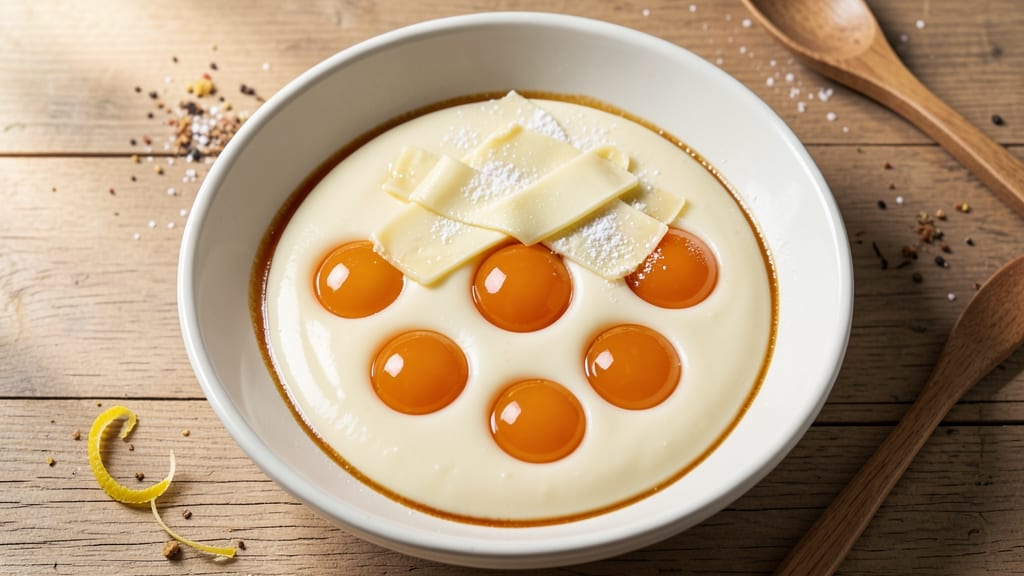
This 6-egg-yolk custard recipe delivers restaurant-quality silkiness without a single lump or curdle—no fancy equipment required. The secret lies in slow, deliberate tempering and a precise balance of dairy and sugar, transforming simple ingredients into velvety perfection.
I’ve perfected this technique over years of baking custards that never disappoint, whether you’re making crème brûlée, flan, or a classic tart filling.
What sets this recipe apart is the foolproof method that eliminates common custard pitfalls—like graininess or cracking—while ensuring a luxuriously smooth texture every time. We’ll use a bain-marie (water bath) for even cooking, but I’ll also share a quick microwave alternative for when you’re short on time.
The key? Patience in the tempering process and a gentle bake that coaxes out the creamiest, richest custard possible.
By the end, you’ll have a custard so ultra-smooth it practically melts on the tongue, with a set but jiggly consistency that’s impossible to resist. The technique works for any custard-based dessert, and I’ll guide you through troubleshooting so you can achieve flawless results—no matter your skill level.
Ready to master this classic?
This recipe is your gateway to professional-level custards at home, whether you’re baking for a special occasion or just craving a decadent treat. Let’s get started—your taste buds will thank you.
Ingredients for 6 egg yolk custard
Six yolks, two cups milk, and a dash of patience—this is your secret to flawless custard every time.
| Ingredient | Amount | Notes |
|---|---|---|
| Large Egg Yolks 🥚 | 6 whole | Fresh, room temperature preferred |
| Whole Milk 🥛 | 2 cups | Full-fat for creaminess (2%) minimum |
| Granulated Sugar 🍚 | ¾ cup | Superfine preferred for smoothness |
| Unsalted Butter 🧈 | ½ cup | Cold, cubed for tempering |
| Vanilla Extract 🌿 | 1 tbsp | Pure Madagascar bourbon preferred |
| Salt 🧂 | ¼ tsp | Fine sea salt for balance |
| Heavy Cream 🥛 | 1 cup | 35% fat for stability (optional) |
| Cornstarch 🌾 | 1 tsp | For ultra-smooth texture |
The yolks are non-negotiable—freshness matters. Grab them from the deli counter if possible (they keep better in the shell), and let them sit at room temperature for 30 minutes before using. Whole milk is key here—skip the skim or almond milk (they curdle easily). For sugar, superfine dissolves faster, but regular granulated works if pulsed in a food processor. The butter should be cold and cubed—this prevents the custard from breaking during tempering. I always buy European-style butter (like Plugrá) for its higher fat content, but any good unsalted brand works.
Running short on butter? Coconut oil works in a pinch (same quantity), though it has a slight flavor. No vanilla extract? Seeds from one vanilla bean or a pinch of vanilla sugar will do. The heavy cream is optional but adds luxurious mouthfeel—if you skip it, reduce the milk by 1/4 cup. For the cornstarch, arrowroot powder is a 1:1 substitute. Pro tip: If your custard starts to curdle during tempering, immediately whisk in 1 tsp of the reserved milk-butter mixture. It’s a lifesaver (trust me, I’ve had it happen).
Store finished custard in an airtight container with plastic wrap pressed directly on the surface to prevent a skin. Keeps 5 days refrigerated or 3 months frozen (thaw overnight in the fridge). For best texture, reheat gently in a double boiler—never microwave, or it’ll get grainy. I like to portion it into ramekins before baking so I can grab one straight from the fridge for desserts. The custard thickens as it cools, so if it seems too firm, just warm it slightly.
Why You'll Love This Recipe
- No Whisk Arm Fatigue: Honestly, I’ve made custards that require elbow grease for hours—this one? Just six yolks, a splash of warm milk, and a quick whisk on low heat. The butter and sugar melt into a silky ribbon while you sip coffee, not while you’re sweating over a stove.
- Vanilla Butter Bliss: That first spoonful of custard—warm, buttery, with vanilla so deep it tastes like you simmered it with actual vanilla beans? The sugar caramelizes just enough to balance the richness, and the whole milk keeps it luscious without being heavy. (Yes, even on a Tuesday night.)
- Leftovers That Save Dinner: I always double the batch because this custard reheats like a dream—smooth, not grainy, and ready in minutes. Perfect for lazy mornings, impromptu dessert guests, or when you realize you forgot to bake anything. Just pop it in the microwave and call it a win.
- Pantry Staple Magic: Six yolks, a stick of butter, and a splash of milk? You’re already halfway there if you keep eggs and dairy on hand. No specialty ingredients, no last-minute grocery runs—just pure, reliable comfort that costs next to nothing. My college budget would’ve wept with joy.
Step-by-step instructions for ultra-smooth egg yolk custard
Here's how to create velvety custard that's impossibly smooth and never curdles.
Temper the Egg Yolks with Warm Milk
Place the 6 whole large egg yolks in a heatproof bowl. Warm the 2 cups whole milk in a saucepan over medium heat until it reaches 160°F—just until small bubbles form around the edges but before it boils. This gentle warmth is crucial for preventing curdling.
Slowly pour about ½ cup of the warm milk into the yolks while whisking constantly. This gradual introduction of heat prevents the yolks from scrambling. Once fully incorporated, pour the yolk mixture back into the saucepan with the remaining milk. Return to medium-low heat and stir continuously with a wooden spoon.
Cook Until Thickened
Add the 0.75 cup granulated sugar and 0.25 tsp salt to the milk mixture and stir until dissolved. Cook while stirring constantly for about 5-7 minutes—you're looking for a thick, creamy consistency that coats the back of a spoon. This is where patience pays off; don't rush the cooking or you'll risk graininess.
Here's the trick: the custard should reach 170-175°F on an instant-read thermometer. If it starts to bubble vigorously before reaching this temperature, reduce the heat immediately. The moment it thickens, remove from heat—it will continue thickening as it cools.
Incorporate Butter and Cornstarch
Cut the 0.5 cup unsalted butter into small cubes and add them to the warm custard mixture. Stir vigorously until completely melted and incorporated—this adds richness and prevents separation. In a small bowl, whisk together the 1 cup heavy cream and 1 tsp cornstarch until smooth, then slowly pour this mixture into the custard while whisking constantly.
The cornstarch acts as a stabilizer, creating that ultra-smooth texture we're after. Continue whisking for 1-2 minutes until the mixture is completely homogeneous. This step eliminates any risk of lumps and ensures a silky finish.
Add Vanilla and Strain for Perfection
Remove the custard from heat and stir in the 1 tbsp vanilla extract. Let it sit for 5 minutes to allow the flavors to meld. Then, strain the custard through a fine-mesh sieve into a clean bowl. This crucial step removes any potential cooked bits that could affect texture, guaranteeing that velvety finish.
For best results, chill the custard in the refrigerator for at least 2 hours before serving. The cold temperature enhances the flavors and creates that perfect spoonable consistency. Serve chilled over fruit, in pastries, or as a creamy sauce—it's incredibly versatile.
Pro Tips For Making 6 Egg Yolk Custard
- Whisk Yolks Like Your Life Depends On It: I learned this the hard way—beat those 6 yolks with sugar until the mixture is pale, thick, and triple the volume. No streaks, no lazy whisks. If you see any yellow flecks after a full minute, start over. This isn’t just about texture; it’s what keeps your custard from breaking when it hits the milk.
- Temper Milk Slowly (Yes, Really): Pour the milk into the yolk mixture in a thin, steady stream while whisking constantly. I used to dump it in—big mistake. The heat shock turns custard into scrambled eggs. If you’re nervous, warm the milk to 160°F first, but still add it slow. The goal is silk, not glue.
- Strain That Mixture: No matter how careful you are, lumps happen. Strain the custard through a fine-mesh sieve into a clean bowl before pouring it into ramekins. I skip this sometimes, and the result? Grainy custard that tastes like you rushed. Five extra minutes now saves frustration later.
- Chill Before Baking (No Exceptions): Let the custard sit at room temp for 15–20 minutes after mixing—this lets the eggs hydrate fully. Then, refrigerate for at least 30 minutes before baking. I’ve baked it straight from room temp, and it either curdles or takes forever to set. Patience here = perfect texture.
Wine and beer pairings for this 6 egg yolk custard
Sweet Dessert Wines
For this rich, velvety custard, a Moscato d'Asti from Piedmont is my go-to choice. Its light, floral notes and subtle sweetness complement the custard’s creaminess without overpowering it.
Look for a bottle with 10-12% ABV—just enough alcohol to balance the dessert’s richness. Serve it slightly chilled (45-50°F) to enhance its refreshing qualities. 🍷
Creamy Port Pairings
A Ruby Port with its deep berry and chocolate undertones creates a luxurious pairing that mirrors the custard’s decadence. Opt for a 10-year-old vintage for smoother tannins and a more complex flavor profile.
The port’s natural sweetness harmonizes beautifully with the custard’s vanilla and caramel notes. Serve at room temperature in small glasses to avoid overwhelming the dessert.
Light Beer Options
If you prefer beer, a Belgian Witbier like Hoegaarden offers a crisp, citrusy contrast to the custard’s richness. The coriander and orange peel notes cut through the custard’s creaminess, cleansing the palate.
For a darker option, try a Belgian Dubbel—its caramel and spice notes pair surprisingly well with the custard’s vanilla and butter flavors. Serve both at 45°F for the best experience. 🍺
Coffee or Tea Finish
For a non-alcoholic option, a strong espresso or chai tea elevates the custard experience. The bitterness of espresso enhances the custard’s sweetness, while chai’s spiced notes add warmth. I like to serve a small cup of dark roast coffee alongside the custard, allowing guests to choose their preferred pairing.
This works especially well for custard-based desserts like crème brûlée or flan.
Regional Wine Specialties
In France, a Sauternes with its honeyed apricot flavors creates a match made in heaven. The wine’s natural sweetness and acidity balance the custard’s creaminess perfectly. For a Spanish twist, try a Pedro Ximénez sherry—its intense raisin and caramel notes complement the custard’s richness.
Both wines should be served slightly chilled (50-55°F) to preserve their delicate aromas.
Nutrition facts
Frequently asked questions
Why do you use only egg yolks instead of whole eggs?
Egg yolks create a richer, creamier texture with more natural fat content. The 6 yolks provide enough emulsifying power to create that signature velvety consistency without needing extra stabilizers. Whole eggs would make the custard lighter but riskier to curdle—this recipe prioritizes decadence over stability.
Can I make this custard without a bain-marie?
Yes! For a quick version, use a microwave-safe bowl. Heat the milk to 160°F, then mix with yolks and microwave in 30-second bursts, stirring vigorously between each. Stop when it reaches 170°F—it'll thicken further as it cools. For even cooking, place the bowl in a larger bowl of hot water (DIY bain-marie).
How do I fix a curdled custard?
Don't panic! Immediately whisk in 1 tablespoon cold milk or 1 teaspoon cornstarch mixed with water. For stubborn curdling, strain through a fine-mesh sieve to remove lumps. If all else fails, blend with 1/4 cup heavy cream—it'll create a smoother texture. Prevention tip: Temper yolks slowly and never let the mixture boil.
What's the best way to use this custard?
This versatile custard works for crème brûlée (top with sugar and torch), flan (pour into caramel), or tart fillings. For a quick dessert, layer with berries or pour over pound cake. Chill for 2+ hours before serving—it thickens as it cools. Store leftovers in an airtight container for up to 5 days.
Can I substitute dairy-free milk?
Not recommended for this recipe—the fat content is crucial for stability. If you must substitute, use full-fat coconut milk (1:1 ratio) and add 1 extra tablespoon cornstarch. For best results, stick with dairy—this custard relies on its rich texture. The butter and cream are non-negotiable for that luxurious finish.