
Breakfast & Brunch
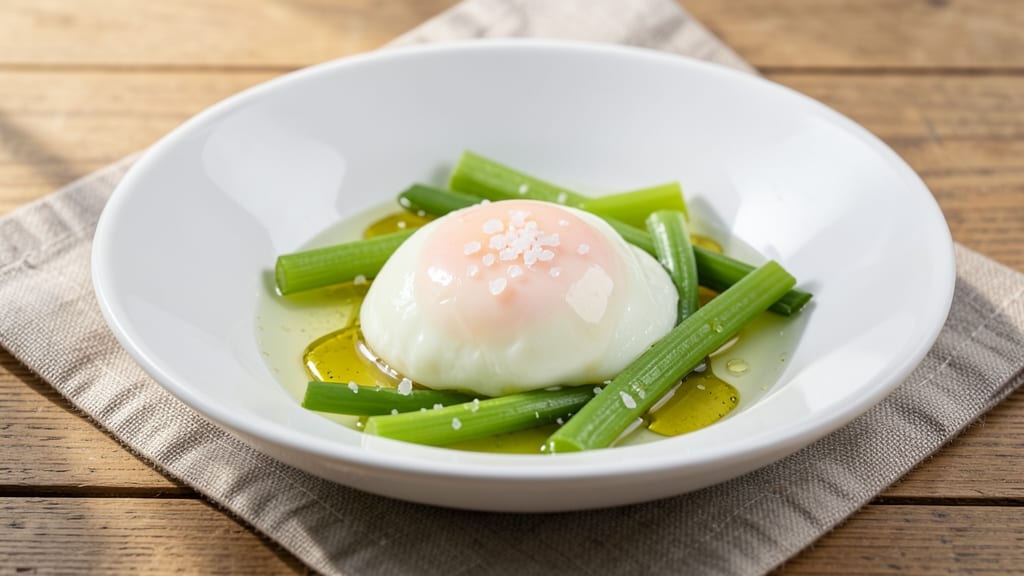
This water poached egg recipe transforms breakfast into an elegant, restaurant-quality experience with minimal effort. The secret lies in precise water temperature and timing—achieving silky whites that hold their shape while delivering a runny yolk that pools like liquid gold.
I've refined this technique over years, ensuring every egg turns out perfectly without guesswork or frustration.
What sets this method apart is the use of room-temperature water and a vinegar solution that gently sets the whites while keeping the yolk intact. No specialized equipment is needed—just a deep saucepan, patience, and attention to detail.
The result? Eggs so tender they melt in your mouth, with whites that stay clean and yolks that remain gloriously fluid.
Serve these poached eggs atop toasted sourdough, a crisp salad, or avocado toast for a meal that feels indulgent yet effortless. The crown of crispy celery adds a refreshing crunch that cuts through the richness, balancing each bite with bright, fresh flavor.
This is breakfast elevated—simple, precise, and utterly satisfying.
Mastering the technique takes practice, but the payoff is worth every attempt. Once you perfect the water temperature and timing, you'll have a skill that impresses guests and transforms everyday meals. Let's get started on creating eggs that look as beautiful as they taste.
Ingredients for water poached egg
Precision ingredients for restaurant-quality poached eggs with crisp celery crowns.
| Ingredient | Amount | Notes |
|---|---|---|
| Large Eggs 🥚 | 2 whole | Fresh, room-temperature preferred |
| White Vinegar 🍶 | 1 tbsp | Distilled preferred for clarity |
| Fine Sea Salt 🧂 | 1 tsp | Diamond Crystal preferred |
| Room-Temperature Water 💧 | 4 cups | Filtered or distilled preferred |
| Fresh Celery Stalks 🧅 | 3 whole | Organic, crisp variety |
| Extra-Virgin Olive Oil 🫒 | 1 tbsp | High-quality, fruity |
| Sourdough Bread 🍞 | 2 slices | Artisan, crusty preferred |
| Lemon Juice 🍋 | 1 tsp | Freshly squeezed |
| Freshly Ground Black Pepper 🌶️ | ¼ tsp | Coarsely ground |
| Fresh Dill Sprigs 🌿 | 2 whole | For garnish, optional |
The eggs are the foundation—use room-temperature ones for even cooking. Organic, free-range eggs yield richer yolks, but any high-quality eggs work. Vinegar matters here; distilled white vinegar won't overpower the delicate egg flavor. For water, filtered or distilled minimizes impurities that could cloud the whites. Celery should be crisp and organic—avoid pre-cut stalks, which lose crunch. If you can't find organic, wash thoroughly and pat dry to maintain texture. The sourdough should have a thick crust; artisanal bakeries often carry superior slices for toasting.
No vinegar? A splash of lemon juice at half the amount works in a pinch, though it may slightly alter the whites' texture. Short on celery? Thinly sliced cucumber or radish adds crunch, but celery's anise notes are irreplaceable. For the olive oil, avoid light or refined varieties—they lack the fruity depth needed to complement the eggs. The lemon juice can be omitted if you prefer, but it brightens the dish. Freshly ground pepper is non-negotiable; pre-ground loses potency quickly. If dill isn't available, chives or parsley work as garnishes, though they lack dill's fresh, slightly tangy flavor.
Store eggs in their carton in the coldest part of your fridge for up to 3 weeks. Celery keeps 1 week wrapped in damp paper towels in a sealed container. Toasted sourdough stays fresh 3 days if stored in a paper bag at room temperature. Poached eggs reheat beautifully—gentle warming in a water bath preserves their texture. For meal prep, poach eggs ahead and store in ice water for up to 2 days; reheat in simmering water for 30 seconds before serving. The celery crown can be prepped 1 day ahead and stored separately to maintain crispness.
Why You'll Love This Recipe
- No-Fuss Technique: I swear by this method—just crack eggs into vinegar water, let them poach undisturbed, and boom. No fancy gadgets, no broken yolks, no stress. The vinegar keeps the whites tight while the celery adds a subtle crunch that makes it feel fancy without the effort.
- Celery’s Secret Boost: That celery isn’t just garnish—it’s flavor magic. The stalks soften just enough to add a bright, grassy bite that cuts through the egg’s richness. Honestly, I’ve tried it without, and it’s just not the same. Pair it with toast and you’ve got a meal that tastes like a café breakfast for pennies.
- Breakfast or Brunch Fix: Slap these on avocado toast for a quick breakfast, or serve them over greens for a light lunch. They’re my go-to when I’m prepping ahead because they reheat beautifully—just warm the water, drop in the eggs, and they’re fresh again. (Yes, even on a Tuesday night.)
- Pantry-Proof Perfection: Three ingredients—eggs, vinegar, salt—that I always have on hand. No last-minute grocery runs, no overcomplicating things. And if I make a batch, the leftovers keep for days in the fridge, ready to turn into a salad topper or a lazy dinner in seconds. Budget-friendly? Absolutely. Reliable? You bet.
Step-by-step instructions for water poached eggs with celery crown
Mastering this technique transforms simple eggs into a restaurant-worthy centerpiece.
Prepare the Poaching Bath
Combine the 4 cups room-temperature water and 1 tablespoon white vinegar in a deep skillet or saucepan. The vinegar lowers the surface tension, helping the egg whites wrap neatly around the yolk. Bring to a gentle simmer over medium-low heat—you want small, steady bubbles breaking the surface, not a rolling boil. This controlled temperature prevents the eggs from breaking apart during poaching.
Add the 1 teaspoon fine sea salt and stir until fully dissolved. The salt enhances flavor and helps stabilize the egg whites as they cook. Keep the heat at this level—too vigorous and the whites will overcook before the yolks set properly. You'll know it's ready when you see fine bubbles forming continuously at the bottom without disturbing the surface too much.
Blanch and Prepare Celery Crowns
While the water heats, prepare the celery crowns by cutting the 3 whole fresh celery stalks into ½-inch thick rounds. Blanch these rounds in boiling water for 30 seconds, then transfer to an ice bath to stop the cooking process. This preserves their crisp texture and prevents them from turning mushy when assembled later.
Drain the blanched celery and pat dry with paper towels. Arrange them in a circular pattern on a small plate—this creates your signature "crown" that will frame the poached egg. The slight blanch also removes any bitterness from the celery, making it more palatable when eaten raw.
Poach the Eggs to Perfection
Crack each of the 2 whole large eggs into a small ramekin or shallow bowl. This containment prevents the whites from spreading too widely in the poaching water. Using a slotted spoon, gently lower one egg at a time into the simmering water. The water should be at a gentle simmer—if it's too active, the whites will break apart.
Poach for 3-4 minutes until the whites are set but the yolks remain runny and vibrant. You'll see the whites begin to form a neat, rounded shape around the yolk. Remove with the slotted spoon and transfer to a paper towel-lined plate to drain briefly. The key is timing—overcooking by even 30 seconds will turn the yolk from silky to rubbery.
Assemble the Celery Crown Presentation
Toast the 2 slices sourdough bread lightly until golden and crisp. Place one slice on each plate as the base. Arrange the blanched celery crowns in a tight circle around the center of each plate, creating your signature presentation. Drizzle with the 1 tablespoon extra-virgin olive oil and 1 teaspoon lemon juice—this adds brightness and prevents the celery from drying out.
Gently place one poached egg in the center of each celery crown. The heat from the egg will slightly warm the celery, enhancing its flavor. Sprinkle with ¼ teaspoon freshly ground black pepper and garnish with the 2 whole fresh dill sprigs. The dill adds a fresh, herbal note that complements the richness of the egg.
Serve Immediately for Optimal Texture
Serve the poached eggs immediately while the yolks are still runny and the celery maintains its crispness. The contrast between the silky yolk and the crunchy celery crown is what makes this dish truly special. If you must hold them briefly, cover loosely with a cloth to keep the eggs warm without steaming.
The presentation should be elegant yet approachable—each bite delivers the creamy yolk surrounded by the refreshing celery and bright lemon dressing. The sourdough base adds a subtle tang that ties everything together. This isn't just an egg dish; it's a textural and visual experience that elevates simple ingredients into something extraordinary.
Pro Tips For Making Water Poached Egg
- USE COLD WATER FIRST: The water needs to be room temp when you add the eggs, but start with cold water—it’s easier to heat gradually without cracking eggs. I learned this the hard way after watching three yolks turn into scrambled messes from overzealous boiling.
- SALT THE WATER LATE: Add sea salt only after the water reaches a gentle simmer, not before. Salt early and you’ll end up with a cloudy broth and eggs that taste like they’ve been swimming in a brine bath—trust me, the timing matters.
- CUT CELERY THIN: Slice those celery stalks into paper-thin rounds, not thick coins. Thin pieces cook faster and infuse the poaching water with flavor without turning it into a soup. (Yes, even if you’re impatient like me.)
- CRACK EGGS INTO A CUP: No more egg shells in your poaching water—crack each egg into a small ramekin or measuring cup first, then gently slide it into the simmering water. This keeps the whites intact and your broth clean. (Your future self will thank you.)
Wine and beer pairings for water poached egg
Crisp White Wine
A dry Riesling from Germany or Alsace is my go-to pairing—its bright acidity and subtle honeyed notes cut through the richness of the poached yolk while complementing the celery's fresh crunch.
Look for a Kabinett-level Riesling like Dr. Loosen Blue Slate or Trimbach Riesling; these wines have enough body to stand up to the egg's creaminess without overpowering the dish. Serve slightly chilled (45-48°F) to enhance the wine's crispness and refresh your palate between bites. 🍷
Light Beer Options
For beer lovers, a Belgian witbier like Stella Artois or Hoegaarden brings a citrusy, spicy contrast that mirrors the lemon dressing and celery's herbal notes. The effervescence also cleanses the palate, making each bite of the silky yolk feel fresh.
If you prefer something bolder, a pilsner like Pilsner Urquell works—its clean, hoppy finish balances the egg's richness without competing. Keep the beer well-chilled (38-42°F) to preserve its crispness.
Sparkling Wine
A dry sparkling wine like Veuve Clicquot Brut or La Marca Prosecco adds a luxurious touch to this elegant dish. The bubbles and acidity mirror the poaching technique itself, creating a harmonious experience from first sip to last bite.
The slight sweetness in Prosecco also pairs beautifully with the celery's natural sugars, while the Brut's dryness complements the egg's savory depth. Serve at 45-50°F to highlight its crispness and effervescence. ✨
Avoid Heavy Flavors
Skip bold reds or oaky whites—they’ll overpower the delicate balance of this dish. Heavy malty beers or sweet dessert wines (like Moscato) clash with the celery's freshness and the egg's clean whites.
Instead, stick to wines and beers with high acidity and minimal residual sugar to let the poached egg shine. The goal is to enhance the dish’s natural flavors, not mask them. Trust me, your taste buds will thank you!
Nutrition facts
Frequently asked questions
Why does my water poached egg turn out rubbery?
Overcooking is the most common cause—poach for exactly 3-4 minutes with a gentle simmer (185-195°F). Use room-temperature eggs and water to ensure even cooking. If the yolk feels firm, it's overdone. The whites should be set but still slightly translucent around the edges.
Can I poach eggs without vinegar?
Yes, but the whites may spread more. Replace vinegar with ½ teaspoon lemon juice or skip it entirely—just stir the water vigorously to help the whites hold shape. The vinegar lowers surface tension, making the whites wrap neatly around the yolk. For best results, use it if possible.
How do I keep the whites perfectly round?
Crack eggs into a shallow bowl first to contain the whites, then gently slide them into the simmering water using a slotted spoon. Avoid stirring the water once the egg is in—this disrupts the whites. A gentle simmer (just small bubbles) and room-temperature water also help. Practice makes perfect!
What’s the best way to reheat poached eggs?
Never microwave! Instead, place eggs in a small saucepan with 1 cup hot water and warm on low heat for 30 seconds. This keeps the yolk runny while gently reheating the whites. For make-ahead meals, poach eggs and store in ice water for up to 2 days—reheat the same way before serving.
Can I use this technique for soft-boiled eggs?
Not exactly—this method is for runny yolks. For soft-boiled eggs, cook in 160°F water for 6-7 minutes. The water poaching technique here relies on precise timing for silky whites and liquid yolks. For a similar effect, try a 6-minute egg** in boiling water.