
Breakfast & Brunch
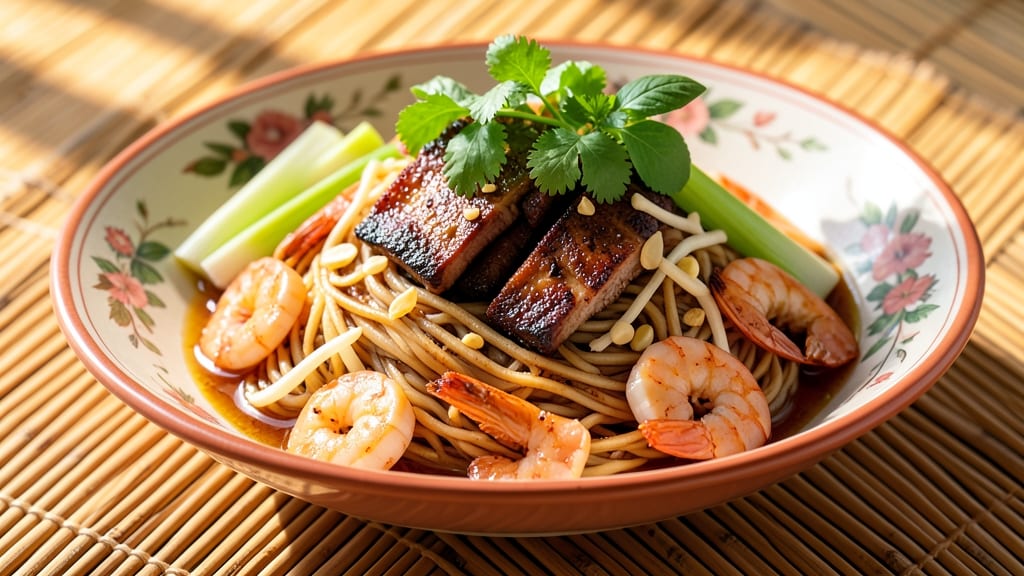
This Vietnamese egg noodles recipe brings the aromatic streets of Hanoi to your kitchen with a fragrant lemongrass broth and fiery chili oil twist. 🌟 The secret lies in homemade noodles—either freshly stretched or store-bought for convenience—paired with tender pork or shrimp and fresh herbs.
I developed this version after years of perfecting the balance between sweet, savory, and spicy, ensuring every bowl delivers restaurant-quality flavors without the fuss.
The dish starts with a fragrant broth infused with lemongrass, garlic, and ginger, simmered until deeply aromatic. For the noodles, you can stretch fresh egg noodles by hand (a rewarding process) or use pre-made rice noodles for simplicity.
The chili oil adds a signature kick, while garnishes like Thai basil, cilantro, and lime elevate each bite to new heights.
What makes this recipe special is its adaptability—whether you prefer the light, herb-forward style of Hanoi or the richer, spicier Saigon version, the foundation remains the same. The result is a dish that’s both comforting and vibrant, perfect for breakfast or a light dinner.
With just a few simple ingredients and techniques, you’ll create a bowl that transports you to Vietnam.
Serve with an assortment of fresh herbs, bean sprouts, and extra chili oil on the side for customization. This recipe is designed to be your go-to for quick yet impressive meals that feel like a culinary journey. Let’s get started!
Ingredients for vietnamese egg noodles
Fresh herbs and aromatic spices transform simple noodles into a Hanoi street feast.
| Ingredient | Amount | Notes |
|---|---|---|
| Fresh Lemongrass Stalks 🌿 | 6 whole | White parts only, finely chopped |
| Garlic Cloves 🧄 | 8 cloves | Peeled, minced finely |
| Fresh Ginger 🌶️ | 2 tbsp | Finely grated, aromatic |
| Egg Noodles 🍜 | 12 oz | Fresh or dried rice noodles |
| Pork Shoulder 🐷 | 1 lb | Thinly sliced, boneless |
| Shrimp 🦐 | 1 lb | Peeled, deveined, optional |
| Fish Sauce 💧 | 3 tbsp | Red Boat preferred |
| Soy Sauce 🍶 | 2 tbsp | Light or dark |
| Sugar 🍯 | 1 tbsp | White or brown |
| Lime Juice 🍋 | ½ cup | Freshly squeezed |
| Thai Chili Oil 🌶️ | ¼ cup | Homemade or store-bought |
| Thai Basil Leaves 🌿 | ½ cup | Fresh, stems removed |
| Cilantro Leaves 🌿 | ¼ cup | Fresh, chopped |
| Bean Sprouts 🌱 | 1 cup | Fresh or canned, drained |
| Vegetable Oil 🫒 | ½ cup | For stir-frying |
Lemongrass is the soul of this dish—look for stalks with tight, pale leaves and no brown spots. Asian markets usually carry the best quality, but the regular grocery store works too. The white part only is used, so trim the green leaves before chopping. Fresh ginger should smell sharp and citrusy—no musty aromas. For the noodles, fresh egg noodles are ideal, but dried rice noodles (soaked in hot water) work perfectly. The pork can be swapped for shrimp or tofu if preferred—just adjust cooking time accordingly.
No Red Boat fish sauce? Any good-quality brand works—just check for no added sugar. Thai chili oil can be homemade (chili flakes + oil) or store-bought—Maesri or Thai Kitchen are reliable. Fresh Thai basil has a distinct anise flavor—regular basil won't cut it. The bean sprouts add crunch, but snow peas or shredded cabbage work in a pinch. For extra depth, toast the lemongrass and ginger in oil for 30 seconds before adding broth—trust me on this. The pork should be thinly sliced against the grain for tender bites.
Broth keeps for 3 days in the fridge—reheat gently and add extra water if too thick. Noodles should be cooked al dente and tossed immediately to prevent sticking. The chili oil can be made ahead and stored for 1 month in a cool, dark place. Fresh herbs like Thai basil and cilantro stay vibrant for 5 days if wrapped in damp paper towels. Double the recipe—leftovers reheat beautifully and taste even better the next day.
Why You'll Love This Recipe
- No Chopping Chaos: I slice just three things—ginger, garlic, lemongrass—and call it a day. The rest? Toss, simmer, serve. Even my roommate (who burns toast) can handle this.
- Umami Bomb: That pork shoulder? Slow-braised until it falls apart, then tossed with the bright, citrusy lemongrass and garlic. It’s the kind of flavor that makes you pause mid-bite—like a hug in noodle form.
- Leftover Hero: Double the batch, and you’ve got lunch for three days. Reheat with a splash of water, and it’s just as good as day one—no sad, dry noodles here.
- Budget Flex: Pork shoulder stretches across meals, and egg noodles are dirt cheap. Honestly, I make this when I’m pinching pennies, and no one ever guesses. (My secret’s out now.)
Step-by-step instructions for Vietnamese egg noodles with lemongrass and chili oil
Let's build this fragrant dish with layers of flavor—crispy pork, tender shrimp, and aromatic herbs.
🍳 Step 1: Stir-Fry the Pork Shoulder Until Crispy
Heat the 0.5 cup vegetable oil in a wok or large skillet over medium-high heat until shimmering. Add the 1 lb thinly sliced pork shoulder in a single layer, being careful not to overcrowd the pan. Let it sear undisturbed for 2-3 minutes until the edges turn golden brown and crispy.
I press down gently on the pork with a spatula during the first minute—this prevents it from curling and ensures even contact with the pan. Once the pork is golden on one side, flip and cook for another 2-3 minutes until fully crispy. Remove the pork and set it aside on a plate, leaving the rendered fat in the pan. This fat will become the flavor base for your noodles.
👨🍳 Step 2: Cook the Shrimp and Prepare the Aromatics
In the same pan with the pork fat, add the 1 lb shrimp over medium heat and cook for 1-2 minutes per side until they turn pink and opaque. Remove the shrimp and set aside with the pork. Now, add the 6 whole chopped lemongrass stalks, 8 minced garlic cloves, and 2 tbsp grated ginger to the pan.
Stir-fry the aromatics for 1-2 minutes until the lemongrass turns bright green and the garlic becomes fragrant—this releases their oils and infuses the fat with their signature flavors. Here's the thing—don't let the garlic burn. It should smell amazing but not bitter. If it starts to darken too quickly, reduce the heat slightly.
🍳 Step 3: Build the Lemongrass Chili Sauce
Pour in the 3 tbsp fish sauce, 2 tbsp soy sauce, and 1 tbsp sugar, stirring to combine with the aromatics. Let the mixture simmer for 1 minute until the sauce slightly thickens. Then, add the 0.5 cup lime juice and 0.25 cup Thai chili oil, stirring well to incorporate.
This is where the dish comes together—bright, tangy, and spicy all at once. Taste the sauce and adjust the seasoning if needed. You want it balanced: salty from the fish and soy sauce, sweet from the sugar, and zesty from the lime. If it's too strong, add a splash of water or a pinch of sugar to mellow it out.
🥘 Step 4: Cook the Egg Noodles and Assemble
Bring a pot of water to a boil and cook the 12 oz egg noodles according to package instructions until al dente. Drain and rinse briefly under cold water to stop the cooking process, then toss with 1 tbsp vegetable oil to prevent sticking. Divide the noodles among four bowls.
Top each bowl with the crispy pork shoulder and shrimp, then ladle the lemongrass chili sauce evenly over the noodles. Finish with 0.5 cup Thai basil leaves, 0.25 cup chopped cilantro, and 1 cup bean sprouts. The herbs should be fresh and vibrant—this adds a bright, herbal contrast to the rich, spicy sauce.
🍽️ Step 5: Serve Immediately with Fresh Garnishes
Give everything a good toss right before serving so the noodles soak up the fragrant sauce. The dish should be hot, aromatic, and packed with texture—crispy pork, tender shrimp, and chewy noodles all coated in that bright, spicy-sweet sauce.
Real talk: the best part is the balance of flavors. The lemongrass and chili oil add depth, the lime keeps it fresh, and the herbs bring it all together. Serve with extra lime wedges on the side so everyone can adjust the tanginess to their taste. Enjoy while it's hot—this dish doesn't wait!
Pro Tips For Making Vietnamese Egg Noodles
- CHAR THE PORK LOW AND SLOW: Vietnamese egg noodles need pork that’s fork-tender, not just cooked through—rush this, and you’ll end up with chewy, flavorless shreds. Start with a cold pot, add just enough water to cover the pork shoulder, and simmer uncovered on lowest heat for 3 hours. The liquid will reduce dramatically, concentrating the collagen into rich, silky broth that clings to every noodle.
- SLICE LEMONGRASS THINLY: Thick stalks of lemongrass just sit in your broth like twigs. Split each stalk lengthwise, then slice into ½-inch rounds—this releases the oils and aroma without turning your broth into a strainer. I learned this the hard way after pulling out a mouthful of fibrous lemongrass. Trust me, your future self will notice the difference.
- DON’T OVERCOOK THE NOODLES: Fresh egg noodles for this dish should be al dente—they’ll finish cooking in the hot broth. Taste one at the 45-second mark (yes, even if it feels early). Overcooked noodles turn mushy and dull, while perfectly al dente ones soak up the pork fat and broth like a sponge. Save 2 minutes of boiling time and gain 10x flavor impact.
- SAUTÉ GINGER AND GARLIC UNTIL FRAGRANT: The moment garlic turns golden and ginger starts to sizzle, you’ve unlocked the dish’s soul. Cook them in small batches over medium-high heat until the edges crisp slightly—this prevents bitterness and builds depth. Skip this step, and you’re just adding raw garlic flavor instead of a complex, toasty base. (Your nose will thank you.)
Essential equipment for great vietnamese egg noodles
Wok Essentials
Your wok is the heart of this recipe—I use a 14-inch carbon steel wok from Made In because it heats evenly and develops a natural non-stick patina over time. Carbon steel retains heat better than stainless steel, which is crucial for high-heat stir-frying.
If you don’t have a wok, a large, deep skillet (like All-Clad Stainless) works in a pinch, though it won’t get as hot in the center. Preheat your wok over high heat for 2-3 minutes until it’s smoking slightly before adding oil.
This ensures proper searing and prevents sticking. 🔥
Noodle Tools
For fresh egg noodles, a rolling pin and laminating roller (like the Norpro Laminating Roller) make stretching easier, but you can use a wooden dowel or even a soda can if you’re improvising. If using dried rice noodles, a fine-mesh strainer helps drain them quickly without breaking.
I also recommend a slotted spoon for serving—it lets you scoop noodles and sauce together neatly. For homemade noodles, a sharp chef’s knife and cutting board are essential for slicing the dough thinly and evenly. 🍜
Garnish Prep
Fresh herbs like Thai basil and cilantro wilt quickly, so prep them last minute. A small, sharp pair of kitchen shears makes chopping basil stems faster than a knife. For bean sprouts, rinse them in a colander under cold water to remove any dirt before draining.
I keep a small bowl of ice water nearby to refresh herbs if I’m prepping ahead. A microplane is perfect for zesting lime and grating ginger finely—it’s faster than a knife and more precise.
Store-bought Thai chili oil can be drizzled from its bottle, but homemade versions need a fine-mesh sieve to strain out chili flakes if you prefer a smoother texture. 🌿
Broth Control
A long-handled spoon (like OXO Good Grips) helps stir the broth without burning your hand, while a small ladle makes it easy to portion sauce over noodles. For balancing flavors, I keep a small bowl of water and a pinch dish nearby to adjust the sauce’s intensity.
A digital instant-read thermometer (like ThermoWorks Thermapen) ensures your pork reaches 145°F for safe eating. If making broth ahead, a large, heavy pot (like Le Creuset Dutch Oven) keeps it warm on the stove for up to 3 days. 🌡️
Serving Style
Individual wide, shallow bowls (like Villeroy & Boch stoneware) let guests customize their bowls with extra herbs, chili oil, or lime. A small pitcher holds the extra lime juice for adjusting tanginess at the table.
For presentation, I arrange garnishes in a small ceramic dish on the side—it keeps everything fresh and adds a restaurant-style touch. If serving a crowd, a large serving spoon helps distribute noodles evenly. Don’t forget chopsticks or sporks for easy eating—this dish is messy but worth it! 🍽️
Nutrition facts
Frequently asked questions
Can I make these egg noodles gluten-free?
Replace regular wheat flour with a 1:1 gluten-free flour blend (like Bob's Red Mill) for homemade noodles. For store-bought, look for certified gluten-free rice noodles—brands like Vietnamese Rice Noodle or Thai Kitchen have great options. Just soak them 5-7 minutes longer than package instructions to ensure full cooking.
How do I adjust the spice level?
Start by reducing the Thai chili oil to 1-2 tablespoons for mild heat. For extra kick, add 1-2 chopped Thai chilies to the sauce or serve with sriracha on the side. The lime juice naturally balances spice, so adjust that too if needed. Remember, you can always add more chili oil after serving!
What's the best way to make fresh egg noodles?
Mix 1 cup all-purpose flour with 2 tablespoons water and a pinch of salt until a dough forms. Knead for 5 minutes until smooth, then rest 30 minutes wrapped in plastic. Roll thin with a rolling pin or laminating roller, then cut into strips. For authentic texture, stretch the noodles by hand or use a wooden dowel—this creates the signature chewy quality.
Can I prepare this dish ahead of time?
Yes! Cook the noodles and pork/shrimp separately, then refrigerate in airtight containers for 1 day. Reheat noodles in hot water and pork/shrimp in a pan with a splash of water. The sauce can be made 2 days ahead—just reheat gently and adjust seasoning. Fresh herbs should be added last minute to keep them vibrant. The best approach is to prep components separately and assemble when ready to eat.
What's the difference between Hanoi and Saigon-style egg noodles?
Hanoi-style (bún) uses thinner, chewier noodles with a lighter broth and more herbs. Saigon-style (hủ tiếu) features thicker noodles in a richer, spicier sauce with more meat. For this recipe, we blend both styles—use medium-thick noodles and adjust the chili oil to taste. The key difference is texture: Hanoi noodles are delicate, while Saigon noodles are heartier and more filling.