
Salads
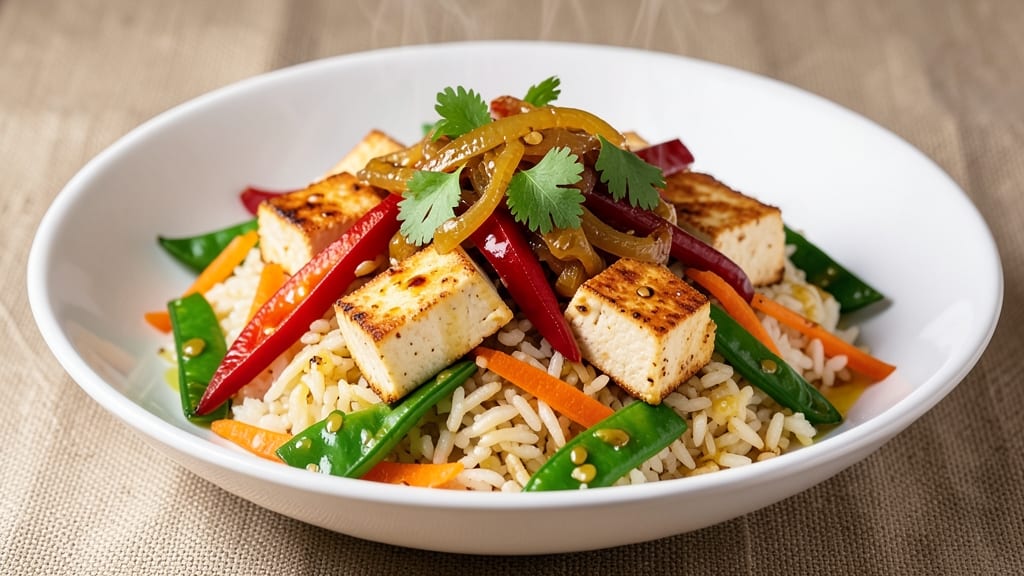
This healthy veggie fried rice recipe transforms simple ingredients into a high-protein, low-calorie power bowl that’s packed with flavor and nutrition. 💛 The secret lies in balancing fresh vegetables, lean protein, and aromatic seasonings to create a dish that’s as satisfying as it is healthy—perfect for meal prep or a quick weeknight dinner.
No heavy sauces or excess oil here, just vibrant, nutrient-dense bites that keep you full without the guilt.
The foundation starts with day-old rice (or freshly cooked and cooled) that absorbs flavors beautifully, paired with crisp vegetables like bell peppers, carrots, and snap peas for crunch and color.
For protein, firm tofu or scrambled eggs add substance without overpowering the dish, while low-sodium soy sauce and a touch of sesame oil elevate the umami depth. The result? A light yet hearty bowl that’s customizable for any dietary preference—spicier, lighter, or gluten-free.
What makes this recipe stand out is its efficiency and adaptability. Prep all your veggies in advance, and the stir-fry comes together in under 15 minutes, making it ideal for busy schedules.
The dish is also nutritionally balanced, with fiber from the vegetables, plant-based protein from the tofu or eggs, and healthy fats from sesame oil. Every bite delivers a mix of textures—crisp, tender, and chewy—while keeping calories in check.
Serve this veggie fried rice as a standalone meal or pair it with a side of steamed greens or miso soup for a complete, wholesome dish. The best part?
It tastes just as good reheated the next day, making it a foolproof solution for lunches or dinners. Ready to elevate your fried rice game? Let’s get cooking!
Ingredients for veggie fried rice recipe healthy
Balanced nutrition meets bold flavor in this vibrant veggie fried rice power bowl.
| Ingredient | Amount | Notes |
|---|---|---|
| Day-Old Cooked White Rice 🍚 | 4 cups | Cold or room temperature preferred |
| Extra-Firm Tofu 🥬 | 1 lb | Pressed and cubed |
| Red Bell Pepper 🌶️ | 1 whole | Diced into small pieces |
| Carrots 🥕 | 2 medium | Julienned or thinly sliced |
| Snap Peas 🌱 | 1 cup | Trimmed and halved |
| Yellow Onion 🧅 | 1 medium | Finely diced |
| Garlic Cloves 🧄 | 4 cloves | Minced for aromatic depth |
| Low-Sodium Soy Sauce 🥢 | 2 tbsp | For umami flavor |
| Sesame Oil 🫒 | 1 tbsp | Toasted for aroma |
| Olive Oil 🫒 | 1 tbsp | Light for cooking |
| Green Onions 🧅 | 2 whole | Chopped for garnish |
| Sesame Seeds 🌾 | 1 tbsp | Toasted for crunch |
| Fresh Ginger 🌿 | 1 tbsp | Grated for zing |
| Diamond Crystal Kosher Salt 🧂 | ½ tsp | Adjust to taste |
| Black Pepper 🌶️ | ¼ tsp | Freshly ground |
The foundation begins with day-old rice—freshly cooked rice releases too much starch and turns mushy. Look for jasmine or basmati at Whole Foods or your local Asian market for the best texture. Extra-firm tofu is non-negotiable here; Wildwood or Nasoya brands press beautifully without crumbling. For the vegetables, aim for bright, crisp produce—red bell peppers should snap when bent, and snap peas should be vibrant green. Prep all veggies in advance to save time during cooking.
No tofu on hand? Firm white beans or scrambled eggs work as protein substitutes. Swap snap peas for frozen peas (thawed) if fresh isn't available, though texture will differ slightly. The low-sodium soy sauce is crucial—regular versions add excessive salt. For extra heat, add 1 tsp of sriracha or red pepper flakes to taste. Sesame oil should be toasted (heat lightly in a pan) to deepen its nutty aroma before adding to the rice. The olive oil used for cooking should be light, like Avocado oil, to avoid overpowering the dish's delicate flavors.
Store cooked fried rice in airtight containers for up to 4 days in the fridge or 3 months in the freezer. For best texture, reheat in a steamer basket over boiling water or microwave with a splash of water. The dish reheats beautifully, making it ideal for meal prep. Garnishes like green onions and sesame seeds can be added fresh after reheating to maintain crispness. Portion into individual containers with a side of steamed edamame or a miso soup for a complete, balanced meal.
Why You'll Love This Recipe
- No Waste, All Flavor: I swear by using day-old rice—it’s the secret to that perfect texture, not sticky or mushy. The tofu soaks up the sauce like a sponge, and the crispy edges? That’s the magic of pressing it first and pan-frying until golden.
- One-Pan Magic: Honestly, this is my "I don’t want to wash dishes" meal. Toss everything in one pan—rice, veggies, tofu—and stir-fry until the snap peas blister just enough to pop. The red bell pepper adds a sweet crunch that cuts through the savory tofu like a breath of fresh air.
- Lunchbox Hero: Between us, this is my go-to for meal prep. Pack it in containers for days, and it stays fresh (and delicious) until Friday. The carrots add a subtle sweetness that kids actually eat—my daughter picks out the peas, but still finishes her bowl.
- Budget-Friendly Powerhouse: Tofu’s cheap, rice lasts forever, and seasonal veggies stretch further than takeout. I make this twice a week, and it’s always the dish that saves me when the grocery budget’s tight. Plus, the leftovers reheat like a dream—no soggy rice here.
Step-by-step instructions for high-protein veggie fried rice
Transform simple ingredients into a nutrient-packed meal with this efficient, protein-rich method.
🍳 Step 1: Press and Crisp the Tofu for Maximum Protein
Wrap the 1 lb extra-firm tofu in a clean kitchen towel and place a heavy pan on top for 15 minutes to remove excess water. Cut into ½-inch cubes—this size ensures even cooking and better texture. Heat 1 tablespoon olive oil in a non-stick skillet over medium-high heat until shimmering.
Add the tofu cubes in a single layer, being careful not to overcrowd the pan. Cook undisturbed for 4-5 minutes until golden brown on one side, then flip gently. The tofu should develop crispy edges while maintaining a tender center. Remove and set aside—this crispy texture adds both protein and satisfying crunch to your dish.
👨🍳 Step 2: Prep and Sauté the Vegetable Base
In the same skillet (no need to clean it—the fond adds flavor), add 1 tablespoon olive oil if needed. Sauté the finely diced yellow onion and minced garlic cloves over medium heat for 2-3 minutes until soft and fragrant. Add the grated fresh ginger and cook for 30 seconds until the raw aroma disappears.
Stir in the julienned carrots and diced red bell pepper, cooking for 3-4 minutes until the carrots soften slightly but still retain their color. Add the halved snap peas and cook for another 2 minutes—you want them vibrant and just tender-crisp. Season with 0.5 teaspoon Diamond Crystal kosher salt and 0.25 teaspoon black pepper as you go. This layered cooking ensures each vegetable contributes its best texture and flavor.
🥘 Step 3: Combine Rice and Seasonings for Perfect Texture
Increase heat to high and add the 4 cups day-old cooked white rice, breaking up any clumps with a spatula. Stir-fry for 2-3 minutes until the rice is heated through and begins to sizzle. Pour in 2 tablespoons low-sodium soy sauce and 1 tablespoon sesame oil, tossing vigorously to coat every grain. The rice should look glossy and slightly sticky—this ensures it holds together while remaining distinct.
Return the crispy tofu to the pan and mix everything together. Cook for another 2 minutes until all ingredients are evenly distributed. The rice should be hot but not mushy, and the tofu should be warmed through without losing its crispy edges. Taste and adjust seasoning—you may need a splash more soy sauce if the flavors seem mild.
🔥 Step 4: Finish with Aromatics and Garnish for Restaurant-Quality Results
Reduce heat to medium-low and drizzle in 1 tablespoon toasted sesame oil, stirring quickly to distribute the nutty aroma. Remove from heat and transfer to serving bowls. Garnish immediately with chopped green onions and toasted sesame seeds—this adds freshness and crunchy contrast. The sesame seeds should be lightly toasted in a dry pan for 30 seconds before sprinkling to enhance their flavor.
Serve while hot, with each bite delivering a perfect balance of textures—crispy tofu, tender vegetables, and fluffy rice. The dish should be vibrant in color, aromatic from the garlic and ginger, and packed with plant-based protein. For extra staying power, pack leftovers with a sprinkle of sesame seeds to maintain texture.
Pro Tips For Making Veggie Fried Rice Recipe Healthy
- CRISP THE TOFU FIRST: I learned this the hard way—if you toss tofu in raw, it’ll turn into a soggy sponge. Press it first (wrap in a towel, weigh it down for 15 minutes), then pan-fry until golden brown with a pinch of cornstarch. That crispy exterior stays intact through the stir-fry, adding texture without extra oil.
- CHOP VEGGIES UNIFORM: Uneven pieces mean some carrots turn mushy while bell peppers stay crunchy. Cut everything (including tofu) into ½-inch cubes—same size as snap peas. Cooks faster, distributes heat evenly, and keeps the texture balanced. (Yes, even if it takes 2 extra minutes.)
- USE DAY-OLD RICE: Fresh rice is a disaster—it’ll clump like glue. Spread leftover rice on a tray, microwave for 30 seconds to dry it out, then break up any lumps with your hands. Cold, slightly dry rice fries up light and separate, not like a rice ball.
- STIR-FRY IN BATCHES: Crowding the pan steams the veggies instead of searing them. Cook tofu first, then remove it. Stir-fry bell peppers and snap peas for 2 minutes, push to one side, add carrots, and toss. The high heat works best with space—don’t overfill the pan. (Your future self will thank you.)
Regional styles of veggie fried rice recipe healthy
Asian-Inspired Classic
This version stays true to the dish’s Chinese roots but with a lighter touch. Use jasmine rice for its delicate floral notes and swap the tofu for shredded chicken if you prefer meat—just marinate it in 1 tbsp soy sauce + 1 tsp honey for 15 minutes before cooking.
The key is balancing sweet and umami: add 1 tsp honey to the soy sauce and finish with 1 tsp rice vinegar for brightness. Garnish with cilantro instead of green onions for an authentic touch. 🌶️
Thai-Inspired Spicy Kick
Transform this into a Thai-inspired dish by adding 1 tbsp red curry paste (like Maesri) to the vegetable sauté step. Boost flavor with 1 tsp fish sauce (or soy sauce for vegetarian) and 1 tsp lime juice at the end.
Swap snap peas for thinly sliced Thai eggplant and add ½ cup chopped cilantro for garnish. For extra heat, stir in 1 tsp sambal oelek with the soy sauce. Serve with lime wedges for squeezing. 🔥
Japanese Teriyaki Twist
Give it a Japanese flair by using mirin and teriyaki sauce instead of soy sauce. Mix 1 tbsp mirin with 1 tbsp teriyaki sauce and toss it with the rice at the end. Add ½ cup shredded cabbage and ½ cup sliced shiitake mushrooms for extra umami.
Top with sesame seeds and thinly sliced scallions. For protein, use grilled shrimp instead of tofu—toss them in 1 tsp soy sauce + ½ tsp grated ginger before adding to the pan. 🍣
Korean Bibimbap Style
Turn this into a Korean-inspired bibimbap by adding 1 tbsp gochujang (Korean chili paste) to the rice mixture. Stir in 1 tsp toasted sesame oil and 1 tsp honey for balance.
Top with fried eggs (runny yolk preferred) and quick-pickled radishes (slice ½ cup radish into matchsticks, toss with 1 tsp rice vinegar + ½ tsp sugar). Garnish with extra sesame seeds and chopped scallions. Serve in individual bowls for a build-your-own experience. 🌟
Mexican-Inspired Fusion
Spice it up Mexican-style by swapping soy sauce for 1 tbsp lime juice + 1 tsp cumin + ½ tsp smoked paprika. Use corn tortilla strips (lightly fried) instead of rice for a taco bowl vibe.
Add ½ cup black beans, ¼ cup corn, and diced avocado for texture. Top with fresh cilantro, crumbled cotija cheese, and a lime crema (mix 2 tbsp Greek yogurt + 1 tsp lime juice). Serve with salsa verde on the side. 🌶️
Mediterranean Herb Version
Brighten it up with Mediterranean flavors by adding 1 tsp dried oregano and ½ tsp dried thyme to the vegetable sauté. Use quinoa instead of rice for extra protein and fiber. Swap tofu for chickpeas (tossed in 1 tsp olive oil + ½ tsp smoked paprika before cooking).
Finish with feta cheese crumbles, kalamata olives, and a drizzle of lemon-olive oil dressing (mix 1 tbsp olive oil + 1 tsp lemon juice). Garnish with fresh parsley for a fresh twist. 🌿
Nutrition facts
Frequently asked questions
Why does the recipe call for day-old rice instead of freshly cooked?
Freshly cooked rice releases too much starch when stir-fried, making it mushy. Day-old rice has firmer grains that absorb flavors better and hold their shape during cooking. If you only have fresh rice, cook it, spread it on a tray, and chill for 30 minutes before using it.
Can I make this veggie fried rice without tofu?
Swap tofu for scrambled eggs (2 large eggs), chickpeas (1 cup, tossed in olive oil), or white beans (1 cup, drained). For extra protein, add ½ cup edamame or ½ cup shredded chicken (if not vegetarian). Adjust seasoning slightly if using beans or eggs.
How do I prevent the veggies from getting soggy?
Cook each vegetable separately in stages—start with onions and garlic, then harder veggies like carrots, followed by softer ones like snap peas. Use high heat and stir constantly to avoid overcrowding the pan. Add the rice last and cook it quickly to lock in crispness.
Is this recipe gluten-free?
Yes, but check your ingredients: use tamari or gluten-free soy sauce instead of regular soy sauce. All other ingredients (rice, tofu, veggies, sesame oil) are naturally gluten-free. For extra safety, verify that sesame seeds and sesame oil are processed in a gluten-free facility.
Can I meal prep this fried rice for the week?
Yes! Store cooked fried rice in airtight containers for up to 4 days in the fridge. Reheat in a steamer basket or microwave with a splash of water to restore moisture. Garnishes like green onions and sesame seeds can be added fresh after reheating to keep them crisp.