
Breakfast & Brunch
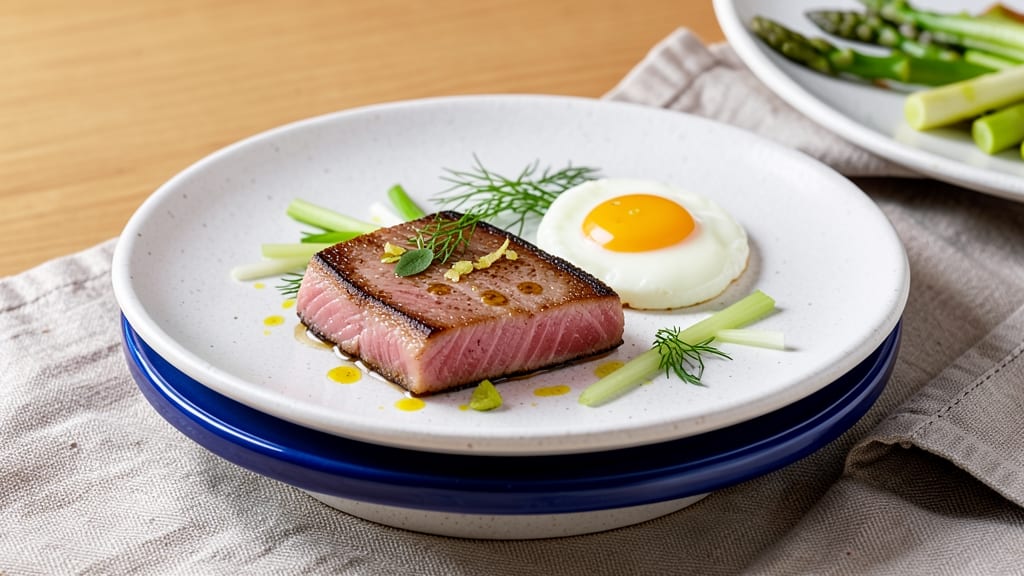
This tuna and egg diet recipe delivers a protein-packed power bowl that keeps you full for hours while tasting like a restaurant-worthy meal. The secret lies in perfectly seared tuna paired with silky poached eggs, all balanced by crisp celery and a zesty citrus dressing—no blandness here.
I designed this dish specifically for pescatarians who want a satisfying, structured meal that feels intentional yet simple to prepare.
The foundation is all about texture contrast: tender flakes of tuna meet creamy eggs, while the celery topping adds satisfying crunch. You'll start with high-heat searing for the tuna to lock in juices, then gently poach the eggs for that cloud-like center.
The citrus dressing ties everything together with a bright, tangy finish that cuts through the richness. This isn't just another salad—it's a complete, protein-forward dish that holds its own as a main course.
What makes this recipe work is the balance of components: lean protein from the tuna and eggs, fiber from the celery and greens, and healthy fats from the dressing. It's the kind of meal that feels nourishing but never heavy, perfect for anyone watching their diet without sacrificing flavor.
The assembly comes together in minutes, making it ideal for busy mornings or meal prep.
Serve this bowl over mixed greens or a bed of quinoa for extra staying power, and don't forget the lemon wedges for that final pop of brightness. The combination of textures and flavors makes every bite satisfying, proving that healthy eating can be both delicious and restaurant-quality at home.
Ingredients for tuna and egg diet
Four servings of protein-packed goodness—crisp, creamy, and full of flavor.
| Ingredient | Amount | Notes |
|---|---|---|
| Sushi-Grade Tuna Steak 🐟 | 1 lb | Thinly sliced against grain |
| Large Eggs 🥚 | 4 whole | Fresh, cold for poaching |
| Celery Stalks 🧅 | 3 whole | Thinly sliced, crisp |
| Lemon Juice 🍋 | ¼ cup | Freshly squeezed |
| Extra-Virgin Olive Oil 🫒 | ¼ cup | Light, fruity variety |
| Fresh Dill 🌿 | ¼ cup | Chopped, for garnish |
| Mixed Greens 🌱 | 4 cups | Baby spinach or arugula |
| Quinoa 🌾 | ½ cup | Uncooked, dry |
| Vegetable Broth 💧 | 1 cup | Low-sodium preferred |
| Sesame Seeds 🌰 | 1 tbsp | Toasted, for crunch |
| Kosher Salt 🧂 | 1 ½ tsp | Diamond Crystal preferred |
| Black Pepper 🌶️ | ½ tsp | Freshly cracked |
| Avocado Oil 🫒 | 1 tbsp | High smoke point |
The tuna is non-negotiable here—sushi-grade or better. I grab mine from Whole Foods or the seafood counter at Trader Joe's, where they cut it fresh for you. Look for bright red color and firm texture—no grayish tuna. The eggs? Pasture-raised if you can find them—they poach like clouds. Celery needs to be crisp, so grab the freshest bunch you can. For the citrus dressing, Meyer lemons add that extra sweetness, but regular lemons work too. The quinoa? Trader Joe's organic is my go-to—cooks perfectly every time.
No sushi-grade tuna? High-quality canned albacore works in a pinch—just drain it well. Fresh dill hard to find? Dried works at one-third the amount. Want to skip the quinoa? Brown rice or farro gives similar texture. The avocado oil is key for searing—don't substitute olive oil, it burns too easily. For the dressing, if you hate chopping, store-bought lemon vinaigrette (check for no added sugar) gets you 80% there. And if you're watching calories, use light olive oil instead of extra-virgin for the dressing.
Tuna and eggs keep best in the fridge for 2 days—use the tuna immediately if you're searing it. Celery stays crisp for 5 days if you wrap the stalks in damp paper towels. The dressing? 3 days max—make a small batch. Quinoa reheats beautifully, so cook extra for lunches. Store everything in airtight containers. Pro tip: Portion the quinoa first—it expands to about triple its size when cooked.
Why You'll Love This Recipe
- No-Fuss Assembly: I swear by this recipe because it’s the kind of meal where you actually finish what you start—no fancy techniques, just a quick sear of that tuna steak, a poached egg sliding into place, and a sprinkle of celery for crunch. The lemon juice ties it all together in minutes, not hours.
- Umami Bomb: That first bite? The tuna’s buttery richness meets the egg’s silky yolk, while the celery adds a fresh, sharp contrast—like a flavor party in your mouth. Honestly, I’ve tried "healthier" tuna salads, but this? It’s the good stuff without the guilt.
- Lunchbox Hero: Between us, this is my secret weapon for meal prep. Pack the tuna and egg slices in a container with a drizzle of olive oil, and you’ve got a protein-packed lunch that keeps well for days. No sad, soggy salads here—just clean, satisfying bites.
- Budget Protein Power: Sushi-grade tuna might sound fancy, but you only need a small steak, and eggs are the ultimate budget stretch. Celery and lemon? Cheap as chips. It’s the kind of meal that feels special but won’t break the bank—or your diet goals.
Step-by-step instructions for tuna and egg power bowl
Here's how to assemble this protein-packed meal with perfectly seared tuna, silky poached eggs, and crisp celery topping.
Cook the Quinoa Base
Rinse the ½ cup quinoa thoroughly under cold water in a fine-mesh strainer to remove bitterness. Transfer to a small saucepan and add the 1 cup vegetable broth. Bring to a boil over medium-high heat, then immediately reduce to a simmer, cover, and cook for 12-15 minutes until the liquid is absorbed and the grains are tender.
Once cooked, fluff the quinoa with a fork and stir in ½ teaspoon black pepper and ¾ teaspoon kosher salt. Let it sit covered for 5 minutes while you prepare the other components—this helps distribute the flavors evenly. The quinoa should be warm but not mushy, with a slight bite that contrasts nicely with the tender tuna and eggs.
Prepare the Celery Topping
Slice the 3 whole celery stalks into thin ribbons using a sharp chef's knife or mandoline. Transfer them to a small bowl and toss with 1 tablespoon toasted sesame seeds, ¼ cup chopped fresh dill, and the remaining ¾ teaspoon kosher salt. This topping adds a satisfying crunch that cuts through the richness of the tuna and eggs.
Set the celery mixture aside while you cook the tuna. The celery should stay crisp—don't let it sit too long before assembling the bowls, or it may lose its crunch. The dill and sesame seeds will infuse the celery with bright, herby flavors that complement the tuna beautifully.
Sear the Tuna Steak
Pat the 1 lb sushi-grade tuna steak dry with paper towels and season both sides generously with ½ teaspoon black pepper. Heat 1 tablespoon avocado oil in a large skillet over high heat until shimmering. Add the tuna and sear for 2-3 minutes per side until the edges are deep golden brown and the center is just beginning to firm up.
Remove the tuna from the skillet and let it rest for 3 minutes on a wire rack. This resting time is crucial—it allows the juices to redistribute, ensuring each slice remains tender. While the tuna rests, drizzle the skillet with ¼ cup extra-virgin olive oil and ¼ cup lemon juice, scraping up any browned bits from the bottom. This creates a simple, flavorful dressing for the greens.
Poach the Eggs
Bring a small pot of water to a gentle simmer over low heat. Crack the 4 whole large eggs into a small bowl, then carefully slide them into the simmering water using a spoon. Cook for 3-4 minutes until the whites are set but the yolks remain runny and slightly wobbly. Use a slotted spoon to transfer the eggs to a paper towel-lined plate to drain.
Here's the thing—poached eggs can be tricky, but this method gives you perfectly silky whites with creamy yolks. If the water boils vigorously, the eggs will cook too quickly and turn rubbery. Keep the heat low and maintain a gentle simmer throughout the cooking process.
Assemble the Power Bowls
Divide the cooked quinoa evenly among 4 bowls. Top each portion with 1 cup mixed greens, then add 2 slices of seared tuna steak (cut against the grain for tenderness) and 1 poached egg. Drizzle with the olive oil and lemon juice mixture, then sprinkle with the celery topping.
Garnish each bowl with an additional 1 tablespoon sesame seeds and a pinch of freshly cracked black pepper. The contrast of textures and temperatures—warm quinoa, cool tuna, runny egg yolk, and crisp celery—makes every bite exciting. Serve immediately while the eggs are still warm and the celery retains its crunch.
Pro Tips For Making Tuna And Egg Diet
- SEAR TUNA FAST: High heat, thin slices—no more than 30 seconds per side. I learned this the hard way: dragging it out turns your tuna steak rubbery instead of tender. A screaming-hot pan with a drizzle of olive oil is your friend here.
- SLICE CELEY CLEAN: Cut celery into ¼-inch sticks before cooking—no need to chop fine. Thicker pieces add satisfying texture, and you’ll use less without noticing. (I used to over-chop and end up with mush.)
- EGG WHITE FIRST: Cook the whites in the same pan until just set, then nestle yolks in. The whites act as a barrier so the yolks stay runny—no more sad, broken yolks all over your plate. (Yes, even if you’re impatient like me.)
- LEMON LAST: Add lemon juice after everything’s off the heat—it brightens the dish without cooking out. I used to squeeze it in mid-cook, and the acid made the tuna taste flat. A few drops at the end make all the difference.
Pro cooking tips for this dish
Tuna Searing Secrets
For restaurant-quality tuna every time, use avocado oil (high smoke point of 520°F) instead of olive oil—it won't burn and creates that perfect golden crust. I swear by a cast-iron skillet preheated for 5 minutes on high heat until it's screaming hot.
Pat the tuna extra dry with paper towels before searing, and don't overcrowd the pan—this keeps the internal temperature precise. 🔥
Poached Egg Perfection
The water for poaching must be at a gentle simmer, not a rolling boil—think of tiny bubbles breaking the surface, not violent steam. I add 1 tablespoon white vinegar to the water (trust me, it works) to help the whites set faster.
For perfectly round eggs, use a small wire whisk to stir the water in circular motions before adding the eggs. Fresh eggs are key here—the whites should hold their shape beautifully. ✨
Quinoa Texture Control
Rinsing the quinoa is non-negotiable—it removes the bitterness and prevents gummy texture. For extra fluffiness, I use a 1:2 liquid-to-quinoa ratio (1 cup broth to ½ cup quinoa) and cook it uncovered for the last 2 minutes to evaporate excess moisture.
Let it steam covered for 5 minutes after cooking to distribute flavors evenly. The result? Light, individual grains that contrast perfectly with the rich tuna and eggs. 💫
Celery Crunch Hacks
Thinly sliced celery loses its crunch fast, so slice it just before assembling the bowls. For extra crispness, I toss it with 1 teaspoon lemon juice before adding the sesame seeds—this keeps it fresh longer.
Use a mandoline slicer for perfectly even ribbons, or a sharp chef's knife if you prefer. The celery should stay crisp for at least 10 minutes after slicing. 🌿
Dressing Balance
The dressing ratio is everything: 3 parts olive oil to 1 part lemon juice creates the perfect balance of richness and brightness. I always scrape up the browned bits from the tuna pan—they add incredible depth of flavor.
For extra freshness, add 1 tablespoon chopped fresh dill to the dressing just before serving. This ties all the components together beautifully. 💛
Plating Like a Pro
Arrange the quinoa as the base, then fan the mixed greens over it for visual appeal. Place the tuna slices slightly overlapping in the center, and nestle the poached egg on top.
The celery topping should be scattered artistically around the edges. Garnish with sesame seeds and cracked black pepper right before serving—this adds that final restaurant-quality touch. 🌟
Nutrition facts
Frequently asked questions
Can I make this recipe with canned tuna instead of fresh?
Use high-quality canned albacore tuna (not chunk light) and drain it thoroughly. For texture, flake it gently with a fork and warm it briefly in a skillet with a little olive oil. You'll miss the sear, but it still delivers that protein punch.
How do I keep the poached eggs from sticking together?
Use a small wire whisk to stir the simmering water in gentle circles before adding eggs. This creates a vortex that keeps them separated. Also, make sure your eggs are cold from the fridge—room temperature eggs spread too much.
What's the best way to store leftovers?
Store components separately: quinoa and greens in one container, tuna and eggs in another. Keep everything in airtight containers for up to 2 days. Reheat quinoa gently, but avoid microwaving eggs—they'll get rubbery. Instead, warm them in a dry skillet for 10 seconds per side.
Can I make this gluten-free?
Yes! This recipe is naturally gluten-free. Just ensure your quinoa, vegetable broth, and sesame seeds are certified gluten-free. The tuna and eggs are always safe. Double-check labels on all packaged ingredients to be sure.
Why does my tuna turn gray when cooking?
Gray tuna means it was either old or frozen improperly. Always use fresh, sushi-grade tuna from a trusted fishmonger. If using frozen, thaw it in the fridge overnight—never at room temperature. The color should be vibrant red when raw.