
Breakfast & Brunch
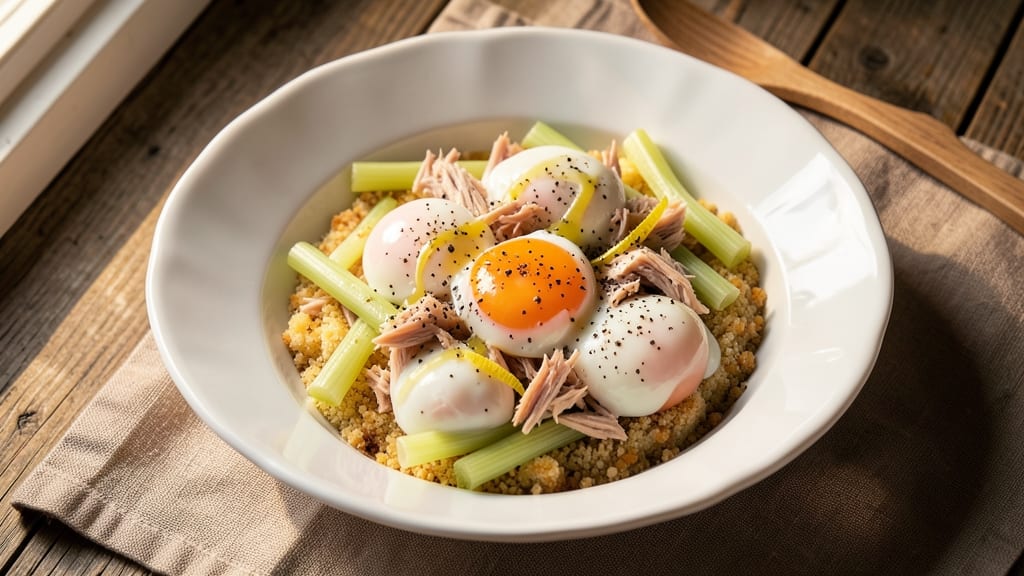
This 3 eggs and tuna recipe transforms simple pantry staples into a restaurant-worthy dish with crispy celery bites and velvety yolk centers that practically melt in your mouth. The secret lies in perfectly searing the tuna and cooking the eggs just enough to maintain their fluffy texture—no rubbery yolks here.
I developed this recipe after years of experimenting with brunch dishes that deliver both protein punch and elegant presentation without requiring fancy techniques.
The foundation starts with crispy celery sticks—lightly battered and pan-fried until golden—paired with flaky canned tuna that's been gently warmed with a touch of lemon and Dijon mustard for brightness. Three eggs, cooked in a delicate omelet style, bind everything together with their rich, custardy centers.
This isn't just another tuna salad; it's a balanced, protein-packed dish that feels special enough for weekend brunch but simple enough for weeknight dinners.
What makes this recipe stand out is the texture contrast: crispy celery bites against tender tuna and silky eggs, all finished with a sprinkle of fresh herbs and a drizzle of creamy dressing.
The result is a plate that looks as impressive as it tastes—perfect for serving to guests or treating yourself to a luxurious breakfast without the fuss. The method is straightforward, but the flavors are anything but basic.
Whether you're meal prepping for the week or hosting a brunch gathering, this dish comes together in under 20 minutes with minimal cleanup. The key is keeping everything hot while you assemble, so the eggs stay fluffy and the celery maintains its satisfying crunch.
Ready to elevate your tuna and eggs game? Let's get started.
Ingredients for 3 eggs and tuna
Here's what you'll need to turn simple ingredients into crispy, fluffy brunch magic.
| Ingredient | Amount | Notes |
|---|---|---|
| Flaky Canned Tuna 🐟 | 2 cans | High-quality, in water or oil |
| Large Eggs 🥚 | 3 whole | Room temperature for fluffiness |
| Celery Sticks 🧅 | 4 cups | Cut into 3-inch lengths |
| All-Purpose Flour 🌾 | ½ cup | For crispy batter |
| Cornstarch 🌾 | 2 tbsp | For extra crunch |
| Lemon Juice 🍋 | 1 tbsp | Freshly squeezed |
| Dijon Mustard 🍯 | 1 tsp | For tangy brightness |
| Extra-Virgin Olive Oil 🫒 | ½ cup | For frying celery |
| Unsalted Butter 🧈 | 2 tbsp | For egg cooking |
| Fresh Dill 🌿 | ¼ cup | Chopped, for garnish |
| Fresh Parsley 🌿 | 0.15 cup | Chopped, for garnish |
| Salt 🧂 | 1 tsp | Kosher or sea salt |
| Black Pepper 🌶️ | ½ tsp | Freshly ground |
| Mayonnaise 🥫 | ¼ cup | For creamy dressing |
| Plain Greek Yogurt 🥛 | ¼ cup | For creamy dressing |
The tuna and celery are the stars here. Look for high-quality canned tuna—the kind with flaky pieces in water or oil. Trader Joe's and Whole Foods carry great brands like Wild Planet or Vital Choice. For the celery, pick fresh, crisp stalks—avoid the rubbery ones that have been sitting too long. The eggs? Room temperature makes all the difference for fluffy yolks. I always grab a dozen from Costco when I'm doing a big batch, but any good grocery store will have them. Fresh herbs are worth splurging on too—the brighter the green, the better.
No fresh dill or parsley? Dried works in a pinch—just use one-third the amount. Running low on mayo? Greek yogurt plus lemon juice makes a great substitute. The celery batter can be prepped ahead—just keep it dry until frying. Want extra crunch? Add a pinch of smoked paprika to the batter. The tuna gets warmed with lemon and Dijon—skip the mustard if you dislike tang, but it really brightens things up. For the dressing, mix mayo and yogurt until smooth—add a splash of milk if it's too thick.
Celery stays crispy for 2 days in the fridge if stored in a sealed container. The dressing keeps for 5 days—just stir before using. Eggs? Use within 3 days for best texture. I like to prep everything ahead except the eggs—they cook fast, so timing matters. For a make-ahead brunch, fry the celery and warm the tuna, then assemble everything just before serving. Trust me, the crispy crunch is worth the extra minute.
Why You'll Love This Recipe
- No-Fuss Pantry Magic: I swear by this when my fridge is bare—just open a can of tuna, crack three eggs, and boom. The celery adds that fresh crunch without needing a whole vegetable haul.
- Crispy-Creamy Contrast: That light, golden crust from the cornstarch coating? Pure satisfaction. The flaky tuna melts into the eggs, and the flour gives it just enough body to hold together—no soggy mess here.
- Lunchbox Hero: Between us, this is my go-to for work lunches. It reheats like a dream, stays fresh for days in the fridge, and my coworkers still ask for seconds—even after I’ve made it three times in a row.
- Budget Breakthrough: Honestly, I make this when I’m pinching pennies. Three eggs, a can of tuna, and a stalk of celery? That’s under $5 for a meal that feeds four. The cornstarch and flour are pantry staples, so no extra shopping needed.
Step-by-step instructions for crispy celery bites with fluffy yolk magic
Here's how to make these addictive bites with perfect texture every time.
Prepare the Celery Bites
In a large bowl, combine the 4 cups celery sticks with the 2 cans flaky canned tuna, breaking up the tuna slightly with your hands. Add the 0.5 cup all-purpose flour, 2 tbsp cornstarch, 1 tsp salt, and 0.5 tsp black pepper. Mix gently until everything is evenly coated - you want the celery to hold its shape while getting that crispy exterior.
Transfer the mixture to a plate and let it sit for 10 minutes at room temperature. This resting period helps the flour and cornstarch adhere better to the celery, ensuring maximum crispiness when fried. Don't skip this step - it makes all the difference in texture.
Create the Crispy Coating
Heat 0.5 cup extra-virgin olive oil in a large skillet over medium heat until it shimmers but doesn't smoke. Working in batches (don't overcrowd the pan), fry the celery bites for 2-3 minutes per side until they turn golden brown and crispy. You'll know they're ready when they release easily from the pan and have a satisfying crunch.
Remove the crispy celery bites and place them on a paper towel-lined plate to drain excess oil. Keep them warm in a 200°F oven while you prepare the eggs. This low oven temperature maintains their crispiness without overcooking them.
Cook the Perfect Eggs
In a separate skillet, melt 2 tbsp unsalted butter over low heat. Crack the 3 whole large eggs into a small bowl, then gently pour them into the melted butter. Cover the skillet and cook for 3-4 minutes until the whites are set but the yolks remain runny - you want that perfect "soft curd" texture.
While the eggs cook, whisk together 0.25 cup mayonnaise, 0.25 cup plain Greek yogurt, 1 tbsp lemon juice, and 1 tsp Dijon mustard in a small bowl. This creamy dressing will complement the crispy celery and rich eggs beautifully. The yogurt adds a nice tang that balances the richness.
Assemble and Garnish
To serve, place 2-3 crispy celery bites on each plate, then carefully place a cooked egg on top. Drizzle with the prepared dressing and immediately garnish with 0.25 cup chopped fresh dill and 0.15 cup chopped fresh parsley. The fresh herbs add a pop of color and bright flavor that cuts through the richness of the eggs and tuna.
Serve immediately while everything is hot and crispy. The contrast of temperatures - warm eggs, cool celery bites, and room-temperature dressing - makes each bite exciting. These bites are perfect for parties, game day, or as a light but satisfying lunch when you need something quick but impressive.
Pro Tips For Making 3 Eggs And Tuna
- Drain and Pat Tuna Dry: The canned tuna you buy is swimming in oil or water—don’t just dump it straight into the mix. Drain it, then press it between two paper towels for 30 seconds. This keeps the texture light and prevents a soggy, greasy mess in your finished dish.
- Chill the Egg Mixture: After mixing eggs, tuna, and flour, let the batter sit in the fridge for 10 minutes. I learned this the hard way—skipping it means the eggs cook unevenly, and you end up with a dense, rubbery center instead of a fluffy, tender bite.
- Use Celery Juice, Not Chunks: Dice that celery? Forget it. Pulse it in a food processor until it’s a fine paste, then mix it into the batter. This distributes flavor evenly and avoids those annoying, chewy bits that ruin the texture. (Yes, it sounds weird, but it works.)
- Fry in Small Batches: Crowd the pan, and you’ll steam the eggs instead of fry them. Use a nonstick skillet and keep the heat at medium—no need to blast it—and cook just 2-3 patties at a time. This guarantees a golden crust every time, not a greasy, limp pile.
Common mistakes when making this dish
Overcrowding the Pan
Frying the celery bites in batches is crucial—I've made this mistake by trying to rush and loading the pan too full. When you overcrowd, the oil temperature drops, and the celery absorbs excess oil instead of getting crispy.
Work in batches of 6-8 pieces per pan to maintain that golden-brown crunch. I promise you'll notice the difference immediately. 🔥
Skipping the Resting Time
That 10-minute rest for the celery mixture isn't just a suggestion—it's essential. Without it, the flour and cornstarch won't stick properly, leading to soggy, unevenly coated celery. Let it sit while you prep the eggs. Trust me, the crispiness is worth the wait.
Overcooking the Eggs
Eggs cook fast, and once they're done, they're done. Cooking them longer than 3-4 minutes turns those perfect runny yolks into rubbery disappointment. Use a timer and watch closely—the whites should be set but still slightly translucent at the edges. The yolks should jiggle like jelly when gently shaken.
Wrong Oil Temperature
The oil needs to be hot enough to crisp but not smoking hot. If it's too cool, you'll end up with greasy celery. If it's too hot, the outside burns before the inside cooks.
Test with a small piece—it should sizzle immediately and turn golden in 1-2 minutes. Adjust heat as needed. A thermometer helps, but even without one, you'll get the hang of it.
Using Cold Eggs
Cold eggs from the fridge take longer to cook evenly and can crack unpredictably. Let them sit at room temperature for 15-20 minutes before cooking. I always pull them out while I'm prepping the celery. The difference in texture is noticeable—room-temperature eggs cook faster and have a smoother, silkier finish.
Neglecting the Dressing
The dressing isn't just an afterthought—it's the glue that ties everything together. If you skip it or use store-bought mayo without yogurt, the dish loses that bright, balanced flavor.
The yogurt adds tang, while the Dijon mustard brings depth. Mix it fresh right before serving to keep it creamy and vibrant. 💫
Nutrition facts
Frequently asked questions
Can I use fresh tuna instead of canned?
Fresh tuna works beautifully, but you'll need to sear it first for texture. Slice 8 oz fresh tuna into ½-inch thick pieces, season with salt and pepper, then sear in a hot pan with 1 tbsp olive oil for 2-3 minutes per side until medium-rare (130°F internal temp). Let it rest 5 minutes before using in place of canned tuna.
How do I make this dish vegetarian?
Swap the tuna for 1 cup marinated artichoke hearts or 1 cup chickpeas (drained and patted dry). For extra protein, add ½ cup crumbled feta cheese to the celery mixture. The artichokes add a nice briny contrast while chickpeas keep it hearty—just increase the flour to ⅔ cup for better coating.
Can I prep this recipe ahead of time?
Fry the celery bites and store them in an airtight container for up to 2 days—they'll stay crispy if kept at room temperature. Warm them in a 350°F oven for 5 minutes before serving. Make the dressing ahead too (it keeps 5 days refrigerated). Cook the eggs fresh—they're best served immediately for that perfect yolk texture.
What's the best way to reheat leftovers?
Reheat only the eggs and dressing—never the celery bites again (they lose crispiness). Place eggs in a 200°F oven for 3-4 minutes on a baking sheet. Warm the dressing in a small saucepan over low heat for 1 minute, stirring constantly. Serve with fresh herbs for brightness—no one will know it's reheated!
Can I make this gluten-free?
Yes! Replace the flour with ½ cup gluten-free all-purpose blend and 2 tbsp cornstarch (already in the recipe). The celery will still get crispy—just shake off any excess coating before frying. For extra insurance, use a gluten-free certified cornstarch if you're highly sensitive. The eggs and dressing remain unchanged.