
Main Courses
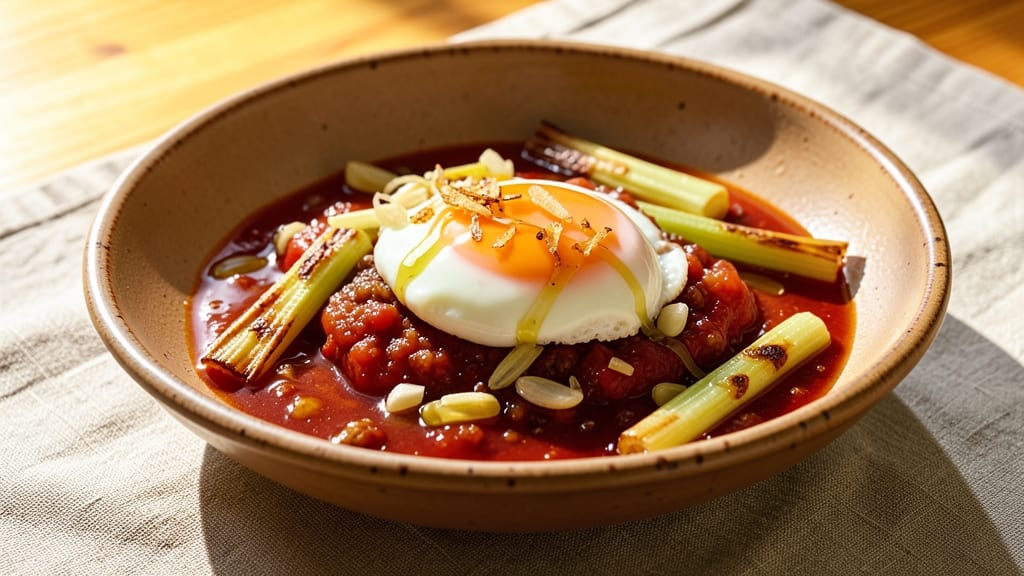
This tomato egg recipe made with lau transforms humble ingredients into a dish that balances umami depth and delicate textures. The crispy celery crowns add a satisfying crunch, while the silky poached yolk brings luxurious richness—each bite delivers a perfect harmony of savory and smooth.
I developed this version after realizing how much fermented fish paste elevates simple dishes, especially when paired with tomatoes and eggs.
The secret lies in balancing lau's bold flavor with bright tomatoes and creamy eggs, creating a dish that feels both comforting and sophisticated. You'll need just 15 minutes of active prep, followed by a gentle simmer that lets all the flavors meld together.
The celery crowns crisp beautifully when fried, while the poached yolk stays perfectly runny at the center—every element plays its part.
What makes this recipe special is how it bridges tradition with modern tastes. The lau adds that signature umami punch found in Southeast Asian cuisine, while the tomato-egg combination makes it approachable for home cooks. Serve with steamed jasmine rice to soak up every last drop of that flavorful sauce.
This dish proves you don't need complicated techniques to create restaurant-quality results. The key is paying attention to textures—crispy, silky, and tender—and letting the flavors develop through gentle cooking. Perfect for weeknight dinners when you want something impressive without spending hours in the kitchen.
Ingredients for tomato egg recipe made with lau
Just 13 ingredients transform into a dish that feels both rustic and refined.
| Ingredient | Amount | Notes |
|---|---|---|
| Lau (Fermented Fish Paste) 🐟 | 2 tbsp | High-quality, strong flavor preferred |
| Fresh Tomatoes 🍅 | 1 ½ lb | Ripe, vine-ripened for sweetness |
| Large Eggs 🥚 | 4 whole | Room temperature for perfect poach |
| Celery Stalks 🧅 | 4 whole | Thick, crisp varieties preferred |
| Vegetable Oil 🫒 | ½ cup | High smoke point for frying |
| Shallots 🧅 | 3 whole | Minced finely for smooth sauce |
| Garlic Cloves 🧄 | 4 cloves | Minced, aromatic variety |
| Fish Sauce 🐟 | 1 tbsp | Red Boat preferred for balance |
| Sugar 🍯 | 1 tsp | Balances acidity in tomatoes |
| Salt 🧂 | 1 ½ tsp | Diamond Crystal preferred |
| Black Pepper 🌶️ | ½ tsp | Freshly cracked for heat |
| Jasmine Rice 🍚 | 1 ½ cups | Uncooked, long-grain preferred |
| Green Onions 🧅 | 4 whole | Thinly sliced for garnish |
The lau is non-negotiable here—Red Boat or Three Crabs brands deliver that signature umami punch without overpowering. If you can't find it, anchovy paste at one-third the amount works in a pinch, but the flavor won't be identical. Fresh tomatoes are key; those heirloom varieties from the farmers market have the best balance of sweetness and acidity. Celery needs to be crisp—avoid the wilted stalks that turn mushy when fried. For the eggs, room temperature makes all the difference—they poach perfectly without breaking.
No fish sauce? Soy sauce at half the amount adds some depth, but you'll miss that fermented funk. Shallots and garlic can be swapped for one small yellow onion, finely diced, though the flavor will be milder. Running short on celery? Substitute with fennel bulbs, thinly sliced—they crisp beautifully too. The sugar might seem odd in a savory dish, but it's essential to round out the acidity from the tomatoes. For the rice, jasmine or basmati is ideal—long grains stay separate and soak up the sauce perfectly. If you're using pre-cooked rice, add an extra splash of water when reheating.
Lau and fish sauce keep for up to 6 months in the fridge once opened—store them in airtight containers. Fresh celery lasts 1 week in the crisper, but it's best used within 3 days for maximum crispness. The poached eggs should be served immediately after cooking, but the sauce reheats beautifully—simmer gently for 2-3 minutes to restore its silky texture. Portion the rice ahead of time to make serving easier, and keep the fried celery crowns warm in a 200°F oven until ready to plate.
Why You'll Love This Recipe
- Five-Ingredient Magic: I swear, this dish is proof you don’t need a pantry full of fancy stuff. Lau’s umami punch, fresh tomatoes, and eggs—plus celery for crunch—mean you’re basically making restaurant-quality flavor with ingredients you might already have.
- Umami Bomb: That first spoonful of lau? Chef’s kiss. It’s funky, it’s bold, and it transforms simple eggs into something deeply savory. Honestly, I’ll take this over bland scrambled eggs any day—especially when the tomatoes caramelize just right.
- Leftovers That Still Shine: This recipe actually improves the next day. The eggs get even more tender, the flavors meld, and you can reheat it in a flash. I’ve packed this for lunch three times this week—no sad, dry reheated food here.
- Weeknight Workhorse: No chopping mountains of veggies, no fancy techniques—just dice some celery, crack eggs, and let the lau do the heavy lifting. Between us, this is the dish I turn to when I’m exhausted but still want something that feels like a meal. (Yes, even on a Tuesday night.)
Step-by-step instructions for tomato egg dish with lau
Here's how to create crispy celery crowns and silky poached yolks with that signature umami depth from lau.
Prepare the Tomato-Lau Base
Heat the 0.5 cup vegetable oil in a heavy-bottomed pot over medium heat until shimmering but not smoking. Add the 3 minced shallots and 4 minced garlic cloves, cooking for 2-3 minutes until fragrant and just beginning to color.
Reduce heat to low and add the 2 tbsp lau (fermented fish paste). Stir constantly for 1 minute until the paste dissolves completely and releases its aromatic oils. This is where the magic happens—the lau's deep umami flavor will infuse the entire dish. Add the 1.5 lb fresh tomatoes, chopped into ½-inch pieces, and cook for 10 minutes until they break down into a thick, jammy consistency.
Stir in the 1 tbsp fish sauce, 1 tsp sugar, 1.5 tsp salt, and 0.5 tsp black pepper. Simmer for another 5 minutes until the sauce thickens slightly and the flavors meld together. Taste and adjust seasoning—this base should be rich, slightly sweet, and deeply savory. Remove from heat and set aside.
Create Crispy Celery Crowns
While the tomato base simmers, prepare the celery for its crispy transformation. Cut each of the 4 whole celery stalks into 1-inch thick rounds, keeping the leaves attached to form a "crown." Pat them completely dry with paper towels—this step is critical for achieving that perfect crispy texture.
Heat 2 tablespoons vegetable oil in a clean skillet over medium-high heat until the oil is hot enough to sizzle when a celery round is added. Working in batches, fry the celery crowns for 2-3 minutes per side until they develop a deep golden brown color and the edges become crisp. Don't overcrowd the pan or they'll steam instead of crisp.
Transfer the fried celery to a paper towel-lined plate to drain excess oil. The celery should be firm to the touch with a satisfying crunch—this is your crispy foundation for the dish. Keep them warm while you prepare the eggs.
Poach Perfect Eggs
Bring a pot of water to a gentle simmer—you want small bubbles breaking the surface, not a rolling boil. Crack each of the 4 whole large eggs into a small bowl or ramekin. The eggs should be at room temperature for perfect poaching.
Using a slotted spoon, lower each egg gently into the simmering water. Poach for 3-4 minutes for runny yolks or 4-5 minutes for slightly firmer yolks. The whites should be set but still tender, with the yolks intact and silky. Remove the eggs with a slotted spoon and drain on a paper towel.
Here's the thing about poached eggs—they continue cooking slightly after removal. To keep them warm and prevent overcooking, place them in a bowl of warm water while you assemble the final dish. This maintains their perfect texture until serving.
Assemble the Dish
Cook the 1.5 cups jasmine rice according to package instructions until perfectly tender. Fluff with a fork and set aside. In each serving bowl, arrange 2 crispy celery crowns on top of the rice to create a beautiful presentation.
Spoon the tomato-lau sauce generously over the celery and rice, then place 1 poached egg on top of each serving. The contrast of crispy celery, silky egg yolk, and rich tomato sauce creates an unforgettable texture combination. Garnish with thinly sliced 4 whole green onions for freshness and color.
Serve immediately while the celery is still crisp and the egg yolks remain perfectly runny. The lau adds that signature umami depth that elevates this dish from ordinary to extraordinary. Each bite delivers a perfect balance of textures and flavors that will leave your guests asking for seconds.
Pro Tips For Making Tomato Egg Recipe Made With Lau
- Bloom the Lau First: Skip the urge to toss lau straight into the pan—first, mix it with 2 tablespoons of warm water (not boiling) and let it sit for 5 minutes. This softens the paste and lets the umami spread evenly instead of clumping like a fishy brick. I learned this the hard way after scraping burnt chunks off my wok for three nights in a row.
- Cut Tomatoes Like a Pro: Dice those tomatoes into ½-inch chunks, but here’s the trick: squeeze out excess juice by packing them in a colander for 10 minutes before cooking. Lau’s saltiness and the eggs’ richness will overwhelm you if the tomatoes are waterlogged. Sounds tedious, but it keeps the sauce thick and flavorful—no sad, watery mess at the end.
- Low and Slow for Eggs: After adding the eggs, resist the urge to blast the heat. Start on medium-low and let them cook undisturbed for 2 full minutes before gently stirring—this keeps the yolks creamy and prevents scrambled bits. I was skeptical until I tried it; now I can’t imagine doing it any other way.
- Celery: Slice Thin, Sauté Long: Shave the celery into paper-thin strips (a mandoline helps) and cook them in the oil for 3 minutes before adding anything else. This softens them just enough to blend into the dish without turning to mush later. Yes, it’s an extra step, but it makes a real difference in texture—no crunchy surprises in your final bite.
Common mistakes when making perfect results
Overcooking the Celery
Celery crowns lose their crispness fast once removed from heat, but the real mistake is frying them too long. I’ve seen home cooks leave them in the pan until deeply browned or even charred—big mistake.
The goal is golden brown with just a hint of crisp, not burnt. Fry in batches over medium-high heat for 2-3 minutes per side, then transfer immediately to a wire rack to keep them crisp.
If you’re worried about overcooking, set a timer—2 minutes max—and check frequently. 🧅
Skipping the Lau Bloom
The lau’s deep umami flavor needs time to infuse properly, but I’ve seen people rush this step. When you add the 2 tbsp lau, stir constantly for at least 1 minute over low heat—this lets the paste dissolve and release its aromatic oils.
Skipping this step means your sauce will taste flat and underseasoned. If your lau is particularly strong, start with 1 tbsp and taste as you go. Remember, you can always add more, but you can’t take it out. 🐟
Poaching Eggs Too Long
Poached eggs are delicate, and overcooking them turns them rubbery. The whites should be set but still tender, with runny yolks at the center. If you poach for more than 4 minutes, you’ll end up with a sad, gray egg.
Keep your water at a gentle simmer (small bubbles), not a rolling boil, and use a slotted spoon to remove them promptly. Pro tip: Place them in a bowl of warm water while you assemble the dish—they’ll stay warm and perfectly set. 🥚
Using Cold Eggs
Room-temperature eggs poach beautifully, but I’ve seen people pull them straight from the fridge. Cold eggs take longer to set and are far more likely to break apart. Let your eggs sit in their shells at room temperature for at least 30 minutes before poaching.
If you’re in a hurry, place them in a bowl of warm water for 10 minutes—this mimics room temperature perfectly. Trust me, your eggs will thank you. ⏰
Ignoring the Sugar
The 1 tsp sugar in the tomato-lau base might seem odd, but it’s essential for balancing the acidity of the tomatoes. Without it, your sauce can taste sharp or even bitter.
I’ve seen people skip this step because they think it’s unnecessary, but it’s the secret to that slightly sweet, rich depth that makes this dish shine. Taste your sauce before serving—if it’s too acidic, add a pinch more sugar or a splash of rice vinegar to brighten it. 🍯
Not Adjusting Seasoning
Every batch of tomatoes and every brand of lau has different intensity levels, so tasting and adjusting is non-negotiable. After simmering the sauce, always taste it before serving.
You might need more salt, a splash of fish sauce, or even a squeeze of lemon juice to balance the flavors. I’ve seen people serve underseasoned dishes simply because they didn’t taste-test. Don’t be that person—your dish deserves better! 🧂
Nutrition facts
Frequently asked questions
What exactly is lau and where can I find it?
Lau is a fermented fish paste commonly used in Southeast Asian cuisine, especially Thai and Vietnamese dishes. It has a strong umami flavor similar to anchovies but more complex. You can find it in Asian grocery stores or online retailers like Amazon or specialty food websites. Look for brands like Red Boat or Three Crabs for the best quality. If unavailable, anchovy paste works in a pinch, though the flavor won't be identical.
Can I make this recipe without celery?
If you don't have celery, try crispy fried shallots or thinly sliced fennel bulbs instead. Both add a satisfying crunch to balance the silky egg yolk and rich tomato sauce. For a different texture, you could also use crispy fried garlic or even thinly sliced green onions fried until golden.
How do I know when the poached eggs are done perfectly?
Perfect poached eggs should have set whites but still runny, silky yolks at the center. For runny yolks, poach for 3-4 minutes in gently simmering water. The whites should be opaque but still tender to the touch. Remove them immediately when done—they continue cooking slightly after removal. Keep them warm in a bowl of warm water while you finish assembling the dish.
Is this dish spicy? Can I make it milder?
This recipe isn't inherently spicy, but if you prefer a milder version, simply omit the black pepper or reduce it to ¼ tsp. The lau and fish sauce provide plenty of umami flavor without heat. For extra mildness, you could also add a pinch of sugar or a splash of coconut milk to the sauce to round out the flavors.
Can I prepare any components ahead of time?
Yes! The tomato-lau sauce can be made 1 day ahead and stored in the refrigerator. The fried celery crowns can be made 2 hours ahead and kept warm in a 200°F oven until serving. However, poach the eggs fresh—they're best served immediately for that perfect runny yolk. Reheat the sauce gently before serving to restore its silky texture.