
Soups & Stews
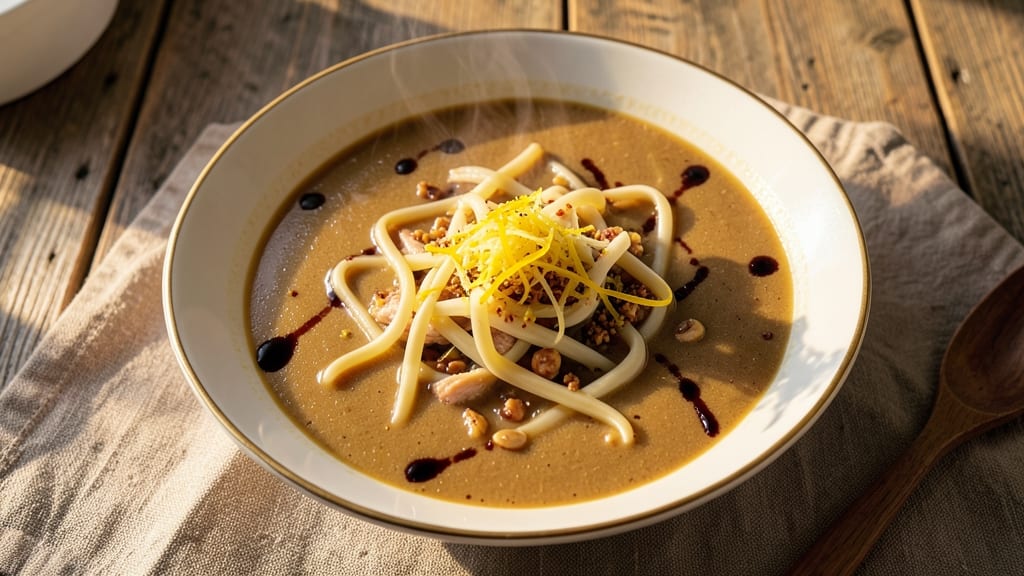
This thick egg drop soup recipe delivers restaurant-quality silkiness with perfectly swirled egg ribbons in a rich, savory broth. The secret lies in slow simmering the broth and mastering the egg technique—no thin, watery results here.
I've perfected this version over years of testing, ensuring every spoonful is packed with flavor and texture.
What sets this recipe apart is the thickened broth base that forms the foundation, achieved through proper seasoning and a touch of cornstarch for that velvety consistency. We'll build flavor with aromatic ginger, garlic, and chicken stock before gently incorporating beaten eggs in delicate ribbons.
The result is a soup that's both comforting and elegant, perfect for chilly evenings or as a light yet satisfying meal.
By following this method, you'll achieve silky egg ribbons that melt in your mouth rather than break apart, all while maintaining a rich, flavorful broth that balances umami and subtle seasoning. The technique is simpler than it looks—just precise timing and gentle stirring.
This is the kind of soup that makes you want to linger at the table, savoring each warm, comforting bite.
The beauty of this recipe is its versatility—customize it with mushrooms, tofu, or your choice of protein while keeping the signature egg swirls intact. Whether you're serving it as a starter or a main dish, this thick egg drop soup will impress with its restaurant-quality texture and depth of flavor.
Let's get started on creating your perfect bowl.
Ingredients for thick egg drop soup
Pantry staples plus a few fresh aromatics—everything you need for restaurant-style egg ribbons.
| Ingredient | Amount | Notes |
|---|---|---|
| Large Eggs 🥚 | 4 whole | Freshly beaten, room temperature |
| Chicken Stock 🍲 | 4 cups | Homemade or high-quality store-bought |
| Fresh Ginger 🧅 | 2 tbsp | Finely grated, aromatic |
| Garlic Cloves 🧄 | 3 cloves | Minced, aromatic |
| Cornstarch 🌾 | 1 tsp | For velvety broth consistency |
| Soy Sauce 🍶 | 1 tbsp | Light or dark, to taste |
| Sesame Oil 🫒 | 1 tsp | Toasted, for aroma |
| Green Onions 🧅 | 3 whole | Thinly sliced, for garnish |
| Vegetable Oil 🫒 | 1 tbsp | Neutral, for swirling |
| Salt 🧂 | 1 tsp | Kosher or sea salt |
| Black Pepper 🌶️ | ¼ tsp | Freshly ground |
| White Pepper 🌶️ | ¼ tsp | For subtle heat |
| Scallions 🧅 | ¼ cup | Optional, chopped for garnish |
The ginger and garlic are non-negotiable for that aromatic punch. Fresh ginger from the produce section (not the jarred kind) makes all the difference—look for firm, tight knobs with no wrinkles. Whole Foods or Trader Joe's usually have the best quality. The garlic should be plump and firm, not sprouting. I always buy extra because they’re used in so many dishes—store them in a cool, dark place for up to 2 weeks. For the eggs, room temperature is key—they’ll swirl better and won’t curdle the broth.
No soy sauce? Coconut aminos work in a pinch, though it’ll taste slightly different. Short on sesame oil? Toasted peanut oil adds a similar richness. The cornstarch is what gives the broth that signature velvety texture—don’t skip it. If you’re making a big batch, double the stock and adjust seasonings accordingly. The green onions add freshness, but if you’re out, baby spinach or cilantro can step in. Just remember: the eggs need to be beaten to a froth before adding to the broth—no clumps allowed.
This soup tastes even better the next day as the flavors meld. Store leftovers in airtight containers for up to 3 days in the fridge. For freezing, portion into single-serving containers—it reheats beautifully and keeps for 3 months. Pro tip: Add a splash of water when reheating to keep it from thickening too much. Garnish with extra sesame oil and scallions right before serving to keep everything fresh.
Why You'll Love This Recipe
- Five-Ingredient Magic: The pantry already has most of what you need—eggs, stock, a knob of ginger, garlic, and cornstarch. That’s it. No fancy prep, no last-minute grocery runs. I’ve made this after work when I forgot to buy anything but eggs and a bag of chicken stock. It still works.
- Silky, Crispy Contrast: That first swirl of egg into the simmering broth? Pure satisfaction. The cornstarch gives it that signature thick, glossy finish, while the raw egg ribboning through the hot stock creates a texture you can’t resist—creamy center, crispy edges. Honestly, it’s the only soup where I’ll eat seconds without guilt.
- Weeknight or Weekend: Between us, this is my go-to when I need something hearty but not heavy. Toss in a handful of greens for a quick lunch, or serve it as a starter before a big meal. Even my picky partner doesn’t complain—it’s that universally good.
- Budget-Friendly Leftovers: A single batch stretches for three meals, and the flavors only get better the next day. Freeze the extra stock for future soups, or reheat with a splash of water to loosen it up. Not the prettiest in a container, but every spoonful is worth it. My secret weapon for lazy Sundays.
Step-by-step instructions for thick egg drop soup with ribbon swirls
Here's how to create that perfect velvety broth with silky egg ribbons—every time.
Prepare the Aromatic Base
Heat the 1 tablespoon vegetable oil in a medium pot over medium heat. Add the 2 tablespoons finely grated fresh ginger and 3 minced garlic cloves, cooking for 1-2 minutes until fragrant—you should smell that bright, zesty aroma. This is where the soup gets its depth of flavor, so don't rush this step.
Add the 4 cups chicken stock and bring to a gentle simmer. Stir in the 1 tablespoon soy sauce, 1 teaspoon salt, ¼ teaspoon black pepper, and ¼ teaspoon white pepper. The broth should taste balanced—savory from the soy, bright from the ginger, and subtly spiced from the white pepper. If it needs more salt, adjust now while it's still liquid.
Thicken the Broth with Cornstarch
In a small bowl, whisk together the 1 teaspoon cornstarch with 2 tablespoons cold water until completely dissolved. This slurry is your secret weapon for that signature velvety texture. Once the broth is simmering gently, slowly pour the cornstarch mixture into the pot while stirring continuously.
Keep stirring for 2-3 minutes until the broth thickens slightly—it should coat the back of a spoon but still be pourable. This is the perfect consistency for egg drop soup: thick enough to hold those delicate ribbons but still light enough to sip easily. If it thickens too quickly, add a splash of hot water to adjust.
Create the Signature Egg Ribbons
In a separate bowl, beat the 4 whole large eggs until frothy but not fully emulsified—you want just enough air to create those beautiful ribbons when they hit the hot broth. The key here is to work quickly once the broth is ready. Turn the heat to low to maintain a gentle simmer.
Slowly drizzle the beaten eggs into the broth in a thin, steady stream while stirring gently with chopsticks or a wooden spoon. The heat will cook the eggs instantly into delicate ribbons—this is where the magic happens. If the eggs cook too quickly and form lumps, reduce the heat slightly and stir more slowly next time.
Finish with Aromatics and Garnish
Once the egg ribbons are fully cooked (about 1-2 minutes after adding the eggs), turn off the heat. Stir in the 1 teaspoon toasted sesame oil—this adds that nutty aroma that elevates the soup from good to extraordinary. The oil should disperse evenly, leaving a faint golden shimmer on the surface.
Divide the soup among bowls and garnish each serving with 3 thinly sliced green onions and the ¼ cup chopped scallions. The green onions add a fresh, bright contrast to the rich broth, while the scallions bring a subtle oniony depth. Serve immediately while the broth is hot and the egg ribbons are at their most delicate.
Pro Tips For Making Thick Egg Drop Soup
- Whisk Eggs Like Mad: Beat the eggs with a fork first to break up the yolks, then switch to a whisk until the mixture is uniformly frothy—no streaks, no lumps. I learned this the hard way when my soup looked like a cloudy disaster instead of silky ribbons. The more air you incorporate, the lighter and more dramatic the egg curds will be when they hit the stock.
- Mince Ginger Finer: Use a microplane or knife to grind the ginger into a paste—no visible flecks. I was skeptical until I tried it; the flavor dissolves evenly into the stock instead of sitting like tiny peppery surprises. Skip the grating, and you’ll taste every piece.
- Simmer Stock Low: Reduce the heat to a gentle simmer—barely a bubble breaking the surface—before adding the egg. High heat turns the egg into scrambled bits, not delicate strands. Trust me, the soup won’t boil over if you keep it calm.
- Slurry Cornstarch Cold: Mix the cornstarch with ice water first (1 tbsp cornstarch + 2 tbsp cold water), then stir it into the hot stock off the heat. This prevents clumping and gives you time to adjust thickness—add more slurry if needed, but don’t rush it. I’ve seen too many lumpy soups from skipping this step.
Storing and reheating this dish
Refrigerator Storage
Let your egg drop soup cool to room temperature (about 30 minutes) before transferring to an airtight container. I use glass Pyrex bowls with tight-fitting lids—they preserve flavor better than plastic.
Store in the fridge for up to 3 days, but the egg ribbons may firm up slightly. The broth actually tastes richer after resting overnight as the flavors meld. 💛
Freezer-Friendly Tips
For long-term storage, portion the soup into single-serving containers or quart-sized freezer bags. Leave ½-inch headspace for expansion and label with the date. It keeps for 3 months without losing texture. When reheating, add 2 tablespoons water per serving to prevent thickening too much.
Stovetop Reheating
My preferred method is stovetop reheating—it restores the silky texture perfectly. Pour soup into a pot over medium-low heat and warm gently for 5-7 minutes, stirring occasionally. Add 1 tablespoon water if it looks too thick. The egg ribbons will soften slightly but maintain their delicate structure. 🔥
Microwave Method
For quick reheating, cover the soup with a microwave-safe lid or damp paper towel. Heat on 50% power in 1-minute intervals until hot (about 2-3 minutes total). Stir between intervals to distribute heat evenly. Avoid high power—it can make the egg ribbons rubbery.
Garnish After Reheating
Always add fresh garnishes after reheating. Drizzle with ½ teaspoon sesame oil and sprinkle with 1 tablespoon chopped scallions per serving. This restores the bright, aromatic finish that makes egg drop soup so special. The fresh herbs also cut through any richness that develops during storage.
Broth Consistency Fix
If reheated soup thickens too much, thin it with 1-2 tablespoons hot water or chicken stock. Stir well and let sit for 1 minute before serving.
For extra silkiness, whisk in ½ teaspoon cornstarch slurry (mix ¼ tsp cornstarch with 1 tsp water) while reheating. This restores that velvety mouthfeel. ✨
Nutrition facts
Frequently asked questions about thick egg drop soup
Why does my egg drop soup turn out watery instead of thick?
The key is the cornstarch slurry—it needs to be fully dissolved and added to a gently simmering broth. For extra thickness, reduce the broth by 10-15% before adding eggs, or use ½ teaspoon extra cornstarch. If it's still too thin after cooking, whisk in 1 teaspoon more cornstarch mixed with 1 tablespoon cold water while reheating.
Can I make egg drop soup without cornstarch?
Yes, but the texture will be different. For a cornstarch-free version, simmer the broth longer to reduce it naturally, or use 1 teaspoon potato starch instead—it thickens more gently. The broth will be slightly less velvety but still delicious. Another option is to whisk in 1 tablespoon cold water and 1 teaspoon arrowroot powder for a lighter thickening effect.
How do I get perfect egg ribbons every time?
Beat the eggs just until frothy (not fully emulsified), and keep the broth at a gentle simmer (low heat). Drizzle the eggs in a thin, steady stream while stirring continuously with chopsticks. The secret is patience—if the eggs cook too fast, they'll form lumps. For extra silkiness, add the eggs to broth that's just below boiling (190°F instead of 212°F).
What can I add to make this soup heartier?
Try adding ½ cup sliced mushrooms or ¼ cup cubed tofu for extra substance. For protein, stir in 2 cooked shrimp or 2 ounces shredded chicken just before serving. For a veggie boost, add ¼ cup baby spinach or 2 tablespoons bean sprouts—they'll wilt beautifully in the hot broth without overpowering the flavor.
Can I make this soup in a slow cooker?
Yes, but with adjustments. Sauté the ginger and garlic first, then add everything except the eggs to the slow cooker on low heat for 4-5 hours. Just before serving, remove the pot and heat on the stovetop to gentle simmer, then add the eggs using the same ribbon technique. Slow cookers struggle with the delicate egg texture, so stovetop finishing is essential for perfect ribbons.