
Breakfast & Brunch
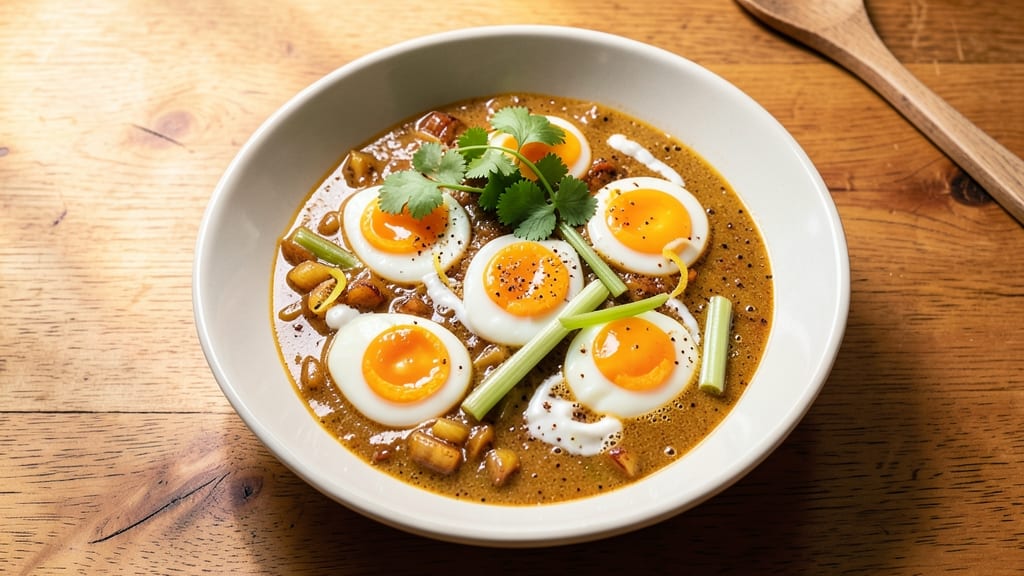
This thick egg curry recipe delivers the perfect balance of rich, velvety coconut base and crispy celery bites that add texture and freshness. The secret lies in slow-cooked spices and a carefully reduced curry that clings to every egg—whether scrambled or hard-boiled—without turning watery.
I've perfected this dish over years of testing, ensuring the sauce stays thick and flavorful while maintaining that satisfying bite.
The foundation begins with a deep, aromatic spice blend—cumin, coriander, and turmeric—that forms the backbone of the curry. Coconut milk provides the creamy thickness, while a touch of yogurt adds tanginess that brightens the dish.
The celery, lightly fried until golden, introduces a satisfying crunch that contrasts beautifully with the soft eggs and smooth sauce. This isn't just a curry; it's a restaurant-quality dish you can make at home.
By the time you're done, you'll have a thick, gravy-like curry with tender eggs suspended in a sauce that's neither too thin nor too heavy. The celery adds a subtle sweetness and crispness that cuts through the richness, while the spices deliver warmth and depth.
Every spoonful is packed with flavor—earthy, creamy, and just slightly spicy—without overwhelming the palate.
Serve this curry over steamed basmati rice or with warm naan for the full experience. The leftovers reheat beautifully, making it perfect for meal prep. Whether you're feeding a family or treating yourself to a comforting meal, this recipe delivers foolproof results every time.
Ingredients for thick egg curry
Rich coconut milk, aromatic spices, and crispy celery—this curry delivers restaurant-quality depth in every bite.
| Ingredient | Amount | Notes |
|---|---|---|
| Large Eggs 🥚 | 8 whole | Hard-boiled or scrambled, room temperature |
| Coconut Milk 🥥 | 1 can | Full-fat, 13.5 oz can (400 ml) |
| Plain Yogurt 🥛 | ¼ cup | Unflavored, full-fat preferred |
| Yellow Onion 🧅 | 1 whole | Medium size, finely chopped |
| Fresh Ginger Root 🌿 | 1 inch | Peeled, finely grated (about 1 tbsp) |
| Celery Stalks 🥬 | 3 whole | Thinly sliced, cut into 1-inch pieces |
| Ground Cumin 🌶️ | 1 tsp | Toasted for deeper flavor |
| Ground Coriander 🌿 | 1 tsp | Freshly ground preferred |
| Turmeric Powder 🧂 | ½ tsp | Bright yellow, not orange |
| Garam Masala 🌶️ | ½ tsp | Store-bought or homemade blend |
| Vegetable Oil 🫒 | ¼ cup | Neutral flavor, high smoke point |
| Salt 🧂 | 1 tsp | Kosher or sea salt |
| Black Pepper 🌶️ | ½ tsp | Freshly ground preferred |
| Lemon Juice 🍋 | 1 tbsp | Freshly squeezed |
The coconut milk is non-negotiable here—full-fat canned coconut milk gives the best creaminess. Thai Kitchen or Goya brands are reliable, but check the label for no additives. Fresh ginger and turmeric make all the difference; Whole Foods bulk section has the freshest ginger if you're picky. Celery should be crisp—avoid wilted stalks. For the eggs, room temperature scrambles or hard-boiled eggs work best, as they hold up better in the sauce. If you're using scrambled eggs, cook them just until set before adding to the curry.
No garam masala? Mix equal parts cinnamon, cardamom, and cloves for a quick substitute. Short on yogurt? Plain Greek yogurt works too, but reduce the amount slightly. The celery can be swapped for green beans or bell peppers if you prefer, though celery adds that signature crunch. For extra richness, stir in 1 tbsp of cashew butter at the end. If your curry seems too thick, add a splash of water or coconut milk to loosen it—just don't overdo it, or the sauce will turn watery.
This curry reheats beautifully—3-4 days in the fridge, 3 months frozen. Store leftovers in an airtight container with a layer of plastic wrap pressed against the sauce to prevent a skin from forming. For meal prep, double the batch and freeze half. The celery stays crisp for 2-3 days in the fridge if stored separately. Serve over steamed basmati rice or with warm naan for the full experience. The flavors actually deepen overnight, so leftovers often taste even better.
Why You'll Love This Recipe
- Fewer Messy Ingredients: I swear by this recipe because it uses just five core ingredients—no confusing spice blends or hard-to-find items. The onions caramelize while you chop ginger, and the yogurt thickens everything without extra stirring.
- Rich Without Effort: That coconut milk and yogurt combo creates a velvety sauce that coats every egg perfectly. Honestly, the first bite makes you forget how little work went into it—the eggs stay tender, the sauce clings, and the ginger adds just enough zing.
- Lunchbox Magic: Between us, this is my go-to for packed lunches. The curry thickens beautifully when reheated, and the eggs hold up for days. My kids dump the rice and go straight for the eggs—no complaints, just empty containers.
- Budget-Friendly Feast: A dozen eggs and a can of coconut milk stretch this into five meals for my family. I’ll be real: it’s cheaper than takeout, and the leftovers taste just as good the third day. Plus, the onions and ginger last weeks in the fridge.
Step-by-step instructions for thick egg curry
Transform simple eggs into a rich, velvety curry with crispy celery bites.
Prepare the Aromatic Base
Heat the 0.25 cup vegetable oil in a heavy-bottomed pot over medium heat. Add the 1 whole Yellow Onion, finely chopped, and cook for 5 minutes until translucent and golden around the edges. The onions should soften completely without browning.
Add the 1 inch Fresh Ginger Root, freshly grated, and stir for 1 minute until fragrant. Here's where the magic begins—you'll smell the ginger's sharp aroma release as it melds with the onions. This aromatic foundation is what carries the curry's depth of flavor.
Build the Spice Foundation
Stir in the 1 tsp Ground Cumin, 1 tsp Ground Coriander, 0.5 tsp Turmeric Powder, and 0.5 tsp Garam Masala. Cook for 1 minute until the spices bloom and fill your kitchen with their warm, earthy scent. This is crucial—don't rush it. The spices need time to release their essential oils.
Add the 3 whole Celery Stalks, thinly sliced, and stir for 3 minutes until they begin to soften but still maintain some crispness. Here's the key: you want them tender enough to eat but with just enough bite to contrast the creamy sauce. If they soften too quickly, reduce the heat slightly to medium-low and cook uncovered to evaporate excess moisture.
Create the Velvety Coconut Sauce
Pour in the 1 can Coconut Milk and bring to a gentle simmer over medium heat. Stir in the 0.25 cup Plain Yogurt and 1 tsp Salt, then add the 8 whole Large Eggs (whether hard-boiled or scrambled). The eggs should be at room temperature—this ensures even cooking and prevents curdling.
Simmer gently for 8-10 minutes, stirring occasionally, until the sauce thickens to a luxurious, velvety consistency. You're aiming for a coatable texture that clings to the eggs beautifully. If it thickens too quickly, add 1-2 tablespoons of water to maintain the perfect balance. The sauce should be thick enough to spoon but still flow smoothly.
Finish with Fresh Herbs and Brightness
Reduce the heat to low and stir in the 0.5 tsp Black Pepper and 1 tbsp Lemon Juice. The lemon juice brightens the dish and cuts through the richness of the coconut. Taste and adjust the seasoning—you might need a touch more salt or a splash of lemon to balance the flavors.
Let the curry rest for 5 minutes off the heat. This resting period allows all the flavors to meld together perfectly. The eggs will absorb the rich coconut sauce, and the celery will soften just enough to complement the creamy texture without losing its subtle crunch.
Pro Tips For Making Thick Egg Curry
- Boil Eggs Till Cool: I learned this the hard way—peeling hot eggs ruins everything. Run them under cold water for 30 seconds after boiling, then peel while still warm. The shells slide off clean, and you won’t waste time scrubbing bits out of your curry.
- Whisk Yogurt First: Lumpy yogurt turns your curry into a sad, grainy mess. Whisk it with 2 tablespoons water before adding—this cuts the tang and makes it blend smoother. (Yes, even if it’s "plain" yogurt.)
- Simmer Coconut Milk Low: Coconut milk curdles fast when it boils. Keep the heat at a bare simmer—just tiny bubbles breaking the surface—once the eggs are in. Too much heat = scrambled eggs in a sauce.
- Grate Ginger Fine: Skip the food processor—your curry needs texture. Use a microplane or the smallest holes on a box grater. Coarse ginger stays visible and fights the coconut milk’s sweetness. (I know, it’s more work—but it matters.)
Flavor customization for these flavors
Spice Level Control
Adjust the heat with cayenne pepper or green chili flakes. Start with ¼ tsp for mild, ½ tsp for medium, or 1 tsp for bold heat. I find Madras curry powder adds depth without overpowering—just ½ tsp blends beautifully with the coconut base. 🌶️
Creamy Variations
Swap coconut milk for cashew cream (blend ½ cup soaked cashews with ½ cup water) for a nutty twist. For extra richness, stir in 2 tbsp Greek yogurt at the end. If you prefer a tangier profile, add 1 tbsp tamarind paste when simmering. 🥥
Protein Swaps
Replace eggs with chickpeas (2 cups) for a vegan option—simmer them in the sauce until heated through. For texture contrast, add ½ cup crispy fried tofu cubes at the end. If you love seafood, shrimp or scallops cook beautifully in just 3-4 minutes before adding to the curry. 🍤
Vegetable Boosts
Add ½ cup diced bell peppers with the celery for sweetness. Spinach or kale wilt beautifully when stirred in during the final 2 minutes of cooking. For earthy depth, include ½ cup mushrooms sautéed with the onions. 🥬
Flavor Brighteners
Finish with cilantro or mint leaves for freshness. A squeeze of lime juice (instead of lemon) adds citrusy brightness. For umami, stir in 1 tsp soy sauce or ½ tsp fish sauce (if using seafood). 🍋
Texture Tweaks
For extra crunch, top with toasted coconut flakes or crushed peanuts. If you prefer a smoother sauce, blend ½ cup of the curry before mixing back in. For heartier texture, add ½ cup cooked lentils to the base before adding the coconut milk. 🥜
Nutrition facts
Frequently asked questions
Can I make this curry without coconut milk?
Yes! For a dairy-free version, use cashew cream (blend ½ cup soaked cashews with ½ cup water) or 1 cup Greek yogurt instead. If you want to avoid nuts entirely, try ½ cup tomato purée for a tangier base—simmer it longer to thicken. The key is to adjust the liquid ratio to maintain the curry's velvety texture.
How do I keep the eggs from breaking in the sauce?
Use room temperature eggs (scrambled or hard-boiled) to prevent cracking. For scrambled eggs, cook them just until set before adding to the curry. If using hard-boiled eggs, gently peel them and cut into halves or quarters. Add the eggs after the coconut milk and yogurt have simmered together for 5 minutes—this creates a protective layer around them. Stir gently to avoid breaking.
Why is my curry too thin? How can I fix it?
Thin curries usually happen from overcooking or adding too much liquid. To thicken it, simmer uncovered on medium heat for 5-7 minutes to reduce the sauce naturally. If that doesn't work, mix 1 tbsp cornstarch with 2 tbsp water, stir into the curry, and simmer for 2 minutes until thickened. For a smoother texture, blend ½ cup of the sauce and mix it back in.
Can I make this curry ahead of time?
This curry actually tastes better the next day as flavors meld. Store in an airtight container in the fridge for up to 4 days or freeze for 3 months. Reheat gently on low heat, stirring occasionally, and add a splash of water or coconut milk if needed. For best texture, reheat the celery separately and add it fresh when serving. The eggs will stay tender if reheated slowly.
What's the secret to getting crispy celery?
For perfectly crispy celery, slice it thinly and cook it in batches if needed. Use medium-high heat and stir frequently for 3-4 minutes until golden brown. The key is to remove excess moisture first—pat the celery dry with a paper towel before cooking. If your pan isn't hot enough, the celery will steam instead of crisp. For extra crunch, toss the cooked celery with ½ tsp sugar and a pinch of salt before adding it to the curry.