
Breakfast & Brunch
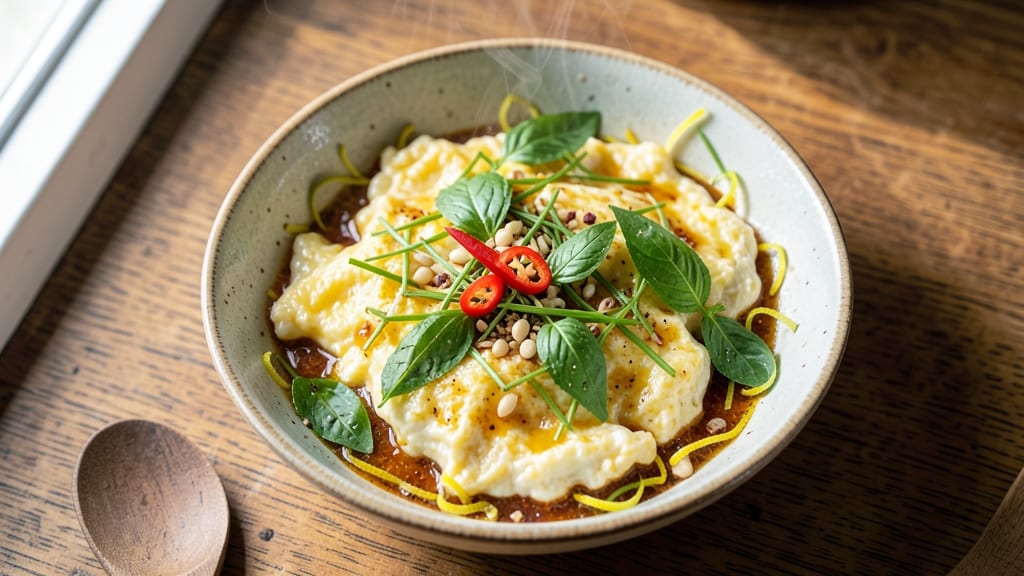
This Thai scrambled eggs recipe transforms a simple breakfast into a fragrant, spicy experience that tastes like a Bangkok street stall. The secret lies in balancing lemongrass's bright aroma with chili heat, creating a dish that's both comforting and bold.
I developed this version after years of experimenting with Thai flavors—it's quick, vegetarian-friendly, and packed with restaurant-quality depth.
The technique is simple but precise: high heat for quick cooking, constant stirring to create soft, custardy curds, and a fragrant paste of lemongrass, garlic, and chili that infuses every bite.
Unlike traditional scrambled eggs, this version gets its complexity from Thai ingredients—fresh herbs, lime zest, and a touch of fish sauce (or soy sauce for vegetarians) that elevate it beyond ordinary breakfasts.
What you'll end up with is eggs that are tender yet slightly firm, infused with citrusy, spicy, and herby notes that linger on your palate. The aroma alone will wake up your kitchen, and the first bite delivers that perfect balance of heat, brightness, and richness.
This recipe is designed to be adaptable—add Thai basil for extra freshness or coconut milk for creaminess, if you like.
Perfect for brunch, a quick lunch, or even as a flavorful side dish, these eggs come together in just 15 minutes with minimal prep. The flavor profile is so distinctive that even egg purists will be converted. Let's get cooking!
Ingredients for thai scrambled eggs
Quick pantry raid plus fresh Thai flavors—this transforms ordinary eggs into something extraordinary.
| Ingredient | Amount | Notes |
|---|---|---|
| Large Eggs 🥚 | 8 whole | Freshly cracked for best texture |
| Lemongrass Stalks 🌿 | 3 whole | Lower 4 inches only, finely chopped |
| Garlic Cloves 🧄 | 4 cloves | Minced for aromatic paste |
| Fresh Red Chili 🌶️ | 1 whole | Thai or serrano, finely chopped |
| Fresh Thai Basil 🌿 | ½ cup | Chopped, stems removed |
| Lime Zest 🍋 | 1 tbsp | From 1 lime, finely grated |
| Soy Sauce 🥢 | 1 tbsp | For umami depth (vegetarian) |
| Coconut Milk 🥥 | ¼ cup | Full-fat for creaminess (optional) |
| Vegetable Oil 🫒 | 2 tbsp | High smoke point preferred |
| Salt 🧂 | ½ tsp | Kosher or sea salt |
| Black Pepper 🌶️ | ¼ tsp | Freshly ground preferred |
| Brown Sugar 🍚 | ½ tsp | Lightly toasted for depth |
Lemongrass is the star here—look for fresh stalks at Asian markets or the produce section. The lower 4 inches is all you need, and chopping it finely releases that bright, citrusy aroma. Trader Joe's usually carries it, or grab a bunch and freeze extras. Fresh Thai basil? If you can't find it, regular basil plus a pinch of cinnamon works in a pinch. For the chili, Thai or serrano peppers pack the right heat—adjust to taste. Toasting the brown sugar in a dry pan for 30 seconds before adding deepens its flavor (trust me, it's worth it).
No lemongrass? Lime zest plus a splash of lime juice mimics some of that brightness, though nothing beats the real thing. Swapping soy sauce for fish sauce (if not vegetarian) adds even more umami depth. Coconut milk optional but recommended—full-fat canned coconut milk works best here. If you're short on time, skip the coconut milk and add an extra tablespoon of soy sauce. The eggs? Room temperature scramble better, so take them out 10 minutes before cooking. And if you're worried about overcooking, low and slow heat wins over high heat here—we want custardy curds, not rubbery eggs.
The aroma lingers for days, so make extra—these reheat beautifully (though honestly, they're best fresh). Store leftovers in an airtight container for 3 days in the fridge. For freezing, portion into single servings and freeze flat—up to 1 month. Pro tip: Serve with steamed jasmine rice and a sprinkle of chopped cilantro to mimic a Bangkok street stall. The lime zest keeps for 1 week in the fridge, so zest extra for future use if you're feeling fancy.
Why You'll Love This Recipe
- Here’s what sold me: this works for brunch and as a quick weeknight dinner. Serve it with jasmine rice and a squeeze of lime for a full meal, or toss it into a wrap with some quick-pickled veggies for a grab-and-go lunch. My daughter picks out the chili peppers (she’s 10), but still asks for seconds—no matter what we’re eating it with.
- Five-Ingredient Magic: I swear, this is the kind of dish where you glance at your pantry and think, "I’ve got this." Lemongrass and Thai basil might sound fancy, but you only need a handful of stalks and a few leaves—no measuring cups, no stress. Honestly, I’ve made it with eggs straight from the fridge and still ended up with something that tasted like a street cart in Bangkok.
- Bright & Bold: That first hit of garlic and chili when you crack the eggs into the pan? Chef’s kiss. The lemongrass adds this bright, citrusy backbone that cuts through the richness of the eggs, while the Thai basil ties it all together with that unmistakable anise-like punch. It’s not just flavor—it’s character.
- Breakfast or Dinner: Here’s what sold me: this works for brunch and as a quick weeknight dinner. Serve it with jasmine rice and a squeeze of lime for a full meal, or toss it into a wrap with some quick-pickled veggies for a grab-and-go lunch. My daughter picks out the chili peppers (she’s 10), but still asks for seconds—no matter what we’re eating it with.
Step-by-step instructions for Thai scrambled eggs
Ready to make these vibrant, fragrant eggs in minutes? Here's how to get that perfect balance of heat, aroma, and creamy texture.
Prepare the Lemongrass-Garlic-Chili Paste
Start by finely chopping the lower 4 inches of the 3 whole lemongrass stalks and mincing the 4 cloves garlic cloves. Remove the seeds from the 1 whole fresh red chili and finely chop it—keep the seeds for extra heat if you prefer. In a small bowl, combine these with the 0.5 teaspoon brown sugar and let them sit for 5 minutes while you crack the eggs.
This resting time lets the flavors meld slightly, creating a more cohesive paste. The brown sugar helps caramelize the aromatics when cooked, adding depth to the dish. Don't skip this step—it makes all the difference in the final flavor profile.
Toast the Aromatics in the Oil
Heat the 2 tablespoons vegetable oil in a large non-stick skillet over medium heat. Add the lemongrass-garlic-chili mixture and cook for 2-3 minutes until fragrant and the lemongrass turns slightly golden. You'll smell that incredible citrusy, spicy aroma—this is your cue that the base is ready.
Watch carefully to avoid burning. If the mixture starts to darken too quickly, reduce the heat slightly. The goal is to develop the flavors without charring. Once the lemongrass is fragrant and the garlic is just beginning to turn golden, it's time to move to the next step.
Scramble the Eggs with Coconut Milk
In a separate bowl, whisk together the 8 whole large eggs, 0.5 teaspoon salt, 0.25 teaspoon black pepper, 1 tablespoon soy sauce, and 1 tablespoon lime zest. Add the 0.25 cup coconut milk and mix until fully combined. The coconut milk adds creaminess that balances the heat and acidity from the lime and chili.
Pour the egg mixture into the skillet with the aromatics. Let it sit for 10 seconds before gently pushing the eggs from one side of the pan to the other with a spatula, creating soft curds. Keep stirring slowly and continuously—this creates those signature silky, custardy scrambled eggs. Cook for 2-3 minutes until the eggs are just set but still slightly runny in the center.
Finish with Fresh Thai Basil
Remove the skillet from heat just before the eggs are fully set. Stir in the 0.5 cup chopped fresh Thai basil and let the residual heat wilt the leaves slightly. The basil adds a bright, slightly peppery note that cuts through the richness of the coconut milk and eggs.
Taste and adjust seasoning if needed—you might want to add a pinch more salt or a splash of lime juice for brightness. Serve immediately while the eggs are still creamy and the basil is vibrant. This dish is best enjoyed fresh, straight from the pan.
Optional Garnish and Serving
For an extra touch, garnish with additional lime zest or a sprinkle of flaky sea salt. These eggs pair perfectly with steamed jasmine rice or crusty bread to soak up the rich, flavorful sauce. The combination of heat, aroma, and creamy texture makes this dish truly special—don't let the simple ingredients fool you.
If you have leftovers, store them in the fridge for up to 2 days, but they're best enjoyed fresh. The flavors continue to develop as they sit, so reheating gently in a pan with a splash of coconut milk brings them back to life.
Pro Tips For Making Thai Scrambled Eggs
- STIR CONSTANTLY ON HIGH HEAT: Thai scrambled eggs need that signature crispy edge, and the only way to get it is by keeping the pan screaming hot while stirring like you’re trying to win a race. I used to let the eggs sit for even a second, and they’d turn into sad, rubbery clumps—no matter how much coconut milk you add later. Keep that wok or skillet at maximum heat and move those eggs fast.
- SMASH LEMONGRASS STALKS: Tossing in whole lemongrass stalks is lazy and leaves you with bland eggs. Instead, give them a sharp smash with the flat side of your knife before adding them to the pan—this releases the oils and aroma without turning your eggs into a lemongrass smoothie. (Yes, even if you’re impatient like me.)
- SALT THE EGGS BEFORE WHISKING: I learned this the hard way—adding salt after the eggs hit the pan just doesn’t cut it. Whisk your eggs in a bowl with a generous pinch of salt first, then let them sit for 5 minutes. This ensures the salt distributes evenly and the eggs stay tender, not tough. Trust me, your taste buds will notice the difference.
- USE FROZEN THAI BASIL: Fresh Thai basil is amazing, but if you’re not near an Asian market, frozen basil works just as well—and saves you from wilted stems in the pan. Toss it in at the very end, straight from the freezer, and it’ll thaw and brighten the dish without turning to mush. (Your future self will thank you.)
Storing and reheating this thai scrambled eggs
Refrigerator Storage
Store your Thai scrambled eggs in an airtight container for up to 3 days in the fridge. The coconut milk and lime zest keep them moist, but the texture will firm up slightly—reheat gently to restore creaminess.
I always portion leftovers into small glass containers (like Pyrex) to make reheating easier later. 🥥
Freezer-Friendly Tips
For longer storage, freeze single portions in silicone molds or flat freezer bags for up to 1 month. Spread a thin layer of coconut milk on top before freezing—this prevents a dry texture when thawed.
Label with the date and reheat in a skillet with 1 tablespoon fresh coconut milk to revive the flavors. 🧊
Reheating Like a Pro
For the best results, reheat in a non-stick skillet over medium-low heat with 1 tablespoon oil or coconut milk. Stir gently for 2-3 minutes until warmed through—this prevents the eggs from drying out.
If using the microwave, cover with a damp paper towel and heat in 30-second intervals on 50% power. 🔥
Reviving Texture
If your reheated eggs seem dry, sprinkle 1 teaspoon warm coconut milk or water and stir until creamy. A pinch of black pepper or lime zest can also brighten flavors. For extra freshness, top with chopped Thai basil or a drizzle of chili oil right before serving. 🌿
Serving Leftovers
These eggs reheat beautifully for breakfast wraps, rice bowls, or even a quick lunch. Pair with steamed jasmine rice or crusty baguette to soak up the sauce. The flavors actually deepen overnight, so don’t hesitate to make extra! 🍚
Avoid These Mistakes
Never reheat directly from frozen—thaw in the fridge overnight first. Overheating turns eggs rubbery, so low and slow is key. If the basil looks wilted after reheating, add fresh leaves on top to restore that vibrant Thai flavor. 🌶️
Nutrition facts
Frequently asked questions
Can I make this recipe without lemongrass?
Yes! If you can't find fresh lemongrass, substitute with 1 tablespoon lime zest plus 1 teaspoon lime juice for brightness. For depth, add ½ teaspoon ground coriander or ½ teaspoon toasted brown sugar to mimic lemongrass's caramelized notes. The dish will still taste amazing—just slightly less aromatic.
What's the best way to adjust the heat level?
For milder heat, remove the seeds and membranes from the chili before chopping. For extra spice, keep the seeds and add ½ teaspoon chili flakes at the end. If you love heat, stir in 1 teaspoon sambal oelek (Thai chili paste) with the Thai basil. Always taste before serving!
Can I use regular basil instead of Thai basil?
Regular basil works in a pinch, but Thai basil has a distinct anise-like flavor that pairs perfectly. For the best substitute, mix ½ cup regular basil with ½ teaspoon ground cinnamon or a pinch of fennel seeds (toasted and ground) to mimic Thai basil's complexity. Add it at the very end to preserve freshness.
Why do my eggs turn out rubbery?
Rubbery eggs usually mean overcooking or too much heat. Use medium-low heat and remove the pan from heat just before the eggs are fully set. Stir constantly and cook for 2-3 minutes max—they'll continue cooking slightly off the heat. For extra creaminess, add 1 extra tablespoon coconut milk to the egg mixture.
How can I make this dish vegetarian-friendly?
This recipe is already vegetarian! Just replace the fish sauce with 1 tablespoon soy sauce or vegetarian fish sauce substitute (like coconut aminos). For extra umami, add ½ teaspoon miso paste to the egg mixture. The coconut milk and lime zest keep it rich and flavorful without any animal products.