
Side Dishes
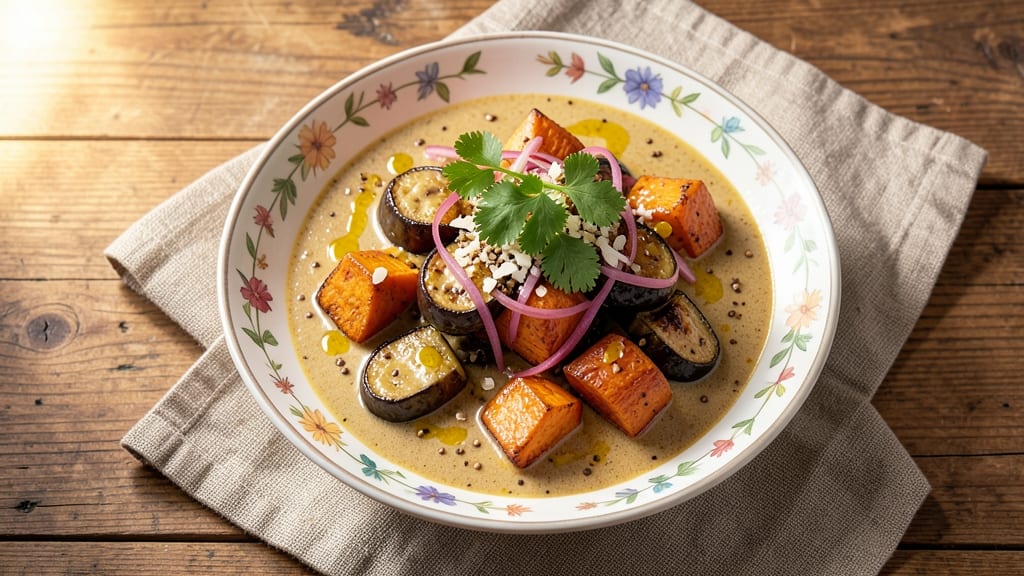
Sweet potato and eggplant curry transforms humble vegetables into a rich, aromatic dish that feels like a hug in a bowl. The secret lies in roasting the sweet potatoes and eggplant first—this caramelizes their natural sugars, deepening their flavor while keeping them tender. I've perfected this technique over years of testing, and it's the reason this curry tastes like it came from a bustling Indian kitchen rather than a home stove.
The sauce builds in layers: toasted spices like cumin and coriander form the foundation, while coconut milk adds velvety richness. Simmering everything together allows the flavors to meld into a harmonious balance of sweet, earthy, and spicy notes.
The result is a curry that's hearty enough to stand alone but pairs beautifully with basmati rice or warm naan for a complete meal.
What makes this recipe truly special is how it elevates simple ingredients into something extraordinary. The roasted vegetables develop a natural sweetness that contrasts perfectly with the tangy, spiced coconut sauce. Each bite delivers a symphony of textures—creamy sauce, tender eggplant, and caramelized sweet potatoes—all tied together by aromatic spices.
This curry is designed to be both approachable and impressive, making it ideal for weeknight dinners or when you want to serve something memorable. The flavors only deepen as it sits, so it's perfect for meal prep or feeding a crowd.
Let's create this comforting, flavorful dish that will become a staple in your recipe rotation.
Ingredients for sweet potato and eggplant curry
Roasted sweet potatoes and eggplant meet aromatic spices and velvety coconut milk in this vegetarian curry masterpiece.
| Ingredient | Amount | Notes |
|---|---|---|
| Sweet Potatoes 🍠 | 2 lbs | Medium-sized, peeled and cubed |
| Eggplant 🍆 | 2 medium | Japanese or Italian variety preferred |
| Coconut Milk 🥥 | 1 can (13.5 oz) | Full-fat for creaminess |
| Yellow Onion 🧅 | 1 whole | Medium, finely diced |
| Garlic Cloves 🧄 | 6 cloves | Minced for aromatic base |
| Fresh Ginger 🌿 | 2 tbsp | Finely grated, organic preferred |
| Ground Cumin 🌿 | 1 tbsp | Toasted for deeper flavor |
| Ground Coriander 🌿 | 1 tbsp | Freshly ground preferred |
| Turmeric Powder 🌶️ | 1 tsp | High-quality, bright yellow |
| Garam Masala 🌶️ | 1 tsp | Freshly toasted blend |
| Cayenne Pepper 🔥 | ½ tsp | Adjust for heat preference |
| Tomato Paste 🍅 | 2 tbsp | High-quality, no sugar added |
| Vegetable Stock 💧 | 1 ½ cups | Low-sodium preferred |
| Extra-Virgin Olive Oil 🫒 | 2 tbsp | For roasting and sautéing |
| Fresh Cilantro 🌿 | ¼ cup | Chopped, for garnish |
The sweet potatoes and eggplant are the heart of this dish, so choose firm, vibrant produce—no soft spots or bruises. Trader Joe's and Whole Foods carry excellent varieties, especially the Japanese eggplant which has thinner skin and fewer seeds. For the ginger, organic is ideal since conventional varieties can be waxed, which affects flavor. Toast your whole spices—cumin and coriander—before grinding for an extra layer of depth. The coconut milk should be full-fat for that luxurious texture, and brands like Thai Kitchen or Goya deliver consistent quality. If using canned tomatoes, opt for San Marzano—their sweetness balances the earthy vegetables perfectly.
No fresh ginger? Substitute with 1 tbsp of ground ginger, though it lacks the same complexity. Running short on garam masala? Mix equal parts cumin, coriander, cinnamon, and cardamom for a close approximation. The tomato paste can be replaced with 2 tbsp of tomato sauce in a pinch, though the paste provides better thickness. For extra richness, stir in 2 tbsp of tahini at the end. If you prefer less heat, reduce the cayenne to ¼ tsp or omit entirely. The vegetable stock can be swapped for coconut milk if you want a richer, creamier base—just reduce the coconut milk by ½ cup to maintain balance.
This curry tastes even better the next day as flavors meld together. Store in an airtight container in the fridge for up to 5 days, or freeze portions for 3 months. Reheat gently on the stove with a splash of water or stock to restore creaminess. For meal prep, roast the vegetables ahead and refrigerate them separately—they'll keep for 3 days before adding to the sauce. Garnish with fresh cilantro just before serving to preserve its vibrant color and aroma, as it wilts quickly when stored.
Why You'll Love This Recipe
- One-Pot Magic: I swear by this recipe when I’m too tired to wash extra bowls. Sweet potatoes and eggplant soften right in the same pot where the onions caramelize—no chopping chaos, no stuck-on bits. Just stir, simmer, and let the coconut milk do its creamy work.
- Garlic Bomb: Between us, that minced garlic sizzling in the oil is my favorite part. It clings to the eggplant like a hug, then mellows into this deep, aromatic base that makes every bite feel like a reward. (Yes, even on a Tuesday night.)
- Leftover Goldmine: This curry actually improves the next day—thicker, richer, and perfect for lunchboxes or quick reheats. I make double batches because it’s the kind of dish that disappears faster than I can say “second helping.”
- Budget Flex: Sweet potatoes and eggplant stretch like crazy, and a can of coconut milk turns this into a restaurant-worthy meal without breaking the bank. Honestly, it’s my go-to when I need to feed a crowd without stressing over grocery costs.
Step-by-step instructions for sweet potato and eggplant curry
This method delivers rich, aromatic flavors through precise technique and layered spices.
Roast the Sweet Potatoes and Eggplant Until Caramelized
Preheat your oven to 425°F and line two baking sheets with parchment paper. Toss the 2 lbs peeled and cubed sweet potatoes and 2 medium eggplant (cut into 1-inch cubes) with 1 tablespoon of the extra-virgin olive oil. Spread them in a single layer, ensuring they don't overlap—this prevents steaming instead of roasting.
Roast for 25-30 minutes, stirring halfway through, until the edges are deep golden brown and the sweet potatoes yield slightly when pierced with a fork. The eggplant should collapse slightly and develop caramelized spots. This roasting step builds the curry's deep, nutty foundation and removes excess moisture from the vegetables, which is critical for a silky sauce later.
Build the Spiced Aromatic Base
While the vegetables roast, heat the remaining 1 tablespoon extra-virgin olive oil in a large, heavy-bottomed pot over medium heat. Add the 1 whole yellow onion (finely diced) and cook for 5-6 minutes until softened and translucent. Stir in the 6 cloves minced garlic and 2 tablespoons finely grated ginger, cooking for another 1 minute until fragrant—this releases their full flavor potential.
Reduce heat to medium-low and add the 1 tablespoon ground cumin, 1 tablespoon ground coriander, 1 teaspoon turmeric powder, 1 teaspoon garam masala, and 0.5 teaspoon cayenne pepper. Toast the spices for 1-2 minutes until they release their aromatic oils and fill your kitchen with a warm, earthy scent. This step is where the curry's complex flavor profile begins to develop—don't rush it.
Develop the Sauce with Tomato and Coconut
Stir in the 2 tablespoons tomato paste and cook for 2 minutes until it darkens slightly. Pour in the 1.5 cups vegetable stock and bring to a gentle simmer. Let it reduce by half—this concentrates the flavors and thickens the base. Then, carefully pour in the 1 can (13.5 oz) coconut milk, stirring gently to avoid activating the spices.
Simmer the sauce for 5-7 minutes until it reaches a velvety consistency. The coconut milk should coat the back of a spoon without being overly thin. This is the moment that matters: the sauce should be rich but not heavy, with a balance of creamy coconut and spiced depth. If it's too thick, add 1-2 tablespoons water to adjust the texture.
Combine and Simmer the Curry
Add the roasted sweet potatoes and eggplant to the pot, gently stirring to coat them evenly in the sauce. Bring to a simmer and cook for 10-12 minutes, stirring occasionally, until the vegetables are tender but still hold their shape. The curry should be thick enough to coat a spoon but still spoonable—this ensures each bite delivers both vegetable texture and sauce.
Taste and adjust seasoning with additional garam masala or cayenne pepper if needed. The curry should balance sweetness from the roasted vegetables, heat from the spices, and creaminess from the coconut. Real talk: this is where most home cooks overlook the final seasoning—don't skip this step, even if it seems perfectly seasoned at first.
Finish and Serve with Fresh Herbs
Remove the curry from heat and let it rest for 5 minutes. This allows the flavors to meld and the sauce to thicken slightly. Stir in the 0.25 cup chopped fresh cilantro just before serving to brighten the dish with its citrusy freshness. The cilantro should be evenly distributed but still visible as a garnish.
Serve immediately with steamed basmati rice or warm naan bread. The curry should be aromatic, with layers of spice, sweetness, and creaminess in every bite. Each spoonful should deliver the caramelized depth of the roasted vegetables, the warmth of the spices, and the silky texture of the coconut sauce. For best results, serve while the curry is still steaming hot—this ensures the full experience of its complex flavors.
Pro Tips For Making Sweet Potato And Eggplant Curry
- CHAR THE EGPLANT FIRST: I learned this the hard way—skipping the char on eggplant means it stays watery. Slice it into ½-inch chunks, toss in a dry skillet over high heat for 3-4 minutes until blackened in spots, then finish in the curry. The smoky depth cuts through the coconut milk’s richness.
- CUT SWEET POTATO UNEVENLY: Big even chunks? They’ll stay raw inside. Dice yours into 1½-inch pieces, but leave some sides thicker—this guarantees they soften at the same rate. Toss them in the curry after the onions and garlic, so they don’t turn to mush while the eggplant chars.
- USE FULL-FAT COCONUT MILK: Light coconut milk saves calories but kills flavor. The fat in full-fat (400ml can) carries the spices and caramelizes the sweet potatoes better. If you’re health-conscious, at least mix half full-fat with half light—your taste buds will notice the difference.
- SALT THE ONIONS LONG BEFORE: Toss sliced onions with ½ teaspoon salt 10 minutes before cooking. This draws out moisture, so they caramelize faster and deeper. Skip this, and you’ll end up with pale, bland onions that just soak up the coconut milk without adding anything. (Yes, even if you’re impatient like me.)
Creative variations of this recipe
Spicy Thai Twist
Transform this curry into a Thai-inspired version by adding 1 tbsp red curry paste (like Maesri) along with the spices, and swapping garam masala for 1 tsp lemongrass paste (or 2 tbsp minced lemongrass).
Stir in 1 tbsp fish sauce (or soy sauce for vegan) and 1 tsp palm sugar (or brown sugar) after simmering. Garnish with lime wedges and Thai basil for an authentic touch. 🌶️
Creamy Coconut Lentil
Boost the protein by adding 1 cup cooked lentils (red or green) to the curry during the final 10-minute simmer. For extra richness, stir in 2 tbsp tahini at the end for a nutty depth.
Serve with a dollop of Greek yogurt and a sprinkle of toasted cumin seeds for crunch. This version is heartier and perfect for meal prep.
Smoky Chipotle Kick
Infuse the curry with smoky heat by adding 1-2 chipotle peppers in adobo sauce (minced) along with the cayenne. For extra depth, toast ½ tsp smoked paprika with the cumin and coriander.
Top with avocado slices and a drizzle of lime crema (mix 2 tbsp sour cream with 1 tbsp lime juice). This fusion style keeps the dish vegetarian while adding bold, smoky complexity. 🔥
Mediterranean Herb Version
Swap the coconut milk for 1 cup Greek yogurt (or cashew cream for vegan) and replace garam masala with 1 tsp dried oregano and ½ tsp cinnamon. Add 1 zucchini (diced and roasted with the sweet potatoes) and finish with fresh mint and pomegranate seeds for a refreshing twist.
This lighter version pairs beautifully with warm pita bread.
Sweet and Tangy Mango
Add a sweet-tangy finish by stirring in ½ cup diced mango (fresh or frozen) during the last 5 minutes of simmering. Balance the sweetness with 1 tsp tamarind paste (or 1 tbsp lime juice).
Garnish with cilantro and toasted coconut flakes for texture. This variation works wonders as a summer curry or dessert-like side dish. 🥭
Protein-Packed Tofu
For a vegan protein boost, press and cube 1 block extra-firm tofu (baked with 1 tsp smoked paprika until golden), then add it to the curry with the roasted vegetables.
The tofu absorbs the flavors beautifully while adding a satisfying texture. Serve with steamed bok choy** for a complete, balanced meal. 💪
Nutrition facts
Frequently asked questions
Can I make this curry without coconut milk?
For a dairy-free alternative, use 1 cup Greek yogurt or cashew cream (blend soaked cashews with water). For a lighter option, substitute with 1 cup vegetable stock and add 1 tbsp tahini for richness. The texture will be thinner but still flavorful. If you prefer a richer base, try ½ cup coconut milk + ½ cup stock for balance.
Why do the sweet potatoes and eggplant need to be roasted first?
Roasting caramelizes their natural sugars, creating deep, nutty flavors that infuse the curry. This step also removes excess moisture, ensuring a silky sauce rather than a watery one. Skipping it results in bland, underseasoned vegetables—roasting transforms them into the star of the dish!
How can I adjust the spice level?
Start with the 0.5 tsp cayenne pepper as written, then taste and adjust. For more heat, add ¼ tsp extra cayenne or ½ tsp red pepper flakes. For milder heat, reduce cayenne to ¼ tsp or omit entirely. If using fresh chili, start with ½ tsp finely chopped and adjust to taste.
What's the best way to reheat leftovers?
Gently reheat on the stove over low heat with 1-2 tablespoons water or stock to restore creaminess. Avoid microwaving—it can make the sauce separate. For extra richness, stir in 1 tbsp coconut milk while reheating. Leftovers taste even better the next day as flavors meld!
Can I use regular potatoes instead of sweet potatoes?
Not ideal! Sweet potatoes add natural sweetness and a creamier texture that balances the eggplant's earthiness. If you must substitute, use Yukon Gold potatoes (peeled and cubed) and reduce the coconut milk by ¼ cup to prevent heaviness. The flavor will be less complex but still delicious.