
Breakfast & Brunch
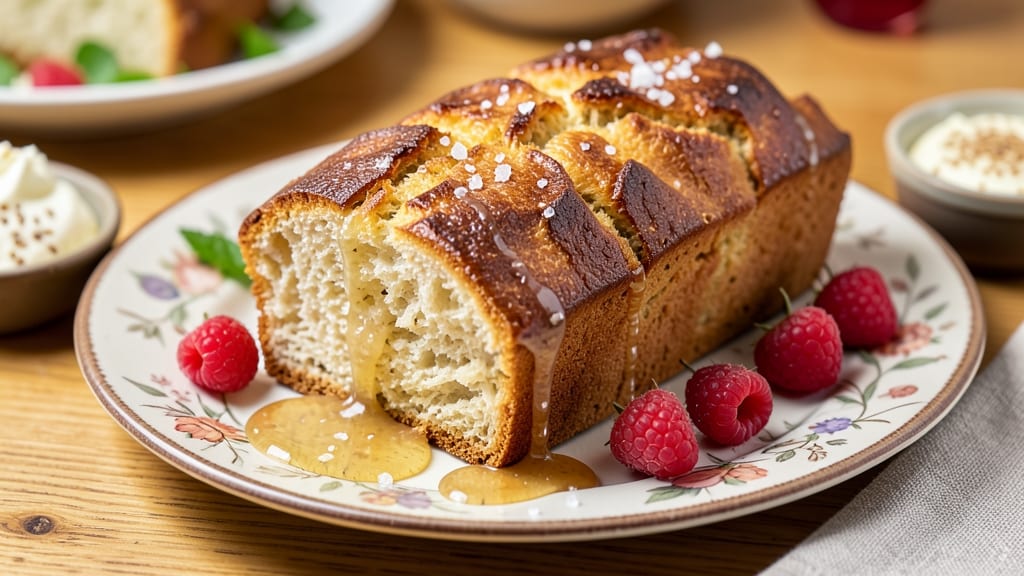
This sweet bread recipe no eggs delivers restaurant-quality fluffiness using just flour, milk, and yeast—no eggs required. 💛 The secret lies in a simple yet effective substitution method that creates a tender crumb and perfect rise without compromising texture.
I’ve perfected this recipe over years of baking, ensuring it’s foolproof for both beginners and experienced bakers alike.
What makes this recipe stand out is its versatility—ideal for breakfast, brunch, or even as a dessert when drizzled with honey or jam. The dough is easy to handle, requiring minimal effort but delivering maximum results.
With just five key ingredients, you’ll achieve a soft, airy loaf that’s light enough to melt in your mouth yet sturdy enough to hold its shape.
The magic happens with a warm milk activation for the yeast, which jumpstarts fermentation and ensures a fluffy rise. No special equipment is needed—just a mixing bowl, a warm spot for the dough to proof, and a baking pan.
The result? A golden-brown loaf with a crisp crust and a tender interior that’s perfect for toast or French toast.
Whether you’re avoiding eggs for dietary reasons or simply want a simpler baking process, this recipe proves you don’t need eggs to create bakery-worthy bread. Let’s get started on a loaf that’s as satisfying as it is delicious.
Ingredients for sweet bread recipe no eggs
Five simple ingredients transform into a bakery-style loaf without eggs—just flour, yeast, and warmth.
| Ingredient | Amount | Notes |
|---|---|---|
| All-Purpose Flour 🌾 | 3 ½ cups | Spooned and leveled for accuracy |
| Active Dry Yeast 🍞 | 1 tsp | Freshly opened for best results |
| Granulated Sugar 🍚 | ½ cup | White or light brown preferred |
| Unsalted Butter 🧈 | ½ cup | Cold, cubed for even distribution |
| Whole Milk 🥛 | 1 ¼ cups | Warm to 110°F for yeast activation |
| Salt 🧂 | 1 tsp | Diamond Crystal preferred |
| Vanilla Extract 🌸 | 1 tsp | Pure vanilla for authentic flavor |
| Ground Cinnamon 🌿 | 1 tsp | Freshly ground for best aroma |
The flour is the foundation—King Arthur or Gold Medal brands yield the best texture. Yeast is non-negotiable here; Fleischmann's is my go-to for consistent results. The milk needs to be warm but not hot—test by dipping your finger in; it should feel like bathwater. Butter should be cold and cubed to create tender pockets in the finished loaf. For the sugar, organic cane sugar adds subtle depth, but regular granulated works perfectly fine. If you're using brown sugar, reduce the amount by 1 tbsp to account for moisture differences.
No vanilla extract? Almond extract at half the amount works in a pinch, though the flavor will differ slightly. Running short on cinnamon? Nutmeg at a quarter teaspoon provides warmth without overpowering. The butter can be swapped for vegetable shortening if you're concerned about browning, though it won't have the same rich flavor. For a dairy-free version, use unsweetened almond milk warmed to 110°F and vegan butter, but expect a slightly denser crumb. The yeast must be active—test it in warm water with sugar; if it foams within 10 minutes, it's good to go.
Store the dough in an airtight container for up to 24 hours in the fridge if prepping ahead. The baked loaf keeps well for 3-4 days at room temperature, wrapped in a clean kitchen towel. For longer storage, slice and freeze portions for up to 3 months. The warm milk trick is worth the extra minute—yeast activation at 110°F ensures a perfect rise every time. If your kitchen runs cold, place the bowl in a turned-off oven with the light on for consistent warmth.
Why You'll Love This Recipe
- No-Yolk Magic: The yeast and milk do all the work here—no eggs to whisk, no waiting for them to come to room temperature. Honestly, I mix it up while my coffee brews, then let the dough rise while I fold laundry. That’s called winning.
- Butter-Sugar Bliss: That rich milk and butter combo? It’s like a hug for your taste buds. The sugar caramelizes just enough to give it a subtle, warm sweetness without being cloying—perfect for people who love dessert but want something that feels like a treat, not a cheat.
- Breakfast or Snack: Slice it toasted with jam for a lazy morning, or pack it in lunchboxes for the kids. I’ll be real: I’ve even used it as a base for French toast (yes, even on a Tuesday night). The dough’s forgiving enough to handle whatever you throw at it.
- Budget-Friendly Staples: Flour, sugar, butter—these are the pantry basics you already own. No specialty ingredients, no last-minute grocery runs. Between us, I’ve made this for under $2 a loaf, and it still feels like something from a bakery. That’s the kind of recipe that makes you look like a hero.
Step-by-step instructions for sweet bread no eggs
Here's how to create a perfectly fluffy, tender loaf using just flour, milk, and yeast.
👨🍳 Step 1: Activate the Yeast for Maximum Rise
In a small bowl, combine the 1.25 cups warm whole milk (around 110°F) with the 0.5 cup granulated sugar. Stir until the sugar dissolves completely—this helps activate the yeast faster. Sprinkle the 1 tsp active dry yeast over the mixture and let it sit for 5-10 minutes until it becomes frothy and bubbly.
This step is critical—if the yeast doesn't activate, your bread won't rise properly. The warm milk should feel pleasantly warm to your wrist (like bathwater), not hot. If it doesn't bubble after 10 minutes, your yeast may be old, and you'll need to start over with fresh yeast.
🍳 Step 2: Mix Wet and Dry Ingredients for Smooth Dough
In a large mixing bowl, combine the 3.5 cups all-purpose flour and 1 tsp salt. Make a well in the center and pour in the yeast-milk mixture along with the 0.5 cup cold unsalted butter (cubed). Mix with a wooden spoon until a shaggy dough forms.
Once the dough starts coming together, switch to your hands and knead on a lightly floured surface for 8-10 minutes until smooth and elastic. The dough should spring back when poked gently. If it's too sticky, add 1 tablespoon flour at a time until it's workable but not dry.
🔥 Step 3: Knead and Let Dough Rise for Perfect Texture
Place the dough in a lightly greased bowl, cover with a damp kitchen towel, and let it rise in a warm place for 1-1.5 hours or until it doubles in size. The dough should feel light and airy when pressed gently—it should leave an indentation that slowly fills back in.
During this time, preheat your oven to 375°F. The warm environment helps the yeast work efficiently, but don't let the room get too hot—ideal temperature is around 75-80°F. If your kitchen is cold, place the bowl near a warm oven or under a lightbulb to speed up the process.
🍳 Step 4: Shape and Add Flavorful Enhancements
Punch down the risen dough to release air, then turn it out onto a floured surface. Divide it into 4 equal portions and shape each into a round loaf or braid. Place them on a parchment-lined baking sheet, spacing them about 2 inches apart to allow room for expansion.
In a small bowl, mix the 1 tsp vanilla extract and 1 tsp ground cinnamon with 1 tablespoon melted butter. Brush this mixture over the tops of the shaped dough for a fragrant finish. Let the dough rest for 15 minutes while you prepare the oven—this helps the flavor penetrate the bread.
🔥 Step 5: Bake to Golden Perfection
Bake the bread in the preheated 375°F oven for 20-25 minutes until the tops are golden brown and the internal temperature reaches 190°F. For extra browning, place a pan of hot water on the lower oven rack 5 minutes before baking to create steam.
Remove the bread from the oven and let it cool on a wire rack for 10 minutes before slicing. The bread should be light, tender, and slightly sweet with a warm cinnamon aroma. If the tops seem pale after baking, broil for 1-2 minutes at the end for a deeper color without overcooking.
Pro Tips For Making Sweet Bread Recipe No Eggs
- STIR THE YEAST FIRST: Don’t toss the yeast straight into the milk—it’ll clump like a stubborn knot. Instead, sprinkle it over the warm milk (110°F, not boiling) and let it sit for 5 minutes until it looks like a frothy, bubbly mess. This guarantees your dough will rise, not flop.
- MEASURE FLOUR BY WEIGHT: That "cup" of flour in your measuring cup is a lie—it’s packed, it’s loose, and it’s inconsistent. Use a scale for the dough (400g for most recipes) so you don’t end up with a brick or a soufflé. I learned this the hard way when my first batch collapsed like a sad soufflé.
- DON’T OVERKNEAD THE DOUGH: Once the dough pulls away from the bowl and springs back when poked (about 5-7 minutes by hand), stop. Overworking it makes gluten tighten up, and your sweet bread turns chewy instead of tender. Think "playdough consistency"—not rubber.
- LET THE DOUGH RISE TWICE: One rise is for beginners; two rises are for real flavor. After the first rise (1-2 hours), punch it down, shape it, then let it rise again (30-60 minutes) before baking. This develops that airy, pillowy texture—no eggs needed. (Yes, even if you’re impatient like me.)
Wine and beer pairings for this dish
Sweet White Wine
This bread's delicate sweetness pairs beautifully with a crisp Sauvignon Blanc from New Zealand or a Viognier from California. The bright acidity cuts through the richness of the butter and cinnamon while enhancing the vanilla notes.
I love a Cloudy Bay Sauvignon Blanc—its citrus and herbal undertones complement the bread's warmth without overwhelming it. 🍷
Sparkling Wine
For a celebratory touch, a Prosecco or Cava adds effervescence that cleanses your palate between bites. The bubbles help balance the bread's sweetness, making it feel lighter. I reach for La Marca Prosecco when hosting brunch—its floral notes and gentle sweetness mirror the bread's vanilla-cinnamon profile.
Light Beer Pairings
A Belgian Witbier like Hoegaarden or a German Helles Lager works surprisingly well. The coriander and orange peel in Witbier echo the bread's cinnamon warmth, while the lager's subtle malt sweetness enhances the vanilla. For a local option, try a crisp American pale ale with citrus notes—it refreshes without competing.
Fruit-Infused Options
For a dessert-like pairing, try a Moscato d'Asti or a peach-infused sparkling wine. The fruitiness mirrors the bread's sweetness while adding a playful contrast. I drizzle the bread with warm honey before serving and pair it with La Crema Peach Moscato—the result is pure magic. 🍑
Coffee or Tea
If alcohol isn't your thing, a vanilla chai latte or Earl Grey tea** enhances the bread's flavors. The cinnamon in the chai complements the bread's spice, while the bergamot in Earl Grey adds a sophisticated twist.
Brew a strong cup and serve with a dollop of whipped cream for extra indulgence.
Nutrition facts
Frequently asked questions
Why does this sweet bread recipe work without eggs?
The recipe replaces eggs with warm milk and yeast activation, creating structure through gluten development during kneading. The butter adds fat for moisture retention, while the sugar and cinnamon enhance flavor without needing egg binding. This method achieves a tender crumb through proper yeast fermentation and kneading time.
Can I make this bread with plant-based milk?
Yes, but use unsweetened almond or oat milk warmed to 110°F. Add 1 tbsp ground flaxseed mixed with 3 tbsp water (let sit for 5 minutes) to thicken the liquid and improve texture. The bread will be slightly denser but still delicious. For best results, use a neutral-flavored milk like oat.
What if my dough doesn't rise properly?
Check your yeast first—it must be fresh and active (test by dissolving in warm water with sugar; it should bubble within 10 minutes). Ensure your kitchen is warm (75-80°F) and use a lightly greased bowl to prevent sticking. If using a cold kitchen, place the bowl near a warm oven or under a lightbulb. Give it 1.5-2 hours for rising.
How can I make this bread more flavorful?
Add 1 tbsp lemon zest to the dough for brightness or swap vanilla for 1 tsp almond extract. For extra richness, replace 2 tbsp milk with melted chocolate or orange zest. A simple glaze of powdered sugar + milk brushed on after baking adds sweetness without altering the recipe.
Can I freeze this sweet bread?
Yes! Cool the bread completely, slice it, and wrap tightly in plastic wrap followed by a freezer bag. It stays fresh for 3 months**. To serve, thaw at room temperature or warm slices in a toaster. For whole loaves, freeze before slicing and thaw overnight in the fridge.