
Beverages
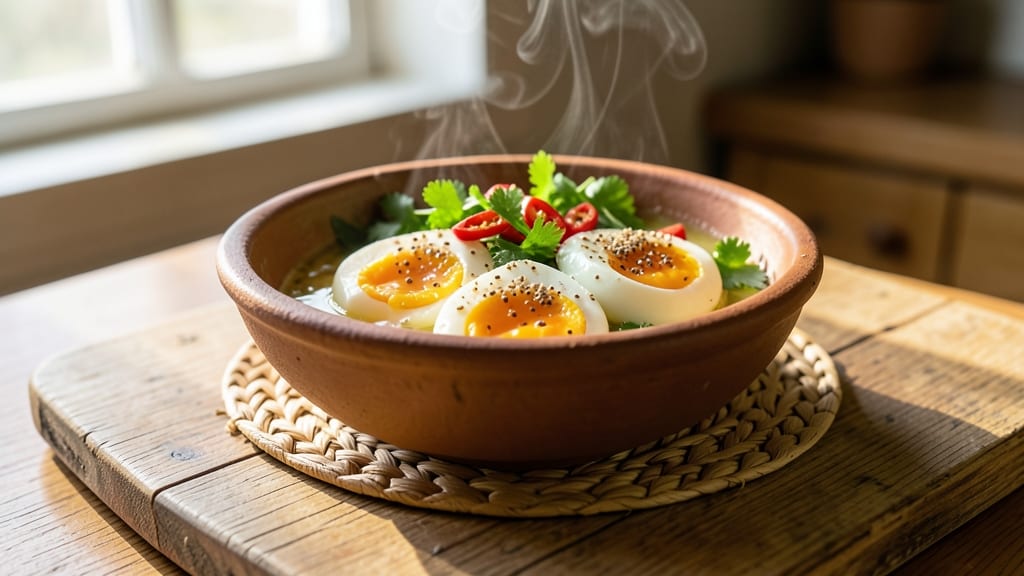
This steamed egg Indian recipe transforms simple eggs into a fragrant, spiced delicacy that balances rich yolks with aromatic herbs and subtle warmth. 💛 The secret lies in gentle steaming—preserving the egg's delicate texture while infusing it with turmeric, cumin, and fresh cilantro for a dish that feels both comforting and refined.
Unlike scrambled or fried eggs, steaming unlocks a silky, custard-like center that pairs perfectly with roti or chutney.
The technique is rooted in traditional Indian cooking, where eggs are often prepared with minimal oil and maximum flavor. By steaming whole eggs in a spiced broth, you achieve a dish that's lighter than curry yet deeply satisfying—ideal for breakfast or a light lunch.
The key is patience: letting the eggs cook slowly ensures they remain tender while absorbing the surrounding spices. This method also makes it a versatile dish, adaptable to regional variations like Bengali kandhapuli or South Indian anda bhurji.
What you’ll end up with is a dish where the yolk stays gloriously runny, the whites silky, and every bite infused with earthy cumin and bright cilantro. The aroma alone—warm spices mingling with the egg’s natural richness—will have your kitchen smelling like a home-cooked Indian feast.
It’s the kind of recipe that feels special without being complicated, perfect for weeknight dinners or impressing guests with minimal effort.
Serve with a side of mint chutney or fluffy roti to soak up the delicate flavors. The beauty of this dish is its adaptability—add coconut milk for a richer texture or extra green chilies for heat. Let’s bring this traditional technique to your kitchen with a modern twist.
Ingredients for steamed egg indian
Twelve ingredients for a dish where delicate eggs meet aromatic Indian spices.
| Ingredient | Amount | Notes |
|---|---|---|
| Large Eggs 🥚 | 4 whole | Room temperature for even cooking |
| Fresh Cilantro Leaves 🌿 | ½ cup | Chopped, stems removed |
| Fresh Green Chilies 🌶️ | 2 whole | Slit lengthwise, seeds removed |
| Ground Cumin Seeds 🌿 | ½ tsp | Toasted for deeper aroma |
| Turmeric Powder 🧅 | ¼ tsp | Bright yellow, vibrant color |
| Ghee 🧈 | 2 tbsp | Clarified butter for richness |
| Water 💧 | 1 ½ cups | Filtered or spring water |
| Salt 🧂 | ½ tsp | Fine sea salt preferred |
| Fresh Lemon Juice 🍋 | 1 tbsp | Freshly squeezed |
| Fresh Cilantro Stems 🌿 | ¼ cup | Chopped finely for garnish |
| Coconut Milk 🥥 | ¼ cup | Full-fat for creaminess |
| Asafoetida Powder 🌶️ | ⅛ tsp | Optional for authentic flavor |
The eggs are the heart of this dish—use room temperature ones for even cooking. Whole eggs work best, but if you prefer, you can use egg whites for a lighter version. For cilantro, Indian or Persian varieties have the most vibrant flavor, but any fresh cilantro will do. Green chilies add heat, but if you prefer mildness, remove all seeds or use fewer. The ghee is non-negotiable here—it adds a rich, nutty depth that butter or oil can't replicate. Look for pure, unflavored ghee in the international aisle of most grocery stores or at Indian specialty markets.
No fresh cilantro? Fresh parsley at half the amount works in a pinch, though it lacks the bright, citrusy note. Running out of green chilies? Red chili powder at one-quarter teaspoon mimics the heat but not the freshness. The asafoetida might be tricky to find—substitute with a pinch of garlic powder if needed, though it won’t be identical. For a richer texture, add an extra tablespoon of coconut milk. The turmeric should be bright yellow; if it’s dull, toast it lightly in a dry pan to revive its flavor. And if you’re feeling adventurous, swap the lemon juice for lime juice for a tangier twist.
This dish reheats beautifully, but the magic is in the freshness. Serve immediately after steaming for that silky yolk. Store leftovers in an airtight container for up to 2 days in the fridge, though the texture may firm up slightly. For longer storage, freeze the cooked eggs for up to 1 month, but thaw gently in warm water before reheating. The spiced water base can be prepped ahead and reheated with the eggs—just add fresh herbs and ghee at the end. Garnish with extra cilantro and a drizzle of coconut milk for a restaurant-worthy finish.
Why You'll Love This Recipe
- No-Fuss Steaming: The eggs cook themselves—just crack them into a bowl, sprinkle with turmeric and cumin, and let the steamer do the work. No flipping, no frying, no stress. Honestly, I’ve burned omelets before, but this? Zero room for error.
- Earthy Heat Balance: That first crack of green chili and cilantro on top? It’s the perfect contrast—cool, fresh, and just spicy enough to wake up your taste buds. The cumin seeds add a warm, toasty depth that lingers, making every bite feel intentional.
- Lunchbox Hero: Pack these for work or school—they stay fresh for days without soggy mess. My kids actually ask for them now, and I’ve sent them in bento boxes, wrapped in foil for picnics, or even as a quick snack with roti. No reheating needed.
- Pocketbook Perfection: Eggs are cheap, spices last forever, and you’re using the whole plant—cilantro stems, chili seeds, nothing wasted. I’ve made this for under $2 per serving, and it still feels like a treat. Between us, it’s my go-to when grocery money’s tight.
Step-by-step instructions for steamed eggs with spiced herb harmony
Transform simple eggs into a restaurant-worthy dish with this precise steaming technique.
🍳 Step 1: Prepare the Spiced Ghee Base
In a small saucepan, melt the 2 tbsp ghee over low heat until it just begins to shimmer. Add the 0.5 tsp ground cumin seeds and toast for 30 seconds until fragrant—you'll smell that warm, nutty aroma. Immediately add the 0.25 tsp turmeric powder and 0.125 tsp asafoetida powder, stirring constantly for 10 seconds until the spices dissolve completely into the ghee.
This step creates the flavor foundation. The cumin should be golden but not browned—if it darkens, you've gone too far. Remove from heat and let cool slightly while you prepare the eggs. The residual heat will help infuse the flavors into the egg mixture later.
👨🍳 Step 2: Create the Egg and Herb Mixture
In a medium bowl, gently whisk the 4 whole large eggs until just combined—no need to overbeat. Add the 0.5 cup chopped fresh cilantro leaves, 2 slit green chilies, 0.5 tsp salt, and 1 tbsp fresh lemon juice. Mix lightly with a spatula, just until the herbs are evenly distributed. The mixture should look like marbled green and yellow—this ensures each bite has vibrant color and fresh flavor.
Here's the thing—don't overmix. You want the herbs to be visible in the final dish, not completely blended in. The lemon juice brightens the flavors while preventing the eggs from becoming too rich. Add the cooled spiced ghee to the egg mixture and stir gently to combine.
🔪 Step 3: Prepare the Steaming Setup
Combine the 1.5 cups water and 0.25 cup coconut milk in a small saucepan and bring to a gentle simmer over medium heat. The coconut milk adds subtle creaminess to the steam, enhancing the overall texture. While the water heats, prepare your steaming equipment—a colander or steamer basket that fits snugly over the saucepan with a tight seal.
Line the steaming basket with a damp paper towel or cheesecloth to prevent the egg mixture from sticking. This step is crucial—if the mixture touches the metal, it'll cook unevenly. The water should be at a full rolling boil before adding the eggs, but you'll reduce it to a gentle simmer for steaming.
⏰ Step 4: Steam to Perfect Doneness
Pour the egg mixture evenly into small ramekins or a single heatproof dish that fits your steamer. Place this in the prepared steaming basket and cover with a tight-fitting lid. Steam over the simmering water for 12-14 minutes—this gives you that signature silky yolk with just a hint of set around the edges. The eggs are done when they've just set but still have a slight wobble in the center.
I check for doneness by gently shaking the ramekin—if the center moves slightly but doesn't jiggle like liquid, it's perfect. Don't oversteam or you'll end up with rubbery eggs. The coconut milk in the steam adds a delicate creaminess that balances the spiced flavors.
🥘 Step 5: Finish and Garnish
Remove the steamed eggs from the heat and let them rest for 2 minutes before serving. This resting period allows the heat to distribute evenly. Garnish immediately with the 0.25 cup finely chopped fresh cilantro stems—this adds a lovely pop of green color and fresh herbaceousness that complements the spiced yolk.
The result should be eggs with vibrant yellow yolks that have just begun to set, surrounded by a delicate custard. Each bite delivers the warm cumin aroma, bright lemon tang, and fresh herb notes. Serve immediately while warm—these eggs don't reheat well and are best enjoyed straight from the steamer.
Pro Tips For Making Steamed Egg Indian
- Poke the Eggs First: Before steaming, pierce the top of each egg with a pin or toothpick—this prevents them from exploding like overripe fruits in a pressure cooker. I learned this the hard way when a batch turned my kitchen into a scrambled mess.
- Toast the Cumin Dry: Bloom the ground cumin in a dry pan for 10 seconds before adding water—this awakens its aroma and stops it from turning bitter. Skip this, and your dish will taste flat, like someone forgot the spice entirely.
- Use Room-Temp Eggs: Take eggs out of the fridge 30 minutes before steaming so they cook evenly. Cold eggs steam unevenly, leading to rubbery whites and undercooked yolks—no one wants a sad, half-set center.
- Chop Chilies Last: Finely mince the green chilies just before folding them into the eggs—this keeps their heat sharp and stops them from bleeding into the water like a bad tattoo. Add them early, and you’ll regret it.
Common mistakes when making your steamed egg indian
Oversteaming the Eggs
This is the #1 mistake I see—cooking the eggs too long until they become rubbery instead of silky. The ideal texture has a slight wobble in the center, not a firm set.
Use a timer for 12-14 minutes max and check doneness by gently shaking the ramekin. Oversteaming happens when you don't account for residual heat after removing from steam. 💫
Skipping the Ghee Infusion
Many people just toss in the spices without properly toasting the cumin or dissolving the turmeric in ghee first. This creates a flat, one-dimensional flavor. Always toast cumin seeds until fragrant (30 seconds) and stir turmeric until fully dissolved—this builds the aromatic base that makes the dish sing.
I've tested it both ways, and the difference is night and day.
Uneven Steaming Setup
A common error is using a steamer basket that doesn't fit snugly over the pot, letting heat escape. This causes uneven cooking where some parts set faster than others. Use a colander with a tight seal or a dedicated steaming rack.
Also, never steam over boiling water—reduce to a gentle simmer to maintain consistent moisture. The coconut milk in the water helps, but proper setup is critical.
Overmixing the Eggs
When you blend the eggs too vigorously, you break down the natural texture that creates that beautiful custard-like center. Lightly whisk just until combined—you should see visible herb flecks in the mixture.
I've made this mistake and ended up with dense, uniform eggs that lacked character. The herbs should be distributed, not completely dissolved. 🥚
Using Cold Eggs
Room temperature eggs are crucial for even cooking. Cold eggs from the fridge create uneven heat distribution, leading to some parts overcooked while others remain underdone.
Let eggs sit at room temperature for 15-20 minutes before preparing. This simple step prevents the most common texture failure I see in home kitchens.
Ignoring the Resting Time
Skipping the 2-minute rest after steaming causes the eggs to shift when you try to serve them, often spilling the delicate custard. This resting period lets the heat distribute evenly and helps the eggs firm up just enough to hold their shape.
It's a small detail that makes a huge difference in presentation and texture. 💡
Nutrition facts
Frequently asked questions about Indian steamed eggs
Can I make this recipe without a steamer?
If you don't have a steamer, use a colander or heatproof bowl that fits snugly over a pot of simmering water. The key is maintaining a gentle steam—keep the water at a low simmer (not boiling) and cover tightly with a lid. For even cooking, place the bowl on a damp paper towel to prevent sticking.
How do I know when the eggs are perfectly steamed?
Look for a slight wobble in the center when you gently shake the ramekin—the yolk should be just set but still runny. The whites should be opaque but tender, not rubbery. Oversteaming by even 1 minute can turn them tough, so check at 12 minutes and remove immediately if done.
What's the best way to serve these steamed eggs?
Pair them with warm whole wheat roti or naan to soak up the delicate flavors, or serve with a side of mint chutney or tamarind sauce. For a heartier meal, add a simple cucumber raita or a bowl of basmati rice. The dish works beautifully for breakfast or light lunches.
Can I substitute any ingredients?
Yes! Swap ghee for butter or coconut oil if needed, though ghee adds the best flavor. For cilantro, use parsley or basil> at half the amount. If you can't find green chilies, add ½ tsp red chili powder> or omit for a milder version. The coconut milk in the steaming water can also be replaced with regular milk> for a lighter taste.
How long can I store leftovers?
Store steamed eggs in an airtight container> in the fridge for up to 2 days>, but they're best eaten fresh. For longer storage, freeze for 1 month>, but thaw gently in warm water before reheating.