
Beverages
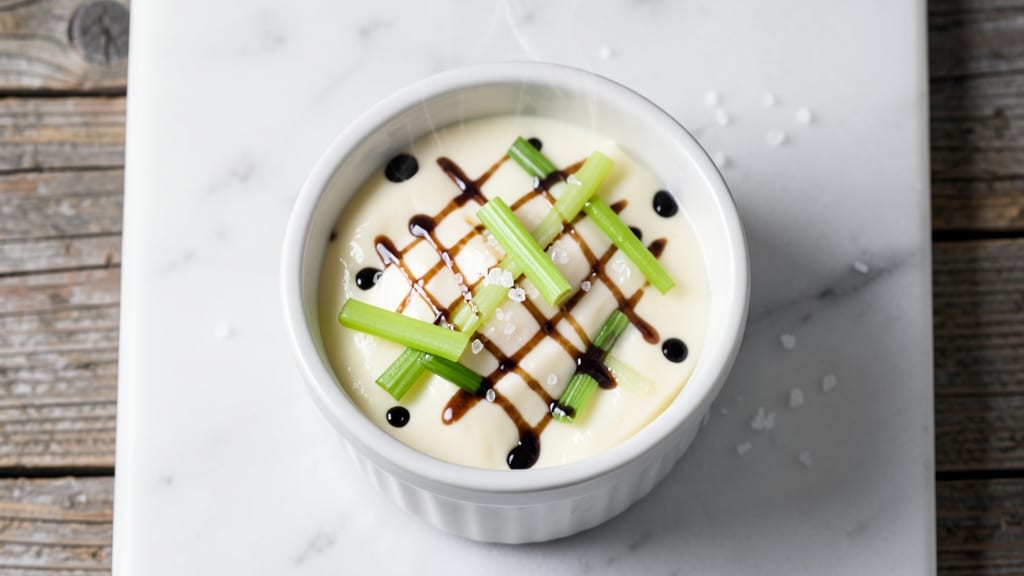
This steamed egg tofu Chinese recipe delivers the delicate, cloud-like texture that makes it a dim sum star—silky yolk centers wrapped in a tender, eggy envelope.
The secret lies in the precise batter mixture and gentle steaming process, transforming simple ingredients into a dish that feels luxurious yet remains approachable for home cooks. I've perfected this vegetarian classic after years of experimenting with ratios and steaming times, ensuring every bite achieves that signature melt-in-your-mouth consistency.
The recipe begins with a smooth batter of eggs, water, and a touch of salt, whisked to ribbon-like consistency before being poured into a hot steamer. As it cooks, the egg transforms into a delicate, translucent tofu with a custardy yolk center—no artificial additives required.
The key technique is maintaining even heat and proper steaming time, which prevents the tofu from becoming rubbery or breaking apart. This method preserves the dish's traditional appeal while making it accessible for modern kitchens.
What makes this dish truly special is its versatility. Serve the steamed egg tofu with a drizzle of light soy sauce, a sprinkle of black vinegar, and a scattering of crisp celery for that classic dim sum crunch.
The contrast between the silky tofu and crisp vegetables creates a textural experience that's both satisfying and balanced. It's equally at home as a light lunch, a dim sum appetizer, or even a sophisticated vegetarian main course.
The beauty of this recipe lies in its simplicity—just five core ingredients yet a result that feels restaurant-quality. No special equipment beyond a steamer (or even a colander over boiling water) is needed, making it perfect for home cooks who want to recreate this beloved Chinese dish without the fuss.
Once mastered, you'll find yourself reaching for this recipe whenever you crave something delicate yet deeply flavorful.
Ingredients for steam egg tofu chinese
Five ingredients transform into restaurant-quality egg tofu with cloud-like texture and perfect yolk centers.
| Ingredient | Amount | Notes |
|---|---|---|
| Large Eggs 🥚 | 8 whole | Room temperature for even cooking |
| Water 💧 | ½ cup | Distilled or filtered preferred |
| Diamond Crystal Kosher Salt 🧂 | ¼ tsp | Fine grain for even dissolution |
| Light Soy Sauce 🥢 | ¼ cup | For serving, not cooking |
| Black Vinegar 🍶 | 1 tbsp | For serving, optional |
| Celery Stalks 🧅 | 2 whole | Thinly sliced for crunch |
| Sesame Oil 🫒 | 1 tsp | Toasted for aroma, for serving |
| Neutral Oil 🫒 | 1 tbsp | For greasing steamer basket |
The eggs are the foundation—use large, fresh eggs with vibrant yolks for optimal texture. Room temperature eggs whisk to ribbons more easily, preventing lumps in the delicate batter. For the best results, source eggs from a trusted producer like Pete and Gerry's or your local farmers market, where you can verify freshness by checking the carton date. The water should be distilled or filtered to avoid mineral buildup that could interfere with the delicate steaming process. Kosher salt is essential here; Diamond Crystal dissolves more easily than table salt, ensuring even flavor distribution throughout the tofu.
No light soy sauce? Tamari or regular soy sauce at half the amount works in a pinch, though the lighter color won't match traditional presentation. Black vinegar can be omitted entirely if unavailable, but it adds that signature tang that balances the eggy richness. For the celery, fresh organic stalks provide the crispest texture—avoid pre-sliced celery from the bag, as it loses crunch quickly. If you're short on time, quick-pickled celery (1 tbsp vinegar, pinch of sugar, 10 minutes) enhances flavor without extra prep. The sesame oil should be light toasted**—heat 1 tbsp in a dry pan for 30 seconds until fragrant, then cool before using.
Prep the steamer basket ahead of time by lightly greasing it with neutral oil—this prevents sticking and makes unmolding effortless. Store any leftover batter in an airtight container in the fridge for up to 24 hours, though fresh batter yields the best texture. The finished egg tofu keeps in the fridge for 3 days when stored properly in a sealed container, though it's best enjoyed immediately for peak tenderness. For serving, assemble components just before eating to maintain that satisfying crunch from the celery.
Why You'll Love This Recipe
- No-Fuss Technique: I swear by the simplicity of this—just eggs, water, and a steamer basket. No fancy gadgets, no last-minute grocery runs. The magic happens while you sip tea or scroll through your phone.
- Umami Magic: That balance of light soy and black vinegar? It’s the kind of flavor that makes you pause mid-bite. Salty, tangy, and just a little funky—like a hug for your taste buds.
- Lunchbox Hero: Between us, this is my go-to for packed lunches. Cold or at room temp, it holds up perfectly. My kids still beg for it even after school—proof it’s a winner.
- Budget Win: Eggs are cheap, and this recipe stretches them far. I make a big batch on Sundays and eat it all week. No waste, no stress, just consistent satisfaction.
Step-by-step instructions for silky steamed egg tofu
Mastering this delicate technique transforms ordinary eggs into ethereal, cloud-like tofu with perfect texture.
Prepare the Steaming Equipment
Grease a heatproof bowl or ramekin with the 1 tablespoon neutral oil, coating the interior thoroughly. This prevents sticking and ensures clean release of the finished tofu. I use a small, shallow bowl about 3 inches in diameter—just enough to hold the eggs without overflowing during steaming. Place the bowl in your steamer basket, ensuring it sits above the water level to prevent contact with steam.
Bring 0.5 cup water to a gentle simmer in the steamer base. The water should never boil vigorously—this creates too much direct heat. Cover the steamer and let the water heat up for 5 minutes to stabilize the temperature before adding the eggs. This preheating step guarantees even cooking and prevents cracking during the process.
Whisk Eggs with Precision
Crack the 8 whole large eggs into a separate bowl and whisk vigorously until the yolks and whites are completely blended. I use a fork for this step—it creates a finer texture than a whisk. The mixture should be uniform with no visible streaks of white or yolk. Add the 0.25 teaspoon Diamond Crystal kosher salt and whisk again until fully dissolved. The salt enhances flavor and helps stabilize the egg mixture.
Pour the egg mixture into the prepared oiled bowl. Tap the bowl gently on the counter to release any air bubbles that may have formed. These bubbles can cause uneven cooking or cracks in the finished tofu. The eggs should fill the bowl to about ¾ capacity—this allows for expansion during steaming without overflowing.
Steam at Gentle Heat
Place the bowl in the steamer basket and cover immediately. Steam over medium-low heat for 12-15 minutes. The key here is patience—too much heat causes cracking, while too little results in undercooked centers. You'll know it's ready when the top appears set but still slightly jiggly in the center, with a pale, translucent appearance. The edges should pull away cleanly from the bowl when tested with a spatula.
I like to check at the 12-minute mark—if the center still wobbles slightly when the bowl is gently shaken, it needs a few more minutes. Never lift the lid during steaming; the sudden temperature drop can cause the tofu to collapse or crack. If you see condensation on the lid, your heat is too high—reduce it immediately.
Prepare Serving Components
While the tofu steams, thinly slice the 2 whole celery stalks on a bias cut for maximum crunch. Heat the 1 teaspoon sesame oil in a small pan over low heat until fragrant—this should take about 30 seconds. Remove from heat immediately to prevent burning. In a small bowl, combine the 0.25 cup light soy sauce with the 1 tablespoon black vinegar (if using) and mix well. This sauce should be ready to drizzle just before serving.
The celery should be sliced into ¼-inch thick pieces for optimal texture contrast. The sesame oil should be toasted but not colored—just aromatic. The soy-vinegar mixture should be well combined but still slightly thick. All components should be prepared and ready to assemble immediately after the tofu finishes steaming.
Serve Immediately for Optimal Texture
Once the tofu is perfectly set, carefully invert it onto a serving plate. It should release cleanly from the bowl with minimal resistance. Cut into 4 equal portions using a sharp knife. The interior should be completely set but still tender, with a delicate, almost custard-like texture. Serve each portion immediately with a drizzle of the soy-vinegar mixture and a sprinkle of toasted sesame oil.
Arrange the thinly sliced celery around the tofu for both visual appeal and textural contrast. The celery should be served raw to maintain its crispness. Each bite should deliver the silky, cloud-like texture of the tofu contrasted with the sharp crunch of celery and the savory tang of the soy-vinegar sauce. This dish is best enjoyed immediately after preparation while the tofu remains at its peak tenderness.
Pro Tips For Making Steam Egg Tofu Chinese
- Crack Eggs Cold: I learned this the hard way—room-temperature eggs slide into the water like greased lightning, but cold eggs stay put. Tap them gently into the pot with the flat side down, then add a splash of hot water to help them settle evenly.
- Salt the Water Light: Diamond Crystal is saltier than table salt, so use half the amount called for in most recipes. Too much salt makes the egg curds dense and chewy instead of silky. Trust me, you’ll taste the difference.
- Stir Once, Then Stop: The moment you see the eggs start to set (about 30 seconds in), give the pot one gentle stir with a wooden spoon. After that, leave them alone—poking or stirring breaks the delicate curds into rubbery chunks.
- Finish with Vinegar Heat: After steaming, pour in the black vinegar and soy sauce while the eggs are still piping hot. The acid cuts through the richness and brightens the flavor, but only do this off the heat—adding it too early makes the curds watery.
Make-ahead tips for this recipe
Prep Ahead Strategy
Prepare the batter the night before for foolproof results. Whisk the 8 eggs, 0.5 cup water, and 0.25 tsp salt together and store in an airtight container in the fridge.
The mixture will thicken slightly overnight, making it easier to pour. Just whisk again briefly before using to restore smoothness. 💫
Steamer Prep Shortcut
Set up your steamer basket ahead of time by lightly greasing it with 1 tbsp neutral oil. Place it in the steamer base and fill with 0.5 cup water, then cover and let it heat up while you finish other prep.
This eliminates last-minute setup stress and ensures everything is ready when the batter is. The water should be simmering gently by the time you're ready to steam.
Celery Prep Hack
Slice the 2 celery stalks into ¼-inch thick pieces and store them in a sealed container with a damp paper towel. This preserves their crunch for up to 24 hours in the fridge.
For extra flavor, toss with ½ tsp sugar and 1 tsp rice vinegar—let it marinate for 10 minutes before serving for a quick pickled effect.
Sauce Assembly
Mix the 0.25 cup light soy sauce and 1 tbsp black vinegar in a small bowl and store it in the fridge. This sauce keeps for 5 days and can be used for other dishes too.
Toast the 1 tsp sesame oil just before serving to maintain its fresh aroma—heat it in a dry pan for 30 seconds until fragrant but not browned.
Make-Ahead Serving
For meal prep, steam the egg tofu ahead of time and store it in an airtight container in the fridge for up to 3 days. Reheat gently in the steamer for 3-4 minutes to restore its tenderness.
Assemble with prepped celery and sauce just before eating to maintain the perfect texture contrast. This makes it ideal for busy weeknights or dim sum gatherings.
Freezer Option
For longer storage, steam the tofu, cool completely, then wrap each portion tightly in plastic wrap followed by aluminum foil. Freeze for up to 1 month. To serve, thaw in the fridge overnight, then steam again for 5 minutes to refresh the texture.
The flavor remains intact, though the texture will be slightly firmer than fresh.
Nutrition facts
Frequently asked questions
Why does my egg tofu crack during steaming?
The most common causes are either too much heat or lifting the lid while steaming. Use medium-low heat and maintain a gentle simmer—never let the water boil vigorously. Also, avoid opening the lid during cooking, as the sudden temperature change causes cracks. If you see condensation on the lid, reduce the heat immediately.
Can I make egg tofu without a steamer?
Use a colander or metal strainer over a pot of simmering water. Just ensure the water doesn't touch the bowl—place it on a folded kitchen towel or rack to elevate it. The key is maintaining gentle, indirect heat for the same 12-15 minutes as with a steamer.
What’s the best way to serve egg tofu beyond the classic soy-vinegar-celery combo?
Try it in a vegetarian dumpling with shiitake mushrooms and scallions, or slice it into a cold noodle salad with sesame dressing. For a spicy twist, drizzle with chili crisp oil and scatter with toasted sesame seeds. The delicate texture works beautifully in both hot and cold dishes.
How do I fix egg tofu that’s too rubbery?
Rubbery texture usually means it was overcooked. If it’s slightly underdone, steam for 1-2 more minutes—but don’t overdo it. For already rubbery tofu, try reheating it in a lightly oiled pan over low heat for 30 seconds while adding a splash of water to steam it gently. The texture won’t fully reverse, but it’ll soften slightly.
Can I substitute water with another liquid in the batter?
Stick with water for the best texture—it creates the signature silky consistency. However, you could replace up to ¼ cup with vegetable broth** for subtle flavor, but test the batter first. Avoid milk or other dairy, as it can make the tofu denser and less translucent.