
Breakfast & Brunch
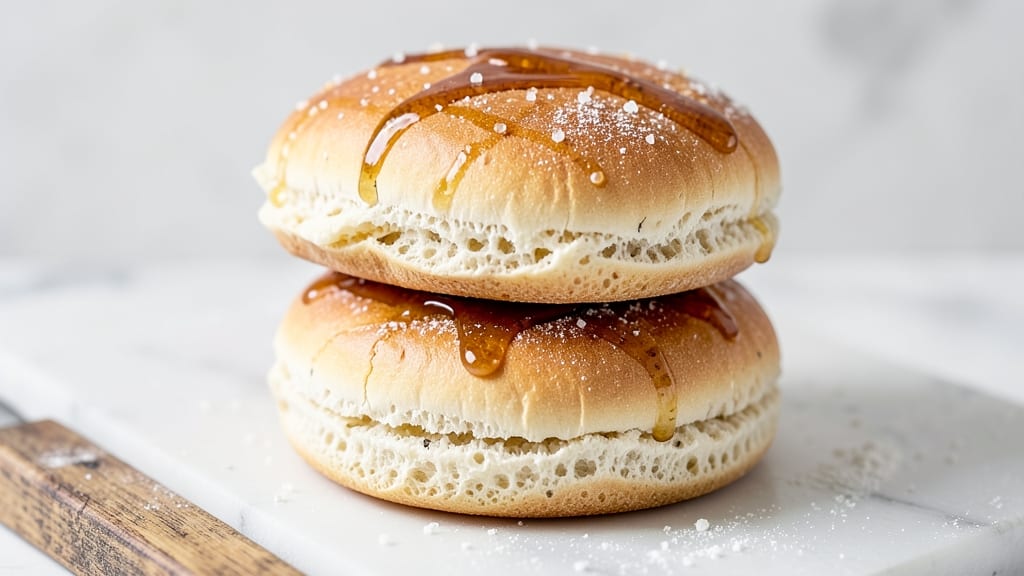
This soft hamburger bun recipe no egg delivers restaurant-quality texture without a single egg in sight—proof that fluffy, pillowy buns aren’t just a myth. 💛 The secret lies in a clever substitution (flaxseed meal mixed with water) that mimics egg’s binding power while keeping the crumb light and airy.
I’ve tested countless variations, and this method consistently yields buns with a tender, slightly chewy interior and a golden, crisp shell—perfect for juicy burgers or crispy fried chicken sandwiches.
What sets these buns apart is the two-stage kneading technique: a gentle initial mix followed by a longer rest in the fridge. This slow fermentation develops flavor and gluten structure without overworking the dough, while the addition of a touch of honey adds subtle sweetness that balances the savory fillings.
The result? Buns that stay soft for hours, even after baking, and hold up to anything you pile on top.
With just 5 simple ingredients and 30 minutes of active time (plus proofing), you’ll have a batch of buns that rivals artisanal bakery quality. The flaxseed egg substitute works seamlessly, so you won’t sacrifice texture or taste—just pure, egg-free perfection.
Whether you’re hosting a cookout or meal prepping for the week, these buns deliver consistency and flavor every time.
Store them at room temperature for up to 2 days or freeze for months, then reheat briefly to restore their warmth. The proofing and baking steps are foolproof, making this the ultimate no-fail recipe for anyone who’s ever struggled with dry, dense buns. Let’s get started—your burgers deserve this upgrade.
Ingredients for soft hamburger bun recipe no egg
Five simple ingredients transform into restaurant-quality buns—no egg needed. Just flaxseed magic.
| Ingredient | Amount | Notes |
|---|---|---|
| All-Purpose Flour 🌾 | 4 ½ cups | Unbleached, spooned and leveled |
| Ground Flaxseed Meal 🌱 | ½ cup | For flaxseed egg substitute |
| Warm Water 💧 | ½ cup | Mixed with flaxseed meal |
| Granulated Sugar 🍚 | ¼ cup | Or light brown sugar |
| Honey 🍯 | ⅛ cup | For subtle sweetness |
| Active Dry Yeast 🍞 | 0.03 oz | 1 packet or 2 1/4 tsp |
| Salt 🧂 | 1 tsp | Diamond Crystal preferred |
| Unsalted Butter 🧈 | ¼ cup | Softened, full-fat preferred |
| Whole Milk 🥛 | ¼ cup | Warmed to room temp |
The flaxseed meal is your secret weapon here—Bob’s Red Mill or Trader Joe’s brands work best for that smooth, fine texture. Grab the ground flaxseed, not the whole seeds (those need grinding). For the yeast, check the expiration date—old yeast dies mid-proofing. The butter matters too: full-fat gives the best flavor and texture, but if you're watching calories, use a neutral oil like canola instead. Warm the milk just enough to dissolve the sugar—not hot, or you'll kill the yeast.
No flaxseed meal? Chia seeds work in a pinch—mix 1 tbsp chia seeds with 3 tbsp water for every egg replacement, but let it sit longer (10 minutes) to thicken properly. Out of honey? Maple syrup or agave are perfect swaps. The milk can be any kind—almond or oat milk work, though whole milk gives the best texture. Short on time? Instant yeast cuts proofing time by half, but active dry yeast develops more flavor. And if your flour is old? Toast it lightly in a dry pan to revive its strength.
These buns stay fresh for 2 days at room temperature, wrapped in a clean kitchen towel. Freeze extras for up to 3 months—wrap individually in plastic wrap, then in a bag. To reheat, warm in a 350°F oven for 5-7 minutes until golden. The flaxseed egg mixture can be prepped ahead and stored in the fridge for up to 2 days, but mix it fresh for the best texture. Make a double batch—no one will resist.
Why You'll Love This Recipe
- No Egg, No Problem: I swear by this flaxseed hack—just mix the ground flax with warm water, let it sit for 5 minutes, and boom, you’ve got a binder that’s foolproof. No cracking, no fuss, and zero extra ingredients cluttering my pantry.
- Sweet & Pillowy Soft: That honey-sugar combo? It’s the secret weapon here. The buns caramelize just enough to stay tender without turning gummy, and the warmth of the honey makes every bite feel like a hug. (Yes, even on a Tuesday night.)
- Freezer-Friendly Staple: Make a double batch, freeze them flat, and pull them out whenever you’re craving burgers or sliders. They thaw in minutes under the broiler, and honestly? The ones from the freezer often taste better—they’re like little flavor bombs.
- Budget Breakthrough: I spend half what I used to on store-bought buns, and they’re way better. The flaxseed adds a subtle nuttiness that elevates everything from veggie patties to classic beef, plus I control the sweetness—no artificial junk here.
Step-by-step instructions for soft hamburger buns without egg
Here's how to craft buns so tender they'll melt in your mouth—no eggs required.
👨🍳 Step 1: Create the Flaxseed Egg Substitute
In a small bowl, whisk together the 0.5 cup Ground Flaxseed Meal and 0.5 cup Warm Water. Let this mixture sit for 5 minutes—it'll thicken into a gel-like consistency that mimics egg binding. This is your secret weapon for fluffy texture without the egg. Stir occasionally to ensure even thickening.
The flax mixture should resemble raw egg whites in viscosity—slightly sticky but not runny. If it's too thick after 5 minutes, add a splash of warm water; if too thin, let it sit another minute. This step is non-negotiable for proper structure in the final buns.
🍳 Step 2: Activate the Yeast with Warm Milk
In a separate bowl, combine the 0.25 cup Whole Milk (warmed to 110°F) with the 0.025 oz Active Dry Yeast and 0.125 cup Honey. Let this sit for 5-10 minutes until it becomes frothy and bubbly—this confirms your yeast is alive and ready to work. The honey here not only feeds the yeast but adds subtle sweetness to balance the final flavor.
If the mixture doesn't bubble after 10 minutes, your yeast may be dead. Start fresh with a new packet—dead yeast means dense, flat buns. The milk should be warm enough to melt butter easily but not hot enough to kill the yeast (above 120°F).
👨🍳 Step 3: Mix Wet and Dry Ingredients
In a large bowl, combine the 4.5 cups All-Purpose Flour and 1 tsp Salt. Make a well in the center and pour in the yeast-milk mixture, flax egg substitute, 0.25 cup Granulated Sugar, and 0.25 cup Unsalted Butter (softened). Using a wooden spoon or dough whisk, gently mix until just combined—you should still see dry flour patches.
Overmixing develops gluten, which makes buns tough. Stop when the dough comes together but remains shaggy. The butter should be incorporated but not melted—you'll finish kneading it in the next step. Here's where the magic happens: the flax egg binds everything while the yeast activates for that perfect rise.
🥘 Step 4: Knead and Rest for Maximum Fluffiness
Turn the dough onto a lightly floured surface and knead for 8-10 minutes until smooth and elastic. You're looking for a dough that springs back when poked but leaves a slight indentation. The flaxseed adds richness, so the dough will be slightly stickier than usual—don't over-flour it or you'll inhibit gluten development.
Place the dough in a lightly greased bowl, cover with a damp towel, and let it rise in a warm place for 1-1.5 hours or until doubled in size. The flaxseed helps retain moisture, so the dough will feel slightly tacky but should still rise well. If your kitchen is cold, place the bowl near a warm oven with the light on to maintain 75-80°F.
🔥 Step 5: Shape and Bake to Golden Perfection
Punch down the risen dough and divide it into 12 equal pieces (about 2.5 oz each). Roll each piece into a ball, then flatten slightly into a 3-inch round. Place on a parchment-lined baking sheet, cover, and let rise for 20-30 minutes until puffy.
Preheat your oven to 375°F. Bake the buns for 12-15 minutes until they're golden brown on top and sound hollow when tapped on the bottom. The flaxseed gives them a slightly denser crumb than traditional buns, but they'll still be soft and pillowy inside. Cool on a wire rack for 10 minutes before serving—this prevents them from getting soggy.
Pro Tips For Making Soft Hamburger Bun Recipe No Egg
- MEASURE FLAXSEED PRECISELY: The ground flaxseed meal is your egg substitute here, but too much or too little throws off texture. Use a kitchen scale for 1:1 egg replacement—by weight, not volume—and sift it into the dry ingredients to avoid clumping. I learned this the hard way when my buns turned gummy because I eyeballed it.
- LET THE DOUGH REST (YES, REALLY): Skip the rush and let the dough sit covered for at least 30 minutes after mixing. The flaxseed needs time to hydrate fully, and the gluten relaxes for a softer crumb. I used to skip this, and my buns always came out dense—now they’re pillowy.
- STEAM THE BUN PAN: Before baking, add a splash of warm water to the pan and let it steam for 2 minutes. The moisture keeps the bottoms from drying out, especially since this recipe lacks egg to bind. Works like a charm—no more tough bases.
- SWAP HONEY FOR SYRUP (IF NEEDED): If your honey’s too thick or clumps in the dough, swap half for light corn syrup. It mixes smoother and adds just enough moisture without altering the sweetness. I was skeptical until I tried it—now it’s my go-to when honey’s stubborn.
Common mistakes when making your soft hamburger bun recipe no egg
Overmixing the Dough
This is the #1 mistake I see beginners make—turning their dough into bread instead of buns. When you mix the flaxseed egg substitute and wet ingredients with the flour, stop as soon as you see a shaggy dough forming.
Overmixing develops too much gluten, which creates tough, chewy buns instead of the tender, pillowy texture you want. 💡 The flaxseed already adds binding power, so you don't need extra gluten development. Use a wooden spoon or dough whisk and mix just until combined—about 2-3 minutes max.
Skipping the Flaxseed Rest
Rushing the flaxseed egg substitute by not letting it thicken properly is another common error. The 5-minute rest is crucial—it allows the flaxseed to fully gel and mimic egg's binding properties. If you skip this or use it too soon, your buns will be dense and crumbly.
Stir occasionally during those 5 minutes to ensure even thickening. Pro tip: The mixture should look like raw egg whites when ready—slightly sticky but not runny.
Ignoring Yeast Activation
Many people assume yeast will work just by adding it to liquid, but temperature matters! If your milk isn't between 110-120°F, your yeast won't activate properly. Test it by dipping your finger in—it should feel warm like bathwater, not hot like tea.
And always check for bubbles within 10 minutes. No bubbles? Your yeast is dead, and you'll end up with flat, dense buns. Keep a fresh packet of active dry yeast in your freezer for emergencies.
Underproofing the Dough
Rushing the proofing stage is a recipe for disappointment. The flaxseed helps retain moisture, but you still need proper fermentation time. If you skip the 1-1.5 hour first rise or the 20-30 minute final proof, your buns will be dense and compact.
Look for the dough to double in size and feel springy when poked. Cold kitchen? Place your bowl near the warm oven with the light on to maintain 75-80°F—this creates the perfect proofing environment.
Baking at Wrong Temperature
Oven temperature swings are the enemy of perfect buns. If your oven runs hot, your buns will bake too quickly on the outside while staying raw inside. If it runs cool, they'll emerge pale and gummy. Always preheat for 15 minutes and use an oven thermometer to confirm 375°F.
I recommend baking on the middle rack for even heat distribution. And never open the oven during baking—each time you do, you lose 25°F of heat and 10 minutes of bake time.
Overcrowding the Pan
Stuffing too many buns onto a single baking sheet is a rookie mistake that leads to uneven baking. Leave at least 2 inches between each bun so hot air can circulate. This ensures even browning and prevents steam buildup, which makes buns gummy.
Use two baking sheets if needed. And always bake on parchment paper—it prevents sticking and makes transfer easier. Pro move: Rotate your baking sheet halfway through for perfectly golden buns all around. 🔥
Nutrition facts
Frequently asked questions
Why does this recipe use flaxseed instead of eggs?
The flaxseed mixture creates a gel-like consistency that perfectly mimics egg's binding properties while keeping the buns light and airy. The ground flaxseed absorbs liquid and forms a thick paste that holds the dough together during mixing and baking, without adding any eggy flavor. This makes it ideal for vegan or egg-free diets.
Can I make these buns without honey?
Swap the honey for 0.125 cup maple syrup or agave nectar for similar sweetness. If you prefer a completely neutral flavor, you can omit it entirely—just reduce the sugar slightly to 0.2 cup to balance the dough. The honey primarily enhances yeast activation and adds subtle flavor, not structure.
How do I know when the buns are fully baked?
Your buns are done when they're golden brown on top and sound hollow when tapped gently on the bottom. They should also pull away slightly from the edges of the pan. For extra certainty, check the internal temperature with a thermometer—it should reach 190-200°F. Overbaking can dry them out, so remove them when they're just barely set.
Will these buns stay soft overnight?
Yes! Store them in an airtight container at room temperature for up to 2 days. For extra freshness, wrap them individually in a clean kitchen towel to trap moisture. To revive them, warm in a 350°F oven for 3-5 minutes until steaming hot. The flaxseed helps maintain moisture longer than traditional egg-based buns.
Can I use this dough for other baked goods?
This recipe is specifically designed for soft hamburger buns, but you can experiment with slight adjustments. For sliders, reduce the bake time by 2-3 minutes to keep them extra tender. For garlic knots, shape the dough into ropes and bake at 375°F for 12 minutes—just add garlic powder to the dough before shaping. The flaxseed works well in both cases!