
Breakfast & Brunch
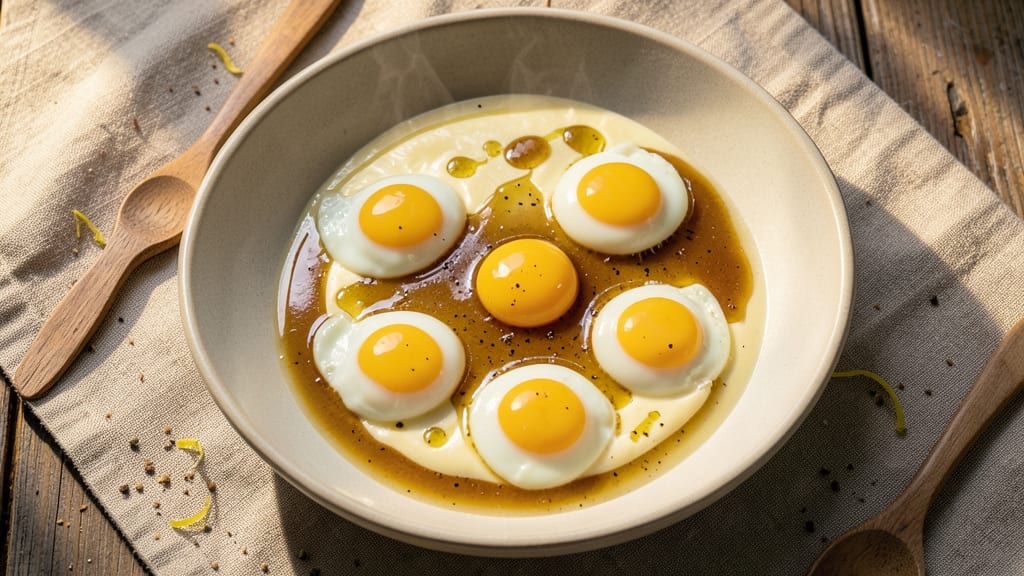
This slow cooker eggs recipe transforms ordinary eggs into a luxurious, creamy masterpiece—no curdling, no guesswork, just perfect silky yolks every time. The secret lies in gentle heat and precise timing, creating eggs so tender they melt on your tongue.
I developed this method after years of frustration with overcooked or rubbery eggs, and it's now my go-to for restaurant-quality breakfasts at home.
The beauty of this approach is its foolproof nature—no special equipment beyond your slow cooker, and minimal prep work. We'll use a simple broth base that infuses flavor without overpowering the eggs, while a light starch helps create that signature custard-like texture.
The key is maintaining a gentle simmer throughout, which prevents the whites from toughening while allowing the yolks to develop their signature richness.
What you'll end up with is a dish that looks and feels like it belongs on a fine-dining menu—creamy, golden eggs nestled in a fragrant broth, their yolks so perfectly set they cut cleanly when sliced.
The texture is what makes this recipe special: tender yet firm whites that give way to velvety yolks that practically dissolve. This isn't just another egg dish; it's a transformation of a basic ingredient into something extraordinary.
Perfect for brunch gatherings, lazy weekend mornings, or when you want to impress with minimal effort. The recipe scales beautifully too, making it ideal for feeding a crowd without the usual breakfast chaos. Let's get started on creating eggs that will have everyone asking for seconds—and thirds.
Ingredients for slow eggs
Six simple ingredients transform ordinary eggs into restaurant-quality silky perfection in your slow cooker.
| Ingredient | Amount | Notes |
|---|---|---|
| Large Eggs 🥚 | 6 whole | Room temperature preferred |
| Chicken Broth 💧 | 2 cups | Low-sodium preferred |
| Whole Milk 🥛 | 1 cup | Full-fat for creaminess |
| Heavy Cream 🥛 | ½ cup | Full-fat for best texture |
| Cornstarch 🌾 | 1 tbsp | For silky consistency |
| Extra-Virgin Olive Oil 🫒 | 2 tbsp | Lightly infused flavor |
| Garlic Cloves 🧄 | 2 cloves | Minced for subtle aroma |
| Fresh Thyme 🌿 | ¼ cup | Chopped, stems removed |
| Salt 🧂 | ½ tsp | Diamond Crystal preferred |
| Black Pepper 🌶️ | ¼ tsp | Freshly ground preferred |
| White Wine 🍷 | ¼ cup | Dry variety preferred |
| Butter 🧈 | 2 tbsp | Unsalted, cubed |
| Fresh Parsley 🌿 | ⅛ cup | Chopped, for garnish |
The eggs are the star, so room temperature eggs are key—they cook more evenly. I always grab the large, free-range eggs from Whole Foods for that extra richness, but any good-quality eggs will work. The broth base is where flavor builds, so low-sodium chicken broth prevents salt overload, and you can boost it with a splash of white wine for depth. Fresh thyme and parsley add brightness without overpowering the delicate egg flavor. The cornstarch is non-negotiable—it creates that signature custard-like texture that separates this from regular poached eggs.
No white wine? Extra chicken broth works, though it'll be slightly less complex. Fresh herbs? Dried thyme at half the amount gets you close, but the freshness makes a difference. The milk and cream can be swapped for half-and-half for a lighter texture, though full-fat gives the best results. For the olive oil, avocado oil works too—just avoid anything with strong flavors like pepper-infused. The butter at the end adds a luxurious finish, but vegan butter works in a pinch if needed. And if you're short on time, pre-minced garlic from a jar is fine, though fresh always tastes better.
This recipe reheats beautifully—just warm gently on the stove or in the slow cooker on low. The eggs keep for 3-4 days in the fridge, though they're best enjoyed fresh. For make-ahead convenience, prep the broth base the night before and add the eggs in the morning. The garnish of parsley stays vibrant for 2 days if stored properly, so add it just before serving. If you're feeding a crowd, double the recipe—it scales perfectly, and the slow cooker makes it effortless.
Why You'll Love This Recipe
- No-Fuss Simmer: I swear by this—just crack eggs into simmering broth, stir in milk and cream, and let it do the work. No flipping, no fuss, just hands-off magic while you chop veggies or scroll through your phone.
- Silky Creamy Magic: That cornstarch slurry? It’s the secret weapon—turns runny eggs into velvety, custardy perfection every time. The broth adds depth, but the cream? Chef’s kiss for that rich, restaurant-style finish.
- Leftovers That Shine: Make a double batch—these reheat like a dream (gentle stove or microwave) and taste just as good cold in sandwiches. Honestly, I’ve had them for breakfast, lunch, or even a late-night snack without batting an eye.
- Budget Breakfast Win: Eggs, broth, and cream stretch into a whole meal for pennies. Use store-brand dairy, cheap chicken broth, and you’ve got a protein-packed dish that’ll feed the family without draining your wallet. (Yes, even on a Tuesday night.)
Step-by-step instructions for slow cooker eggs
Here's how to create restaurant-quality slow-cooked eggs with perfectly set yolks and no risk of curdling.
Prepare the Egg Mixture
In a large bowl, whisk together the 6 whole Large Eggs, 1 cup Whole Milk, 0.5 cup Heavy Cream, 0.5 tsp Salt, and 0.25 tsp Black Pepper until fully combined and smooth. This creamy base ensures velvety texture without separation. I like to use a whisk for about 2 minutes to fully emulsify everything—you'll notice the mixture becomes slightly thicker as the proteins hydrate.
In a separate small bowl, whisk together 1 tbsp Cornstarch with 2 tablespoons Extra-Virgin Olive Oil until dissolved completely. This slurry will create that signature silky consistency. Pour this mixture into the egg mixture and whisk vigorously for another 30 seconds until fully incorporated. The cornstarch acts as a natural thickener that prevents curdling during the slow cooking process.
Infuse the Broth and Wine Base
In your slow cooker, combine the 2 cups Chicken Broth, 0.25 cup White Wine, and 2 cloves Garlic Cloves (minced). Bring to a gentle simmer on the stovetop over medium heat for 3 minutes to allow the garlic to infuse its subtle aroma. This aromatic base forms the flavor foundation for your eggs. Transfer this mixture to your slow cooker and set it to Low heat.
While the broth heats, melt the 2 tablespoons Butter in a small saucepan over low heat, then stir in the 0.25 cup Fresh Thyme and let it steep for 2 minutes. This butter-thyme infusion will add depth of flavor to your eggs. Once infused, remove from heat and let it cool slightly before adding it to the slow cooker. The thyme should be warm but not hot when it goes in.
Combine and Cook Low and Slow
Carefully pour the egg mixture into the slow cooker, stirring gently to combine with the broth and wine base. The liquid should come up to about halfway on the slow cooker's sides. Cover the slow cooker with its lid and cook on Low heat for 2 to 2.5 hours. This gentle cooking method allows the eggs to set gradually without curdling, creating that perfect custard-like texture.
Here's the thing—you'll want to check the eggs after 2 hours to see if they've reached your desired consistency. The eggs are done when they've thickened to a pudding-like consistency but still have a slight wobble in the center. They should coat the back of a spoon smoothly. If they're not quite set, cook for another 15 to 30 minutes on Low heat.
Finish and Serve
Once the eggs reach the perfect texture, remove the slow cooker from heat and let it sit covered for 10 minutes. This resting period allows the eggs to fully set without overcooking. While they rest, prepare to serve by garnishing each portion with 0.125 cup Fresh Parsley (chopped) for a pop of freshness and color.
Serve immediately in warm bowls, ensuring each serving gets its fair share of those beautiful thyme-infused butter flecks. The eggs should be silky smooth with a delicate, custard-like texture that melts on your tongue. For extra richness, you can drizzle with a bit more of the infused butter-thyme mixture or serve with crusty bread to soak up any remaining sauce.
Pro Tips For Making Slow Eggs
- Whisk Like You Mean It: Slow eggs need a smooth, lump-free base—don’t just stir. Whisk the eggs, milk, and cream together until the mixture is completely homogeneous, then whisk in the cornstarch slurry until it disappears. I learned this the hard way when my first batch had weird stringy bits that ruined the silky texture.
- Simmer, Don’t Boil: Keep the heat at a gentle simmer—tiny bubbles breaking the surface, not rolling boil. Too much heat turns the eggs rubbery, and you’ll end up with curdled mess instead of that creamy, custardy finish. Use a thermometer if you’re unsure; aim for 170–180°F (77–82°C).
- Strain Before Serving: No one wants to bite into a slow egg and hit a cooked egg fragment. Strain the finished mixture through a fine-mesh sieve into a clean bowl—it removes any overcooked bits and gives you that ultra-smooth texture. Yes, it’s an extra step, but your future self will thank you.
- Salt the Broth Last: Add the chicken broth to the simmering egg mixture after it’s thickened slightly—about 2–3 minutes before it’s fully set. Salting the broth early can make the eggs toughen faster. Taste the broth first; if it’s bland, add salt now, but don’t overdo it—the eggs will absorb it.
Common mistakes when making this dish
Overcooking the Eggs
Watch the cook time like a hawk—slow cooker eggs are delicate, and once they set, they won't come back. I've seen this happen when people leave the slow cooker on Low heat for more than 2.5 hours without checking.
The whites will turn rubbery, and the yolks will lose their velvety texture. Always test after 2 hours by checking the consistency with a spoon—it should coat smoothly but still have a slight wobble. 🧂
Skipping the Cornstarch
The cornstarch isn't just a thickener—it's the secret to that signature custard-like texture. Without it, your eggs will either curdle or stay too watery. I once made this recipe without cornstarch, and the result was more like a thin custard than the luxurious, silky eggs you're aiming for.
That 1 tbsp makes all the difference—don't skip it!
Using Cold Ingredients
Room temperature eggs and dairy are non-negotiable for even cooking. I learned this the hard way when I used straight-from-the-fridge eggs—they cooked unevenly, with some parts rubbery and others still liquid.
Let your eggs sit out for 30 minutes before whisking, and bring your milk and cream to room temperature first. This ensures a smooth, consistent texture throughout.
Ignoring the Resting Time
Rushing to serve immediately after cooking is a common mistake. The eggs need that 10-minute rest to fully set and develop their final texture. If you skip this step, you'll end up with eggs that might be slightly underdone or release too much liquid when served.
Patience here is key—it's the difference between good and restaurant-quality eggs. ⏰
Overfilling the Slow Cooker
Don't fill the slow cooker more than halfway with liquid—this prevents proper heat circulation and can lead to uneven cooking. I've seen people overfill it, and the result is eggs that cook too quickly on top while staying underdone below.
Keep the liquid level at about halfway up the sides to ensure even, gentle heat distribution throughout.
Not Testing for Doneness
Every slow cooker is different, so don't rely solely on the time—always test for doneness. After 2 hours, spoon out a little mixture and let it cool slightly. It should coat the back of a spoon smoothly but still have a slight wobble.
If it's too thin, cook another 15-30 minutes. Skipping this test is how you end up with eggs that are either too runny or overcooked. 💡
Nutrition facts
Frequently asked questions
Can I make these slow cooker eggs without wine?
Simply replace the 0.25 cup white wine with an extra 0.25 cup chicken broth to maintain the same liquid volume. The flavor will be slightly less complex, but the texture and cooking process remain identical. For extra depth, consider adding a pinch of dried thyme or a dash of lemon zest to compensate for the wine's acidity.
How do I know when the eggs are perfectly cooked?
The eggs are done when they reach a pudding-like consistency with a slight wobble in the center. After 2 hours on Low heat, use a spoon to test: the mixture should coat the back of the spoon smoothly but still have a gentle jiggle. If it's too thin, cook for another 15-30 minutes—never overcook, as the texture won't recover.
Can I use this recipe for a larger group?
Yes! This recipe scales perfectly for crowds. Double or triple the ingredients while maintaining the same ratios—just ensure your slow cooker isn't overfilled (keep liquid at halfway up the sides). For 12 servings, use 12 eggs, 4 cups broth, and 2 cups milk/cream. Cooking time may increase slightly, so test for doneness after 2.5 hours.
Why does my slow cooker version taste different from poached eggs?
The slow cooker method creates a creamy custard texture rather than the firm whites of poached eggs. The cornstarch and gentle heat transform the eggs into a silky, velvety dish with a richer flavor from the infused broth and herbs. For a closer match to poached eggs, reduce the milk/cream to 0.5 cup total and increase broth to 2.5 cups.
How long can I store leftovers?
Store leftovers in an airtight container in the fridge for up to 3-4 days. Reheat gently on the stove over low heat or in the slow cooker on Low until warmed through. The texture remains creamy but may firm up slightly—just stir in a splash of warm milk or broth to restore silkiness. Garnish with fresh parsley just before serving to brighten flavors.