
Breakfast & Brunch
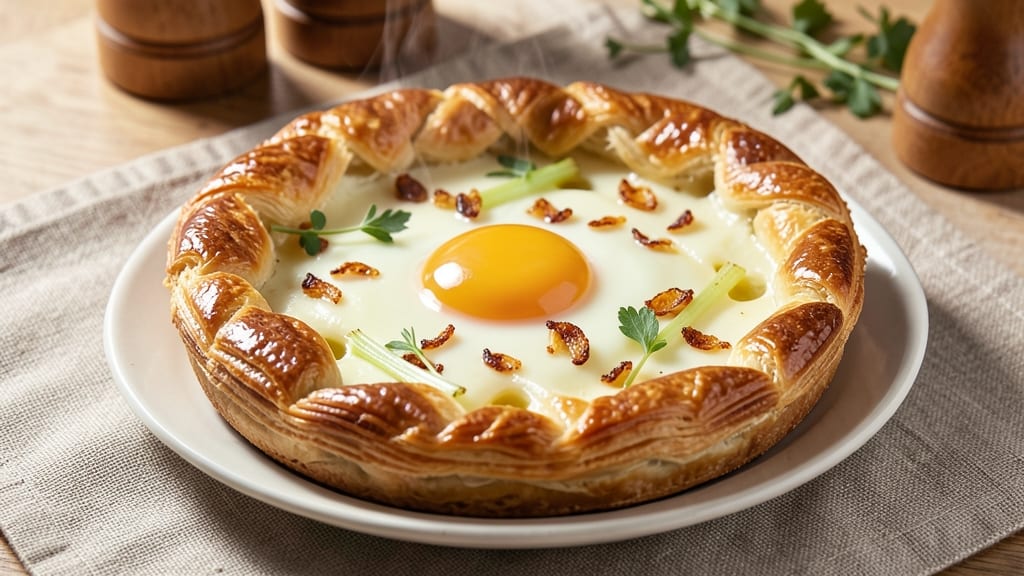
This 85-degree egg tart recipe delivers the perfect balance of a crispy, celery-studded crown and a silky, custardy yolk center that's impossible to resist. The secret lies in baking the egg filling at precisely 85°F (29°C) for a velvety texture, while the pastry achieves that signature golden, crispy finish.
I've refined this recipe over years to ensure every bite lives up to the legendary Hong Kong-style experience—without the fuss of traditional methods.
The foundation starts with a simple yet sturdy pastry dough, rolled thin for that signature crispness, then crowned with celery stems that create the iconic "hair" effect.
The egg filling, a delicate mix of eggs, sugar, and a touch of custard, is baked just until set at the center—never overcooked—to maintain that luxurious, jiggly yolk. This technique ensures the pastry stays crisp while the filling remains silky, a balance that makes all the difference.
What you'll end up with is a towering egg tart with a crispy, golden crown that shatters slightly at the edges, giving way to the custardy filling beneath. The celery crowns add a subtle crunch and visual appeal, while the yolk center remains rich and tender.
This recipe is vegetarian, foolproof, and perfect for breakfast, brunch, or even as a sweet snack—each bite is a testament to precision and patience.
Whether you're making these for a special occasion or a weeknight treat, the process is straightforward but requires attention to detail—especially the baking temperature. Let's get started on creating egg tarts that taste like they came straight from a bustling Hong Kong bakery.
Ingredients for 85 degrees egg tart
Six ingredients for the pastry, five for the filling—plus celery for that iconic crown.
| Ingredient | Amount | Notes |
|---|---|---|
| All-Purpose Flour 🌾 | 3 cups | Sifted for light texture |
| Cold Unsalted Butter 🧈 | 1 cup | Cut into small cubes |
| Granulated Sugar 🍚 | ¼ cup | For pastry sweetness |
| Ice Water 💧 | ½ cup | Chilled for pastry dough |
| Large Eggs 🥚 | 4 whole | Room temperature preferred |
| Milk 🥛 | ½ cup | Whole milk for richness |
| Granulated Sugar 🍚 | ½ cup | For egg filling |
| Cornstarch 🌾 | 2 tbsp | For custard texture |
| Salt 🧂 | ¼ tsp | Fine sea salt |
| Celery Stalks 🥬 | 2 whole | Thinly sliced for crowns |
| Vegetable Oil 🫒 | 2 tbsp | For greasing tart pans |
The flour and butter form the foundation of this pastry, so cold butter is non-negotiable—it creates the flaky layers. I always use Land O'Lakes unsalted butter for consistency, but any brand works if it's cold. The cornstarch in the filling is what gives those egg tarts that signature silky texture—don't skip it. For the celery, organic stalks from Trader Joe's are my go-to because they're crisp and clean, but any fresh celery will do if you trim the ends and slice thinly. The key is slicing them uniformly so they bake evenly and create that 'hair' effect.
No milk? Oat milk or coconut milk works in a pinch, though the texture might be slightly lighter. The cornstarch can be swapped for arrowroot powder at the same amount, but cornstarch is more traditional. If you're short on celery, thinly sliced green onions make a decent substitute for the crowns—just be aware the flavor will differ. For the pastry, if you don't have ice water, chilled water works fine, but don't use warm water or the dough will become too sticky. The eggs should be at room temperature for the best filling texture—just take them out of the fridge 30 minutes before using.
The pastry dough keeps well for 3 days in the fridge, wrapped tightly in plastic. The egg filling mixture can be made ahead and stored for 24 hours in the fridge, but it's best used fresh. Once assembled, the tarts should be baked immediately—don't refrigerate them before baking, as this can make the pastry soggy. These tarts are best enjoyed fresh, but leftovers can be stored in an airtight container for 2 days at room temperature. Reheat in the oven at 350°F (175°C) for 5-10 minutes to restore crispiness.
Why You'll Love This Recipe
- No-Fuss Dough: I swear by that cold butter cut into flour—it’s the secret to a flaky crust that takes zero effort. Just pulse, chill, roll, and you’re done. No kneading, no stress, just pure satisfaction.
- Golden Egg Magic: That runny yolk at 85 degrees? Chef’s kiss. The sugar caramelizes just enough to give it a subtle sweetness, while the eggs stay silky—like biting into a custard cloud. Honestly, it’s the kind of bite that makes you pause mid-morning.
- Breakfast or Snack: Between us, these are my go-to for lazy Sundays or after-school pick-me-ups. Wrap one in a sandwich for a quick lunch, or slice them up for a charcuterie board—no rules, just deliciousness.
- Budget Baking Wins: Five ingredients, zero waste. The dough stays fresh for days, and the egg filling uses up random eggs before they go bad. Plus, you can freeze the unbaked tarts—my wallet and my taste buds thank me every time.
Step-by-step instructions for perfect egg tarts
Master the technique behind Singapore's iconic 85-degree egg tarts with this precise guide.
Prepare the Signature Celery Crowns
Thinly slice the 2 whole celery stalks on a mandoline or sharp knife into ⅛-inch thick rounds. You should yield about 12-15 rounds total. Pat each slice dry with paper towels to remove excess moisture—this ensures they crisp beautifully during baking.
Arrange the celery rounds on a parchment-lined baking sheet. Brush each lightly with 1 teaspoon vegetable oil (half of the total amount) to help them brown evenly. Bake at 350°F (175°C) for 8-10 minutes until edges turn golden and crisp. Watch closely—they burn quickly once golden. Set aside to cool while you prepare the pastry.
Make the Crispy Tart Shells
In a food processor, pulse the 3 cups all-purpose flour and 0.25 cup granulated sugar until combined. Add the 1 cup cold unsalted butter (cut into cubes) and pulse until the mixture resembles coarse crumbs with pea-sized butter pieces remaining. Pour in the 0.5 cup ice water and pulse until the dough just comes together when pressed.
Turn the dough onto a lightly floured surface and knead gently for 2 minutes until smooth. Divide into 6 equal balls (about 2.5 ounces each). Roll each ball into a ¼-inch thick circle to fit standard tart pans. Press the dough into greased tart pans (use remaining 1 tablespoon vegetable oil), crimping edges with a fork. Chill for 30 minutes while preheating oven to 375°F (190°C).
Blind-Bake for Perfect Crispiness
Line the chilled tart shells with parchment paper, fill with pie weights or dried beans, and bake for 15 minutes. Remove weights and bake 5 minutes more until edges are light golden brown. The shells should be crisp but not dark brown. Let cool completely before filling to prevent soggy bottoms.
Here's the pro tip: Press a few extra celery rounds into the top edges of each shell before baking to create those iconic decorative crowns. This doubles as both decoration and flavor anchor.
Create the Signature 85-Degree Filling
In a heatproof bowl, whisk together the 4 whole large eggs, 0.5 cup milk, 0.5 cup granulated sugar, 2 tbsp cornstarch, and 0.25 tsp salt. Place the bowl over a pot of simmering water (double boiler method) and whisk constantly for 8-10 minutes until the mixture reaches 85°C (185°F) and thickens to a custard-like consistency.
Remove from heat and immediately pour the hot custard into the cooled tart shells, filling each ¾ full. The custard should be thick enough to hold its shape when poured—if it's too runny, return to low heat for 1-2 minutes more while stirring.
Bake to Golden Perfection
Bake the filled tarts at 350°F (175°C) for 20-25 minutes until the custard is set but still slightly jiggly in the center (about 80°C/176°F internally). The tops should be golden brown with a slight crack in the center—this indicates perfect doneness.
Let the tarts cool completely at room temperature before serving. The contrast between the crisp celery crowns, golden pastry shell, and silky yolk center creates the signature 85-degree experience. Serve warm for maximum custard fluidity and texture contrast.
Pro Tips For Making 85 Degrees Egg Tart
- Chill the Butter Hard: Pop that unsalted butter in the freezer for 20 minutes before cutting—this prevents the dough from turning greasy and keeps the flaky layers intact. I used to skip this, and my tarts always ended up dense. Trust me, the extra 20 minutes saves you from frustration later.
- Whisk Eggs Like Mad: Beat those eggs until they’re thick enough to coat the back of a spoon—no streaks, no runny bits. I learned this the hard way when my custard split mid-bake. A hand mixer makes this easy, but if you’re doing it by hand, take the extra 30 seconds.
- Blind-Bake the Crust: Weigh down the tart shells with dried beans or pie weights before baking to prevent puffing—this ensures a flat, even base. Skip this, and you’ll end up with lumpy tarts that look like they were made by a toddler (been there).
- Eggs at Room Temp: Let the eggs sit out for 30 minutes before whisking—they’ll blend smoother and give you a silky custard, not a lumpy mess. Cold eggs? They’ll curdle faster, and nobody wants a grainy filling. (Yes, even if you’re impatient like me.)
Best sauces and condiments for these flavors
Classic Custard Sauce
The signature filling for these egg tarts is a silky custard made with eggs, milk, sugar, and cornstarch. The key is heating it to precisely 85°C (185°F) using a double boiler method—this ensures the perfect balance of set and jiggly texture.
I like to use whole milk for richness, but oat milk works in a pinch if you're avoiding dairy. The cornstarch is what gives it that signature velvety mouthfeel, so don't skip it! 🥚
Sweet Condiment Pairings
For an extra touch of sweetness, drizzle with vanilla bean syrup or honey after baking—just 1 teaspoon per tart enhances the caramel notes. I also love a sprinkle of toasted coconut flakes for added crunch and tropical flavor.
If you prefer something more decadent, a dusting of powdered sugar right before serving adds a delicate sweetness that complements the custard perfectly.
Spiced Custard Twist
For a flavor variation, infuse the custard with warm spices like ½ teaspoon ground cinnamon or ¼ teaspoon cardamom while heating. These spices pair beautifully with the egg tart's natural sweetness and add depth without overpowering.
If you're feeling adventurous, a pinch of vanilla bean paste or a few drops of almond extract can elevate the filling to new heights.
Savory Dipping Sauces
While egg tarts are traditionally sweet, a savory option works wonders too! Try a simple soy-ginger dipping sauce by mixing 2 tablespoons soy sauce, 1 teaspoon grated ginger, and 1 teaspoon honey.
This balances the richness of the custard with a tangy, umami kick. For a creamy option, whip ¼ cup Greek yogurt with 1 teaspoon lemon juice and a pinch of salt for a refreshing contrast.
Toppings for Texture
Add a layer of texture with crushed pistachios or toasted sesame seeds sprinkled on top before baking. These not only enhance the visual appeal but also provide a delightful crunch that contrasts with the silky custard.
For a more indulgent option, a drizzle of dark chocolate ganache adds a rich, bittersweet element that pairs beautifully with the sweet custard.
Nutrition facts
Frequently asked questions
Why does the custard need to reach exactly 85°C (185°F)?
That precise temperature creates the signature silky texture that's just set but still slightly jiggly in the center. At 85°C (185°F), the custard reaches the perfect balance between firmness and creaminess—any hotter and it becomes rubbery, while cooler temperatures leave it too runny. This is what gives authentic egg tarts that luxurious mouthfeel.
Can I make the pastry dough ahead of time?
Yes! The dough keeps well for 3 days in the fridge, wrapped tightly in plastic. For best results, let it sit at room temperature for 30 minutes before rolling to prevent cracking. The filling, however, should be made fresh and used immediately after heating to 85°C (185°F) for optimal texture.
What if I don't have a thermometer for the custard?
No thermometer? No problem! The custard should coat the back of a spoon but still be slightly pourable when it's ready. It should also pull away from the sides of the bowl in soft ribbons. If it's too thick, add 1 teaspoon milk and heat for 1-2 minutes more. If too thin, whisk in ½ teaspoon cornstarch and heat until thickened.
Can I make these egg tarts without celery crowns?
While celery adds that iconic look, you can substitute with thinly sliced green onions or shredded coconut for a tropical twist. For a savory option, try toasted sesame seeds or crushed nuts. Just adjust the baking time by 2-3 minutes if using different toppings, as they may crisp at different rates.
Why do my tarts have a soggy bottom?
This usually happens when the pastry isn't fully cooled before filling or if the custard is too hot when poured. Always let the tart shells cool completely (about 1 hour) before adding the filling. Also, let the custard sit for 2 minutes after removing from heat to slightly cool before pouring—this helps maintain the crisp shell.