
Appetizers
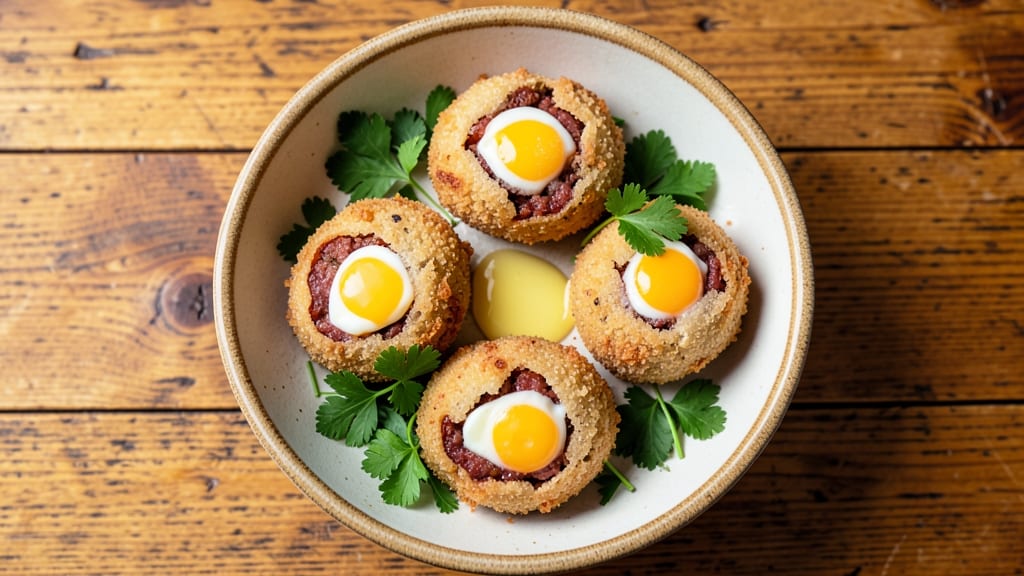
The original Scotch egg recipe delivers a perfect balance of textures—crispy panko crown, juicy sausage meat, and a creamy yolk that bursts with every bite. This classic dish has been a pub favorite for generations, and mastering it at home is simpler than you might think.
The key lies in the technique: wrapping the sausage and egg securely before coating it in seasoned breadcrumbs for that signature golden crust.
What sets this recipe apart is the traditional method of deep-frying, which creates an irresistible crunch while keeping the inside perfectly cooked. You’ll need just a few simple ingredients—ground sausage, eggs, breadcrumbs, and seasoning—but the results are anything but basic.
The panko crown should be thick enough to stay intact when biting in, while the sausage filling stays tender and flavorful.
By the time you pull these from the hot oil, you’ll have Scotch eggs that are crispy on the outside and juicy on the inside, with that rich, savory yolk waiting to surprise you.
The aroma alone will have everyone gathering around the table, and the first bite is always the best part. This is the recipe that made Scotch eggs a timeless classic.
Perfect for appetizers, game day, or a hearty snack, these Scotch eggs are easy to make in batches and reheat beautifully. Let’s get started on creating your own version of this beloved dish—just like the originals from Scotland’s pubs.
Ingredients for scotch eggs original
Pantry staples meet pub perfection—just a handful of ingredients for Scotch eggs that taste like Scotland.
| Ingredient | Amount | Notes |
|---|---|---|
| Ground Pork Sausage 🥓 | 1 lb | High-quality, finely ground |
| Large Eggs 🥚 | 4 whole | Room temperature for best results |
| Panko Breadcrumbs 🍞 | 2 cups | Light and crispy preferred |
| All-Purpose Flour 🌾 | ½ cup | For dusting work surface |
| Unsalted Butter 🧈 | 2 tbsp | Melted for sausage binding |
| Fresh Parsley 🌿 | ¼ cup | Finely chopped, for garnish |
| Garlic Cloves 🧄 | 2 cloves | Minced for sausage flavor |
| Onion Powder 🧅 | 1 tsp | For sausage seasoning |
| Ground Black Pepper 🌶️ | ½ tsp | Freshly ground for heat |
| Kosher Salt 🧂 | 1 tsp | For sausage seasoning |
| Vegetable Oil 🫒 | 3 cups | For deep-frying (high smoke point) |
| Beaten Eggs 🥚 | 1 whole | For egg wash coating |
The sausage is where flavor happens. Ground pork gives the best texture, but beef or chicken works too—just don’t skimp on quality. I grab mine from Costco or the butcher counter at Whole Foods (they grind it fresh). Mix in that minced garlic and onion powder—it’s non-negotiable for that classic taste. Pro tip: Chill the sausage mixture 30 minutes before wrapping—it holds together better. And trust me, the freshly ground black pepper makes all the difference.
No panko? Regular breadcrumbs toasted in a dry pan work in a pinch, but you’ll lose that signature crunch. Short on parsley? Fresh dill or chives add a nice pop. The eggs should be room temperature—cold ones crack when fried. For the oil, vegetable or canola is perfect (high smoke point), but peanut oil works too. And if you’re nervous about deep-frying, bake them at 400°F for 25 minutes—they’ll still be delicious (just less crispy).
These keep for 3 days in the fridge if you can resist eating them all. Freeze them uncooked for up to 3 months—just fry from frozen. Reheat in the oven at 375°F for 15 minutes to revive that crunch. I always make a double batch—they disappear fast. And if anyone asks, the yolk is worth the wait—creamy, rich, and totally worth the mess.
Why You'll Love This Recipe
- The secret’s in the layers: juicy pork sausage (mixed with garlic and black pepper) wrapped around a runny yolk, then shielded by that buttery panko crust. It’s like biting into a warm, savory hug—crunch gives way to creamy, then that first taste of perfectly seasoned sausage. Honestly, the first time I cracked one open, I nearly dropped the plate.
- Crispy in Minutes: I’m talking actual hands-off time here—just 4-5 minutes of frying at 350°F, and you’ve got that golden panko armor locked in. No babysitting the stove; the oil does all the work while you prep the parsley garnish or grab a drink. That’s the kind of recipe that makes you feel like you’ve earned a snack break.
- Sausage-Yolk Obsession: The secret’s in the layers: juicy pork sausage (mixed with garlic and black pepper) wrapped around a runny yolk, then shielded by that buttery panko crust. It’s like biting into a warm, savory hug—crunch gives way to creamy, then that first taste of perfectly seasoned sausage. Honestly, the first time I cracked one open, I nearly dropped the plate.
- Game for Any Gathering: These are my go-to for tailgates, potlucks, or even a lazy Sunday brunch. Serve them warm with mustard or piccalilli for dipping, and suddenly you’re the hero of the spread. (Yes, even on a Tuesday night.) The panko stays crisp, the yolk stays glorious, and they’re hearty enough to feed a crowd without breaking the bank.
Step-by-step instructions for Scotch eggs original recipe
Here's how to build the perfect Scotch egg—juicy pork sausage center, runny yolk, and a shield of crispy panko armor.
Prepare the Sausage Filling
In a large bowl, combine the 1 lb ground pork sausage, 2 tbsp melted unsalted butter, 2 cloves minced garlic cloves, 1 tsp onion powder, 1 tsp kosher salt, and 0.5 tsp ground black pepper. Mix gently with your hands until just combined—you want the sausage to stay slightly chunky for maximum texture.
Here's the thing—don't overwork the mixture. Press it together just enough to form a cohesive mass, but leave some texture. The sausage should hold its shape when packed into the eggs. If it feels too loose, add 1-2 tablespoons of the all-purpose flour to help bind it.
Assemble the Eggs
Crack each of the 4 whole large eggs into a separate bowl, then carefully separate the yolks from the whites. Keep the yolks whole and place them in the center of a plate. Gently whisk the egg whites until they form soft peaks, then set aside.
Take one of the sausage mixtures and shape it into a 2-inch diameter oval, about 1 inch thick. Place a yolk in the center, then wrap the sausage around it completely, sealing it like a little sausage burrito. Repeat with the remaining eggs and yolks. This is where the magic happens—proper sealing ensures that creamy yolk stays perfectly centered when fried.
Create the Crispy Panko Crown
Roll each sausage-wrapped egg in 0.5 cup all-purpose flour, shaking off any excess. Then dip into the 1 whole beaten egg, letting the excess drip off. Finally, press each egg into the 2 cups panko breadcrumbs, completely coating the sausage and creating that iconic crown. Place the coated eggs on a wire rack set over a baking sheet and refrigerate for 15 minutes—this helps the coating adhere better.
Don't skip this chilling step. The cold helps the panko set up properly before frying, preventing it from sliding off into the oil. While they're chilling, heat 3 cups vegetable oil in a deep skillet to 350°F—use a thermometer to monitor this carefully. The oil should shimmer gently when ready.
Fry to Golden Perfection
Working in batches to avoid overcrowding, carefully lower each Scotch egg into the hot oil using a slotted spoon. Fry for 4-5 minutes, turning occasionally, until the panko coating is deep golden brown and the sausage reaches an internal temperature of 160°F. The oil temperature should stay around 340-350°F—if it drops below 325°F, the coating won't crisp properly.
Here's the moment that matters: remove the eggs with tongs and drain on a wire rack over paper towels. The panko should be crisp enough to hear a satisfying crunch when tapped, and the sausage should be cooked through but still juicy. If you cut one open now, you'll see that perfect pink center—this is what makes Scotch eggs so irresistible.
Garnish and Serve Immediately
While still hot, transfer the fried Scotch eggs to a serving platter. Sprinkle each one generously with the 0.25 cup finely chopped fresh parsley for a pop of color and freshness. Serve them immediately—this isn't a dish that waits. The contrast of the crispy panko crown, warm sausage, and creamy yolk is what makes these eggs legendary.
Real talk: if you're serving more than four people, make these fresh in batches. The panko loses its crispness as it sits, and the yolk starts to firm up. Each bite should deliver that perfect balance of textures—crunchy, creamy, and juicy—all in one perfect package.
Pro Tips For Making Scotch Eggs Original
- Shape Sausage Tight: Press the sausage around the yolk like you’re wrapping a burrito—no gaps. I used to rush this, and half my yolks slid sideways during frying. A snug seal keeps the yolk centered and the sausage from unraveling when you dip it in the egg wash.
- Chill Before Frying: That 15-minute fridge break isn’t optional. Cold panko sticks to the sausage like glue instead of raining into the oil. I learned this the hard way when my first batch turned into a greasy mess—now I set a timer and make coffee while they rest.
- Watch the Oil Temp: Keep that thermometer handy—350°F is your sweet spot. Below 325°F and your panko turns soggy; above 375°F and the sausage cooks too fast, drying out before the crust crisps. Adjust heat as needed, and don’t overcrowd the pan or the oil will drop.
- Fry in Batches: Two eggs at a time max—any more and the oil temp plummets. I once fried four at once and ended up with greasy, unevenly cooked eggs. Patience here means a perfect golden crust every time, not a sad, limp crown.
Troubleshooting this recipe
Sausage Won’t Hold
If your sausage filling crumbles when wrapping, it’s likely too loose or underseasoned. The fix? Add just 1-2 tablespoons of all-purpose flour to bind it, but don’t overmix—keep it slightly chunky. I’ve found that chilling the mixture for 30 minutes before wrapping helps it firm up.
Also, ensure your garlic and onion powder are fresh, as stale spices can weaken the structure. 💡
Panko Crown Falls Off
Skipping the 15-minute refrigeration before frying is the #1 reason for panko disasters. The cold sets the coating, so never rush this step. For extra grip, press the panko firmly around the egg’s edges.
If it still slips, try a slightly thicker coating—dip the egg in the beaten egg wash again before the final panko layer. A quick tap test on the countertop should reveal a secure crown.
Oil Too Hot or Cold
Your oil’s temperature is critical—350°F is ideal, but 340-350°F works too. If it’s too hot (375°F+), the outside burns before the inside cooks; too cold (325°F), and the panko turns greasy.
Use a thermometer (like the ThermoWorks Smoke) and adjust heat as needed. I keep a small pot of oil on the stove for quick adjustments while frying.
Yolk Breaks or Leaks
This usually means your sausage wrap wasn’t sealed tightly enough. Press the sausage firmly around the yolk, almost like wrapping a burrito. For extra security, use a tiny dab of beaten egg wash to "glue" the sausage edges together.
If the yolk still leaks during frying, it’s likely overcooked—pull them at 160°F internal temp for the sausage, not the yolk.
Panko Not Crispy Enough
Baked Scotch eggs lack crispiness because they can’t reach the high heat of frying. For a crispier bake, broil for 3-5 minutes at the end, watching closely to avoid burning. If frying, ensure your oil is hot enough (350°F) and fry in batches to maintain temperature.
A wire rack over a baking sheet during chilling also helps the panko stay dry and crispy. 🔥
Sausage Overcooked or Dry
Pull the Scotch eggs when the sausage hits 160°F internal temp, not when the panko is golden. Overcooking dries out the meat. For juicier results, use high-quality ground pork sausage (I prefer Costco’s fresh-ground) and avoid overworking the mixture.
If the sausage still seems dry, add 1 tsp extra melted butter to the filling—it keeps everything moist.
Nutrition facts
Frequently asked questions
Can I make Scotch eggs without deep-frying?
Yes! For a baked version, preheat your oven to 400°F and coat the assembled eggs in panko as directed. Bake on a wire rack for 25-30 minutes until golden. For extra crispiness, broil for 3-5 minutes at the end. The texture won't be as crispy as fried, but it's still delicious and safer for kids.
What’s the best way to store leftover Scotch eggs?
Store them in an airtight container in the fridge for up to 3 days. To reheat, warm in the oven at 375°F for 15 minutes to restore crispiness. For longer storage, freeze uncooked wrapped eggs for 3 months—fry from frozen, adding 1-2 extra minutes to cooking time.
Why does my sausage filling fall apart when wrapping?
The sausage needs to hold together! Chill the mixture for 30 minutes before wrapping, and add 1-2 tbsp flour if it's too loose. Press gently but firmly around the yolk—think of it like wrapping a burrito. Fresh spices (especially garlic and onion powder) also help bind the filling better.
Can I use chicken or beef sausage instead of pork?
Chicken sausage works well for a lighter option, while beef adds richness. Just adjust cooking times slightly—beef may need 1-2 extra minutes in the oil to reach 160°F internal temp. The texture will vary, but the technique remains the same. Pork is traditional, but don’t let that limit your creativity!
How do I keep the panko from getting soggy?
Never skip the 15-minute refrigeration before frying—this sets the coating. Use a wire rack (not a plate) when chilling to allow airflow. For extra insurance, pat the panko-coated eggs dry with paper towels before frying. Also, maintain oil at 350°F—colder oil makes greasy, soggy results.