
Appetizers
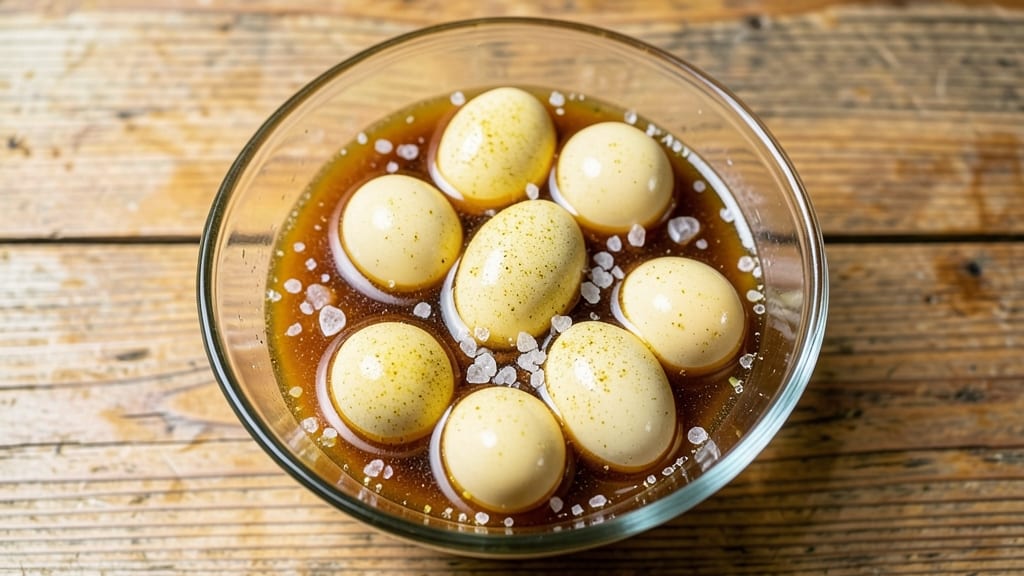
This old-fashioned mustard pickled eggs recipe transforms simple hard-boiled eggs into a tangy, crunchy appetizer that brings old-world charm to any table. The secret lies in a carefully balanced brine of vinegar, mustard, and spices that penetrates each egg, creating a flavor profile that's both bold and refreshing.
I've perfected this technique over years of holiday gatherings, where these pickled eggs become the star of every cheese board.
The process begins with hard-boiling eggs, then carefully cracking their shells to create that signature crunchy texture without the mess. A vinegar-based brine infused with dry mustard, black peppercorns, and bay leaves works its magic over 3-5 days, transforming plain eggs into vibrant, flavor-packed bites.
The longer they cure, the more intense the mustard flavor becomes, making each bite a perfect balance of tangy and savory.
What you'll end up with is a jar of golden eggs with crisp shells that shatter delightfully between your teeth, filled with creamy yolk and white infused with mustard's signature sharpness.
These pickled eggs elevate any spread—whether it's a holiday appetizer platter, picnic lunch, or casual snack with crackers and cheese. The flavor develops beautifully over time, making them perfect for making ahead.
Serve them at room temperature for the best texture and flavor experience. Once you try these, you'll understand why they've been a classic appetizer for generations. Let's get started on creating this timeless recipe that brings a touch of tradition to your table.
Ingredients for old fashioned mustard pickled eggs
Twelve eggs, bold flavors, and a jar of old-world charm waiting to happen.
| Ingredient | Amount | Notes |
|---|---|---|
| Large Eggs 🥚 | 12 whole | Hard-boiled, shells cracked |
| White Vinegar 🍶 | 2 cups | White or apple cider vinegar |
| Water 💧 | 2 cups | Filtered or distilled preferred |
| Dry Mustard Powder 🌶️ | ½ cup | Yellow mustard powder preferred |
| Granulated Sugar 🍚 | ¼ cup | White or brown sugar |
| Coarse Kosher Salt 🧂 | ½ cup | For brining and seasoning |
| Black Peppercorns 🌶️ | 1 tbsp | Whole, lightly crushed |
| Bay Leaves 🍃 | 2 whole | Fresh or dried |
| Mustard Seeds 🌿 | 1 tsp | Optional for extra texture |
| Red Wine Vinegar 🍷 | ½ cup | For depth of flavor |
| Fresh Dill 🌿 | ¼ cup | Chopped, optional garnish |
| Food-Grade Pickling Spice 🌶️ | 1 tbsp | For traditional flavor |
The eggs are the star, so start with fresh, large eggs—they hold up best to the curing process. Trader Joe's or local farms often have the freshest, but any grocery store eggs work. Hard-boil them until the yolks are set but not rubbery—about 10 minutes after they float. The secret? Cracking the shells just enough to let the brine seep in without breaking them apart. Use a small hammer or mallet for even cracks. For the mustard powder, Colman's or Bob's Red Mill are my go-tos—they've got that authentic tang. If you're feeling fancy, grab a few extra bay leaves at Whole Foods; they've got the best dried spices in bulk.
No mustard powder? Dijon mustard at half the amount works in a pinch, but it'll be thinner. Skip the red wine vinegar? Extra white vinegar keeps it classic, though you'll lose that subtle depth. Fresh dill is ideal, but dried dill at one-third the amount gets you close. The pickling spice blend? Penzeys or McCormick have great pre-mixed versions—just check the label for no added MSG. Pro tip: If your vinegar smells funky, it's time to replace it. Fresh vinegar is everything for that bright, tangy flavor.
This recipe gets better with time—3 days minimum, up to 2 weeks for maximum mustard punch. Store in the fridge in a sterilized glass jar with a tight seal. The eggs keep for up to 3 months if submerged in brine. I like to portion them into small jars for gifts—mason jars with ribbon make everything feel special. Serve chilled or at room temp, but never warm. The texture is everything, and cold eggs stay crispy.
Why You'll Love This Recipe
- Here’s what sold me: that first bite of crisp shell and creamy yolk with a punch of dry mustard powder and a whisper of red wine vinegar. It’s tangy but not vinegary, sweet but not cloying—like a bold, savory hug in every bite. The bay leaves and peppercorns sneak in earthy depth you won’t find in store-bought versions.
- I’ll be real: this recipe uses ingredients you already have. Vinegar, sugar, salt, and mustard powder? Check. The eggs last months in the fridge, so you’re not scrambling for uses. And the leftovers? They’re the perfect snack for lazy afternoons or late-night cravings—no reheating, just grab and go.
Step-by-step instructions for old-fashioned mustard pickled eggs
Here's how to create these vibrant, tangy eggs that bring bold flavor to every bite.
Hard-Boil the Eggs to Perfection
Place the 12 whole large eggs in a saucepan and cover them with cold water by about 1 inch. Bring to a rolling boil over high heat, then immediately reduce to medium-low and simmer for exactly 10 minutes. This timing ensures perfectly set whites without overcooking the yolks.
Transfer the eggs to an ice bath for 10 minutes to stop the cooking process. Once cooled, gently tap each egg on a hard surface and roll to crack the shells all over. This creates tiny openings that allow the pickling liquid to penetrate deeply, giving you that signature crunchy texture and bold flavor.
Prepare the Pickling Brine
In a large bowl, whisk together the 2 cups white vinegar, 2 cups water, 0.5 cup dry mustard powder, 0.25 cup granulated sugar, and 0.5 cup coarse kosher salt until the sugar and salt completely dissolve. This mixture creates the tangy, slightly sweet base that defines these pickled eggs.
Add the 1 tablespoon black peppercorns, 2 whole bay leaves, 1 teaspoon mustard seeds, 0.5 cup red wine vinegar, 0.25 cup chopped fresh dill, and 1 tablespoon food-grade pickling spice. Stir gently to combine all ingredients without crushing the bay leaves or peppercorns. The spices will infuse their flavors into the brine, creating layers of complexity.
Combine Eggs and Brine
Place the cracked eggs into a clean, airtight glass jar or container, packing them snugly but not tightly. Pour the prepared brine over the eggs until they're completely submerged, with about 1 inch of liquid above the top egg. This ensures the eggs stay fully immersed during pickling.
Seal the container tightly and let it sit at room temperature for 24 hours. This initial resting period allows the flavors to begin melding together. After 24 hours, transfer the jar to the refrigerator where the eggs will continue to develop their signature tangy, mustard-forward flavor over the next 3 to 7 days.
Develop the Perfect Texture and Flavor
Check the eggs after 3 days and taste one to evaluate the flavor. The pickling liquid should be tangy with a noticeable mustard kick. If the flavor isn't strong enough, leave them another 2 to 3 days. The longer they pickle, the more intense the mustard flavor becomes, but they should never taste bitter.
Once perfectly pickled, the eggs should have a satisfying crunch when bitten into, with a tangy, slightly sweet mustard flavor that lingers. Store them in the refrigerator for up to 3 months, though they'll be most flavorful within the first 2 weeks. These vibrant eggs make an incredible addition to charcuterie boards, sandwiches, or as a tangy snack on their own.
Pro Tips For Making Old Fashioned Mustard Pickled Eggs
- Crack Shells Lightly: Don’t go full hammer on those eggs—just tap them gently until the shells have tiny cracks all over. You want the brine to seep in, not turn your eggs into a mushy mess. I learned this the hard way when I cracked mine too aggressively and ended up with a jar of sad, squishy yolks.
- Use Yellow Mustard Powder: Skip the generic mustard powder and grab yellow—it’s the real deal for that classic old-fashioned kick. Regular powder can taste flat or bitter, and you’ll wonder why your eggs don’t pack the same punch. Trust me, the difference is noticeable, even if it costs a little more.
- Stir Until Salt Dissolves: Don’t just toss the salt and sugar into the brine and call it a day—whisk it until it’s fully dissolved. Lumpy salt means uneven flavor, and you’ll end up with some eggs tasting bland while others are overwhelmingly salty. A quick stir now saves you from regret later.
- Skip the Ice Bath Shortcut: Yes, it’s tempting to just run cold water over the eggs after boiling, but an actual ice bath for 10 minutes stops the cooking process faster and keeps the yolks firm. I used to rush this, and my eggs always ended up with runny centers—now I don’t skip it, even when I’m in a hurry.
Troubleshooting your old fashioned mustard pickled eggs
Eggs Too Soft?
If your pickled eggs turn out too soft after curing, the issue likely stems from over-boiling during the initial hard-boiling step. I’ve found that simmering for more than 10 minutes can make the yolks rubbery, which ruins the creamy texture you want.
To fix this, always use fresh eggs—older eggs have more porous shells and absorb too much brine, leading to a mushy texture. For next time, stick to the exact 10-minute simmer after boiling, then ice bath for 10 minutes to set them properly.
Brine Not Tangy Enough
The mustard flavor might be too subtle if you didn’t use enough dry mustard powder or if the vinegar was old. I recommend Colman’s yellow mustard powder for that authentic kick—it’s stronger than Dijon.
If your brine tastes flat, try adding 1 extra tablespoon of vinegar or a splash of lemon juice to brighten it up. For future batches, always use fresh vinegar—stale vinegar loses its punch and can make the brine taste dull. 💡
Shells Not Crunchy
If the shells aren’t satisfyingly crunchy, you likely didn’t crack them enough during the initial step. The key is to tap each egg gently but firmly with a mallet or rolling pin to create tiny, even cracks all over the shell.
If the shells feel soft, try re-pickling them in a fresh batch of brine with 1 extra tablespoon of vinegar and 1 teaspoon of salt for a stronger cure.
For extra crunch, some cooks even roast the eggs in the oven at 300°F for 15 minutes before pickling to dry the shells slightly.
Mold or Cloudiness
If you see mold or cloudiness in the brine, it’s a sign of bacterial contamination, which usually happens if the eggs weren’t fully submerged or the jar wasn’t sterile. Always sterilize your jar and tools by boiling them for 5 minutes before use.
To prevent this, ensure the eggs are completely covered by at least 1 inch of brine at all times. If mold appears, discard the batch immediately—never taste-test moldy eggs, as they can cause foodborne illness.
For future batches, store the jar in the fridge within 24 hours of starting the pickling process.
Mustard Flavor Overpowering
If the mustard taste is too strong or bitter, you might have used too much dry mustard powder or left the eggs in the brine too long. For a milder flavor, reduce the mustard powder to ¼ cup and cut the pickling time to 3 days instead of 5-7.
To balance the flavor, add 1 extra tablespoon of sugar to the brine to mellow out the heat. If the eggs already taste too sharp, try rinsing them briefly in cold water before serving to dilute the mustard slightly—though this will soften the shells a bit.
Eggs Floating or Leaking
Eggs might float or leak if the shells were cracked too deeply or if the brine wasn’t properly balanced. To fix this, repack the eggs tightly in the jar, ensuring they’re snug but not crushed.
If they’re leaking, drain the old brine and replace it with fresh brine (using the same ratio of vinegar, water, and salt). For future batches, use a slightly firmer egg (like room-temperature eggs) and crack the shells more evenly to prevent leaks.
If the brine level drops significantly, top it off with equal parts vinegar and water to maintain the proper immersion. 🥚
Nutrition facts
Frequently asked questions
Why do the eggs need cracked shells for pickling?
Cracking the shells creates tiny openings that let the mustard-infused brine penetrate deeply, giving you that signature crunchy texture. Without cracks, the shells stay intact but the flavor stays superficial. The cracks also allow excess air to escape, preventing the eggs from floating or leaking during the 3-7 day curing process.
Can I use Dijon mustard instead of dry mustard powder?
Dijon works in a pinch, but it won't give the same texture or intensity. For authentic results, stick with 0.5 cup dry mustard powder. If you must substitute, blend 2 tablespoons Dijon mustard with 1 tablespoon cornstarch to mimic the powder's consistency, then use half the amount. The flavor will be milder but still delicious.
How do I know when the pickled eggs are ready to eat?
After 3 days in the fridge, test one egg. The flavor should be tangy with a noticeable mustard kick, and the shells should be satisfyingly crunchy. If it's too mild, let them pickle 2 more days. They're never "over-pickled" as long as they stay submerged in brine and don't develop mold. The longer they cure, the more intense the mustard flavor becomes.
What's the best way to serve these pickled eggs?
These vibrant eggs shine on charcuterie boards alongside sharp cheeses like cheddar or gouda, or as a tangy topping for sandwiches. Serve them chilled with crusty bread and mustard aioli for dipping. They also make a stunning centerpiece for holiday gatherings or picnic spreads. The crunchy shells and bold mustard flavor cut through rich dishes beautifully.
Can I make this recipe without red wine vinegar?
Yes! Simply increase the white vinegar to 2.5 cups total to maintain the same tangy profile. While red wine vinegar adds subtle depth, the classic flavor will still be delicious. For extra complexity, add 1 teaspoon of lemon zest to the brine. The key is using fresh vinegar—never substitute with old or diluted versions.