
Desserts
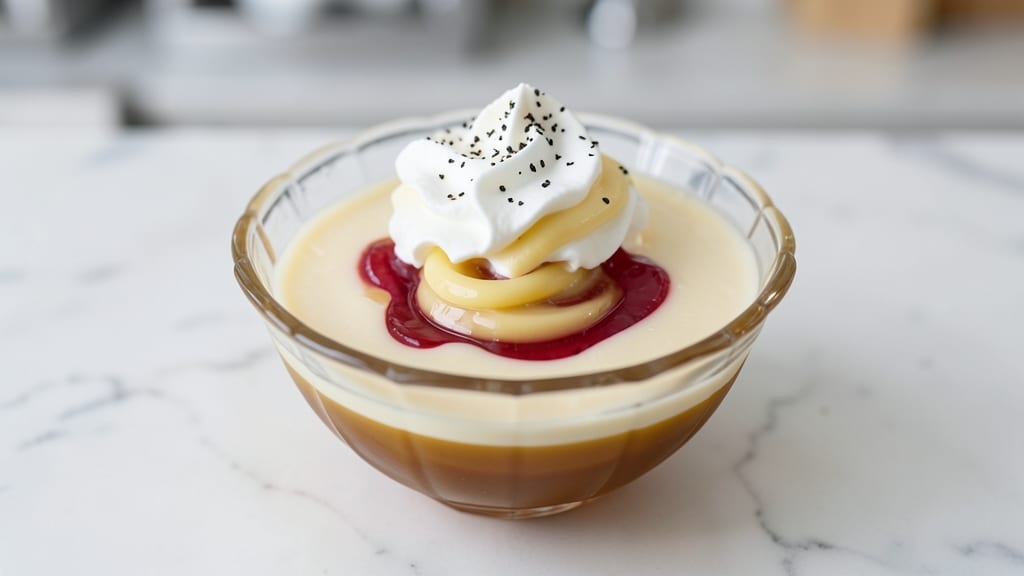
This jello egg custard recipe transforms ordinary gelatin into a luxurious dessert with layers of silky custard and vibrant colors—no baking required. The secret lies in precise gelatin ratios and gentle custard cooking to avoid curdling, creating a restaurant-worthy texture at home.
I developed this recipe after years of experimenting with gelatin-based desserts, and the balance between firmness and creaminess is what sets it apart.
The foundation starts with perfectly set gelatin layers that provide structure without overpowering the delicate egg custard. Using unflavored gelatin allows for customizable colors while maintaining a clean, neutral base that lets the custard shine.
The custard itself requires careful temperature control—heating the mixture to 170°F ensures smoothness without scrambling the eggs, while constant stirring prevents lumps.
What you'll achieve is a dessert that looks elegant yet requires minimal effort: vibrant jelly layers alternating with velvety custard, chilled until set.
The contrast between the firm gelatin and the silky custard creates a satisfying texture in every bite, while the subtle sweetness lets the dessert feel light rather than heavy. This technique works equally well for individual servings or crowd-pleasing platters.
Perfect for special occasions or spontaneous dessert cravings, this recipe delivers professional results with simple ingredients. The key is patience—allowing each layer to set completely before adding the next ensures clean separation and a polished finish. Once mastered, you'll never buy store-bought gelatin desserts again.
Ingredients for jello egg custard
Precision meets elegance—just these ingredients transform simple gelatin into restaurant-quality layered dessert.
| Ingredient | Amount | Notes |
|---|---|---|
| Unflavored Gelatin 🍬 | 1 ½ tbsp | Powdered, high-quality preferred |
| Granulated Sugar 🍚 | ½ cup | Fine grain for even dissolving |
| Large Egg Yolks 🥚 | 6 whole | Fresh, room-temperature preferred |
| Heavy Cream 🥛 | 1 ½ cups | Full-fat for optimal texture |
| Whole Milk 🥛 | ½ cup | Cold for smooth custard |
| Vanilla Extract 🌿 | 1 tsp | Pure, high-quality preferred |
| Lemon Juice 🍋 | 1 tbsp | Freshly squeezed, strained |
| Food Coloring 🎨 | 1 tsp | Gel-based for vibrant layers |
| Salt 🧂 | ¼ tsp | Fine sea salt preferred |
| Cornstarch 🌾 | 1 tsp | For custard stabilization |
| Cold Water 💧 | ½ cup | For gelatin activation |
| Raspberry Jam 🍓 | ¼ cup | Optional for flavor infusion |
The gelatin is non-negotiable for structure. Knox brand is my go-to for its consistent quality, but any unflavored powdered gelatin works. Bloom it in cold water for 5 minutes—this activates the gelatin properly before heating. For vibrant colors, Wilton gel-based food coloring is ideal, but liquid dyes work too (use sparingly). The egg yolks must be fresh and room-temperature—cold yolks can cause curdling. Purchase them the same day or bring them to room temperature before using. Heavy cream should be full-fat for the richest texture, and store it in the fridge until ready to use.
No vanilla extract? Vanilla bean paste adds depth, or vanilla sugar at half the amount works in a pinch. Substituting milk? Half-and-half gives a lighter texture, but whole milk is traditional. For color alternatives, natural fruit powders (like beet for pink) can replace artificial dyes. The raspberry jam is optional but enhances the custard's flavor—use unsweetened jam to avoid over-sweetening. If you lack cornstarch, arrowroot powder at the same amount stabilizes the custard effectively. Always strain the lemon juice to avoid gritty texture.
Store unused gelatin in an airtight container in a cool, dry place for up to 12 months. Once bloomed, use immediately—activated gelatin loses potency quickly. The custard mixture can be prepped 1 day ahead and stored in the fridge until ready to assemble. For serving, chill the set dessert for at least 4 hours for clean layers. Portion into individual glasses for elegant presentation, or serve family-style for gatherings. Leftovers keep for 3 days in the fridge, though texture may soften slightly.
Why You'll Love This Recipe
- I’ll be real: this is my go-to dessert for when I’m hosting but don’t want to slave over the stove. Prep the custard base the night before—just mix everything, let it bloom, and store it in the fridge. The next day, it’s a 5-minute assembly (plus chilling), and suddenly you’re the hero of the party. No last-minute stress, just vibes.
- Here’s what sold me: you’re basically making a fancy dessert with pantry staples. Gelatin, sugar, and cream? That’s it for the heavy hitters, and the rest are flavor boosters. Plus, the custard stretches to feed a crowd—double the batch, and you’ve got leftovers for days. (Yes, even on a Tuesday night.)
Step-by-step instructions for jello egg custard
Mastering this recipe transforms simple ingredients into a velvety dessert with perfect set and texture.
Bloom the Gelatin and Prepare the Base
In a small heatproof bowl, sprinkle the 1.5 tablespoons unflavored gelatin evenly over the 0.5 cup cold water. This prevents clumping and ensures even activation. Let it sit for 5 minutes at room temperature until fully dissolved—you'll see it transform into a smooth, gel-like substance. Meanwhile, in a separate saucepan, combine the 0.5 cup granulated sugar, 6 whole large egg yolks, 1.5 cups heavy cream, 0.5 cup whole milk, 1 tablespoon lemon juice, 0.25 teaspoon salt, and 1 teaspoon cornstarch. Stir constantly over medium-low heat until the mixture reaches 160°F, thickening slightly but not boiling.
This step is critical for creating the custard's silky texture. The sugar and cornstarch work together to stabilize the custard, while the lemon juice adds brightness that balances the richness. Remove the saucepan from heat immediately once it reaches temperature—overheating will scramble the yolks. Here's where precision matters most: the mixture should coat the back of a spoon but remain pourable.
Incorporate Gelatin and Flavor
Whisk the bloomed gelatin into the warm custard base until completely dissolved and smooth. The mixture should return to a uniform, creamy consistency. Add the 1 teaspoon vanilla extract and 1 teaspoon food coloring, stirring vigorously for 30 seconds to fully integrate. For a layered effect, carefully pour half of the mixture into a heatproof serving dish, then add 0.25 cup raspberry jam (if using) in a thin layer. Finally, pour the remaining custard mixture over the jam to create vibrant stripes when chilled.
Real talk: don't rush this step. The gelatin needs to fully incorporate to prevent graininess in the final product. If you're making individual servings, divide the custard among ramekins before adding the jam layer. The color will develop fully during the chilling process, so resist the urge to add extra coloring—trust the recipe's measurements for perfect vibrancy.
Chill for Perfect Set
Cover the custard with plastic wrap pressed directly onto the surface to prevent skin formation. Refrigerate for 4 hours or until completely set—you'll know it's ready when the center jiggles slightly but holds its shape when gently shaken. For a firmer texture, extend chilling to 6 hours. The key to success lies in this patience; rushing will result in a wobbly, under-set dessert that lacks structure.
Here's the thing—your refrigerator's temperature matters. If your kitchen runs warm, consider placing the custard in the coldest part of the fridge or even on an ice bed for the first hour. The ideal internal temperature for proper setting is 38-40°F. Once set, the custard should hold its shape when inverted onto a plate, with clean layers visible if you made the jam version.
Pro Tips For Making Jello Egg Custard
- Bloom Gelatin Properly: Sprinkle that 1.5 tbsp gelatin over the 0.5 cup cold water in a single motion—no piles. If you clump it, you’ll end up with grainy lumps in your custard, and nobody wants that. Let it sit exactly 5 minutes until it’s a smooth gel, not just slightly puffy.
- Hit 160°F, No Higher: Your custard base will scramble if you let it creep past 160°F. I’ve done it twice—once with a distracted stir, once with a thermometer that took too long to check. The second the mixture coats the back of a spoon but still pours like honey, pull it off the heat. That’s your sweet spot.
- Whisk Gelatin Until Vanished: Stirring the bloomed gelatin into the warm custard until it’s completely dissolved isn’t optional—it’s the difference between silky perfection and a dessert that tastes like it’s fighting itself. Use a whisk, not a spoon, and keep going until the mixture looks uniform, even if it takes a full minute.
- Chill in Layers, Not Bulk: If you’re making individual servings, pour the custard into ramekins before adding the jam layer. Trying to layer after the fact means messy drips and uneven stripes. And if you’re doing a big dish, use a spoon to spread the jam thin—thick globs won’t blend into those pretty marbled lines.
Regional styles of jello egg custard
Classic French Mousse Adaptation
In France, this dessert evolved from traditional chocolate mousse by incorporating gelatin for structure. Replace the raspberry jam with 2 tbsp cocoa powder mixed into the custard base, and add ½ cup melted dark chocolate to create a rich, velvety texture.
Use 1 tsp red food coloring for a classic French look, and serve in individual glasses with a dusting of cocoa powder. The French technique emphasizes precision—whisk the custard until it reaches 175°F to achieve a glossy finish. 🥖
Italian Semifreddo Twist
Italian desserts often blend textures, and this version mimics semifreddo by adding ½ cup whipped cream to the custard before chilling. Replace the jam layer with 1 tbsp espresso powder dissolved in 2 tbsp hot water, then fold it into the custard for a coffee-infused depth.
Use yellow food coloring for a sunny hue, and top with toasted pine nuts and cocoa shavings. The Italians focus on balance—reduce the sugar slightly to ¼ cup to let the coffee flavor shine. 🌿
British Trifle Layering
The British love layered desserts, so this version mimics trifle by adding a ½ cup crushed sponge cake between custard layers. Use blue food coloring for a striking effect, and fold in 2 tbsp raspberry liqueur for a boozy twist.
Serve in a trifle dish with extra sponge cake crumbs on top. The British technique calls for a firmer set—chill for 6 hours to achieve a sturdy texture. 🇬🇧
American Fruit Parfait Style
In the US, this dessert often takes on a fruit parfait form. Replace the jam with ½ cup mixed berry compote, and layer it with the custard in clear glasses. Use pink or purple food coloring for a vibrant look, and top with whipped cream and fresh berries.
The American adaptation prioritizes freshness—add 1 tbsp lemon zest to the custard for brightness. Serve immediately after chilling for a refreshing treat. 🍓
Japanese Matcha Fusion
Japan’s love for matcha makes this a perfect fusion. Replace the vanilla with 1 tbsp matcha powder and ½ cup hot water, then whisk it into the custard base. Use green food coloring for a cohesive look, and top with red bean paste for contrast.
The Japanese technique emphasizes smoothness—strain the custard through a fine sieve to remove any lumps. Chill for 5 hours for a lighter, airier texture. 🍵
Mexican Tres Leches Influence
For a Latin twist, blend the custard with ½ cup evaporated milk and add 1 tsp cinnamon. Use orange food coloring for a festive look, and top with crushed Maria cookies and a drizzle of caramel.
The Mexican adaptation focuses on warmth—serve slightly warm (not fully chilled) for a comforting dessert. 🌶️
Nutrition facts
Frequently asked questions
Can I make this dessert without gelatin?
The gelatin creates the signature layered texture, but you can substitute 1.5 teaspoons agar-agar powder for a vegan option. Bloom it in 0.5 cup hot water for 5 minutes before mixing into the custard. The result will be firmer and slightly chewier, but still delicious.
Why did my custard turn grainy?
Graininess usually happens when the gelatin isn't fully dissolved or the mixture overheats. Always whisk the bloomed gelatin into the warm (not hot) custard base, and never let it exceed 165°F. For extra smoothness, strain through a fine-mesh sieve before chilling.
How long does it keep in the fridge?
This dessert stays fresh for 3-4 days in an airtight container, though the texture may soften slightly after 24 hours. For best quality, serve within 2 days. The gelatin layers will hold their shape longer if you store it in individual ramekins rather than a single dish.
Can I use this recipe for a large gathering?
Scale the ingredients up by 2x for 12 servings, using a large rectangular dish for easy slicing. For extra presentation, layer with fruit compote between custard sections. Chill the large dish for 6 hours to ensure clean cuts.
What's the secret to perfect layers?
Patience is key! Let each gelatin layer set completely (2 hours) before adding the next custard layer. Use a spoon or skewer to create clean separations, and avoid shaking the dish during chilling. The 4-hour minimum chill time ensures clean separation between layers.