
Breakfast & Brunch
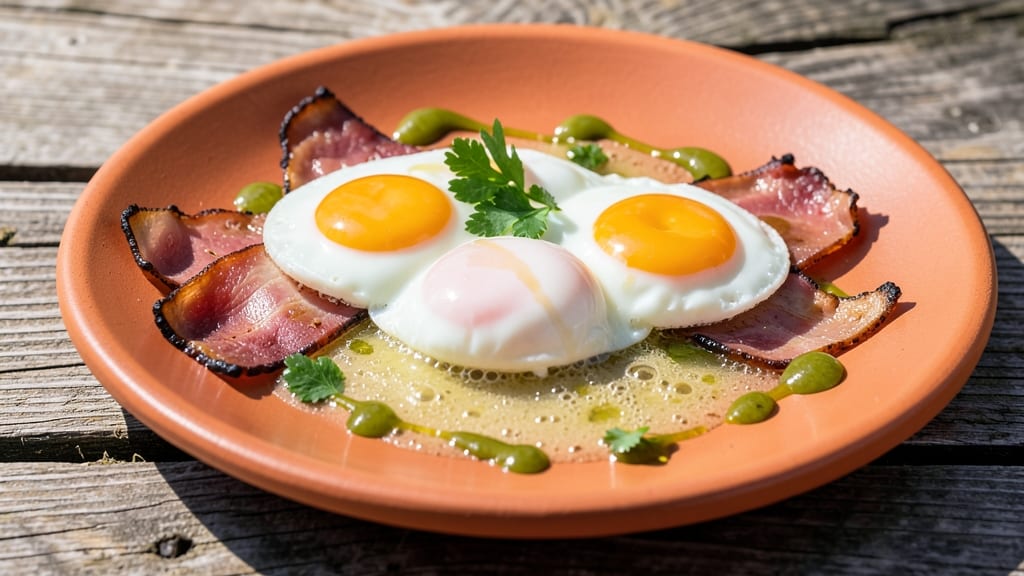
This eggs Portugal recipe reimagines a beloved breakfast by blending traditional flavors with a crispy ham crunch and velvety egg centers. I first discovered this recipe while researching Portugal's rich culinary traditions, where eggs take center stage in dishes like Ovos Moles—soft-boiled eggs bathed in a velvety sauce.
The key difference here? A Portuguese-inspired twist using crispy ham instead of traditional Canadian bacon, paired with a tangy, slightly sweet sauce that balances richness perfectly.
The magic happens in the ham preparation—thinly sliced, pan-fried until crispy, and layered strategically to create that signature crunch. Meanwhile, the eggs are poached to silky perfection, their runny yolks waiting to be crowned with the ham and sauce.
This isn’t your average Eggs Benedict; it’s a dish that nods to Portugal’s love of eggs while delivering a texture contrast that’ll have you reaching for seconds.
The sauce, a blend of Portuguese vinho verde and mustard, adds a bright acidity that cuts through the richness of the eggs and ham.
What you’ll end up with is a plate that’s equal parts elegant and comforting—golden, crispy ham layers, silky egg yolks that glide onto your fork, and a sauce that’s tangy yet smooth.
It’s the kind of breakfast that feels like a celebration, perfect for brunch with friends or a special weekend morning. The best part? Every bite delivers that satisfying crunch while keeping the eggs perfectly tender. Let’s make this Portuguese-inspired classic.
This recipe pays homage to Portugal’s egg-centric dishes, like Tortilla Portuguesa, while adapting it for modern tastes. The crispy ham isn’t just a topping—it’s the star, adding a texture that elevates the dish from ordinary to extraordinary.
Whether you’re serving it to guests or treating yourself, this version of Eggs Benedict will leave everyone asking for the recipe. Ready to bring a taste of Portugal to your breakfast table?
Ingredients for eggs portugal
A few fresh ingredients transform ordinary eggs into a Portuguese-inspired brunch masterpiece.
| Ingredient | Amount | Notes |
|---|---|---|
| Large Eggs 🥚 | 8 whole | Freshly refrigerated for best poaching |
| Thinly Sliced Black Forest Ham 🥓 | 6 oz | Crispy when fried, not smoked |
| Unsalted Butter 🧈 | ½ cup | Cold, cut into small cubes |
| Portuguese Vinho Verde 🍷 | ½ cup | White wine, slightly fizzy |
| Dijon Mustard 🍯 | 1 tbsp | Smooth, not coarse |
| Extra-Virgin Olive Oil 🫒 | 2 tbsp | For frying ham slices |
| Fresh English Cucumber 🥒 | ¼ whole | Thinly sliced for garnish |
| Fresh Dill 🌿 | ¼ cup | Chopped, for garnish |
| Lemon Juice 🍋 | 1 tbsp | Freshly squeezed |
| Granulated Sugar 🍚 | 1 tsp | For sauce balance |
| Salt 🧂 | 1 tsp | Kosher or sea salt |
| Black Pepper 🌶️ | ½ tsp | Freshly ground |
| Heavy Whipping Cream 🥛 | ¼ cup | Cold for sauce |
The ham is everything here. Black Forest ham is my go-to because it stays crispy without getting greasy—Trader Joe's carries it pre-sliced, which saves time. If you can't find it, prosciutto di Parma works too, but it's pricier. The thin slices are key; if yours are thick, pound them gently with a rolling pin. For the eggs, room temperature makes all the difference—they poach more evenly. I always grab the organic, cage-free eggs from the store—they hold their shape better when poaching. The vinho verde? Grab a bottle labeled 'white'—it's slightly fizzy and adds that bright acidity the sauce needs.
No vinho verde? Substitute with a mix of dry white wine and a splash of apple cider vinegar—it mimics the tang. For the mustard, Dijon is non-negotiable—it's the secret to that perfect balance of tang and sweetness. Short on dill? Fresh parsley works in a pinch, but it's not the same. The sauce can be made ahead—it actually tastes better the next day once the flavors meld. If you're serving this for a crowd, double the sauce ingredients—it disappears fast. The cream needs to be cold when you add it, or the sauce will curdle. Trust me on that one.
Poached eggs keep best in the fridge for 1 day—after that, the yolks get too firm. The sauce, though? It lasts 3 days in the fridge, and you can freeze portions for 1 month. I like to portion the sauce into small jars so I can grab it straight from the fridge for quick mornings. The ham stays crispy for about 2 hours if you fry it just before serving. For the cucumber, keep it in a sealed container with a paper towel to stay crisp. The dill? Wrap it in damp paper towels and store it in a bag—it'll last 5 days that way.
Why You'll Love This Recipe
- Weeknight-Friendly Speed: I swear by this for lazy mornings—just fry the ham in 2 tbsp olive oil (2-3 minutes per side, no fuss), simmer the sauce (3-4 minutes max), and poach the eggs while watching a show. The whole thing comes together faster than ordering takeout, and honestly? That crispy ham edge is worth every second.
- Sauce That Stops You: The vinho verde and Dijon mustard combo is next-level—bright, tangy, and just sweet enough from that 1 tsp sugar. It’s the kind of sauce that makes you pour extra, even when you’re trying to be reasonable. (Yes, I’ve been there.)
- Brunch or Lunch Fix: This isn’t just a Sunday splurge—it’s my go-to for weekday lunches too. The poached eggs stay silky for a day in the fridge, and the ham slices reheat perfectly if you’re prepping ahead. Garnish with cucumber and dill, and suddenly, you’ve got a restaurant-worthy plate without the effort.
- Budget Brilliance: You’re using just 6 oz of ham (not even a full package) and 8 eggs—no waste, no guilt. The butter and vinho verde feel fancy, but they stretch across multiple servings, and the cream adds that luxurious touch without breaking the bank. Plus, freezing portions for a month means no sad, rubbery eggs later.
Step-by-step instructions for silky eggs benedict with crispy ham crunch
Here's how to create silky poached eggs and crispy ham with a rich, tangy sauce—every element comes together perfectly.
Fry the Black Forest Ham to Crispy Perfection
Heat the 2 tablespoons extra-virgin olive oil in a large skillet over medium-high heat until shimmering. Add the 6 oz thinly sliced black forest ham in a single layer, being careful not to overcrowd the pan. Cook for 2-3 minutes per side until the ham is deep golden brown and crispy around the edges.
Transfer the fried ham to a paper towel-lined plate to drain excess oil. The key here is high heat for quick cooking—this prevents the ham from becoming greasy while creating that satisfying crunch. Keep the ham warm while you prepare the rest of the components.
Prepare the Tangy Vinho Verde Sauce
In a small saucepan, melt the 0.5 cup unsalted butter over low heat until fully liquid. Remove from heat and whisk in the 0.5 cup portuguese vinho verde, 1 tablespoon dijon mustard, 1 tablespoon lemon juice, 1 teaspoon granulated sugar, 1 teaspoon salt, and 0.5 teaspoon black pepper. Return the saucepan to low heat and simmer gently for 3-4 minutes until slightly thickened.
Here's the thing—this sauce needs to be warm but not boiling when you add the eggs. If it starts to bubble vigorously, reduce the heat immediately. The acidity from the vinho verde and lemon juice will brighten the flavors, while the butter creates that luxurious, velvety texture.
Poach the Eggs to Silky Perfection
Fill a deep saucepan with 4 inches of water and bring to a gentle simmer—you should see small bubbles breaking the surface, but not a rolling boil. Add the 1 teaspoon salt to the water and stir to dissolve. Crack each of the 8 whole large eggs into a small ramekin, one at a time. Using a spoon, gently swirl the water to create a small vortex, then slide the egg into the center.
Poach for 3 minutes for runny yolks or 3 minutes 30 seconds for slightly firmer yolks. Use a slotted spoon to transfer the eggs to a paper towel-lined plate. The water should remain at a gentle simmer throughout—if it boils, the eggs will cook unevenly and turn rubbery.
Assemble and Garnish the Eggs Benedict
To assemble, place 2 slices of crispy black forest ham on each of 4 plates. Top each ham slice with a silky poached egg, then ladle 2-3 tablespoons of the warm vinho verde sauce over each egg. The residual heat from the sauce will gently warm the eggs as you serve.
Garnish each plate with thin slices of fresh english cucumber and chopped fresh dill. For the final touch, whisk the 0.25 cup heavy whipping cream until soft peaks form, then pipe or dollop it around the plate. This adds a light, airy contrast to the rich, crispy, and silky elements.
Pro Tips For Making Eggs Portugal
- CRISP THE HAM FAST: High heat is non-negotiable here—medium-high until the oil shimmers like a desert mirage. I used to linger too long, and the ham turned greasy instead of golden. Two minutes per side max, then immediately drain on paper towels. The secret’s in the speed, not the timing.
- CHILL THE BUTTER CUBES: Cold, cubed butter melts smoother into the sauce without seizing. Skip this, and you’ll end up with a lumpy, buttery mess. Pop the butter in the freezer for 10 minutes before using—it’s worth the wait for that velvety finish.
- SWIRL THE WATER: That gentle vortex isn’t just for show—it keeps the egg whites wrapped tight around the yolk. I learned this the hard way when my first batch turned into floating egg ghosts. Use a spoon to stir the water before sliding in each egg, and keep the simmer gentle.
- SAVE THE SAUCE: The sauce needs to stay warm but not boil while you poach. If it starts bubbling like a witch’s cauldron, pull it off the heat and whisk it back to calm. A lazy simmer keeps the sauce bright and tangy—no one wants a sad, separated mess.
Essential equipment for this recipe
Skillet Selection
For the Black Forest ham, I swear by a 10-inch cast-iron skillet—it distributes heat evenly and retains it perfectly. My go-to is a Lodge Pre-Seasoned Cast Iron Skillet because it’s affordable, durable, and develops a natural nonstick surface over time.
If you don’t have cast iron, a stainless steel skillet with a heavy base works too, but watch the heat more closely. 🔥
Poaching Essentials
The right pan for poaching eggs is a deep, wide saucepan with high sides—at least 3-quart capacity. I use a Calphalon Stainless Steel Saucepan because it heats quickly and maintains a steady simmer.
Avoid nonstick pans for poaching—they can release harmful fumes when exposed to high heat. A slotted spoon with a long handle is your best friend for transferring eggs without breaking them.
Saucepan Must-Haves
For the vinho verde sauce, a small, heavy-bottomed saucepan prevents scorching. My All-Clad Stainless Steel Saucepan is ideal, but any quality stainless steel will do. The key is a tempered glass lid to monitor the sauce without boiling it over.
A whisk is non-negotiable—use a French-style whisk for smooth, lump-free results. 💫
Garnish Tools
Thinly slicing the English cucumber requires a sharp chef’s knife and a mandoline for even slices. I use a Victorinox Fibrox Mandoline—it’s safe and gives perfect, uniform slices. For the fresh dill, a small pairing knife works best.
A piping bag with a small round tip is perfect for dolloping the heavy whipping cream artistically. Don’t skip this step—it adds that restaurant-quality touch!
Optional Upgrades
If you’re serious about poaching, invest in a thermometer—I love the Thermoworks Thermapen One—to keep your water at a gentle simmer (around 180-190°F). For the ham, a tongs with siliconized tips prevents sticking.
And if you’re making this often, a small ramekin set (for cracking eggs) and a fine-mesh strainer (for draining ham) are game-changers. Trust me, these small tools make a big difference. ⚡
Nutrition facts
Frequently asked questions
What makes this Portuguese Eggs Benedict different from the classic version?
This recipe swaps traditional Canadian bacon for crispy Black Forest ham, inspired by Portuguese flavors. The sauce uses vinho verde instead of hollandaise, adding a bright, tangy acidity that cuts through the richness. The texture contrast—silky eggs, crispy ham, and creamy sauce—is what sets it apart.
Can I make this recipe without vinho verde?
Mix ½ cup dry white wine with 1 tablespoon apple cider vinegar for a similar tang. For extra depth, add ½ teaspoon orange zest to mimic vinho verde’s citrus notes. The sauce will still taste vibrant and balanced.
How do I keep the poached eggs warm while assembling?
Place the poached eggs in a single layer on a wire rack over a baking sheet. Set the baking sheet in a 200°F oven for up to 10 minutes while you finish the sauce. This keeps the yolks runny and warm without overcooking. The residual heat from the sauce will also help maintain warmth.
Is this dish suitable for a brunch menu?
Perfect for brunch! The crispy ham and silky eggs make it elegant yet approachable. Serve with Portuguese toast (pão torrado) or fresh bread on the side. For a crowd, double the sauce and prepare components ahead—just assemble when ready to serve. It’s a showstopper that feels special but isn’t overly complicated.
What’s the best way to reheat leftovers?
Reheat the sauce separately in a small saucepan over low heat until warm. Gently warm the ham in a dry skillet for 1-2 minutes. For the eggs, poach fresh ones or reheat gently in the sauce for 30 seconds—they’ll soften but stay tender. Never microwave poached eggs, or they’ll turn rubbery.