
Side Dishes
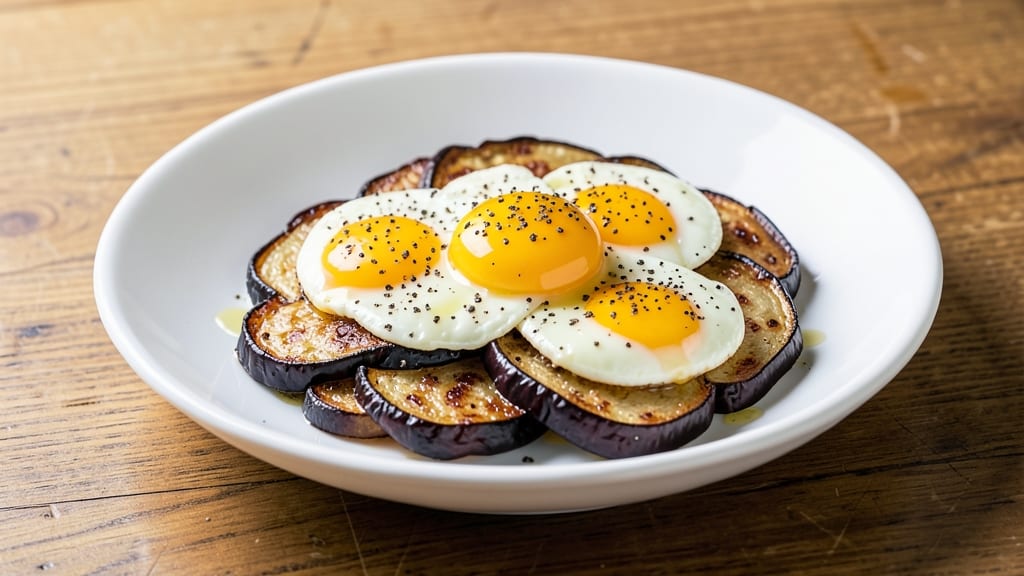
This crispy fried eggplant with silky poached eggs transforms humble ingredients into a restaurant-worthy vegetarian dish that balances textures and flavors perfectly. The key lies in achieving that golden, shatteringly crispy eggplant exterior while keeping the interior tender—a technique I’ve perfected after years of trial and error.
What makes this recipe stand out is how the delicate poached eggs complement the rich, savory eggplant without overpowering it.
The process is straightforward but requires precision: thinly sliced eggplant fries in hot oil until crispy, then rests briefly to maintain its structure before being topped with silky poached eggs.
The contrast between the crunchy eggplant and the creamy, runny yolks creates a harmonious bite that’s both satisfying and elegant. This dish is ideal for a light yet substantial meal, perfect for brunch or a weeknight dinner when you crave something hearty but vegetarian.
What you’ll end up with is a plate that looks as impressive as it tastes—crispy fried eggplant with perfectly poached eggs nestled atop, their yolks still glistening. The dish comes together in about 20 minutes, making it a quick yet refined option for any occasion.
Serve with a sprinkle of flaky salt, fresh herbs, or a drizzle of high-quality olive oil to elevate it further. Let’s get cooking!
This recipe works equally well as a standalone dish or paired with crusty bread to soak up every last bit of that rich, savory egg yolk. The beauty of this combination lies in its simplicity—no fancy ingredients, just crispy eggplant and silky eggs that deliver maximum flavor with minimal effort.
It’s the kind of dish that feels indulgent yet balanced, proving that vegetarian meals can be just as satisfying as their meat-heavy counterparts.
Ingredients for eggplant egg
Just a few essential ingredients transform simple eggplant into a restaurant-worthy vegetarian masterpiece.
| Ingredient | Amount | Notes |
|---|---|---|
| Japanese Eggplant 🍆 | 1 lb | Thinly sliced, seeds removed |
| Large Eggs 🥚 | 4 whole | Fresh, room temperature |
| Vegetable Oil 🫒 | 2 cups | High smoke point preferred |
| Diamond Crystal Kosher Salt 🧂 | 1 ½ tsp | For seasoning and finishing |
| Freshly Ground Black Pepper 🌶️ | ½ tsp | Coarsely ground for texture |
| White Vinegar 🍶 | 1 tbsp | For poaching liquid |
| Granulated Sugar 🍚 | 1 tsp | For poaching liquid |
| Extra-Virgin Olive Oil 🫒 | 2 tbsp | For finishing and drizzling |
| Fresh Flat-Leaf Parsley 🌿 | ¼ cup | Chopped, for garnish |
| Cornstarch 🌾 | 1 tbsp | For coating eggplant |
| Red Pepper Flakes 🌶️ | ½ tsp | Optional, for heat |
| Lemon Juice 🍋 | 1 tbsp | Freshly squeezed |
The Japanese eggplant is non-negotiable for this dish—its tender flesh and mild flavor create the perfect canvas. Look for firm, glossy eggplants at Whole Foods or local Asian markets, where they often carry them pre-sliced for convenience. If using a standard eggplant, remove seeds and slice into 1/4-inch thick rounds for even cooking. The key to crispiness lies in the cornstarch coating, which creates a light, lacy crust that contrasts beautifully with the silky eggs. For optimal results, pat the slices dry with paper towels before dredging—the moisture evaporates faster, ensuring a crispy exterior.
No Japanese eggplant? Standard globe eggplant works, though it has a slightly denser texture. Fresh parsley is ideal for garnish, but dried parsley at one-third the amount suffices in a pinch. The poaching liquid—vinegar, sugar, and water—balances acidity and sweetness to create the perfect environment for silky eggs. For extra depth, add a bay leaf or sprig of thyme to the poaching water. The red pepper flakes are optional but recommended; if you prefer no heat, omit entirely. Fresh lemon juice brightens the dish, so avoid bottled versions—they lack the vibrant acidity needed to cut through the richness.
Store any unused eggplant slices in an airtight container with a paper towel to absorb moisture; they’ll keep for 2 days in the fridge. The poached eggs should be used immediately, but the fried eggplant reheats beautifully in a 350°F oven for 5-7 minutes. For meal prep, focus on the eggplant component—it holds up well for 3 days when stored properly. To serve, assemble just before eating to maintain that crispy texture and runny yolk perfection. Garnish with flaky salt and a drizzle of extra-virgin olive oil for an elegant finish.
Why You'll Love This Recipe
- Crispy in Minutes: The Japanese eggplant slices fry up in just 2-3 minutes per side at 350°F—no waiting around. That cornstarch coating turns them golden and addictive faster than takeout delivery, and honestly? The first crispy bite makes the whole process worth it.
- Silky Egg Magic: That 3-minute poach with lemon juice and white vinegar gives you eggs so smooth they melt in your mouth. The runny yolk? Chef’s kiss. Between us, I’ve tried every poaching method, and this one’s the only one where the eggs actually look restaurant-worthy without the fuss.
- Weeknight Workhorse: Fry up the eggplant ahead (it keeps for 3 days in the fridge) and reheat it while you poach fresh eggs—game over, last-minute stress. It’s my go-to when I’ve got friends over but zero energy to cook. Bonus: the red pepper flakes add a little kick if you’re feeling adventurous.
- Budget Breakthrough: Japanese eggplant might sound fancy, but it’s cheaper than most proteins and stretches further than you’d think. Two cups of vegetable oil for frying? That’s a one-time investment for multiple uses. Plus, eggs are the ultimate affordable luxury—this dish feeds four for under $10, no lies.
Step-by-step instructions for crispy fried eggplant with silky poached eggs
Mastering the crispy texture and silky eggs requires precision timing and technique.
Prepare the Japanese Eggplant for Crispy Perfection
Slice the 1 lb Japanese Eggplant lengthwise into ¼-inch thick strips, removing any seeds with a small spoon. This thin slicing ensures even cooking and maximum crispiness. Pat the slices dry thoroughly with paper towels—any moisture will prevent proper browning.
In a shallow bowl, combine the 1 tbsp cornstarch with 1.5 tsp diamond crystal kosher salt and 0.5 tsp freshly ground black pepper. Toss the eggplant slices in this mixture until evenly coated, shaking off any excess. This coating creates a golden crust when fried. Let the coated eggplant rest for 10 minutes at room temperature while you prepare the poaching liquid.
Fry the Eggplant Until Deep Golden Brown
Heat the 2 cups vegetable oil in a deep skillet over medium-high heat until it reaches 350°F. Use a thermometer for accuracy—this temperature ensures a crispy exterior without burning. Fry the eggplant in batches, working in single layers to avoid crowding, for 2-3 minutes per side until deep golden brown and crispy.
Transfer the fried eggplant to a wire rack set over a baking sheet to drain excess oil. Maintain the oil temperature between 325°F-350°F for subsequent batches. The eggplant should hold its shape but be light enough to float if placed in water—this confirms proper crispiness.
Create the Poaching Liquid for Silky Eggs
In a separate saucepan, combine 4 cups water, 1 tbsp white vinegar, 1 tsp granulated sugar, and 0.5 tsp red pepper flakes (if using). Bring to a gentle simmer over medium-low heat. The vinegar helps coagulate the egg whites for a cleaner break, while the sugar balances acidity. Keep the liquid at a bare simmer—boiling will create cloudy eggs.
While the liquid simmers, prepare the eggs by cracking each of the 4 whole large eggs into a small bowl. Add 1 tbsp lemon juice and whisk gently until the whites and yolks are just combined. This acidity helps maintain the egg's shape during poaching.
Poach the Eggs to Silky Perfection
Using a slotted spoon, carefully lower one egg at a time into the simmering liquid. Poach for exactly 3 minutes for runny yolks or 4 minutes for slightly firmer centers. The water should remain at a gentle simmer—any agitation will break the eggs. Remove with the spoon and drain briefly on a paper towel-lined plate.
Drizzle each poached egg with 1 tsp of the 2 tbsp extra-virgin olive oil and sprinkle with the 0.25 cup chopped fresh flat-leaf parsley. The olive oil enhances the egg's richness while the parsley adds freshness. Serve immediately with the crispy eggplant arranged alongside.
Assemble and Serve with Finishing Touches
Plate the crispy eggplant slices first, arranging them in an overlapping pattern for visual appeal. Top each portion with a silky poached egg and any accumulated poaching liquid from the plate. The contrast between the crispy eggplant and silky eggs creates an ideal textural experience.
Finish with an additional sprinkle of freshly ground black pepper and a final drizzle of the remaining 1 tbsp extra-virgin olive oil. The pepper enhances the egg's flavor while the oil ties all elements together. Serve immediately while both components are at their peak texture and temperature.
Pro Tips For Making Eggplant Egg
- Fry in Batches: I fried my first batch of eggplant in a crowded pan and ended up with soggy slices instead of crispy gold. The oil temperature drops like a rock when you overcrowd, and the cornstarch coating loses its magic. Work in single layers—even if it takes a few minutes longer—and your eggplant will transform into perfect little shards.
- Whisk the Eggs Like You Mean It: That 1 tbsp lemon juice isn’t just decoration—it’s the secret to eggs that hold their shape. Whisk the eggs vigorously after adding the lemon juice until the whites and yolks are actually combined, not just barely stirred. I’ve seen poached eggs turn to mush when this step is skipped; trust the acid to do its job.
- Simmer Like a Ghost: The poaching liquid should be so gentle you could barely feel the heat if you dipped your finger in. A rolling boil turns eggs into rubbery globs, while a bare simmer keeps them silky. If you’re unsure, imagine the bubbles are just barely visible—like a sleeping cat’s breath. Adjust the heat immediately if it gets rowdy.
- Rest the Cornstarch Coating: Skipping the 10-minute rest for the eggplant is a rookie move. The cornstarch needs time to adhere fully to the slices, or it’ll just flake off during frying. I’ve rushed this step and ended up with eggplant that stuck to the pan like glue. Give it the full 10 minutes—it’s worth the wait.
Essential equipment for perfect results
Deep Fryer Essentials
For perfect crispiness, I recommend a deep fryer like the Ninja Foodi Deep Fryer—it maintains precise oil temperatures between 325°F-350°F without fluctuations. If you prefer stovetop frying, use a heavy-bottomed cast-iron skillet like Lodge 10.25-inch to distribute heat evenly.
Never exceed 2 cups of vegetable oil in your pan to avoid spills or temperature drops. 🔥
Thermometer Accuracy
A candy or deep-fry thermometer is non-negotiable—brands like Thermoworks Thermapen One provide instant readings. The 350°F mark is critical for eggplant: too low, and it steams; too high, and it burns.
I test oil temp by dropping in a small piece of eggplant—if it sizzles immediately, it’s ready. For batch frying, maintain temps with a lid to reduce heat loss.
Poaching Setup
Your poaching liquid needs a medium saucepan with 4 cups water and a gentle simmer—I use a Cuisinart MultiClad Stainless Steel for even heat distribution. A fine-mesh slotted spoon (like OXO Good Grips) ensures clean egg removal without breaking yolks.
For extra clarity, add a bay leaf to the poaching water—it subtly enhances flavor without overpowering.
Draining & Resting Tools
Transfer fried eggplant to a wire cooling rack (I use Norpro Stainless Steel) over a baking sheet to maximize crispiness. A paper towel-lined plate catches excess oil drips during egg poaching.
For resting poached eggs, I keep them warm in a 200°F oven while plating—this maintains their silky texture until serving. 💫
Garnish & Finishing
Fresh parsley needs a sharp chef’s knife (I prefer Mac Knife Professional) for 0.25 cup chopped leaves. A microplane works for zesting lemon if you want to add 1 tsp lemon zest as a garnish.
For flaky salt, Maldon Sea Salt melts beautifully into the egg yolk’s richness. Keep these tools handy—they elevate presentation effortlessly.
Nutrition facts
Frequently asked questions
Why does the eggplant need to be sliced so thin?
Thin slices (¼-inch thick) cook faster and achieve that perfect crispy exterior while keeping the inside tender. Thicker slices risk becoming tough or undercooked. Japanese eggplant's natural tenderness makes it ideal, but standard eggplant works too if sliced uniformly.
Can I use regular eggplant instead of Japanese eggplant?
Yes, but you'll need to adjust the technique. Regular eggplant has tougher skin and denser flesh, so slice it ⅛-inch thick and salt it for 10 minutes before frying to remove bitterness. The cornstarch coating helps create crispiness, but expect slightly less delicate texture.
How do I fix soggy fried eggplant?
Soggy eggplant happens when excess moisture remains. Always pat slices thoroughly dry before frying, and maintain oil at 350°F. If already fried, reheat in a 400°F oven for 3-5 minutes to restore crispiness. For future batches, let fried eggplant rest on a wire rack for 5 minutes before serving.
What's the secret to perfect poached eggs?
The key is a gentle simmer (not a boil) and fresh ingredients. Use room-temperature eggs and add lemon juice to the water—this helps whites coagulate faster. Poach for exactly 3 minutes for runny yolks, and never stir the water while cooking.
Can I make this ahead of time?
Fry the eggplant up to 1 day ahead and store in an airtight container with a paper towel to absorb moisture. Reheat in a 375°F oven for 5 minutes before serving. Poach eggs fresh—they lose their silky texture when reheated. Assemble just before eating for best results.