
Breakfast & Brunch
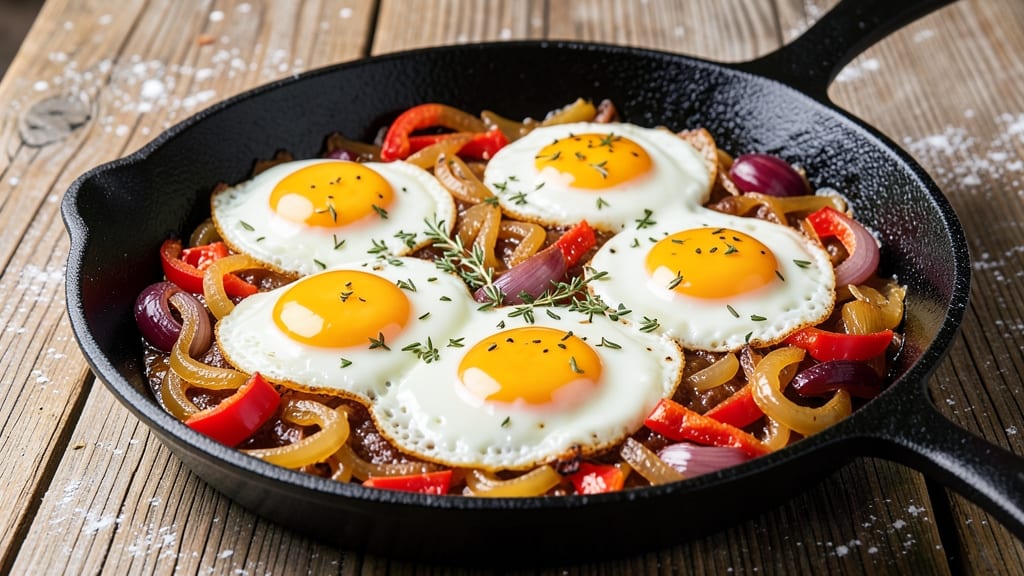
Mastering an egg skillet recipe with crispy edges and fluffy centers transforms breakfast from ordinary to exceptional in a single pan. After years of perfecting this technique, I’ve developed a method that delivers restaurant-quality results without requiring specialized equipment.
The secret lies in proper heat control and ingredient timing—simple steps that make all the difference.
This recipe starts with a well-seasoned cast-iron skillet, where onions and peppers develop a deep caramelized flavor before eggs are added. The eggs cook slowly over medium-low heat, creating tender centers while the edges achieve that coveted crispness.
Whether you prefer a classic breakfast skillet or a heartier frittata-style version, the same principles apply—just adjust the fillings.
By the time you’re done, you’ll have a golden-brown skillet dish with layers of texture and flavor: crispy edges that hold their shape, fluffy egg centers that melt on your tongue, and vegetables or meats that add depth.
The aroma alone will have everyone asking what’s for breakfast. This method works equally well for weeknight meals or weekend brunch spreads.
Pair it with toasted sourdough, fresh avocado slices, or a simple side salad to round out the meal. The beauty of this recipe is its adaptability—swap in your favorite proteins or vegetables while maintaining the perfect egg texture. Let’s get cooking!
Ingredients for egg skillet
A handful of simple ingredients create restaurant-quality crispy edges and fluffy centers.
| Ingredient | Amount | Notes |
|---|---|---|
| Large Eggs 🥚 | 8 whole | Room temperature for even cooking |
| Yellow Onions 🧅 | 1 whole | Thinly sliced for quick caramelization |
| Bell Peppers 🌶️ | 1 whole | Red or yellow, diced into 1/4-inch pieces |
| Unsalted Butter 🧈 | ½ cup | Full-fat for best flavor development |
| Shallots 🧅 | 2 whole | Mince finely for aromatic base |
| Fresh Thyme Leaves 🌿 | 1 tbsp | Stems removed, loosely packed |
| Fresh Parsley 🌿 | ¼ cup | Chopped for garnish, brightens dish |
| Diamond Crystal Kosher Salt 🧂 | 1 ½ tsp | Adjust to taste after cooking |
| Freshly Ground Black Pepper 🌶️ | ½ tsp | Freshly ground for best flavor |
| Whole Milk 🥛 | ¼ cup | For silky, tender eggs |
| All-Purpose Flour 🌾 | 1 tbsp | For thickening egg mixture |
| Crumbled Feta Cheese 🧀 | ½ cup | Salty crunch for depth |
| Chives 🌿 | ¼ cup | Snipped for fresh garnish |
The secret to those crispy edges starts with a well-seasoned cast-iron skillet—don’t skip the preheating step. Thinly sliced onions and diced bell peppers caramelize faster than chunks, so cut them small. I always grab organic yellow onions from Whole Foods for their sweetness, but any will work. For the shallots, mince them finely—they’re the aromatic backbone here. The butter should be melted but not browned when you add the veggies; that’s when you know you’re on track. Fresh thyme leaves add subtle earthiness that dried can’t match—pick up a bunch at the market and snip the leaves off the stems.
No fresh thyme? Dried thyme at half the amount works in a pinch, but it’s not the same. Want extra richness? Swap in crumbled goat cheese instead of feta—it’s tangier and melts beautifully. The milk helps tenderize the eggs, but if you’re dairy-free, unsweetened almond milk works fine. For the flour, gluten-free all-purpose blend works too, though the texture will be slightly different. The chives are purely for garnish, but green onions work too if that’s what you’ve got. Just don’t skip the salt—Diamond Crystal kosher salt dissolves evenly, so measure it out before adding to the eggs.
This skillet reheats beautifully—just add a splash of water and cover for 2-3 minutes on low heat. Store leftovers in the fridge for 3-4 days, or freeze portions for up to 2 months. I always portion mine into containers before freezing so I can grab a meal on busy mornings. For the best texture, reheat in the skillet—the residual heat keeps the edges crispy. And if you’re short on time, prep the veggies the night before—just keep them in a sealed container in the fridge. The eggs cook freshest when added last, so don’t rush this step—patience is key for those perfect edges.
Why You'll Love This Recipe
- One-Pan Magic: I swear by this recipe because it’s literally one pan, one spatula, and zero dishes left to scrub. Sauté the onions and shallots in butter until they’re golden—that smell alone makes it worth it—and then just crack in those eggs. No flipping, no fuss, just crispy edges and runny yolks when you want them.
- Sweet & Savory Crunch: The caramelized onions and bell peppers add this perfect balance of sweetness and bite—like a brunch upgrade without the pretension. I’ll be real: I often throw in a pinch of smoked paprika or a dash of hot sauce if I’m feeling bold, but even as-is, it’s dangerously addictive.
- Leftover Hero: This skillet begs to be made ahead. The flavors actually get better the next day—cooler eggs, still tender, with all those mellowed veggies. I pack it for lunch or reheat it for a lazy dinner, and honestly? It’s just as good cold as it is hot.
- Budget Brunch Win: Eggs, onions, peppers—these are the kind of ingredients that don’t break the bank but still feel special. A single skillet feeds four for under $8, and the leftovers stretch into snacks or a quick breakfast. My college self would’ve wept. (My current self still does.)
Step-by-step instructions for crispy egg skillet
Here's how to nail that perfect golden crust while keeping those eggs silky inside.
Sauté the Aromatic Base
Melt the 0.5 cup unsalted butter in a 10-inch cast-iron skillet over medium heat. Add the 2 whole shallots and 1 whole yellow onion, cooking for 5-6 minutes until softened and translucent. Here's the thing—you want them to caramelize just enough to build flavor without turning brown.
Toss in the 1 whole bell peppers, cut into ¼-inch dice, and cook for another 4-5 minutes until slightly tender. Season with 1 tbsp fresh thyme leaves and 0.5 tsp freshly ground black pepper. The vegetables should be cooked through but still hold their shape—this prevents a mushy skillet later.
Prepare the Egg Mixture
In a medium bowl, whisk together the 8 whole large eggs until just combined. Add the 0.25 cup whole milk and 1 tbsp all-purpose flour, whisking until smooth. This creates a slightly thicker custard that holds together better when poured over the vegetables. Season with 1 tsp of the 1.5 tsp diamond crystal kosher salt, reserving the remaining 0.5 tsp for later.
Real talk: don't overmix. Just until the flour dissolves completely—any more and you'll get tough eggs. The milk adds richness while the flour helps create that perfect crispy edge when baked.
Assemble and Bake for Crispy Edges
Carefully pour the egg mixture evenly over the sautéed vegetables in the skillet. Sprinkle the 0.5 cup crumbled feta cheese evenly over the top, then scatter the 0.25 cup chopped fresh parsley and reserved 0.5 tsp diamond crystal kosher salt. Transfer the skillet to a preheated oven at 375°F.
Bake for 12-15 minutes until the edges are deep golden brown and the center is just set. Here's what I do: I rotate the pan halfway through for even browning. The top should look puffed with crispy edges—this is your crispy promise delivered. A toothpick inserted in the center should come out clean with no raw egg.
Finish with Fresh Herbs
Remove from the oven and let rest for 2 minutes. This resting period helps the eggs set completely. Use a spatula to gently fold the skillet, then sprinkle the 0.25 cup snipped chives over the top. The chives add a bright, fresh finish that cuts through the richness of the eggs and feta.
Serve immediately while the edges are still crispy. Each bite should deliver that perfect contrast—crispy golden edges with silky, fluffy centers. The feta adds salty crunch while the chives bring freshness to every forkful.
Pro Tips For Making Egg Skillet
- Prep Shallots Like a Pro: Don’t just chop those 2 whole shallots—slice them paper-thin. I learned this the hard way: thick shallots burn before they soften, while thin slices caramelize in the 0.5 cup unsalted butter without turning bitter. (Yes, even if you’re impatient like me.)
- Rotate That Skillet: Halfway through baking at 375°F, give the pan a 180-degree spin. The edges near the oven’s heat source will brown too fast otherwise, leaving the other side pale. This guarantees that golden crust all around.
- Whisk Eggs Just Enough: Overmixing the 8 whole large eggs with milk and flour turns them rubbery. Stir until the 1 tbsp all-purpose flour dissolves—no streaks, no lumps—and stop. The eggs need to stay tender, not tough.
- Salt the Feta Last: Sprinkle the 0.5 cup crumbled feta after baking, not before. The salt in the cheese will draw moisture from the eggs while they cook, making them gummy. Save that salty crunch for the final sprinkle.
Wine and beer pairings for this egg skillet
Crisp White Wine
A dry Riesling from Germany or Alsace is my go-to pairing for this egg skillet—its bright acidity cuts through the richness of the eggs and feta while complementing the caramelized onions.
Look for a wine with 12-13% ABV and notes of green apple or citrus, like Dr. Loosen Blue Slate Riesling. Serve slightly chilled (50-55°F) to enhance its crispness. The wine’s mineral finish balances the skillet’s salty feta and crispy edges beautifully. 🍷
Light Lager
For a beer lover’s twist, a crisp pilsner like Stella Artois or Heineken works surprisingly well. The subtle malt sweetness and effervescence cleanse your palate between bites of the rich egg skillet. Opt for a 4-5% ABV beer to avoid overwhelming the dish.
If you prefer something hoppier, a Belgian witbier (like Hoegaarden) adds a refreshing citrusy note that pairs perfectly with the skillet’s thyme and chives. 🍺
Sparkling Wine
If you’re celebrating brunch, a dry sparkling wine like Prosecco or Cava elevates the dish to a festive level. The bubbles and slight sweetness contrast the skillet’s savory flavors, while its acidity keeps your palate fresh.
I recommend a Prosecco with 11-12% ABV—just enough sweetness to balance the saltiness without clashing. Serve in small flutes to maintain the celebratory vibe. ✨
Coffee or Tea
For a non-alcoholic option, a strong black coffee (like a French press) enhances the skillet’s savory notes, especially if you’ve added smoked paprika or chorizo to your variation. Alternatively, a green tea (like jasmine or sencha) provides a delicate, slightly bitter contrast that highlights the dish’s crispy edges.
Brew it lightly to avoid overpowering the skillet’s flavors. ☕
Seasonal Adaptations
In summer, a rosé with 12-13% ABV adds a refreshing touch, while in winter, a Chardonnay with 13-14% ABV and a hint of oak complements the richness of the eggs.
For a festive twist during holidays, a sparkling cider (like Martinelli’s) works wonderfully with a pumpkin-spiced variation of this skillet. 🍂
Nutrition facts
Frequently asked questions
Can I make this egg skillet without baking?
For a stovetop version, cook the sautéed vegetables as directed, then pour the egg mixture over them. Reduce heat to low-medium and cover with a lid. Cook for 8-10 minutes, stirring gently every 2-3 minutes until the edges set. The centers won't be as puffy as baked, but you'll still get tender eggs with crispy edges.
What's the best way to reheat leftovers?
Reheat in the same skillet over low heat for 3-4 minutes with a splash of water to restore crispiness. For microwave reheating, cover with a damp paper towel and heat in 30-second bursts—this prevents rubbery eggs. The oven method works too: 350°F for 5-7 minutes with a sprinkle of water.
Can I add meat to this recipe?
Yes! Cook ½ lb crumbled sausage or diced bacon with the onions and peppers until fully cooked. For extra protein, add ½ lb cooked chicken or shrimp after the vegetables are tender. Just be sure to drain excess grease if using fatty meats. The meat adds heartiness while keeping the crispy egg texture intact.
Why did my eggs turn out rubbery?
Overmixing the eggs or cooking at too high heat causes rubbery texture. Whisk just until combined, and use medium-low heat when baking. Also, ensure your eggs are at room temperature—cold eggs cook unevenly. For extra tenderness, add 1 extra tbsp milk to the mixture.
What's the secret to extra crispy edges?
Use a well-seasoned cast-iron skillet and preheat it thoroughly. Bake at 375°F for 12-15 minutes until edges are deep golden brown. For even crispiness, rotate the pan halfway through. The 1 tbsp flour in the egg mixture also helps create that perfect texture.