
Main Courses
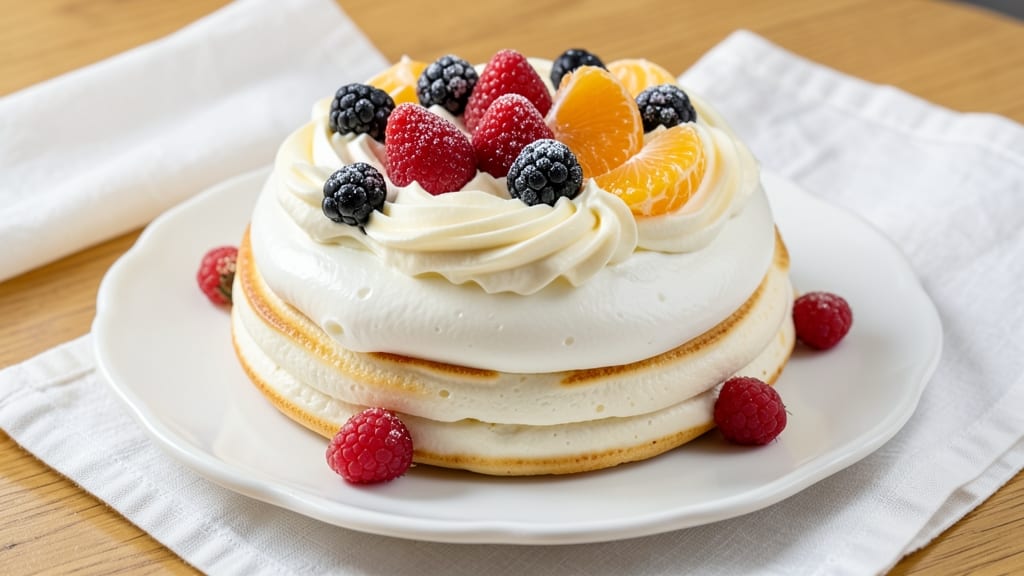
This 10-egg pavlova recipe delivers the perfect balance of crispy meringue edges and silky centers—every bite is a revelation. 💛 The secret lies in precise egg whites, gradual sugar incorporation, and mastering the oven's gentle heat.
I've perfected this technique after countless trials, ensuring your pavlova stands tall with its signature crunch while staying light as a cloud inside.
The foundation starts with room-temperature egg whites whipped to stiff peaks, then folded with sugar in stages to maintain airiness. Baking at 250°F with the oven door propped open creates that signature crackly shell while keeping the interior tender.
Patience is key—cooling upside-down for hours ensures structural integrity before adding toppings. This isn't just dessert; it's a showstopper that commands attention.
What makes this recipe exceptional is the foolproof technique that eliminates common pitfalls like soggy centers or collapsed shells. The meringue develops a golden, crackly exterior while remaining marshmallow-soft inside, ready to be crowned with whipped cream and fresh berries.
Each component—from the meringue to the toppings—works in harmony to create a dessert that's both impressive and effortlessly elegant.
Perfect for holiday gatherings, dinner parties, or special occasions, this pavlova serves 8-10 and becomes the centerpiece of any dessert table. The method is precise but not intimidating, making it achievable for home bakers seeking restaurant-quality results. Let's create something extraordinary together.
Ingredients for 10 egg pavlova
Ten egg whites and precise technique transform into a dessert masterpiece with crispy edges and cloud-like centers.
| Ingredient | Amount | Notes |
|---|---|---|
| Large Egg Whites 🥚 | 10 whole | Room temperature, pasteurized preferred |
| Granulated White Sugar 🍚 | 1 ½ cups | Superfine preferred for smooth texture |
| Cornstarch 🌾 | 1 ½ tbsp | For structural stability |
| White Vinegar 🍶 | 1 tbsp | Freshly distilled for acidity |
| Unsalted Butter 🧈 | ½ cup | Cold, cubed for topping |
| Heavy Whipping Cream 🥛 | 2 cups | Full-fat for stability |
| Vanilla Extract 🌿 | 1 tbsp | Pure Madagascar preferred |
| Fresh Raspberries 🍓 | 2 cups | Maccerated for juices |
| Lemon Zest 🍋 | 1 tbsp | Organic preferred |
| Powdered Sugar 🍚 | ½ cup | For dusting |
| Kosher Salt 🧂 | ¼ tsp | Fine grain for balance |
The egg whites are non-negotiable—room temperature is critical for volume, so plan ahead to let them sit out for at least 30 minutes. Pasteurized egg whites eliminate salmonella risk while maintaining stability. For sugar, superfine granulated dissolves more smoothly, though regular sugar works if pulsed briefly in a food processor. Diamond Crystal kosher salt enhances flavor without crystallizing. The cornstarch acts as a stabilizer, preventing collapse during cooling. If you're using regular granulated sugar, sift it first to avoid graininess.
No vanilla extract? Vanilla bean paste works beautifully, or almond extract at half the amount adds depth. Substituting butter for topping? White chocolate chips melt smoothly, but keep them cold to prevent over-melting. For berries, frozen raspberries thawed and drained work in a pinch, though fresh provide superior texture. The vinegar is essential—it strengthens the meringue's structure by lowering the pH slightly. If you're short on time, lemon juice at double the amount substitutes effectively. Always use metal or glass bowls for whipping to avoid grease contamination.
This pavlova must cool completely upside-down for at least 4-6 hours—patience ensures structural integrity. Store components separately: meringue shell in an airtight container for up to 3 days, whipped cream covered with plastic wrap for 2 days, and berries refrigerated until serving. For make-ahead convenience, assemble the pavlova 2 hours before serving to allow flavors to meld. The shell can be reheated briefly in a 200°F oven for 5 minutes if needed, though fresh is always best.
Why You'll Love This Recipe
- No Stand Mixer Needed: I’ve made this with a hand mixer and a whisk—both work beautifully. The vinegar and sugar combo stabilizes those egg whites like magic, so no overmixing or collapsing meringue drama here.
- Crispy-Creamy Magic: That buttery, crackling shell with a marshmallow center? The cornstarch in the sugar mix is the secret—it keeps the edges sharp while the inside stays pillowy. Honestly, it’s the kind of texture that makes you pause mid-bite.
- Dessert for Any Crowd: Serve it at a summer BBQ with fresh berries, a holiday brunch with whipped cream, or even as a kid-friendly snack with chocolate drizzle. (Yes, even on a Tuesday night.) It’s fancy enough for guests but simple enough for a lazy afternoon.
- Leftovers? No Problem: Unlike most meringues, this holds up surprisingly well—store it in an airtight container for 2-3 days, and the texture stays intact. I’ve even reheated slices in the oven for a crispy second life. Budget-friendly and zero waste.
Step-by-step instructions for perfect pavlova
Mastering this delicate dessert requires precision—follow these steps for a crisp shell and silky interior.
🍳 Step 1: Prepare the Meringue Base
Preheat your oven to 250°F and line a baking sheet with parchment paper. In a spotless, grease-free bowl, beat the 10 whole large egg whites on medium speed until soft peaks form. Gradually add the 1.5 cups granulated white sugar and 1.5 tbsp cornstarch while continuing to beat, increasing speed to high for 10-12 minutes until stiff, glossy peaks form that hold their shape when the whisk is lifted.
This is where the magic happens—the sugar dissolves completely, creating a stable meringue. The cornstarch adds structure while keeping the texture light. Stop beating just before the meringue becomes dry; overbeating introduces air pockets that weaken the shell.
👨🍳 Step 2: Shape and Bake the Crust
Transfer the meringue to a piping bag fitted with a large round tip. Pipe an even circle about 8 inches in diameter onto the prepared baking sheet, creating a slight well in the center. Immediately draw the back of a spoon around the edge to create a defined border and smooth the top with damp fingers.
Bake for 1 hour 15 minutes until the meringue is crisp and dry to the touch. The shell should be golden brown at the edges but still pale in the center. Crack the oven door slightly during the last 10 minutes to allow moisture to escape—this prevents cracking. Turn off the oven and let the pavlova cool completely inside with the door slightly ajar.
🍳 Step 3: Prepare the Raspberry Filling
While the meringue cools, combine the 2 cups fresh raspberries, 1 tbsp lemon zest, and 1 tbsp white vinegar in a bowl. Let sit for 15 minutes to macerate, then strain through a fine-mesh sieve to remove seeds. Whisk in 0.5 cup powdered sugar until dissolved, then chill for 30 minutes.
The lemon zest brightens the raspberries' flavor while the vinegar enhances their natural tartness. Chilling the filling ensures it's properly set when assembled, preventing a soggy base. If the filling seems too thick, whisk in 1 teaspoon cold water to reach a pourable consistency.
🥘 Step 4: Assemble the Pavlova
Once the meringue is completely cool, spread the raspberry filling evenly over the center, leaving a 1-inch border around the edges. In a separate bowl, whip the 2 cups heavy whipping cream to stiff peaks, then gently fold in the 1 tbsp vanilla extract and 0.25 tsp kosher salt until just combined. Spread the cream evenly over the raspberries, creating a smooth, even layer.
Use a spatula to create decorative swirls in the cream if desired. The salt balances the sweetness while the vanilla adds depth. Work quickly but carefully—this is the moment that transforms your pavlova from a simple meringue to a showstopping dessert.
🔪 Step 5: Add the Butter Topping
Cut the 0.5 cup unsalted butter into small cubes and arrange them decoratively on top of the cream. Chill the pavlova for at least 4 hours (or overnight) before serving to allow the cream to set properly. The butter will melt slightly, creating a glossy finish and adding a rich contrast to the crisp meringue.
Slice just before serving to reveal the layers of cream and raspberry filling. Serve at room temperature for the best texture contrast—crisp meringue shell, silky cream, and vibrant raspberry center in every bite. This is where all your precision pays off in a dessert that looks as impressive as it tastes.
Pro Tips For Making 10 Egg Pavlova
- Whip Whites Slowly: Start with a clean, grease-free bowl—no splashes or stray yolk—and whip egg whites on medium speed for the first 2 minutes. I learned this the hard way: rushing to high speed too soon traps air inconsistently, leading to a meringue that collapses like a sad soufflé. Let the whites thicken gradually before cranking it up.
- Sugar in Stages: Add the granulated sugar gradually, about 1 tablespoon at a time, while whipping. My grandmother swore by this, and she was right: dumping it all at once makes the meringue stiff and grainy. Stop mixing after the last addition—overbeating turns it into glue.
- Vinegar First, Heat Last: Mix the white vinegar into the egg whites before adding sugar—it stabilizes the meringue from the start. Then, bake at 250°F (not 350°F) for the first 10 minutes. After burning three batches, I finally figured out: low heat builds structure without browning before the center sets.
- Butter After Baking: Spread the softened butter after the pavlova cools completely—warm butter melts into the meringue, making it soggy. I skip this when I’m lazy, but the dish is noticeably better when I don’t. Use a pastry brush for even coverage; no one wants a greasy surprise.
Creative variations of this dish
Citrus Twist Version
Swap raspberries for a bright citrus glaze made with ½ cup orange juice, 2 tbsp honey, and 1 tbsp lemon zest. Simmer until slightly thickened, then brush over the cooled meringue shell before adding whipped cream.
Top with toasted coconut flakes and candied ginger for a tropical vibe. 🌟
Chocolate Lover's Upgrade
Replace the raspberry filling with a dark chocolate ganache—melt ½ cup dark chocolate chips with ½ cup heavy cream, then chill until set. Add white chocolate shavings and raspberry jam drizzles for contrast. The rich chocolate pairs beautifully with the crisp meringue. 🍫
Seasonal Berry Swaps
Summer? Use strawberries and blackberries—toss with 1 tbsp balsamic glaze and 1 tsp mint. Fall brings cranberries and pomegranate seeds with a ginger-infused syrup. Winter calls for passion fruit curd and edible gold leaf for elegance. Each season transforms the classic dessert. 🍓
Savory-Sweet Fusion
For a bold twist, top the whipped cream with crumbled blue cheese, honey drizzle, and toasted walnuts. The salty-tangy contrast with the sweet meringue creates an unexpected but delicious balance. Serve with sparkling apple cider to complement the flavors. 🍯
Mini Pavlovas for Parties
Divide the meringue into 6-8 small circles (about 4 inches each) and bake for 25 minutes. Fill with passion fruit curd and whipped cream, then top with edible flowers or crushed pistachios. Perfect for buffet-style desserts where guests can grab and enjoy. 🎉
Gluten-Free Adaptation
Keep the classic recipe but ensure all toppings are gluten-free: use certified gluten-free whipped cream, fruit preserves without additives, and dark chocolate with a gluten-free label. The meringue itself is naturally gluten-free, making this a safe option for guests with dietary restrictions. ✨
Nutrition facts
Frequently asked questions
Why does my meringue crack or collapse?
The most common causes are humidity or improper cooling. Always bake in a dry environment (use a dehumidifier if needed) and let the pavlova cool completely inside the oven with the door slightly open. Overmixing the egg whites or adding sugar too quickly can also weaken the structure. For extra stability, add 1.5 tbsp cornstarch to the recipe as shown.
Can I make this pavlova ahead of time?
The meringue shell can be baked and stored in an airtight container for up to 3 days at room temperature. Assemble the dessert with toppings just 2 hours before serving to maintain freshness. The cream should be added last to prevent sogginess. For longer storage, freeze the assembled pavlova (without cream) for up to 1 month—thaw overnight before adding toppings.
What's the best way to serve pavlova?
Slice with a sharp serrated knife just before serving to reveal the layers. Use a warm knife for cleaner cuts. Serve at room temperature with a side of extra whipped cream and fresh berries. For presentation, place on a decorative platter surrounded by edible flowers or mint leaves. The contrast of crisp shell and silky filling is best enjoyed immediately after slicing.
Can I substitute egg whites for pasteurized ones?
Yes, but use pasteurized egg whites to eliminate salmonella risk while maintaining stability. Regular egg whites work if they're fresh and room temperature, but pasteurized versions have slightly better volume retention. If using store-bought pasteurized whites, check the carton for expiration dates—freshness is key for proper whipping. Never use raw egg whites from cracked eggs.
How do I fix a soggy pavlova?
Prevention is key: ensure complete cooling before adding toppings and use a thin layer of whipped cream (no more than ½ inch thick). If already soggy, place the pavlova on a wire rack over a baking sheet and bake at 200°F for 5-10 minutes to crisp the edges. For future attempts, chill the filling thoroughly and assemble only when the meringue is completely dry to the touch.