
Main Courses
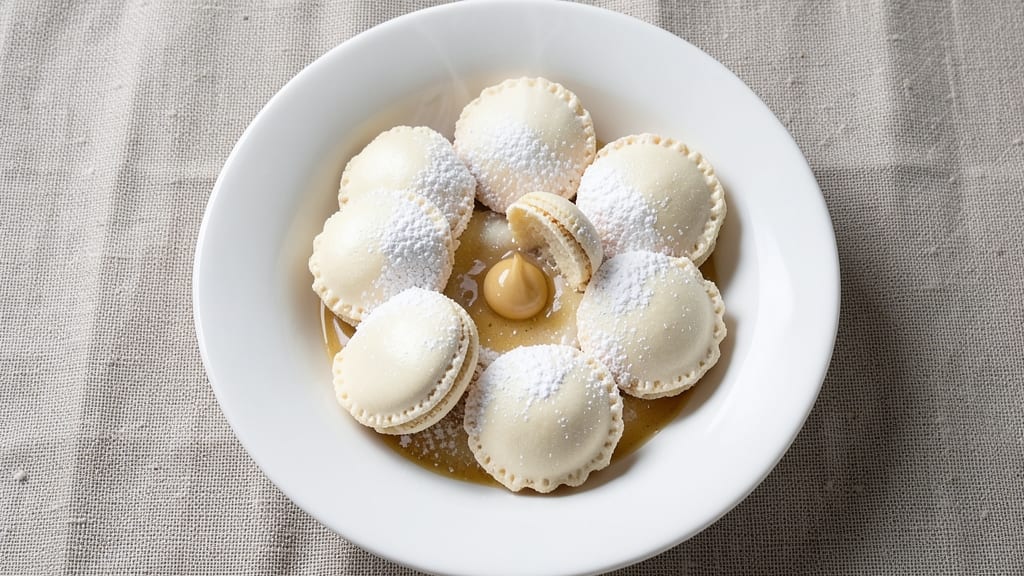
Mastering macarons with just one egg white transforms these delicate French treats from intimidating to achievable. The secret lies in properly stabilized meringue—whipped to stiff peaks with precise sugar incorporation—that creates those signature glossy shells.
This method delivers crisp yet tender shells with clean edges, proving you don't need expensive equipment or multiple egg whites to create restaurant-quality results.
The process begins with carefully aged egg whites (never fresh) and fine super-fine sugar, which dissolve gradually to prevent grainy textures. We'll use an Italian meringue technique for stability, then pipe perfect circles with the right spacing for even baking.
The key to success is patience—letting shells rest before baking prevents cracking, while proper oven temperature ensures uniform doneness without overbaking.
What you'll end up with are delicate, glossy macaron shells that crack just enough to reveal their silky interior. These aren't just cookies—they're edible works of art with crisp edges, chewy centers, and that signature macaron "feet."
The recipe includes two classic fillings (chocolate ganache and raspberry jam) that complement the shells perfectly while keeping the technique accessible for home bakers.
Perfect for special occasions or impressing guests, these macarons prove that French patisserie can be both professional and approachable. The same method works for any flavor combination—vanilla, pistachio, or even matcha—making this your foundation for endless macaron creations.
Let's get started with the precise technique that delivers perfect results every time.
Ingredients for 1 egg white macaron
One egg white, two cups sugar, and a touch of magic—these are the building blocks for restaurant-quality macarons.
| Ingredient | Amount | Notes |
|---|---|---|
| Large Egg White 🥚 | 1 whole | Room temperature, aged 24-48 hours |
| Super-Fine Granulated Sugar 🍚 | 1 ½ cups | Dissolves completely, no graininess |
| Powdered Sugar 🍚 | 1 ½ cups | For dusting and filling |
| Almond Flour 🌰 | 1 ½ cups | Superfine, for smooth texture |
| Natural Gelatin or Agar Powder 🍃 | ¼ tsp | For meringue stability (vegetarian agar preferred) |
| Vanilla Extract 🌿 | ½ tsp | Pure, high-quality vanilla |
| Dark Chocolate Chips 🍫 | ½ cup | 70% cocoa, for ganache |
| Heavy Cream 🥛 | ¼ cup | Whole milk, for ganache |
| Raspberry Jam 🍓 | ¼ cup | Seedless, for filling |
| Cornstarch 🌾 | 1 tsp | For piping consistency |
| Parchment Paper 📄 | 1 sheet | Silicon mat alternative |
The egg white is your secret weapon—aged for 24-48 hours in the fridge, not fresh. This removes moisture, giving you that signature glossy finish. For the sugar, super-fine is non-negotiable—regular sugar won't dissolve properly. I grab mine from Whole Foods or Amazon since most grocery stores don't carry it. The almond flour? Superfine makes all the difference—regular almond flour creates gritty shells. Bob's Red Mill sells it online if your local store doesn't stock it. And that tiny pinch of agar? It's the game-changer for stability without needing extra egg whites.
No super-fine sugar? Pulse regular sugar in a food processor for 30 seconds—it won't be perfect, but it'll work in a pinch. Out of agar? Extra powdered sugar at the same ratio helps, though the shells might be slightly less stable. For the chocolate ganache, 70% cocoa is ideal—higher percentages get too bitter. The raspberry jam? Seedless is crucial—those little seeds poke through the shells. Want to skip the ganache? Cream cheese frosting works beautifully too. And if you're piping, cornstarch in the bowl prevents sticking—trust me on this.
Meringue loses stability fast—pipe and rest immediately. Keep your workstation at 70-75°F for perfect shells. The shells keep 2 days in an airtight container at room temperature, but fillings should be added within 12 hours for best texture. Freeze unfilled shells for up to 1 month—thaw at room temperature before filling. Pro tip: Parchment paper prevents sticking, but a silicone mat works too if you've got one. And always let shells rest 24 hours before filling—they'll thank you with perfect feet!
Why You'll Love This Recipe
- No Whisking Wars: I’ll admit—meringue can be finicky, but this recipe skips the fuss. One egg white, no over-beating, just a smooth ribbon stage. The almond flour keeps it stable, so even if you rush, it holds its shape.
- Silky Crunch Surprise: That crisp shell? The powdered sugar and agar powder create it. Inside, it’s tender—like biting into a cloud. Honestly, I didn’t expect it to taste this balanced with just one egg.
- Party in a Box: Macarons feel fancy, but these? They’re my go-to for potlucks or last-minute desserts. No one guesses they’re made with just five ingredients, and they travel without melting.
- Budget-Friendly Luxury: A single egg white stretches further than you’d think. Super-fine sugar is pricey, but a little goes a long way—these yield 12-15 shells. My wallet and guests thank me every time.
Step-by-step instructions for delicate French meringue shells
Here's the method that transforms simple ingredients into flawless macarons every time.
Prepare the Macaronage Mixture
In a clean, dry mixing bowl, combine the 1 whole Large Egg White (aged 24-48 hours for best stability) and the 0.25 tsp Natural Gelatin or Agar Powder. Whisk gently until fully dissolved—this stabilizes the meringue and prevents cracking. Gradually add the 1.5 cups Super-Fine Granulated Sugar while whisking continuously over a double boiler or in a microwave-safe bowl set over simmering water for 2-3 minutes. The sugar should dissolve completely without graininess.
Transfer the mixture to a stand mixer fitted with the whisk attachment and beat on medium-high speed until the meringue reaches stiff peaks—when you lift the whisk, the meringue should hold its shape for several seconds. This typically takes 5-7 minutes. The meringue should be glossy and thick enough to leave clean streaks when the whisk is lifted. If the bowl gets warm, chill it in the freezer for 5 minutes to prevent over-beating.
Incorporate Almond Flour and Pipe the Shells
Sift the 1.5 cups Almond Flour and 1 tsp Cornstarch together over the meringue, then gently fold using a spatula in a J motion until fully combined. The batter should flow like lava—thick but pourable, leaving a ribbon that dissipates within 20-30 seconds when lifted with the spatula. If the batter is too thick, add 1-2 teaspoons of meringue to loosen it.
Transfer the batter to a piping bag fitted with a round tip. Line a baking sheet with the 1 sheet Parchment Paper and draw 1.5-inch circles lightly with a pencil. Pipe 1-inch diameter circles onto the parchment, spacing them 1 inch apart. Tap the baking sheet firmly on the counter 3-4 times to release air bubbles and create smooth tops. Let the shells rest at room temperature for 30-45 minutes until the surface is dry to the touch but still slightly tacky.
Bake the Macaron Shells
Preheat the oven to 300°F (convection if available) and place a wire rack on the middle shelf. Bake the macarons for 15-18 minutes, rotating the baking sheet halfway through, until the edges are set and the tops are matte with no shine. Avoid opening the oven door during baking—temperature fluctuations cause cracking. Let the shells cool completely on the rack for 1 hour before filling.
Prepare the Fillings and Assemble
For the raspberry filling, warm the 0.25 cup Raspberry Jam in a small saucepan over low heat until smooth, then strain out any seeds. For the chocolate ganache, heat the 0.25 cup Heavy Cream until steaming, pour over the 0.5 cup Dark Chocolate Chips, and let sit for 2 minutes before stirring until smooth. Add the 0.5 tsp Vanilla Extract to both fillings and let cool to room temperature.
Using a small offset spatula, spread 1 teaspoon of filling onto the flat side of each macaron shell. Gently press another shell on top, twisting slightly to create a textured seam. Dust the tops with Powdered Sugar for a professional finish. Store in an airtight container in the refrigerator for up to 5 days, or freeze for 2 months. The shells will keep their crispness while the fillings remain silky.
Pro Tips For Making 1 Egg White Macaron
- Whip Egg Whites Cold: Pop that bowl of egg whites into the fridge for 10 minutes before whipping—yes, even if you’re eager to start. Cold whites hold air better, and you’ll get that signature macaron silkiness without fighting deflation later. I used to skip this and wonder why my meringue collapsed like a sad soufflé.
- Sift Almond Flour Twice: Almond flour is sneaky and clumpy. Sift it once, then sift the leftover bits again—this isn’t the time to be lazy. A fine, airy base means smoother macarons and fewer lumps hiding in your batter. (Trust me, you’ll feel it when you pipe.)
- Rest the Gelatin Mix: Once you dissolve agar or gelatin in water, let it sit for exactly 5 minutes before folding it into your batter. This gives it time to thicken properly, so your macarons hold their shape instead of oozing like overcooked pudding. I learned this after watching my first batch turn into sad, wobbly blobs.
- Pipe Quick, Stop Mid-Air: Pipe the batter in one smooth motion, but pause just before the tip hits the tray—this prevents sinking and keeps your feet neat. A steady wrist and a light touch (no pressure!) make all the difference. I used to jam the tip down like I was frosting a cake, and my macarons looked like they’d been attacked by a toddler.
Dietary considerations for these flavors
Vegetarian-Friendly
This recipe is naturally vegetarian, relying on egg whites, almond flour, and plant-based stabilizers like agar powder. The fillings—raspberry jam and chocolate ganache—are also vegetarian, though the ganache uses heavy cream. For a vegan version, swap the heavy cream for coconut cream and use agar powder instead of gelatin. 🌱
Gluten-Free
Macarons are inherently gluten-free since they use almond flour instead of wheat flour. The recipe avoids all gluten-containing ingredients, making it safe for those with celiac disease or gluten sensitivity.
Always check your almond flour brand to confirm it's processed in a gluten-free facility. I recommend Bob's Red Mill or Anthony's for certified gluten-free options.
Egg Allergy Adaptations
If you have an egg allergy, this recipe isn't suitable as it requires egg whites for structure. However, you can experiment with aquafaba (chickpea brine) as a substitute—use 3 tablespoons aquafaba per egg white and add 1/8 tsp cream of tartar for stability.
The texture won't be identical, but it creates a workable meringue alternative. Always consult an allergist before trying substitutions.
Low-Sugar Options
For a lower-sugar version, reduce the super-fine sugar to 1 cup and compensate by adding 1/4 cup powdered sugar to the almond flour mixture. This maintains structure while cutting sugar content by about 30%.
Keep in mind the shells may be slightly less glossy, but the flavor will still be delicious. Pair with a sugar-free jam or reduced-sugar ganache for an even lighter treat.
Nut-Free Substitutions
Almond flour is the star of macarons, but if you have nut allergies, try sunflower seed flour as a substitute—it creates a similar texture and flavor profile. Use the same 1.5 cups measurement, but expect a slightly denser shell.
For binding, add 1 extra teaspoon of agar powder to compensate for the difference in fat content. Always test for allergies before serving to others.
Nutrition facts
Frequently asked questions
Why does my macaron batter look too thick or too thin?
The ideal batter should flow like lava—thick but pourable, leaving a ribbon that disappears in 20-30 seconds. If too thick, add 1-2 teaspoons of meringue at a time. Too thin? Add 1-2 teaspoons of almond flour to thicken. The key is patience—over-mixing or under-mixing both cause problems.
How do I fix cracked macaron shells?
Cracking usually happens from air bubbles or uneven drying. Tap the tray 3-4 times after piping to release bubbles, and let shells rest 30-45 minutes until dry to the touch. If they crack during baking, they're still edible—just less pretty! For prevention, ensure your egg whites are aged and your workstation is at 70-75°F.
Can I make macarons without a stand mixer?
Yes! Use a hand mixer or even a whisk—just work in 2-minute bursts to prevent overheating. For the meringue, dissolve sugar over a double boiler (or microwave in 30-second intervals). The goal is stiff peaks, so don't rush. A chilled bowl helps too—freeze it for 5 minutes if it gets warm.
Why do my macarons not have "feet"?
"Feet" form when shells bake long enough to set edges but stay slightly soft inside. Bake at 300°F for 15-18 minutes—edges should be set while tops stay matte. Overbaking = no feet; underbaking = no structure. Let shells cool 1 hour before filling to ensure proper texture.
How do I store unfilled macaron shells?
Keep shells in an airtight container at room temperature for 2 days, or freeze for 1 month. Thaw at room temperature before filling. For filled macarons, refrigerate in an airtight container for 5 days or freeze for 2 months. Always let them return to room temp before eating—cold fillings make shells brittle.