
Appetizers
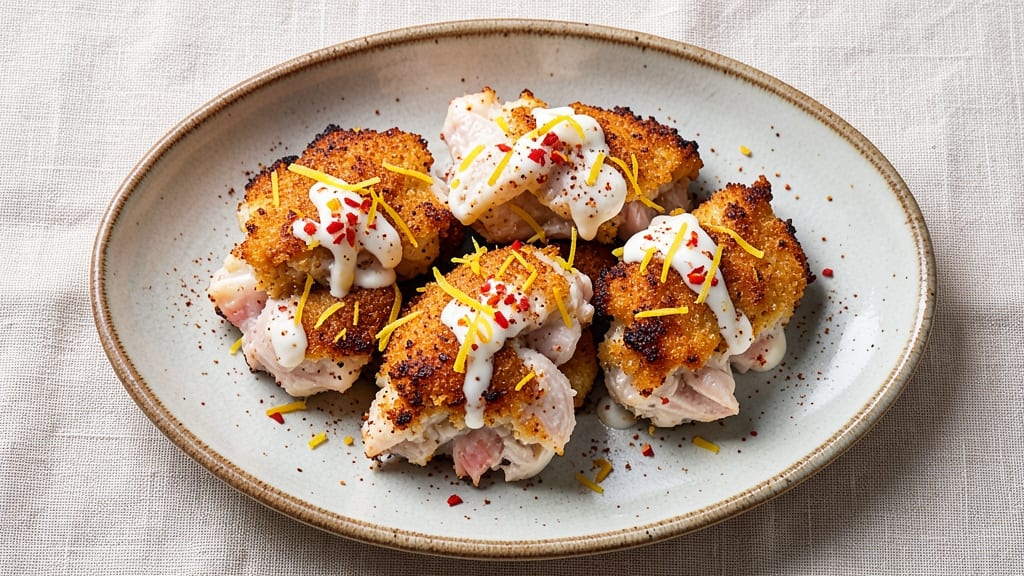
This egg-free crab cake recipe delivers the perfect balance of flaky texture and golden-brown crunch without relying on traditional binders. After years of perfecting seafood dishes, I discovered that panko breadcrumbs and a touch of Dijon mustard create a structure just as sturdy as eggs—while keeping every bite tender inside.
The secret lies in proper preparation and gentle cooking, ensuring your crab cakes hold together beautifully.
What sets this recipe apart is its simplicity and versatility. With just a handful of ingredients—fresh lump crab meat, panko breadcrumbs, and a few pantry staples—you can create restaurant-quality appetizers in under 30 minutes.
The key is using fresh crab meat (not imitation) and letting the mixture rest briefly before shaping, which helps the crumbs absorb moisture and form a cohesive patty.
By the time these crab cakes emerge from the pan, you'll have golden, crispy edges with a flaky interior that melts in your mouth. The flavor is bright, briny, and perfectly balanced, thanks to a touch of lemon zest and Old Bay seasoning.
Serve them warm with a side of tartar sauce or a squeeze of lemon—this is the kind of appetizer that disappears faster than you can say "second helping."
This recipe works equally well for seafood lovers and those avoiding eggs, making it a crowd-pleaser for any gathering. Whether you're hosting a dinner party or simply craving a satisfying bite, these crab cakes are sure to impress. Let's get cooking!
Ingredients for crab cake recipe without egg
Fresh crab, crispy crumbs, and no eggs—just these simple ingredients for perfect crab cakes every time.
| Ingredient | Amount | Notes |
|---|---|---|
| Fresh Lump Crab Meat 🦀 | 1 ½ lb | Backfin or jumbo preferred, not imitation |
| Panko Breadcrumbs 🍞 | ¾ cup | Japanese-style for extra crunch |
| Dijon Mustard 🍯 | 1 tbsp | High-quality, smooth variety |
| Mayonnaise 🥛 | 2 tbsp | Duck egg or vegan mayo works |
| Lemon Zest 🍋 | 1 tsp | Freshly grated from organic lemon |
| Old Bay Seasoning 🌶️ | 1 tsp | Classic blend for authentic flavor |
| Chives 🌿 | 2 tbsp | Finely chopped, fresh preferred |
| Extra-Virgin Olive Oil 🫒 | 2 tbsp | For crisping, high smoke point |
| Unsalted Butter 🧈 | 2 tbsp | Cold, for pan frying |
| Vegetable Oil 🫒 | ¼ cup | For frying, light neutral oil |
| Salt 🧂 | ½ tsp | Fine sea salt for seasoning |
| Black Pepper 🌶️ | ¼ tsp | Freshly cracked preferred |
| Lemon Juice 🍋 | 1 tbsp | Freshly squeezed, for brightness |
| Vegetable Stock 💧 | ½ cup | For deglazing, low-sodium preferred |
The crab meat makes or breaks this. Fresh lump crab from a trusted seafood counter is a must—Costco or Whole Foods carry the best quality. Look for bright, plump meat with minimal shell fragments. If you're using frozen, thaw it overnight in the fridge (never microwave). The panko should be Japanese-style—it's lighter and gives better texture than regular breadcrumbs. I always grab mine from the Asian aisle at Trader Joe's—it's cheaper than the gourmet section and just as good. For the Old Bay, McCormick's original is the gold standard, but any brand works in a pinch.
No Dijon mustard? Yellow mustard at half the amount works, but the flavor won't be as refined. Short on mayo? Greek yogurt or avocado mash (yes, really) can bind it together—just add a splash of lemon to cut the richness. The lemon zest and juice are non-negotiable for brightness, but if you're out of zest, a pinch of citric acid does the trick. For the chives, fresh is ideal, but freeze-dried works in a bind—just crush it finely. The vegetable stock can be swapped for white wine or extra lemon juice if you're keeping it seafood-forward.
These crab cakes are best made fresh, but you can prep the mixture ahead and refrigerate it for up to 4 hours before frying. The pan should be medium-high heat—too hot and they'll burn outside before cooking through. Serve immediately with lemon wedges and tartar sauce (store-bought is fine). Leftovers? They reheat beautifully in a 350°F oven for 10-12 minutes, but honestly, they're best the first time around. Store any extras in an airtight container with a paper towel to keep them crispy.
Why You'll Love This Recipe
- Same recipe, two vibes: toss a batch together for Tuesday dinner or dress them up with a garnish for a brunch spread. I’ve served them at BBQs and potlucks—no one ever guesses how little effort they took.
- No-Fuss Bind: I swear by the mayo-Dijon mix—it holds those crab lumps together perfectly without needing eggs. No whisking, no waiting, just fold and fry. Honestly, the panko adds enough structure that you won’t even miss the egg.
- Lemon-Kissed Crunch: That bright lemon zest cuts through the richness of the mayo, while the panko toasts into a golden, addictive crust. It’s the kind of flavor combo that makes you want to eat them straight from the pan—no sides needed.
- Weeknight or WOW: Same recipe, two vibes: toss a batch together for Tuesday dinner or dress them up with a garnish for a brunch spread. I’ve served them at BBQs and potlucks—no one ever guesses how little effort they took.
Step-by-step instructions for crab cakes without egg
Here's how to create golden, flaky crab cakes that hold together perfectly without any eggs.
Combine the Crab Mixture
In a large mixing bowl, gently fold together the 1.5 lb fresh lump crab meat, 0.75 cup panko breadcrumbs, 2 tbsp mayonnaise, 1 tbsp Dijon mustard, 1 tsp lemon zest, 1 tsp Old Bay seasoning, 0.5 tsp salt, and 0.25 tsp black pepper. I use my hands for this step—it helps me gauge the texture while keeping the crab meat intact.
Add the 2 tbsp finely chopped chives and 1 tbsp lemon juice, mixing just until everything is evenly distributed. The mixture should hold together when pressed but still feel slightly moist—this ensures flaky texture without being too dense. If it feels too dry, add 1 teaspoon of vegetable stock to help bind it. Don't overmix or you'll break up the crab lumps.
Chill and Shape the Cakes
Cover the bowl with plastic wrap and refrigerate for at least 30 minutes (up to 2 hours). Chilling firms up the mixture, making it easier to handle and preventing the crab cakes from falling apart during frying. I like to press the mixture gently against the wrap to compact it before refrigerating.
Once chilled, take the mixture out and form it into 4 equal portions (about 4 ounces each). On a lightly floured surface, gently shape each portion into a ½-inch thick patty, keeping the edges slightly thicker than the center. This helps them hold together better during cooking. Place the shaped cakes on a plate and cover again with plastic wrap.
Create the Crispy Crust
Heat 2 tbsp extra-virgin olive oil and 2 tbsp unsalted butter in a large skillet over medium heat until the butter melts and the oil shimmers. The butter should foam slightly but not brown—this ensures a crispy crust without burning. Arrange the crab cakes in a single layer, leaving about ½ inch between each.
Cook undisturbed for 3-4 minutes until the bottoms are golden brown and crispy. You'll see the edges start to set—that's your signal to carefully flip each cake. Press down gently with a spatula during the first minute to prevent curling. Cook the other side for another 3-4 minutes until golden brown and crispy.
Finish with Flavorful Stock
Remove the crab cakes from the skillet and set them aside on a wire rack to drain any excess oil. Return the skillet to medium heat and add the 0.25 cup vegetable oil. Once hot, pour in the 0.5 cup vegetable stock, scraping up any browned bits from the bottom of the pan.
Simmer the stock for 1-2 minutes until it reduces slightly and thickens into a glossy sauce. This step adds depth of flavor that ties everything together. Spoon the warm stock mixture over the finished crab cakes just before serving to keep them moist and enhance their natural sweetness.
Pro Tips For Making Crab Cake Recipe Without Egg
- Chill the Mixture: After mixing crab, mayo, and mustard, pop the whole batch in the fridge for 15–20 minutes. I used to skip this, and the cakes always fell apart when frying—cold fat + warm batter = disaster. The wait makes the panko crisp up properly instead of turning greasy.
- Pick Your Panko: Not all panko is created equal. For these eggless cakes, use fine panko (like Japanese-style) for a delicate texture, or coarse for extra crunch. I learned this after my first batch turned into a dense brick—turns out, "breadcrumbs" and "panko" aren’t interchangeable.
- Press Firmly: When shaping the cakes, press the mixture hard into the pan—don’t just drop it. The extra compression keeps them from crumbling when flipping. I used to be gentle, and half my cakes would disintegrate into the fryer. (Yes, I’ve done the math on how much crab that wastes.)
- Fry in Batches: Crowd the pan, and you’ll steam the cakes instead of sear them. Two at a time max, and keep the oil at 350°F—hot enough to sizzle but not smoke. I once fried four at once and ended up with soggy, greasy messes. (Your future self will thank you for patience.)
Common mistakes when making this dish
Overmixing the Mixture
I’ve seen too many cooks turn crab cakes into a mushy mess by overmixing the batter. The crab meat is delicate—once you break up those precious lumps, you lose that luxurious texture we all crave.
When combining your ingredients, mix just until everything is evenly distributed, not until it looks like a smooth paste. Use a gentle folding motion with a spatula or your hands, and stop as soon as the crumbs and seasonings disappear.
Overmixing also incorporates too much air, which can cause the cakes to puff up unevenly and crack during frying. Trust me, the lumps are part of the magic—leave them intact! 🦀
Skipping the Chill Time
This is a non-negotiable step, folks. If you skip the 30-minute chill in the fridge, your crab cakes will fall apart when you try to flip them in the pan. The cold helps the panko absorb moisture and the mustard set slightly, creating a stronger structure.
I’ve made this mistake more times than I’d admit—once, I even tried freezing the mixture for 10 minutes in a hurry, and it still wasn’t enough. Pro tip: While it’s chilling, use the time to prep your pan and gather your sides.
Patience here pays off with perfect, hold-together cakes. ❄️
Using the Wrong Heat Level
Too hot, and your crab cakes will burn on the outside before the inside cooks through. Too cool, and they’ll steam instead of crisp up.
The sweet spot is medium heat—your pan should be hot enough to sizzle when the crab cakes hit it, but not so hot that butter smokes uncontrollably. I test this by flicking a drop of water onto the pan; if it dances and evaporates instantly, you’re ready.
If you’re unsure, start with medium and adjust. And for the love of seafood, don’t rush the cooking time. Those 3-4 minutes per side are sacred—cutting them short means soggy, sad crab cakes. 🔥
Ignoring the Pan Prep
A dry, sticky pan is the enemy of crispy crab cakes. Always heat your oil and butter until the butter foams but doesn’t brown—this creates the perfect crust. I also recommend using a nonstick skillet, like a Calphalon Classic or All-Clad Stainless, to ensure even cooking.
If your pan isn’t hot enough, the cakes will absorb oil and turn greasy instead of golden. And here’s a trick I learned from my Nonna: Add a splash of lemon juice to the pan before adding the crab cakes.
It brightens the flavor and helps prevent sticking. Don’t skip this step—it’s the difference between restaurant-quality and “eh, it’s fine” crab cakes. 🍋
Not Resting After Cooking
Freshly fried crab cakes need a 2-3 minute rest on a wire rack before serving. This lets the juices redistribute and the crust set slightly, so they don’t turn into a greasy mess when you cut into them.
I know, it’s tempting to serve them immediately—especially when they’re hot and sizzling—but trust the process. If you’re serving a crowd, transfer them to a warm platter and tent with foil while you finish the batch. And for the love of crispy edges, don’t stack them! Let them breathe. 🍽️
Using Low-Quality Crab Meat
This is where most home cooks go wrong. Inexpensive “crab” meat—especially the imitation kind—is packed with fillers and binders that change the texture and flavor entirely. For these crab cakes, you need fresh lump crab, preferably Backfin or jumbo from a reputable seafood market.
Look for meat that’s bright white, plump, and free of shell fragments. I always buy mine from Whole Foods or a local fishmonger who sources sustainably. If you’re using frozen, thaw it slowly in the fridge overnight—never microwave, or you’ll end up with mushy, waterlogged crab.
Your crab cakes deserve the best, and your taste buds will thank you. 🦀✨
Nutrition facts
Frequently asked questions
Can I make these crab cakes ahead of time?
You can absolutely prep the mixture in advance! The mixture holds well in the fridge for up to 4 hours before frying, making it perfect for meal prep. Just shape the cakes and keep them covered until you're ready to cook. For best results, fry them immediately after shaping, but if you must store them, place shaped cakes on a plate with parchment between layers to prevent sticking.
What's the secret to getting that perfect crispy crust?
The golden crust comes from three key steps: using cold butter in the pan, cooking at medium heat, and pressing gently with a spatula during the first minute after flipping. The butter should foam but not brown—this creates the ideal crispy texture. Also, make sure your pan is hot enough to sizzle when the cakes hit it, but not so hot that the butter smokes.
Can I substitute the mayonnaise with something else?
Yes! For a lighter option, try Greek yogurt or avocado mash (yes, really)—just add a splash of lemon juice to balance the richness. If you're avoiding dairy, vegan mayo works perfectly. The mayo helps bind the mixture without eggs, but these alternatives work just as well. Just be mindful that texture may vary slightly—yogurt adds a slight tang while avocado gives a creamier feel.
Why do my crab cakes fall apart when frying?
This usually happens when the mixture isn't properly chilled or if you skip the 30-minute rest. The cold helps the panko absorb moisture and the mustard set slightly, creating structure. Also, make sure you're not overmixing—the crab lumps need to stay intact. Another common mistake is using too much liquid; if your mixture feels too wet, add just a little more panko or let it rest longer to firm up.
How do I serve these crab cakes at their best?
Serve them immediately with a squeeze of fresh lemon and a side of tartar sauce for that classic touch. For extra flair, spoon the reduced vegetable stock sauce over the top just before serving—it adds a beautiful gloss and enhances the briny flavor. These cakes are perfect as appetizers, but they're hearty enough for a main course when paired with a crisp salad or roasted vegetables.