
Breakfast & Brunch
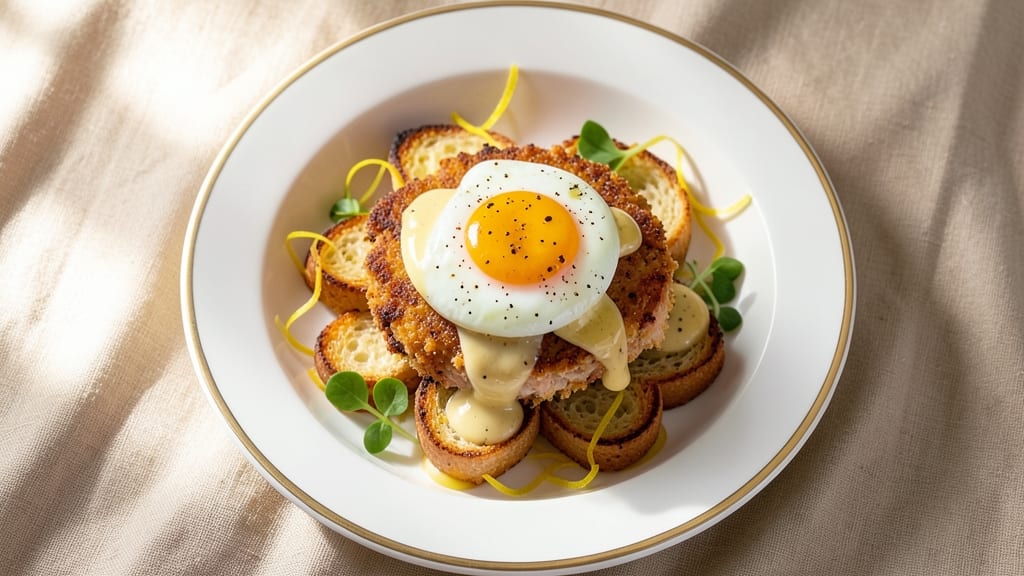
This crispy crab cake Eggs Benedict recipe transforms a classic brunch into something extraordinary—golden crab cakes crowned with silky poached eggs and velvety hollandaise. The secret lies in perfectly balanced flavors: sweet, briny crab meets rich, tangy hollandaise, all elevated by a crispy exterior that holds up to every bite.
I developed this version after years of testing, ensuring the crab cakes stay crispy while the hollandaise remains creamy without breaking.
The foundation starts with a foolproof crab cake batter—lump crabmeat bound with just enough mayo and Old Bay for structure, then fried to a golden finish. Meanwhile, the hollandaise gets a modern twist with lemon zest and a whisper of hot sauce, cutting through the richness while keeping it luscious.
Poached eggs add the final touch, their runny yolks tying everything together in a way that feels both luxurious and approachable.
What you’ll end up with is a dish that looks restaurant-worthy but comes together with precision and care. The crab cakes maintain their crispy edges, the hollandaise blankets each bite in creamy perfection, and the poached eggs add that classic Eggs Benedict elegance.
This isn’t just brunch—it’s a showstopper that impresses without requiring advanced skills.
Serve with a side of fresh greens and a crisp white wine to complement the briny, buttery flavors. The recipe scales easily for gatherings, and leftovers (if there are any) reheat beautifully. Let’s make brunch unforgettable.
Ingredients for crab cake eggs benedict
The perfect balance of briny crab, crispy texture, and velvety hollandaise starts with these quality ingredients.
| Ingredient | Amount | Notes |
|---|---|---|
| Lump Crabmeat 🦀 | 1 ½ lb | Backfin preferred, fresh or high-quality pasteurized |
| Mayonnaise 🥫 | ¼ cup | Dijon-style preferred for tang |
| Old Bay Seasoning 🌶️ | 1 ½ tbsp | Freshly ground for optimal flavor |
| Unsalted Butter 🧈 | ½ cup | Cold, cubed for frying |
| Extra-Virgin Olive Oil 🫒 | ¼ cup | Light variety for high heat |
| Fresh Lemon Juice 🍋 | 1 tbsp | From Meyer lemons preferred |
| Large Eggs 🥚 | 4 whole | Fresh, room temperature |
| White Vinegar 🍶 | ½ cup | For poaching liquid |
| Heavy Cream 🥛 | 1 cup | Full-fat for hollandaise |
| Lemon Zest 🍋 | 1 tbsp | Freshly grated for brightness |
| Hot Sauce 🌶️ | ½ tsp | Tabasco preferred for balance |
| Diamond Crystal Kosher Salt 🧂 | ½ tsp | For seasoning |
| Fresh Chives 🌿 | ¼ cup | Thinly sliced for garnish |
| English Muffins 🍞 | 4 whole | Sliced, lightly toasted |
The lump crabmeat is non-negotiable here—backfin preferred for that sweet, delicate flavor. Costco or local seafood markets often carry the best quality, but avoid pre-shucked crab that’s been sitting in the case too long. If using pasteurized, look for brands like Blue Crab or Sweet Baby—they hold up better in the batter. The Old Bay seasoning should be freshly ground; pre-ground loses potency quickly. For the mayo, Dijon-style adds that subtle tang that keeps the crab cakes from tasting flat.
No lump crab? Chunk crabmeat works in a pinch, but expect slightly less texture. Short on Old Bay? Substitute 1 tsp each paprika and celery salt—it won’t be identical, but it’s better than nothing. The English muffins should be sturdy; Thomas’ or Martin’s brands hold up best when toasted. For the hollandaise, heavy cream must be full-fat—light cream or half-and-half will break the emulsion. If you’re worried about the sauce separating, whisk in the lemon zest and hot sauce gradually while keeping the bowl over simmering water—this is the classic bain-marie technique that keeps it silky.
The crab cake batter keeps 2 days in the fridge, covered tightly. For the hollandaise, make it fresh—it’s not something that reheats well. If you’re prepping ahead, poach the eggs the night before and store them in the fridge; reheat gently in simmering water for 30 seconds before serving. The English muffins can be toasted and stored at room temperature for 1 hour before assembling. And if you’re scaling this up? Double the hollandaise recipe—it’s worth the extra effort.
Why You'll Love This Recipe
- No-Fuss Weekday Win: I swear by this for lazy mornings—just mix the crabmeat with mayo and Old Bay, shape those patties in 5 minutes flat, and let the butter do the rest. No fancy techniques, no waiting around.
- Old Bay Magic: That spice blend transforms the crab cakes into something ridiculously good—briny, zesty, and just sweet enough. Honestly, the Old Bay makes this taste like a coastal vacation in one bite.
- Brunch or Lunch Hero: Serve it on a weekend brunch spread or pack the leftovers for a Monday lunch that’ll impress coworkers. The crab cakes hold up perfectly, and the hollandaise stays luscious.
- Budget-Friendly Luxury: Lump crabmeat feels fancy, but a little goes a long way here. I stretch it with mayo and Old Bay, so one batch feeds four without breaking the bank—plus, the leftovers reheat like a dream.
Step-by-step instructions for crab cake eggs benedict
Here's the method to achieve perfectly crispy crab crowns and velvety hollandaise every time.
Prepare the Crab Cake Mixture
In a large mixing bowl, combine the 1.5 lb lump crabmeat with the 0.25 cup mayonnaise and 1.5 tbsp Old Bay Seasoning. Gently fold these ingredients together using a rubber spatula—just enough to distribute the mayonnaise evenly without breaking down the crab's texture. The mixture should hold its shape when pressed, but remain light and airy.
Add the 1 tbsp fresh lemon juice and 1 tbsp lemon zest to brighten the flavor profile. The zest should be finely grated to avoid any gritty texture. Fold these in gently, then cover the bowl and refrigerate for 30 minutes to allow the flavors to meld. This resting period also helps the crabmeat absorb the seasoning more thoroughly, ensuring each bite is packed with flavor.
Form and Fry the Crab Cakes
Preheat 0.25 cup extra-virgin olive oil in a large skillet over medium-high heat until it shimmers but isn't smoking. Using your hands lightly dampened with water, form the chilled crab mixture into 4 equal patties, each about ½-inch thick. The damp hands prevent sticking and help maintain the shape.
Carefully place the crab cakes in the hot oil, being mindful not to overcrowd the pan. Cook for 3-4 minutes per side until they develop a deep golden-brown crust. The edges should be crisp, and the centers should feel firm to the touch when gently pressed. Transfer the cooked crab cakes to a paper towel-lined plate to drain excess oil while you prepare the hollandaise.
Assemble the English Muffin Base
Lightly toast the 4 whole English muffins in a toaster or skillet until they're golden and crisp. Cut each muffin in half horizontally, creating 8 halves. Arrange these on a serving plate, slightly overlapping if needed to create an elegant presentation. The toasted muffins provide the perfect sturdy foundation for your crab cake crowns.
While the muffins toast, prepare the poaching liquid by combining 0.5 cup white vinegar and 4 cups water in a small saucepan. Bring to a gentle simmer over medium-low heat—this acidic liquid will help the eggs cook evenly without curdling. Keep this at a bare simmer until you're ready to poach the eggs.
Poach the Eggs and Prepare Hollandaise
In a separate saucepan, bring 1 cup heavy cream to a gentle simmer over medium heat. Remove from heat and whisk in 4 whole large eggs, 0.5 tsp diamond crystal kosher salt, and 0.5 tsp hot sauce. Slowly pour the warm cream mixture back into the saucepan and return to low heat, stirring constantly with a wooden spoon or silicone spatula.
As the hollandaise begins to thicken, carefully poach the eggs in the vinegar-water bath. Crack each egg into a small ramekin first, then gently slide it into the simmering water. Poach for 3-4 minutes until the whites are set but the yolks remain runny. Use a slotted spoon to transfer the poached eggs to the prepared English muffin halves.
Assemble and Garnish
Place one crab cake on top of each poached egg, creating a beautiful crown effect. Spoon the warm hollandaise generously over each crab cake, allowing it to cascade down the sides. The hollandaise should be thick enough to coat the back of a spoon but still flow smoothly.
Finally, garnish each serving with 0.25 cup fresh chives, thinly sliced for an elegant finish. The chives add a fresh contrast to the rich flavors of the crab and hollandaise. Serve immediately while the hollandaise is still warm and the crab cakes maintain their crisp texture.
Pro Tips For Making Crab Cake Eggs Benedict
- Chill the Crab First: Dump that lump crab straight from the fridge into an ice bath for 10 minutes before mixing. Cold crab holds its shape better in the patty—no more sad, crumbling edges when you flip them. (Yes, even if you’re impatient like me.)
- Press, Don’t Pack: When forming the crab cakes, press the mixture gently into the pan instead of mashing it down like you’re making taco meat. Too much pressure squeezes out moisture, and dry crab cakes are a crime. Think "firm but tender," not "brick."
- Butter the Pan Twice: Coat that skillet with butter first, then wipe it out—then add another thin layer. The first coat ensures even browning, and the second gives the crab cakes a crisp crust without sticking. Skip this, and you’ll be flipping soggy pancakes instead of golden patties.
- Poach Eggs in Salted Water: Use a splash of vinegar and a full teaspoon of salt in your poaching water. The salt seasons the whites as they cook, and the vinegar keeps them tight—no more wimpy, spread-out yolks. (Trust me, your hollandaise will thank you.)
Troubleshooting this recipe
Crispy Crab Cakes
If your crab cakes turn out soggy instead of crispy, your oil temperature is likely too low. Use a thermometer to monitor the oil—it should be between 350-375°F. I once fried crab cakes in oil that was too cool, and they ended up greasy and limp.
For extra crispiness, pat the crab cakes dry before frying and avoid overcrowding the pan. 🔥
Hollandaise Separation
Hollandaise breaking? This usually means the sauce got too hot or wasn’t emulsified properly. Keep the heat low and whisk constantly over a double boiler (or a heatproof bowl over simmering water).
If it does separate, try whisking in 1 tsp cold water to re-emulsify. I’ve rescued many broken hollandaise sauces this way—just don’t give up!
Poached Egg Failures
Poached eggs turning rubbery? The water wasn’t hot enough or the eggs were too old. Bring the vinegar-water to a gentle simmer (not a rolling boil) and use fresh eggs at room temperature. Crack eggs into a ramekin first, then slide them into the water to prevent breaking.
If the whites spread too much, add a pinch of xanthan gum to the poaching liquid for tighter curls. 🥚
Crab Cake Binding Issues
If your crab cake mixture falls apart when forming, it needs more binder. Add 1 tbsp extra mayo or 1 tbsp breadcrumbs to help hold it together.
I once used too little mayo, and the crab cakes crumbled into the pan—never again! Chill the mixture for 30 minutes before frying to improve structure.
Hollandaise Too Thin
A runny hollandaise? It likely didn’t cook long enough. Simmer the sauce until it thickens enough to coat the back of a spoon. If it’s still too thin, whisk in 1 tsp cold butter to stabilize it.
I’ve had this happen when rushing, so take your time—patience pays off with a silky sauce. ⏱️
English Muffin Sogging
Toasted muffins getting soggy under the hollandaise? The muffins weren’t toasted enough or the sauce was too hot. Toast them until deep golden brown, then let them cool slightly before assembling. Serve immediately to prevent sogginess—this is a classic brunch mistake I’ve seen too often! 🍞
Nutrition facts
Frequently asked questions
Can I make this ahead of time for a brunch gathering?
Prep the crab cake batter and refrigerate it for 2 days—just form and fry them fresh before serving. The hollandaise should be made fresh, but you can poach the eggs the night before and reheat gently in simmering water for 30 seconds before assembling. Toast the English muffins last minute to keep them crisp.
What's the secret to crispy crab cakes that don't fall apart?
Chill the batter for 30 minutes before frying and use damp hands when shaping to prevent sticking. The oil should be between 350-375°F—too cool and they'll be greasy, too hot and they'll burn. Pat them dry before frying for extra crispiness.
Can I substitute lump crabmeat if I can't find it?
Use chunk crabmeat instead, but expect slightly less texture. For better binding, add 1 tbsp breadcrumbs or 1 extra tbsp mayo to the mixture. If using imitation crab, avoid it—it won't hold together properly.
Why did my hollandaise separate?
Hollandaise breaks when it gets too hot or isn't emulsified properly. Keep the heat low and whisk constantly over a double boiler. If it separates, whisk in 1 tsp cold water to re-emulsify. For extra insurance, whisk in the lemon zest and hot sauce gradually while maintaining gentle heat.
How do I make this vegetarian?
Replace the crab cakes with crispy tofu or chickpea cakes (marinated in Old Bay and lemon). Use the same frying method for texture. Keep the hollandaise and poached eggs as-is—just ensure your tofu/chickpea mixture is well-seasoned to mimic the briny flavor.