
Side Dishes
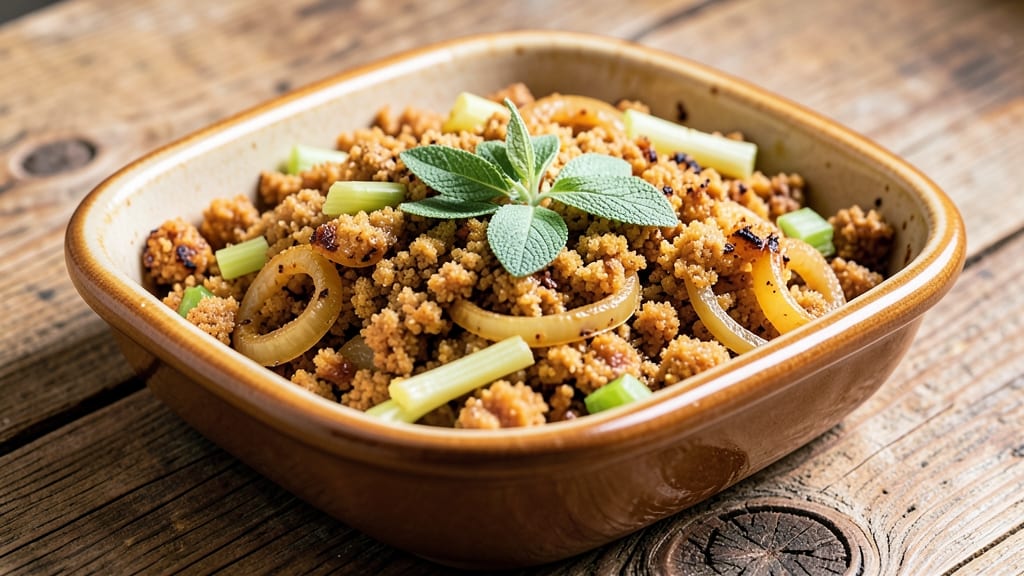
This egg-free cornbread dressing recipe delivers all the comfort of traditional Southern dressing without a single egg in sight—fluffy, moist, and rich with cornbread crumbles that hold together perfectly.
The secret lies in a clever binder made from milk and melted butter that creates the same tender texture as eggs, while still maintaining that classic dressing flavor.
Standing on a step stool in my grandmother’s kitchen in Sicily, I first learned how to balance textures in stuffing, and this recipe carries that same principle.
What makes this version special is how it comes together in one bowl with just 30 minutes of prep time. You’ll sauté onions and celery until soft, mix in cornbread crumbs and herbs, then bind everything with warm milk and melted butter.
The result is dressing that’s light enough to serve at room temperature but hearty enough to stand up as a main dish alongside roasted turkey or ham.
The magic happens when the dressing bakes until golden and fragrant, with cornbread crumbles that stay crisp at the edges while remaining tender inside. This recipe is foolproof—no eggs to worry about cracking, no risk of a gummy texture, and no need for complicated techniques.
It’s the kind of dish that transforms a simple gathering into a memorable feast, all while keeping the focus on flavor and tradition.
Serve warm or at room temperature, and don’t be afraid to get creative with garnishes like fresh herbs or a sprinkle of smoked paprika. This dressing is versatile enough for holidays or weeknight dinners, proving that great food doesn’t always require eggs. Let’s get started!
Ingredients for cornbread dressing recipe without eggs
Pantry staples and fresh herbs transform into fluffy, egg-free dressing that holds its shape perfectly.
| Ingredient | Amount | Notes |
|---|---|---|
| Cornbread Crumbs 🍞 | 3 cups | Homemade or store-bought, dried |
| Unsalted Butter 🧈 | ¾ cup | Melted, full-fat for richness |
| Whole Milk 🥛 | 1 ½ cups | Warm, not boiling |
| Yellow Onion 🧅 | 1 ½ cups | Diced, about 2 medium onions |
| Celery Stalks 🥬 | 3 whole | Diced, about 2 cups chopped |
| Fresh Sage Leaves 🌿 | ½ cup | Chopped, stems removed |
| Fresh Thyme Leaves 🌿 | ¼ cup | Chopped, stems removed |
| Garlic Cloves 🧄 | 4 cloves | Minced, about 1 tbsp |
| Chicken-Free Vegetable Broth 💧 | 1 ½ cups | Low-sodium preferred |
| Salt 🧂 | 1 ½ tsp | Kosher or sea salt |
| Black Pepper 🌶️ | 1 tsp | Freshly ground preferred |
| Smoked Paprika 🌶️ | ½ tsp | For depth of flavor |
| All-Purpose Flour 🌾 | ½ cup | For binding texture |
The cornbread crumbs are the heart of this recipe—homemade crumbs give the best texture, but store-bought works in a pinch. Look for dried crumbs at stores like Whole Foods or Trader Joe's for consistency. Fresh sage and thyme elevate the flavor, so grab them from the grocery store's produce section where they're usually fresher. The yellow onion and celery should be crisp and firm—avoid any that feel soft or wilted. For the garlic, fresh cloves are non-negotiable; jarred garlic lacks the punch this recipe needs.
No cornbread crumbs? Crush stale cornbread or cornbread muffins in a food processor for a quick substitute. Running short on fresh herbs? Dried sage and thyme work at one-third the amount, but fresh is ideal. The vegetable broth should be low-sodium to avoid over-salting; Pacific Foods or Imagine brands are reliable choices. For extra richness, swap half the milk for heavy cream. The smoked paprika adds depth—if you prefer a milder flavor, reduce it to a scant 1/4 teaspoon.
This dressing keeps beautifully in the fridge for 4-5 days, though it reheats best. For longer storage, freeze portions for up to 3 months. I like to portion it into greased ramekins before freezing—just bake straight from frozen, adding 10-15 minutes. The texture improves after baking, so don’t hesitate to make extra for gatherings. Garnish with extra herbs or a sprinkle of smoked paprika before serving for that restaurant-quality touch.
Why You'll Love This Recipe
- No Eggs, No Problem: The flour paste trick—whisking that 0.5 cup all-purpose flour with just 1 tablespoon of warm milk—binds everything together so smoothly, you’d never guess it’s egg-free. Honestly, the first time I made this, I was skeptical, but that crispy edge with the creamy center? Chef’s kiss.
- Herb-Packed Punch: That 0.5 cup fresh sage and 0.25 cup thyme, mixed right into the warm milk and broth? It’s like a flavor bomb—earthy, bright, and lingering. The smoked paprika adds this deep, almost smoky note that makes it taste like it simmered for hours, not 40 minutes.
- Weeknight Crowd-Pleaser: Between us, this is my go-to for Thanksgiving leftovers, potlucks, or even a lazy Sunday brunch. The cornbread crumbs soak up the veggie broth and milk so well that it stays moist for days, and the crispy top? Everyone reaches for seconds. (Yes, even on a Tuesday night.)
- Budget-Friendly Leftovers: I make this in a 9x13-inch dish and it feeds a crowd—no one goes hungry, and no one complains. The fridge keeps it fresh for 4-5 days, so you’re not stuck with a sad, dry loaf. Freeze portions for up to 3 months if you’re planning ahead, and reheating it? Warm, crispy, and just as good as day one.
Step-by-step instructions for cornbread dressing without eggs
Here's how to create a tender, fluffy dressing with no eggs—just simple ingredients and perfect technique.
Sauté the Vegetable Base
In a large, heavy-bottomed skillet, melt the 0.75 cup unsalted butter over medium heat. Add the 1.5 cups diced yellow onion and 3 whole celery stalks (chopped). Cook for 8-10 minutes, stirring occasionally, until the vegetables soften and the onion becomes translucent.
Next, add the 4 cloves minced garlic and cook for 30 seconds until fragrant. This step develops the foundation of flavor—don't rush it. If the vegetables start to brown too quickly, reduce the heat slightly. The goal is to soften them completely without burning.
Combine Liquids and Seasonings
Transfer the sautéed vegetables to a large mixing bowl. Stir in the 1.5 cups whole milk, 1.5 cups chicken-free vegetable broth, 1.5 tsp salt, 1 tsp black pepper, 0.5 tsp smoked paprika, 0.5 cup fresh sage leaves, and 0.25 cup fresh thyme leaves. Mix thoroughly to distribute the seasonings evenly.
Here's the thing—adding the herbs now ensures they infuse the dressing with their aromatic qualities. The milk and broth create a creamy, cohesive base, but we're not done yet. The texture will transform in the next step, so don't skip ahead.
Bind with Flour and Cornbread Crumbs
In a separate bowl, whisk together the 0.5 cup all-purpose flour with 1 tablespoon of the warm milk mixture to create a smooth paste. This prevents lumps when added to the dressing. Gradually pour the flour mixture into the vegetable and liquid combination while stirring constantly.
Now, fold in the 3 cups cornbread crumbs using a wooden spoon or spatula. Work gently but thoroughly to combine everything—you want the crumbs to absorb the liquid without breaking apart. The dressing should hold its shape when pressed lightly; if it's too loose, add another 1-2 tablespoons of cornbread crumbs.
Bake to Golden Perfection
Transfer the dressing to a greased 9x13-inch baking dish and spread it evenly. Bake at 375°F for 35-40 minutes, until the top is golden brown and the edges are crisp. If the top browns too quickly, tent loosely with aluminum foil to prevent over-browning while the center finishes cooking.
To test for doneness, insert a knife into the center—it should come out clean with no wet crumbs clinging. The dressing should be tender but firm enough to hold its shape when sliced. Let it rest for 10 minutes before serving to allow the juices to redistribute.
Pro Tips For Making Cornbread Dressing Recipe Without Eggs
- Sweat, Don’t Burn: I learned this the hard way—onions and celery need gentle heat to soften, not a sear. If your skillet starts smoking or the onions darken before they’re translucent, you’ve gone too far. Drop the heat to medium-low once they’re added, and stir often. The goal is silky, not crispy.
- Toast Your Crumbs: Skip the dry crumbs straight from the bag. Pulse 1-2 tablespoons of the cornbread crumbs in a food processor for 10 seconds—just enough to break them down slightly. This creates a finer texture that absorbs the liquid better, giving you a creamier dressing. (Yes, even if you’re impatient like me.)
- Test the Flour Paste: That flour-milk paste isn’t just about lumps—it’s the glue holding your dressing together. Before folding it into the bowl, dip a spoon in the mixture and let it drip back. If it flows smoothly like honey, you’re good. If it clumps or separates, whisk in another splash of warm milk until it behaves. This is non-negotiable for structure.
- Bake Under Cover: The top of your dressing will brown faster than the center, and that’s okay—just don’t let it turn to leather. Tent it with foil after 20 minutes, then check again at 30. The edges should be golden, but the middle should still jiggle slightly when the dish moves. (Your future self will thank you for not overbaking.)
Common mistakes when making your cornbread dressing recipe without eggs
Over-Sautéing Vegetables
I’ve seen this happen more times than I can count—vegetables turning into a mushy, bitter pile instead of a flavorful base. Onions and celery should soften but never darken or caramelize too much.
Keep your heat at medium and stir frequently. If they start to brown too quickly, reduce to medium-low. The goal is tender, not burnt—think "al dente" for vegetables. 🌶️
Skipping the Flour Paste
This is a rookie mistake that leads to a gummy, gluey mess. Whisking the 0.5 cup flour with 1 tablespoon warm milk first creates a smooth paste that blends seamlessly into the dressing.
Adding dry flour directly to the bowl causes lumps that ruin the texture. Trust me, your Nonna would scold you for this shortcut!
Underestimating Rest Time
Fresh out of the oven, this dressing looks perfect—golden, crisp, and inviting. But if you slice it immediately, you’ll end up with a dry, crumbly disaster. Let it rest for at least 10 minutes (I often wait 15) to allow juices to redistribute.
This keeps every bite moist and flavorful. Patience is key, just like when Nonna taught me to let fresh pasta rest before serving. ⏰
Using Cold Milk
Cold milk creates a dressing that’s uneven in texture—some parts will be too firm, others too loose. Warm the milk to 110-115°F (just below a simmer) before mixing. This ensures the flour activates properly and the dressing binds smoothly.
I like to heat it in the microwave for 45 seconds or on the stovetop in a saucepan over low heat.
Overmixing the Crumbs
Folding in the cornbread crumbs requires a gentle touch. Overmixing breaks them down into a fine powder, which weakens the dressing’s structure. Use a wooden spoon and work just until the crumbs are evenly distributed.
Think of it like tucking in a blanket—firm but not aggressive. The result should hold its shape when pressed lightly.
Ignoring the Baking Test
Never guess if your dressing is done—always test it. Insert a knife into the center; it should come out clean with no wet crumbs clinging. If it’s still damp, bake for another 5-10 minutes.
Overbaking dries it out, but underbaking leaves it gummy. I’ve learned this the hard way—trust the knife, not your eyes! 🔪
Nutrition facts
Frequently asked questions
Can I make this dressing without cornbread crumbs?
If you don't have cornbread crumbs, crush 3 cups of dried cornbread or cornbread muffins in a food processor until you get fine crumbs. For extra texture, you can also toast 1 cup of panko breadcrumbs with 1/4 cup melted butter before mixing them in. The flavor will be slightly different but still delicious.
Why does my dressing turn out gummy instead of fluffy?
Gummy dressing usually means the flour wasn't properly activated or the milk wasn't warm enough. Always whisk the 0.5 cup flour with 1 tablespoon warm milk first to create a smooth paste. Also, warm the 1.5 cups milk to 110-115°F before mixing—cold milk prevents proper binding. If it's still too loose after baking, add another 1-2 tablespoons of cornbread crumbs and bake for another 5 minutes.
Can I make this dressing ahead of time?
Yes! This dressing keeps beautifully in the fridge for 4-5 days in an airtight container. For best results, reheat it in the oven at 350°F for 15-20 minutes until warmed through. You can also freeze portions for up to 3 months. To reheat from frozen, bake at 350°F for 25-30 minutes, tented with foil to prevent drying.
What's the best way to reheat leftover dressing?
For the best texture, reheat in the oven rather than the microwave. Place the dressing in a greased baking dish and cover loosely with foil. Bake at 350°F for 15-20 minutes until heated through. If it's slightly dry after reheating, sprinkle with 1-2 tablespoons warm milk or broth and let it sit for 5 minutes before serving. Never microwave uncovered—it dries out the edges.
Can I use dried herbs instead of fresh?
You can substitute dried herbs, but use one-third the amount. For this recipe, that means 1/6 teaspoon dried sage and 1/12 teaspoon dried thyme instead of the fresh amounts. Fresh herbs add vibrant flavor, but dried works in a pinch. If using dried, toast them lightly in the skillet with the onions and celery for 1 minute to release their aroma before adding the liquids.